The US Lakes With The Most Copperheads
Copperheads are not water snakes, which makes a list of copperhead lakes sound like a mistake. They turn up at reservoirs anyway, in numbers, and the reason is the shoreline rather than the water. Lake Hartwell has 962 miles of it. Lake of the Ozarks has around 1,150. Every mile of it is wooded, brushy, rocky edge with rodents moving through leaf litter at dusk, which is exactly the habitat a copperhead wants. The snakes are not at the lake. They are at the edge of it, which is also where everybody parks.
Lake Hartwell, Georgia And South Carolina

This is the clearest case in the country, with the eastern copperhead described as by far the most common venomous snake native to the reservoir.
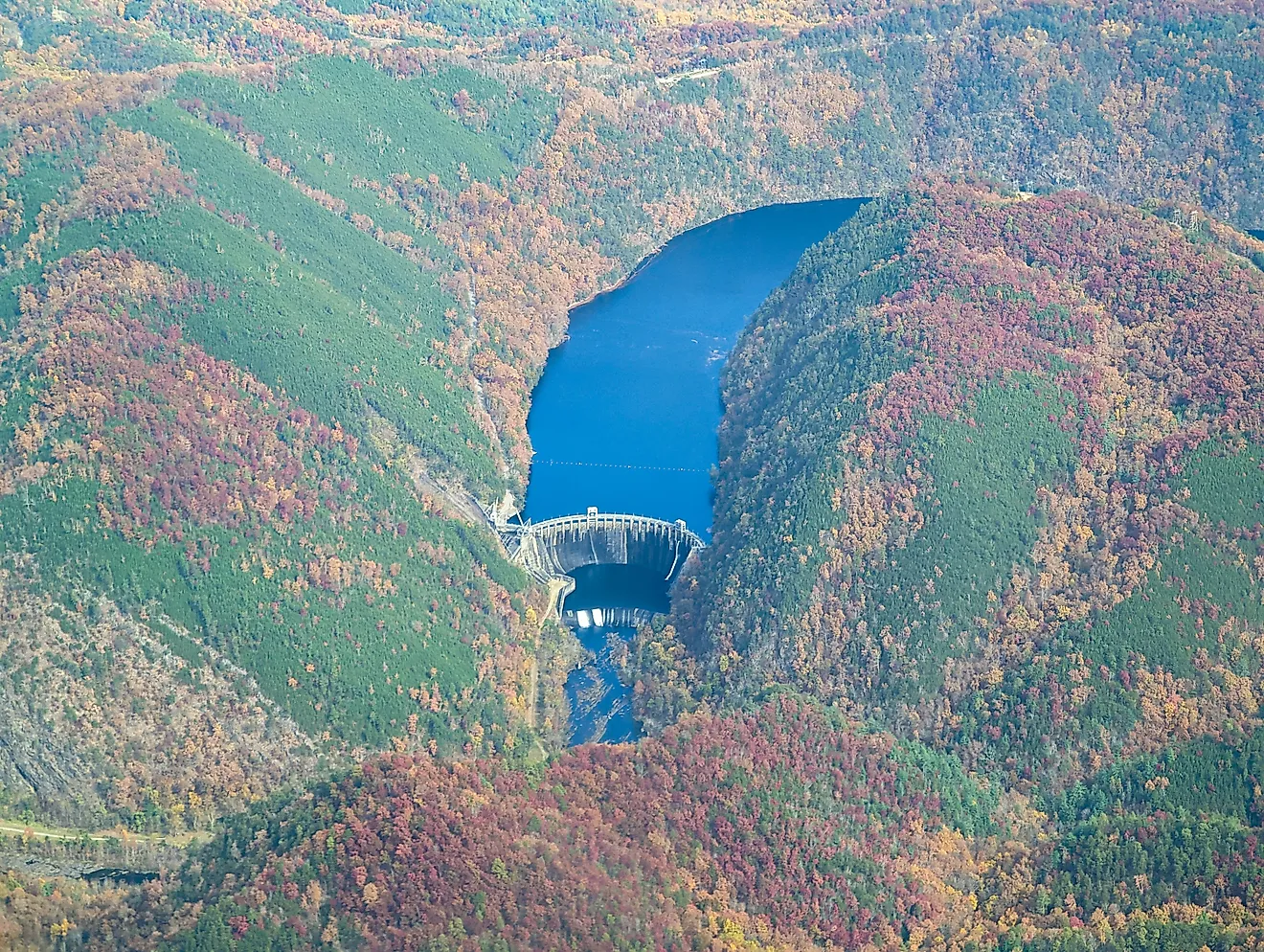
Hartwell covers about 56,000 acres with 962 miles of shoreline, created in the 1950s when the Corps of Engineers dammed the Savannah River. It shares three venomous species with the surrounding country: the eastern copperhead, the timber rattlesnake and the pygmy rattlesnake.
What gets overlooked is how much wooded, brushy shore surrounds all that open water. Rocky banks, downed timber and shaded coves ring the entire reservoir, which is the exact combination copperheads favor: water nearby, thick cover, and small prey moving through leaf litter.
Lake Of The Ozarks, Missouri

The serpentine shape that gives this reservoir its character also gives it an extraordinary amount of snake habitat. Created in 1931 by Bagnell Dam on the Osage River, the lake covers 54,000 acres across four counties and carries roughly 1,150 miles of shoreline, which is more coastline than several US states. The eastern copperhead is listed among the most commonly encountered species here, alongside the harmless northern watersnake and the speckled kingsnake.
Sightings run from spring through autumn, with snakes basking on docks, swimming across coves and sheltering in shoreline debris.
Table Rock Lake, Missouri

The 43,100-acre Army Corps reservoir outside Branson has rocky shoreline, submerged timber and quiet coves, plus one feature that makes it unusual here.
Table Rock's water is clear, which makes snake sightings considerably easier than at murkier lakes. That inflates the apparent snake population without changing the actual one, and is worth remembering when comparing reports between lakes.
Copperheads here concentrate in the remote, less-developed arms of the reservoir, particularly where creek mouths feed in, which is where the leaf litter and the prey both accumulate.
Lake Lanier And Lake Allatoona, Georgia
North Georgia's two big recreational reservoirs run the same pattern as Hartwell with smaller numbers.
Snakes are frequently reported throughout Lake Lanier and its surroundings, mostly rat snakes, garter snakes and northern watersnakes, with copperheads the common venomous species and timber rattlesnakes the other. Allatoona carries watersnakes and copperheads in similar proportion.
These lakes sit close to Atlanta, which matters. Proximity to a large metro area means more people walking more shoreline, and encounters scale with that rather than with snake density.
Lake Texoma And Lake Gaston

Two more reservoirs earn a place, at opposite ends of the copperhead range.
Lake Texoma on the Texas and Oklahoma border is one of the largest reservoirs in the country, and its varied habitat supports copperheads alongside western cottonmouths and diamondback watersnakes. Lake Gaston on the North Carolina and Virginia line has extensive shoreline broken into coves and inlets with overhanging vegetation, holding copperheads and timber rattlesnakes in the surrounding woods.
Lake Guntersville in Alabama belongs in the same group, with copperheads sharing the shoreline with cottonmouths and a long list of harmless species.
Rip-Rap Is The Specific Hazard

Within any of these lakes the distribution is uneven, and one piece of human infrastructure concentrates snakes better than any natural feature.
Rip-rap, the loose rock armoring placed around boat ramps, dams and eroding banks, is close to purpose-built copperhead habitat. It holds daytime heat into the evening, provides endless crevices for cover, and shelters the rodents the snakes are hunting.
Boat ramps and rock walls are where people step out of vehicles, unload gear and let children run ahead. They are also the most reliably snake-occupied square meters on the whole reservoir.
Most Sightings Are Watersnakes

Before anybody recalculates their summer plans, here is the correction that applies to every lake on this list. Northern watersnakes swim boldly across coves and get accused of being copperheads constantly. They are harmless, far more numerous, and much more likely to be the snake anybody actually sees in the water, because copperheads are generally in the vegetation at the edge rather than swimming across the middle.
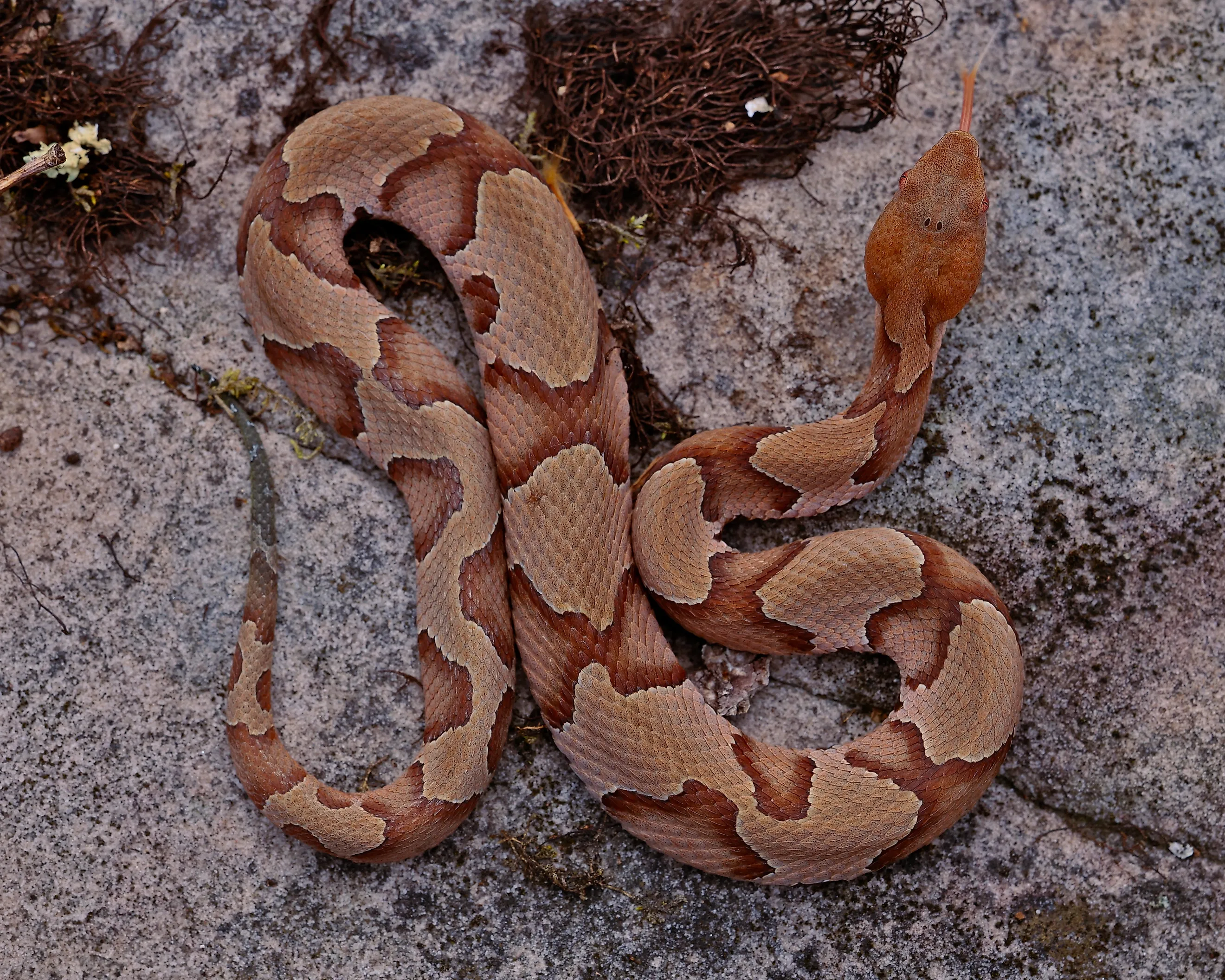
The identification is learnable. A copperhead has a coppery tan head and crossbands that pinch narrow along the spine. A watersnake has a blotchier, less tidy pattern and a rounder face.
The Bite Numbers, Properly Framed

Copperheads account for roughly 25 percent of all venomous snakebites in the United States, which sounds like a reason to stay home until the second number arrives.
Their venom is among the least potent of any American venomous snake, with one study putting the case fatality rate at about 0.01 percent. Copperheads bite more people than anything else and kill almost none of them.
The high bite count comes from abundance, excellent camouflage and the habit of freezing rather than fleeing, not from aggression. Almost every bite involves somebody stepping on, sitting on or reaching past a snake they never saw.
Why Reservoirs Specifically

Every lake named here is artificial, and that is not a coincidence. Damming a river valley floods the bottom and leaves the wooded slopes above it intact, producing an enormously long, irregular boundary between water and forest. Hartwell's 962 miles and the Ozarks' 1,150 are the product of drowned side valleys, each one adding shoreline.
A natural lake of the same surface area would have a fraction of that edge. Reservoirs maximize exactly the habitat copperheads use, and then add boat ramps, rip-rap and several million annual visitors to it.
What Actually Helps

Because the risk concentrates in specific places, the precautions are specific too. Wear shoes in shoreline weeds rather than going barefoot from the dock. Look before putting hands on rip-rap or stepping over logs. Carry a light after dark, since copperheads shift to night movement once daytime temperatures climb. And keep the area around a lake house free of rodent attractants, because fewer mice means fewer reasons for a copperhead to visit.
If you see one, walk around it. A copperhead that has been noticed and given space will stay exactly where it is.
The Short List

Lake Hartwell leads on the strength of 962 miles of wooded shoreline and a copperhead population described as the most common venomous snake there. Lake of the Ozarks follows with 1,150 miles, then Table Rock, Lanier, Allatoona, Texoma, Gaston and Guntersville.
What they share is not water but edge. A copperhead at a lake is a forest animal using a forest margin that happens to have a reservoir on one side of it, and the reason these particular lakes make the list is that somebody built hundreds of miles of that margin and then invited everybody to park on it.