Eastern Diamondback Rattlesnake
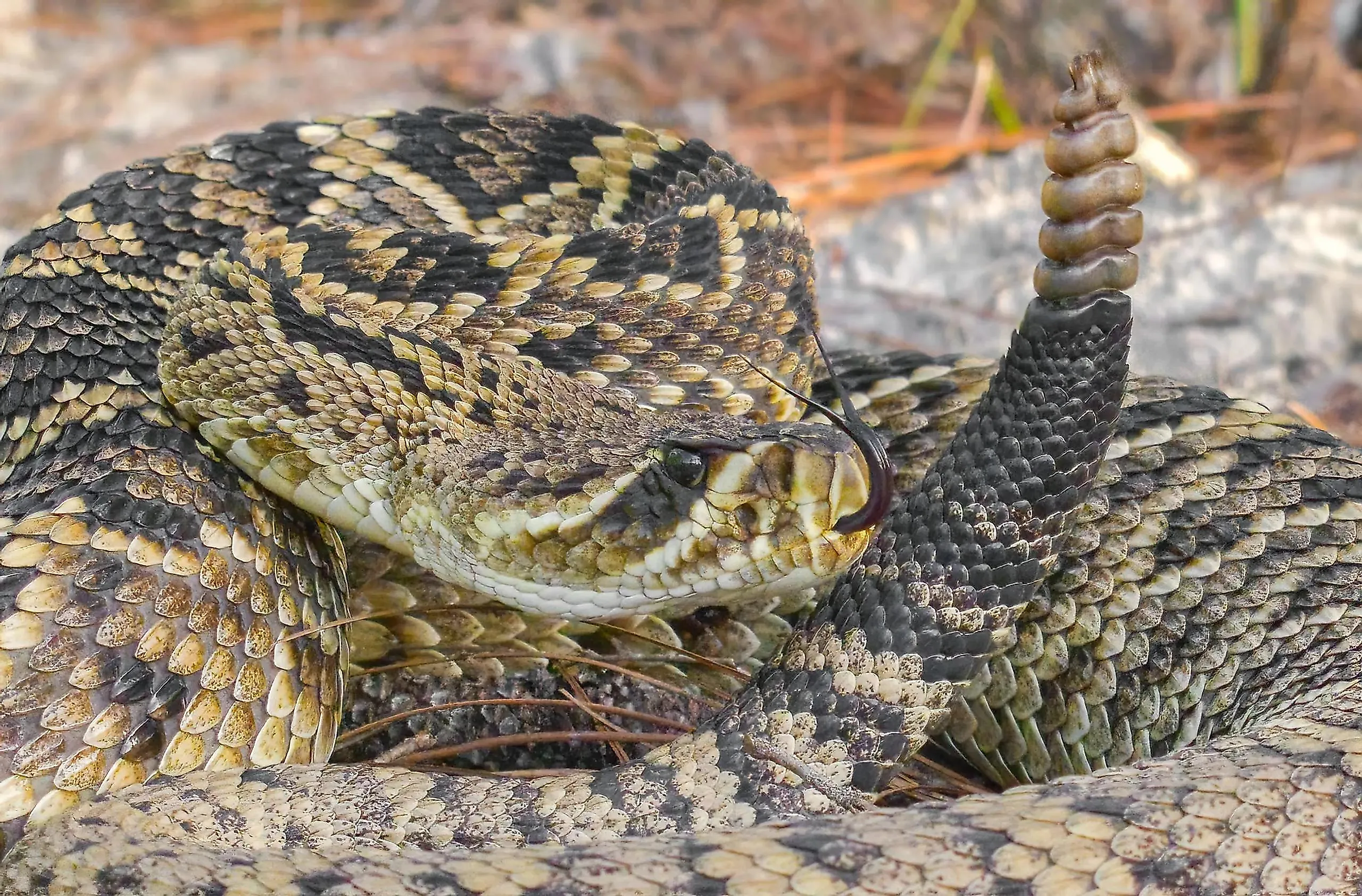
The eastern diamondback rattlesnake is the largest venomous snake in the United States and one of North America's most recognizable reptiles. Found throughout the southeastern coastal plain, it is identified by the bold diamond patterns along its body and the rattle on its tail. Though often feared for its size and potent venom, the species plays a vital role as an ambush predator. Heat-sensing pits and a powerful strike make the eastern diamondback a highly effective hunter. It typically avoids human contact whenever possible. Read on to learn more about this remarkable creature.
Taxonomy

The eastern diamondback rattlesnake belongs to the family Viperidae, which includes other venomous pit vipers such as cottonmouths and copperheads. Its scientific name is Crotalus adamanteus. The genus Crotalus includes most rattlesnake species, which are native to the Americas and range from southern Canada to Argentina. There are no recognized subspecies of eastern diamondback. The western diamondback rattlesnake (Crotalus atrox) is a separate species that is generally smaller and lighter in color.
Range and Habitat

The eastern diamondback's range is restricted to the southeastern Coastal Plain, historically running from extreme eastern Louisiana east through southern Mississippi, Alabama, and Georgia, into South Carolina, all of Florida including the Keys, and north to the lower Coastal Plain of southeastern North Carolina. That distribution has contracted significantly. The species is now considered functionally extirpated in Louisiana, possibly extirpated in North Carolina (last confirmed sighting in the early 1990s), and uncommon and patchy across South Carolina. The remaining strongholds are in southern Georgia and Florida. Its range does not overlap with that of the western diamondback rattlesnake, which is found in the American Southwest.
This species can occupy several different habitats, both dry and wet, including coastal forests, scrublands, prairies, and barrier islands. Its preferred environment is the longleaf pine savanna, a fire-maintained ecosystem that has been reduced to about 3 percent of its original extent across the Southeast. Eastern diamondbacks may also be found in disturbed areas, including agricultural lands, but they are less commonly associated with human structures such as abandoned buildings. They are capable swimmers and can cross freshwater wetlands and even saltwater channels between barrier islands.
Physical Traits

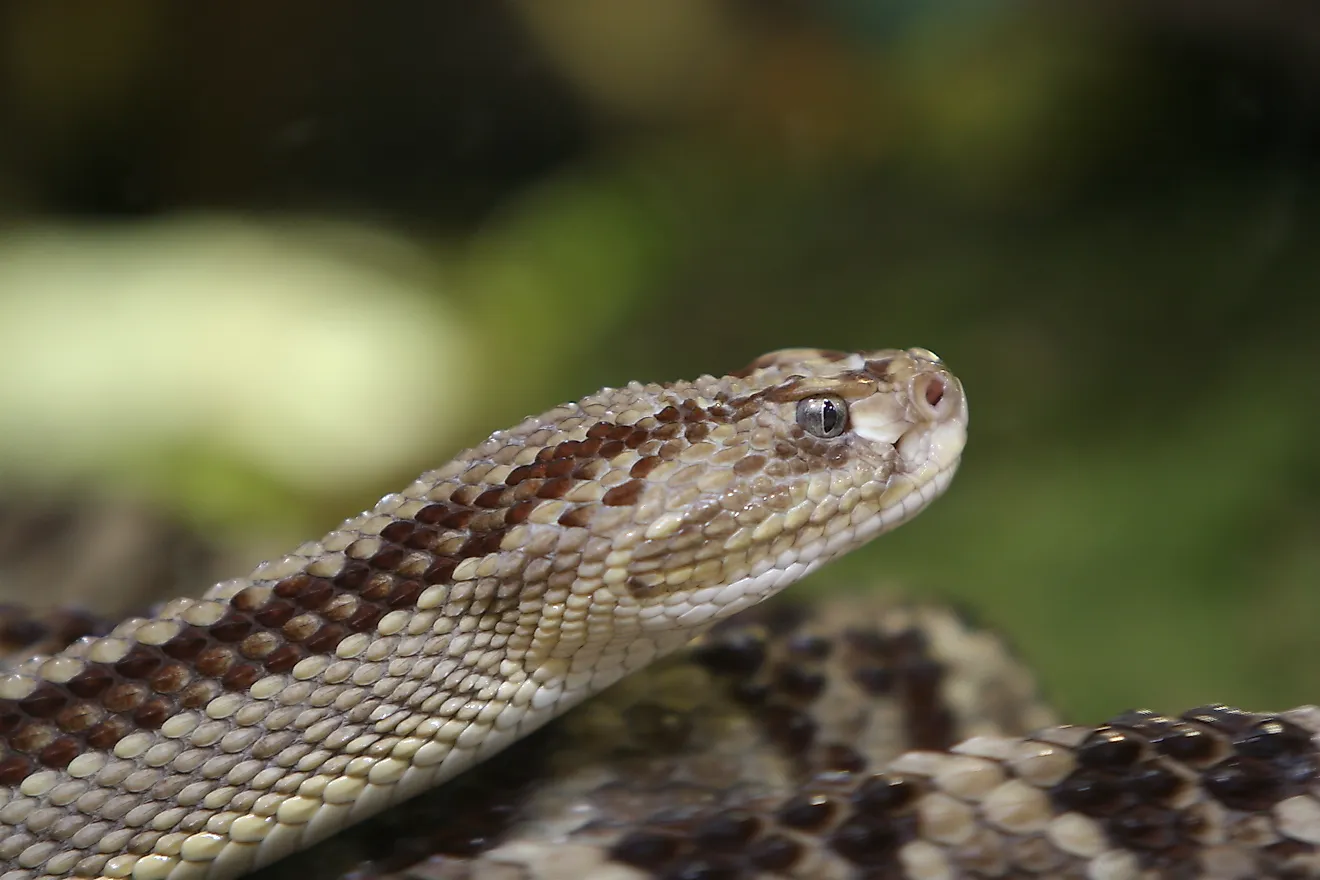
The most imposing feature of the eastern diamondback is its size. Adults typically range from 3 to 6 feet (about 1 to 2 meters) long. Exceptional individuals approach 8 feet (2.4 meters) and around 10 pounds (4.5 kilograms), making this the largest venomous snake in the United States by both length and weight. The body is brownish, tan, or dull gold, with darker diamond-shaped markings outlined by lighter scales. Two diagonal dark stripes cross each side of the head, and a pair of heat-sensing pits sit between the eyes and nostrils.
The tail is typically brown or gray with dark crossbands and ends in a keratinous rattle. The rattle is composed of interlocking segments, with a new segment added each time the snake sheds. The number of segments does not reliably indicate age, since segments break off over time due to wear, predation, or environmental factors. The fangs are typically about 0.75 to 1 inch long and are used to deliver venom into prey.
Food
Eastern diamondbacks are opportunistic carnivores that eat what they can catch and overpower. Adults take small mammals as the main staple of the diet, including rabbits, cotton rats, squirrels, and rice rats, and they will also take ground-dwelling birds. Juveniles eat smaller prey, including lizards and small rodents. Like other large vipers, they feed on relatively few large meals rather than many small ones. After a substantial meal, digestion can take several days or longer, depending on prey size and ambient temperature.
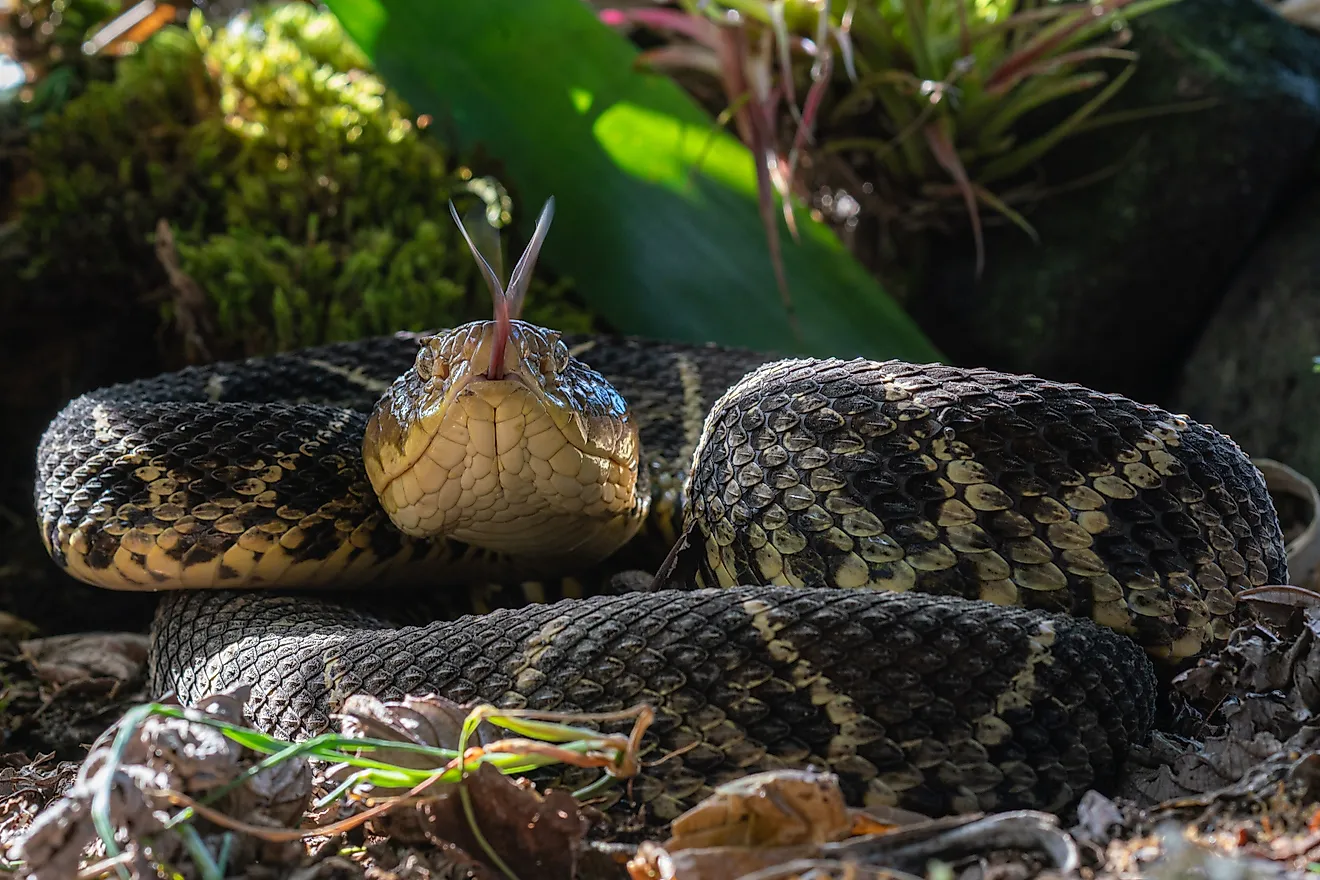
Diet can influence growth, since individuals that consume calorie-rich prey such as rodents may grow larger than those that primarily feed on reptiles. Some animals, including opossums, exhibit partial resistance to rattlesnake venom, allowing them to prey on or survive encounters with these snakes. Like other snakes, eastern diamondbacks use their forked tongue to collect chemical cues from the environment, which are processed by the Jacobson's organ in the roof of the mouth to help locate prey. Their heat-sensing pits allow them to detect warm-bodied animals and accurately target their strikes even in the dark.

A rattlesnake can strike at a distance of up to about two-thirds of its body length. Eastern diamondbacks strike quickly, injecting venom through their retractable fangs, then release the prey and wait for the venom to take effect. The venom is primarily hemotoxic, meaning it disrupts blood and tissue, causing local swelling, bleeding, and tissue death. It also contains enzymes that begin breaking down the prey internally, which aids digestion. When the prey succumbs, the snake follows the scent trail, locates the carcass, and consumes it whole.
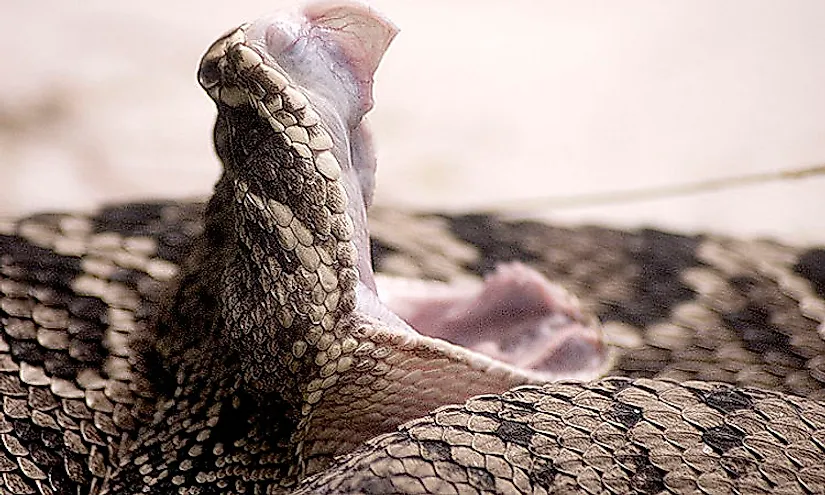
Snakes do not "unhinge" their jaws, despite the popular description. They have highly flexible skulls in which the lower jaw bones are connected to the skull by elastic ligaments rather than a fixed joint, allowing the mouth to expand around prey larger than the head. As ectotherms, snakes rely on external heat sources, and optimal digestion typically occurs at body temperatures between about 80 and 85°F (27 to 29°C).
Behavior

Eastern diamondbacks are largely solitary, though they may share shelters during colder months, especially old gopher tortoise burrows. They are most active during warmer months, usually hunting in the evening or early morning. During cold weather they enter a period of reduced activity called brumation, sheltering in burrows, stump holes, or other protected sites, often those created by other animals. The gopher tortoise burrow is the single most important winter refuge across much of the species' range.
Eastern diamondbacks are typically ambush predators and may remain in a single coiled position for days while waiting for prey. Daily and seasonal movements vary depending on temperature, habitat, and prey availability. While they may move only short distances most of the time, telemetry studies show they are capable of traveling much farther than a few dozen feet per day, especially during seasonal movements or when males are searching for mates. If threatened, the snake will coil up and shake its rattle as a warning. If the threat persists, it may strike defensively. Despite their reputation, these snakes are generally retiring and avoid human contact whenever possible, striking primarily when provoked or threatened.
Reproduction

The mating season for eastern diamondbacks runs from late summer into early fall. During this time, males abandon their usual sit-and-wait habits to search for mates, and may wander out into residential areas, roads, and trails, which puts them at higher risk of being run over or killed by humans. When several males locate the same female, they engage in ritualized combat. Two males raise the front portion of their bodies and intertwine, then attempt to push one another to the ground. The winner gains access to the female. Despite the dramatic appearance, these contests are non-venomous and do not result in injury.
Females reach reproductive maturity around 4 to 6 years old. Like many snakes, they can store sperm for extended periods, allowing fertilization to occur months after mating. Eastern diamondbacks are ovoviviparous, meaning eggs develop and hatch inside the female's body, and the young are born live after a gestation period of approximately 6 to 7 months. Litters typically range from about 6 to 21 offspring, often born in sheltered locations such as burrows or hollow logs. Newborns measure roughly 12 to 15 inches (30 to 38 cm) and have a small, nonfunctional "button" at the tail tip, which becomes a full rattle as they grow and shed. Juveniles are highly vulnerable to predators, and only a small percentage survive to adulthood.
Threats

Adult eastern diamondbacks have relatively few natural predators, though they are not entirely without threats. Large birds of prey such as red-tailed hawks and bald eagles, as well as mammals like bobcats, foxes, and wild pigs, occasionally take them, particularly juveniles. Wild pigs in the Southeast have become an increasingly significant predator of snake eggs and small reptiles. However, humans pose by far the greatest threat to the species.
The leading driver of decline is habitat loss. Eastern diamondbacks are tied closely to longleaf pine savanna, which has been reduced to a small fraction of its original extent through logging, agricultural conversion, and fire suppression. As the remaining habitat is fragmented by roads and development, populations become isolated and vehicle strikes increase.

Direct killing by humans is the second major threat. Out of fear of these large, venomous snakes, individuals are routinely killed on sight, even though bites are uncommon. Public events known as rattlesnake roundups, in which large numbers of snakes are collected from the wild, have historically removed thousands of adults from the population each year, though several traditional roundups have been converted to non-lethal wildlife festivals in recent years. With prompt medical care, the vast majority of human bites are survivable. If left untreated, bites have a fatality rate estimated at 10 to 30 percent, depending on the bite location and the amount of venom injected.
The species is currently listed as Least Concern on the International Union for Conservation of Nature (IUCN) Red List, but the assessment notes a declining population trend and the current range represents only a small portion of its historical extent. The U.S. Fish and Wildlife Service has been reviewing the eastern diamondback for possible listing under the Endangered Species Act since a formal petition was submitted in 2011, and a Species Status Assessment is ongoing. The species is already protected at the state level in North Carolina (state-listed as endangered) and is a species of special concern in South Carolina. Several research groups, including the Orianne Society and partner universities, are working to model remaining habitat and inform conservation decisions.