The Oldest Lighthouses on the Great Lakes
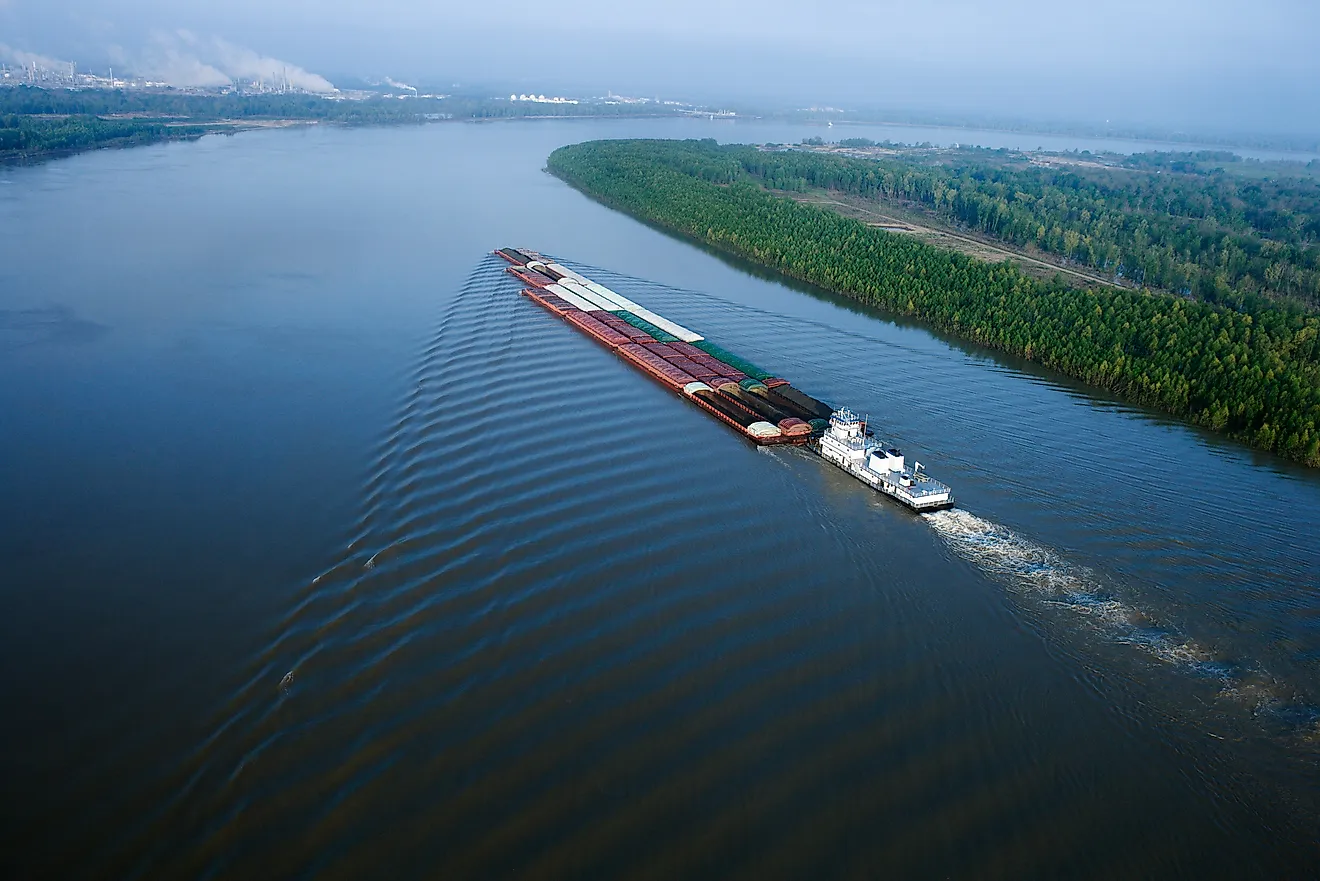
The Great Lakes hold some of the largest supplies of freshwater on the planet, and they have long doubled as a bi-national economic engine. For centuries, schooners and freighters hauled goods back and forth across the shores of these five major water bodies, and now, thanks to engineered canals, cargo arrives from the world over. But whether the freight was timber from isolated logging towns supplying the growing cities of the past, or global goods crossing the Atlantic Ocean today, captains have always had to contend with the capricious waters, erratic shorelines, and scattered islands of the Great Lakes. Hence the need for beacons in the night.
Lighthouses began appearing on the Great Lakes in the late 18th century, but storms wiped out many of these primitive structures, and crews demolished others in short order. The following nine lighthouses are the oldest still standing on the Great Lakes, and several remain operational. Because four of the five Great Lakes are split between the United States and Canada, every lake except Lake Michigan carries two stolid beacons here.
Lake Ontario
Gibraltar Point Lighthouse (1808)

This first Great Lake has been making headlines lately over its contentious nomenclature (that is, Lake Ontario vs. Lake America). But the Canadian side claims the oldest standing lighthouse not just on this lake but across the Great Lakes as a whole, so we will give Lake Ontario top billing. Gibraltar Point Lighthouse went up all the way back in 1808. Mississauga Point Lighthouse (1804) preceded it, but after crews demolished that tower in 1813, the title of oldest standing lighthouse passed to Gibraltar Point. The historic 52-foot, hexagonal stone tower no longer operates, though visitors can reach it via the Centre Island ferry straight from downtown Toronto's harbourfront, then a walk out to Hanlan's Point on the Toronto Islands.
Charlotte-Genesee Lighthouse (1822)

On the southern shore of Lake Ontario, now Lake America to stateside Google and Apple Maps users, the Charlotte-Genesee Lighthouse is America's oldest surviving lighthouse on this particular Great Lake. Here, in Rochester, New York, near the mouth of the Genesee River, crews raised a 40-foot octagonal sandstone tower in 1822. It shone until 1881, when the light was discontinued. Charlotte High School students are credited with saving their beloved lighthouse from demolition in 1965. Then, in 1984, the Charlotte-Genesee Lighthouse Historical Society restored the tower and red-brick keeper's house. Finally, in 2014, the lighthouse returned to active service. That is quite an arc.
Lake Erie
Marblehead Lighthouse (1821)

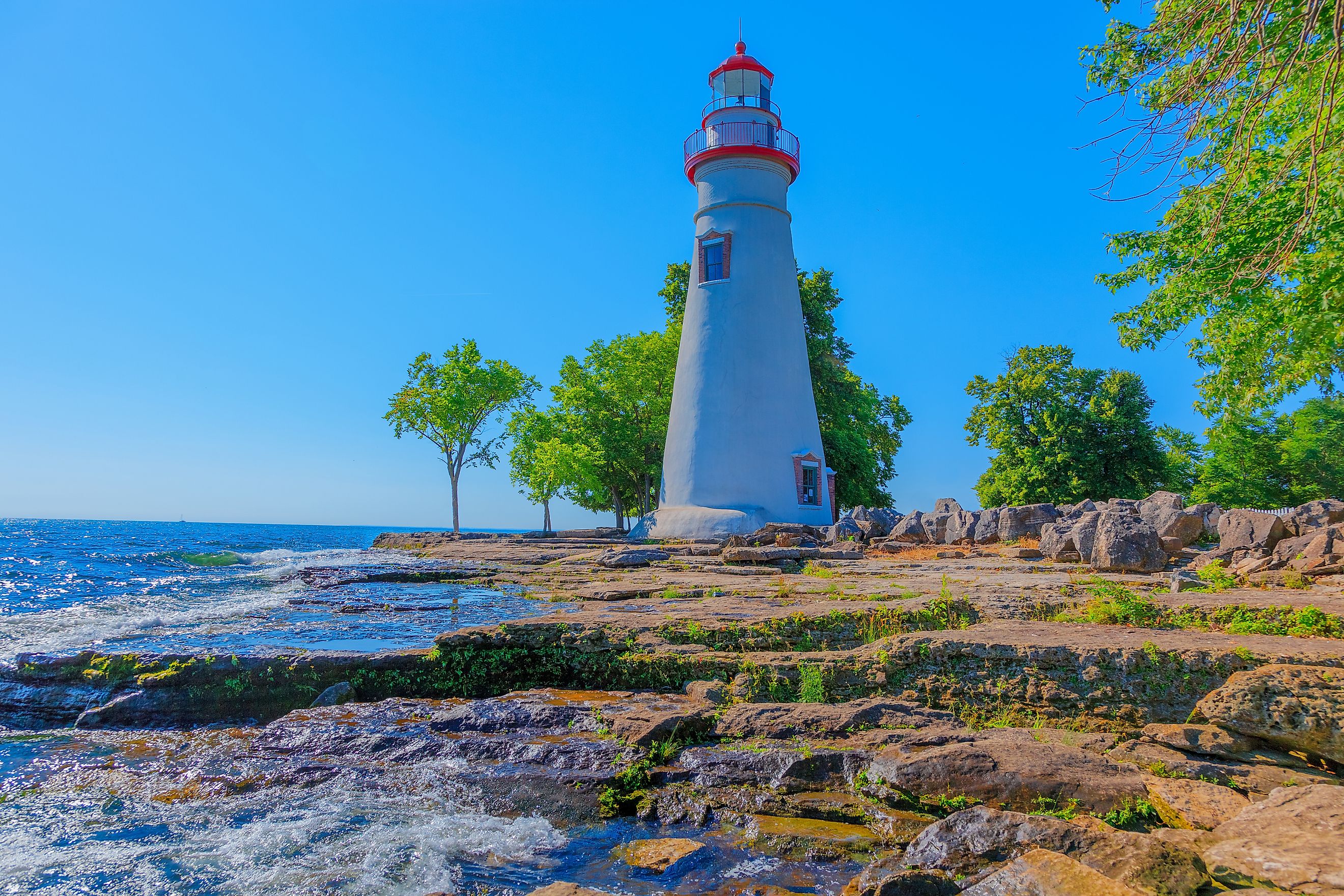
Marblehead Lighthouse is the oldest continuously operating lighthouse on the American side of the Great Lakes. Contractor William Kelly began construction in 1821, using local limestone, on a rocky outcrop then serving Sandusky Bay. On June 22, 1822, the beacon was lit, and Benajah Wolcott took up the post as first keeper, a position he held for the next decade before passing the torch to a line of successors (the current keeper being the U.S. Coast Guard). Fifteen keepers have tended the light in all, two of them women. The 50-foot limestone tower stands on the southern shore of Lake Erie, its green light looking north to Kelleys Island and south to Cedar Point. The tower is the focal point of Marblehead Lighthouse State Park, which also holds the Keeper's House Museum and a Lifesaving Station Museum.
Port Burwell Lighthouse (1840)

Over on the north shore, Port Burwell Lighthouse is the oldest Canadian lighthouse on Lake Erie. Crews built it in 1840 near the mouth of Big Otter Creek, in the namesake community (itself within the Municipality of Bayham). The 13.7-meter (45-foot), white wooden-panelled, octagonal tower guided lake freighters until 1962, when the Canadian Coast Guard decommissioned it. It is currently closed to the public, but is easily seen from Robinson Street and further appreciated at the neighbouring Marine Museum. Down the hill sits the Museum of Naval History's biggest draw: the submarine HMCS Ojibwa.
Lake Huron
Fort Gratiot (1829)

This 86-foot tower is Michigan's oldest standing lighthouse. Crews built it in 1829 beside Port Huron's War of 1812 fort of the same name, and Fort Gratiot Lighthouse still guides massive freighters as they move into and out of Lake Huron. The original 1825 tower stood about where the Blue Water Bridges do now, but it collapsed into the St. Clair River during a major storm in 1828. Would-be U.S. Senator Lucius Lyon built the replacement, which has plainly withstood the test of time. The Fort Gratiot Lighthouse runs daily tours, letting visitors climb its 94 steps for a bird's-eye view of the historic military compound and the Canadian border town of Sarnia, Ontario. While in the area, stop at the Huron Lightship Museum, permanently anchored a few minutes south on Port Huron's bank of the St. Clair River.
Goderich Lighthouse (1847)

The oldest lighthouse on the Canadian side of Lake Huron belongs to Goderich, Ontario, self-styled "The prettiest town in Canada." Scottish stonemason Adam MacVicar built the Port of Goderich Lighthouse in 1847 to replace a pair of stone-filled wooden piers topped with range lights. Though a rather stubby 10.1 meters (33 feet), this working beacon stands atop a 42.7-meter (140-foot) bluff above Goderich's Main Beach and harbour.
Lake Superior
Whitefish Point Light Station (1849)

All the way up on the northeastern tip of Michigan's Upper Peninsula, Whitefish Point Light Station is the oldest operating lighthouse on Lake Superior. Congress established the station in 1849, and crews built the current lanky iron tower in 1861 (during Abraham Lincoln's administration). Whitefish Point marks a vital turning point for ships entering and leaving the largest Great Lake, as well as the eastern terminus of an 80-mile stretch known as "Lake Superior's Shipwreck Coast." At least 200 of the 550 known Lake Superior wrecks occurred along this shoreline, including the legendary Edmund Fitzgerald. The site joined the National Register of Historic Places in 1973, and Whitefish Township, in partnership with the Great Lakes Shipwreck Historical Society, opened the adjacent Shipwreck Museum in 1987.
Battle Island Lighthouse (1871)

Pressing even further north, to the top of Lake Superior, Ontario's oldest relevant lighthouse gets a bit foggier. The first lighthouse the Canadian government erected on this Great Lake was the St. Ignace Lighthouse, in 1867, on the island of the same name. But after three lightkeepers died in its first five years of operation, the Department of Marine abandoned the project. The need for guidance into Nipigon Bay remained, so crews built Battle Island Lighthouse in the 1870s (some reports say 1871, others say operation began in 1877) on the small namesake island belonging to the unincorporated community of Rossport, Ontario. Whatever the official date of the original structure, a replacement tower went up in 1914-15, along with a double dwelling and a building to house the diaphone fog alarm.
Lake Michigan
Beaver Head Lighthouse (1852)

The only Great Lake not shared by the United States and Canada is Lake Michigan, so the third-largest Great Lake has just one oldest lighthouse: Beaver Head Lighthouse. The light station dates to 1852, on the south side of Beaver Island (though, by accident, two miles east of the federally designated tract, a mix-up President Eisenhower finally resolved in 1954). The current 46-foot cylindrical brick tower replaced that original in 1858. Either way, Beaver Head was well placed to steer vessels around this northern archipelago as they sailed between Chicago and the Straits of Mackinac. The U.S. Coast Guard decommissioned it in 1962, and today this custard-colored, green-tipped lighthouse and keeper's house is under restoration, still open to anyone taking the ferry over from Charlevoix.
Guiding Lights
These nine trailblazing lighthouses, along with hundreds of other beacons on the Great Lakes, stand as testaments to the bi-national cooperation this instrumental region has enjoyed ever since the War of 1812. Gibraltar Point led the way in 1808, Beaver Head followed in the 1850s, and every tower in between served the same role: guiding lights for wary sailors. They still offer perspective on the longstanding value of international trade, and most reward the drive out to see them.