The Most Snake Infested Rivers In Texas
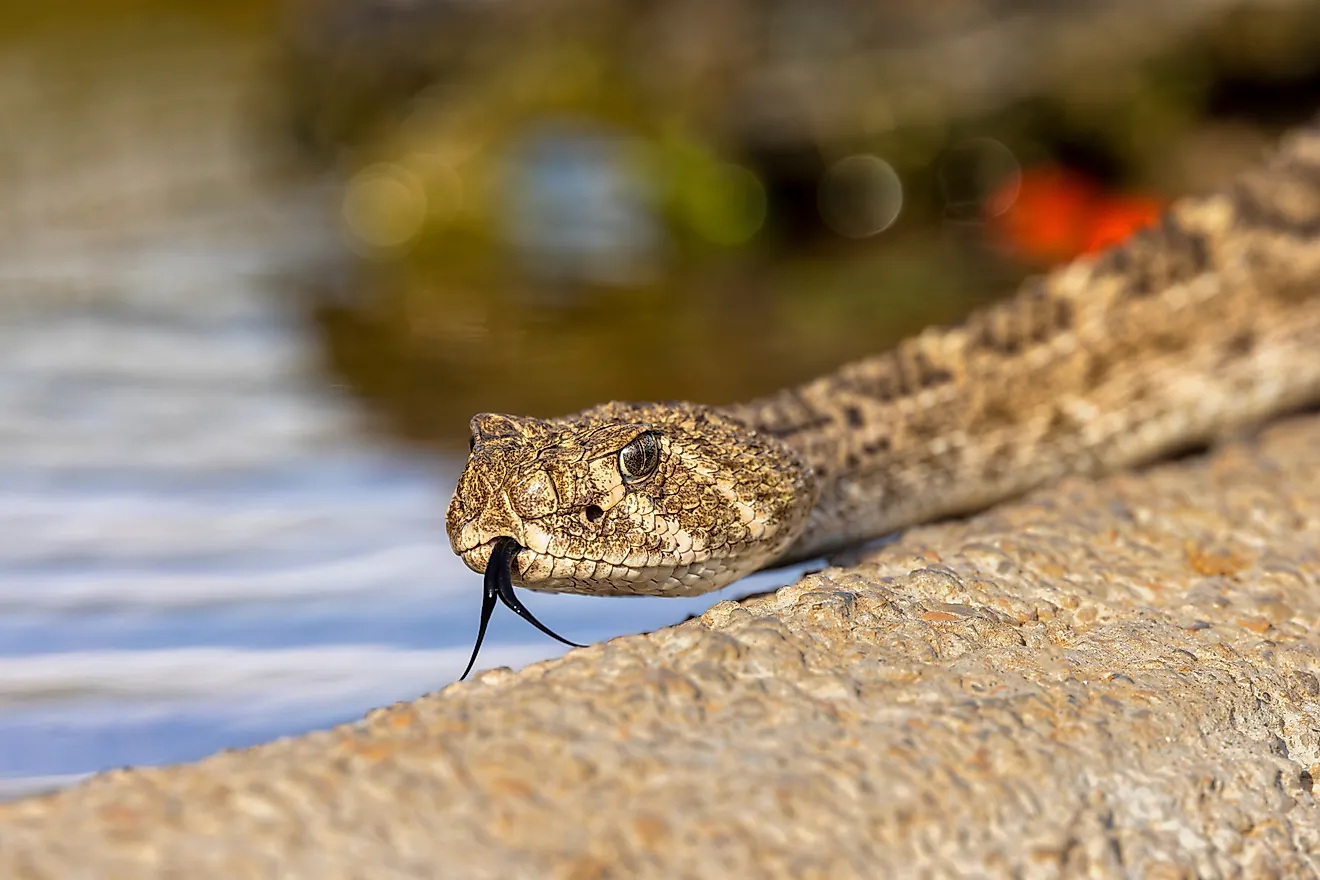
Texas' rivers support a number of aquatic and semi-aquatic species that hunt, shelter, and reproduce along their banks. Cottonmouths (also known as "water moccasins") share the bulk of these environments with nonvenomous water snakes, while copperheads and rattlesnakes tend to inhabit nearby forests and rockier grounds. Local habitat varies considerably beyond that, from the swampy lower Sabine and Neches to the Guadalupe's limestone banks and the upper Colorado's shallow riffles. Warm weather also increases activity in this Southern state, with encounters often occurring where people swim, fish, paddle, or step ashore throughout most of the year.
Brazos River

The Brazos River is home to several aquatic snake species, including a native species found nowhere outside its upper drainage. Brazos water snakes are nonvenomous fish hunters that favor rocky shallows and riffles, where young snakes shelter beneath flat stones along the shoreline. Their restricted distribution also makes conservation of the river especially important for their survival.

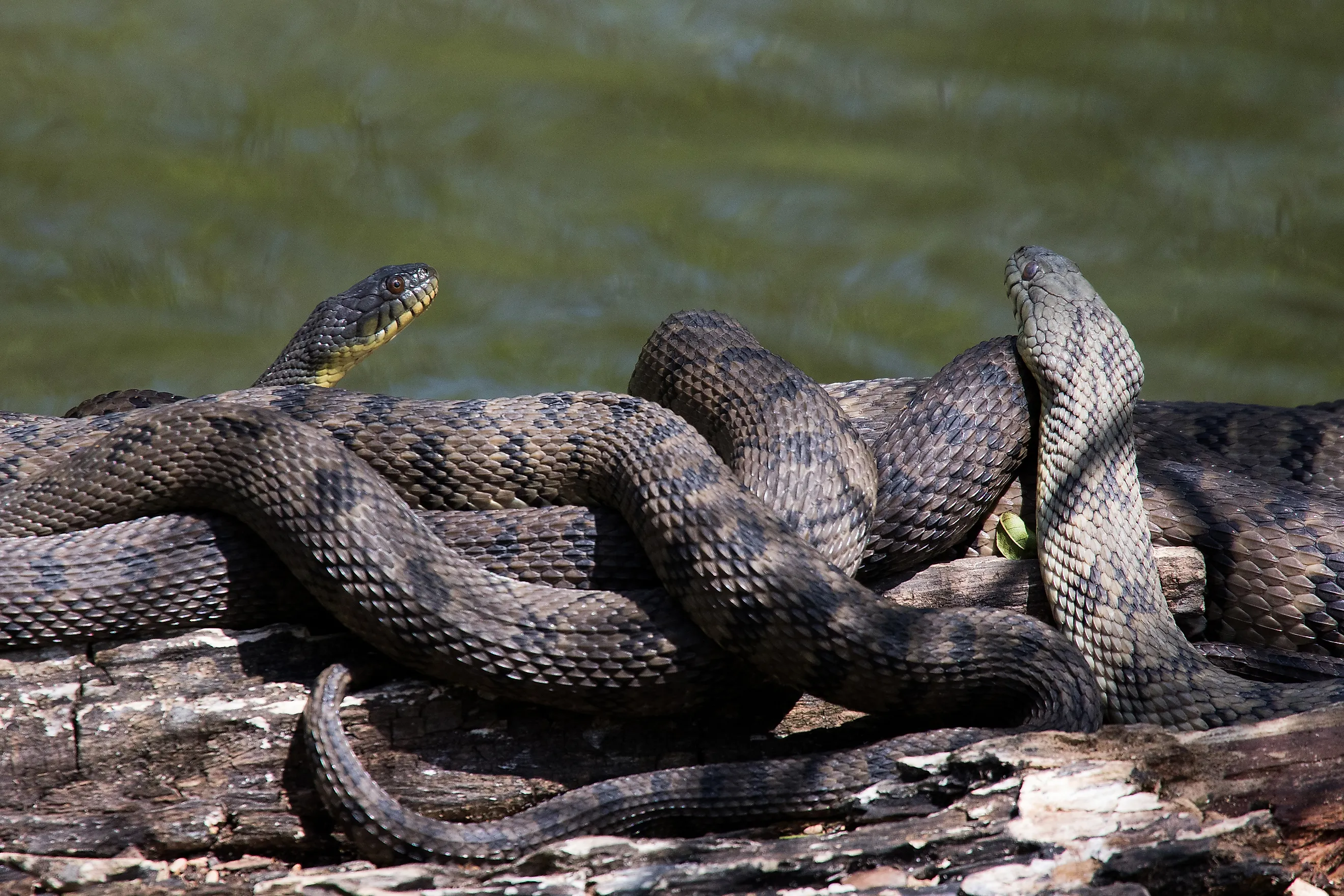
Diamondback water snakes and plain-bellied water snakes also inhabit the system, alongside venomous cottonmouths. Although these species can share waterside habitat, a swimming snake should never automatically be identified as a cottonmouth, which unfortunately happens often.
For paddlers, anglers, and riverbank hikers alike, watching where your hands and feet land around bank cover is more useful than assuming snakes remain solely in the water, as all four species mentioned above commonly rest on land.
Trinity River

Along the lower Trinity River, snakes occupy a floodplain threaded with numerous oxbow lakes and seasonally flooded hardwood forests. These quieter, out-of-the-way waters offer up plenty of feeding grounds beyond the main channel, with fish and amphibians supporting abundant cottonmouths and several nonvenomous water snakes.

In Liberty County, Trinity River National Wildlife Refuge protects part of this habitat, and its reptile checklist includes broad-banded water snakes, diamondback water snakes, and western mud snakes. The latter are secretive aquatic snakes that feed heavily on elongated salamanders, including amphiumas. Copperheads also inhabit the surrounding woods, where fallen leaves conceal them beside logs and tree roots.
Established in 1994, the refuge preserves ecologically vital bottomlands that once covered a much larger area. Its Knobby Knees Trail system leads through forest toward the river, showing how closely woodland and wetland habitats meet along this stretch of the Trinity and its backwaters.
Sabine River

Forming much of the Texas-Louisiana boundary, the Sabine River passes through lush, humid forests before reaching the coastal marshes around Sabine Lake. Inhabiting its wet bottomlands are cottonmouths, while broad-banded and diamondback water snakes tend to hunt in broader freshwater channels and backwaters. Broad-banded water snakes stand out visually with their dark crossbands over a lighter background and feed on fish and frogs.

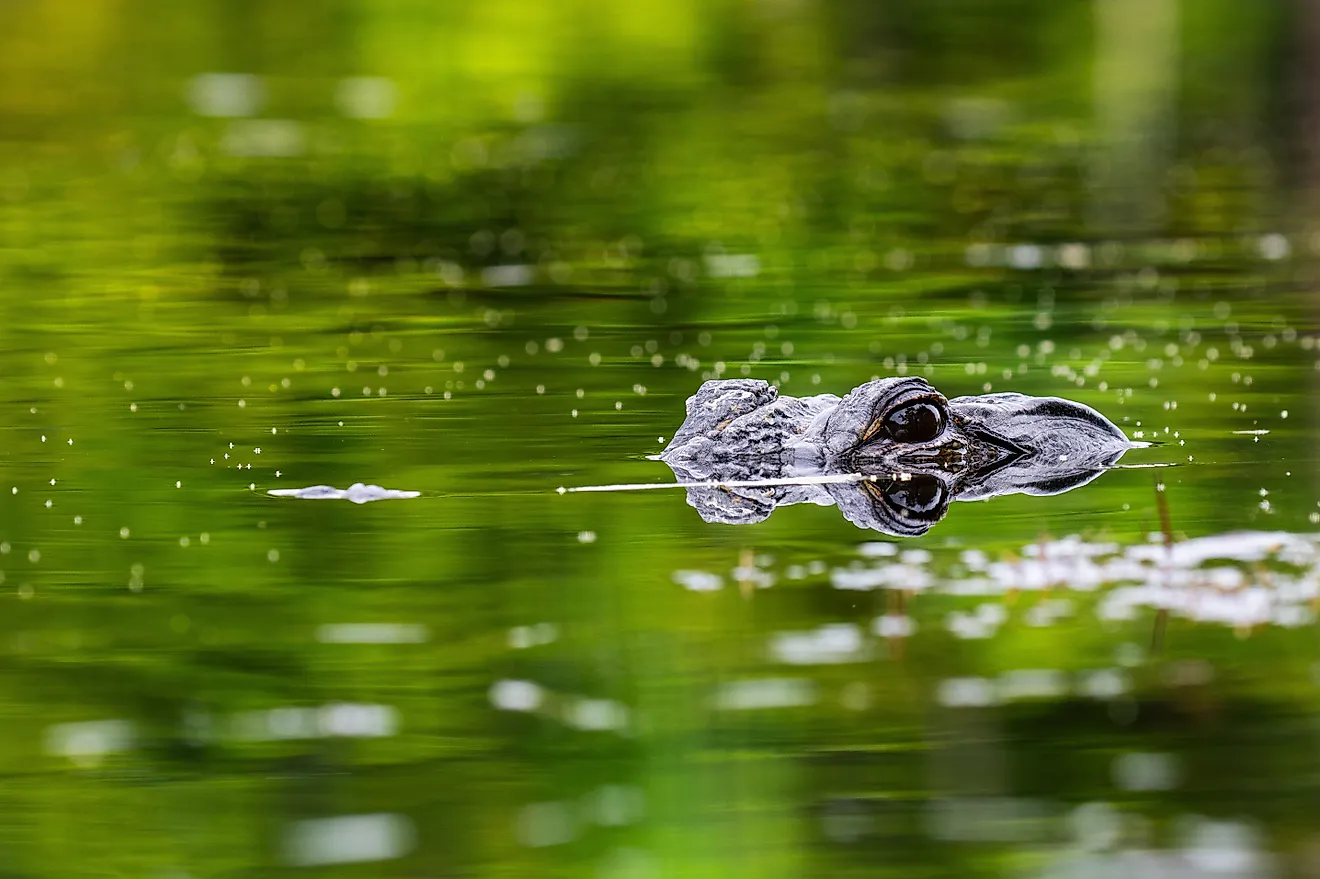
Near the city of Orange, the over 3,300-acre Blue Elbow Swamp provides a distinctive example of this river's lively habitats, with stands of bald cypress and water tupelo growing in saturated ground. The swamp lies within what many also call the "Tony Houseman Wildlife Management Area," where submerged roots, fallen timber, and dense vegetation around nearly every corner give all sorts of reptiles (including American alligators) numerous hiding places.
Warm subtropical conditions in the region often prolong snake activity beyond summer, including occasional appearances during mild winter weather. Water levels also influence encounters, as flooded banks reduce available dry ground and can bring snakes onto higher patches beside trails, roads, and riverfront recreation areas.
Neches River

Snakes along the Neches River can be found in and around everything from muddy shallows to branches above the banks. In the Big Thicket region, western ribbon snakes pursue small prey around wetland edges, while rough green snakes hunt insects and spiders in foliage. These slender, bright green climbers illustrate why watching only the water misses a big part of the river's flourishing reptile community.

As elsewhere in the Deep South, cottonmouths inhabit wetter areas, and timber rattlesnakes occur in surrounding forests, feeding on rodents and other small animals. Sandbars, wooded banks, and adjoining backwaters create changing conditions for all wildlife, with a few exposed surfaces especially ideal for snakes looking to bask, and nearby vegetation providing shelter when temperatures climb during the hottest hours of the day.
Big Thicket National Preserve protects sections of the Neches, including the Upper Neches River Corridor Unit, which extends south from Town Bluff Dam. McQueens Landing provides a boat launch for exploring this stretch.
Guadalupe River

Stretches of the Guadalupe River where swimming and tubing are popular also often support populations of diamondback water snakes, western ribbon snakes, and cottonmouths. The diamondback water snakes here feed mainly on fish, whereas ribbon snakes take small amphibians along the margins.

Around Guadalupe River State Park, uncovered tree roots and rocky banks supply cover beside various pools and shallows, while oak and juniper woodlands nearby extend onto higher ground. Within the park, the Guadalupe also passes beneath limestone bluffs and crosses four natural rapids, creating varied currents and quieter pockets along the banks, too. This mix places many local aquatic species close to terrestrial snakes.
As mentioned, you can swim, paddle, float, or fish along much of the river's frontage. However, when stopping beside overhanging vegetation or stepping out onto shore, leave snakes an unobstructed escape route and avoid reaching into gaps beneath rocks or exposed tree roots.
Colorado River

On the upper Colorado River, snake conservation has largely involved rebuilding the shallow, rocky habitat that dams and sediment altered. In fact, six artificial riffles were constructed below E. V. Spence Reservoir in 1989 to restore habitat for Concho water snakes. Found only in a limited part of central Texas, these nonvenomous snakes have rows of dark brown spots and hunt small fish near the shoreline. Furthermore, their range only includes portions of the Colorado River rather than its entire course through Austin and toward the Gulf Coast.

Thankfully, federal officials removed the species from the threatened list in 2011 after determining that it had recovered substantially. This history makes the upper Colorado, and the state of Texas in general, notable for hosting a specialized native snake whose survival truly depends on the ongoing protection of waterways.
Appreciate these Snake-Friendly Rivers in Texas Today
These river-dwelling snakes in the Lone Star State are both predators and prey within food webs that connect the water to surrounding land. Their presence, however, does not make a river unsuitable for recreation. Just give them room, avoid handling them, and pay attention when moving near the shore. Protecting riverine and shoreline habitats also helps preserve a breadth of important wildlife, including some specialized species found in only small portions of Texas.