The US Reservoirs Holding The Least Water Right Now
Nearly every large American reservoir running close to empty this fall lies in the arid West or in Texas, and for the farms and cities that draw on them, 2026 has been one of the leanest storage years on record. A record-hot March melted a thin mountain snowpack weeks early across much of the West, and heavy irrigation releases through the summer outpaced the runoff coming into the reservoirs.
San Carlos Lake in Arizona and Elephant Butte Reservoir in New Mexico held only about 4% and 5% of their capacity in late October. The three largest reservoirs on the upper Snake River in Idaho and Wyoming sat near 10%. Lake Mead broke its all-time low elevation in October, yet the country's biggest reservoir still holds a larger share of its capacity than any other entry here.
The list below covers reservoirs that hold at least 500,000 acre-feet when full and ranks them by the share of capacity they held in late October 2026, using daily storage reports from federal and state water agencies and starting with the emptiest.
San Carlos Lake, Arizona - About 4% Full

Coolidge Dam was completed on the Gila River in 1928 and dedicated by President Calvin Coolidge in 1930, impounding a reservoir of roughly 900,000 acre-feet on the San Carlos Apache Reservation. NASA's Earth Observatory reported that San Carlos Lake held just 389 acre-feet on May 22, 2026, less than 1% of its capacity. Snowpack in the reservoir's watershed had measured only 2% of the March median that winter. Officials closed the lake indefinitely on June 5 after low oxygen levels killed nearly all of its fish. Inflows in early October raised storage to about 39,550 acre-feet by October 23, according to the US Geological Survey. That still leaves the lake near 4% full. Farmers on about 50,000 acres of the Gila River Indian Reservation and another 50,000 acres of private land in Pinal County irrigate with water stored behind the dam.
Elephant Butte Reservoir, New Mexico - About 5% Full

Elephant Butte Dam has stored Rio Grande water for farms in southern New Mexico and the El Paso area since 1916, in a reservoir that holds about 2 million acre-feet when full. NASA satellite imagery from July 27, 2026, showed the lake at 1.4% of capacity, its lowest level since 1971. The earliest snowmelt on record at the river's headwaters in the southern Rockies worsened several years of extreme drought, and in early August about 13 miles of riverbed through Albuquerque went dry. By August 30, the New Mexico Interstate Stream Commission counted 112.4 dry river miles between Cochiti and Elephant Butte, the most since at least 2007. Irrigation releases ended after July 28, and Texas Water Development Board data put the reservoir at just under 5% of capacity on October 18. Caballo Reservoir, about 25 miles downstream, held roughly 7% of its capacity in late October.
Palisades Reservoir, Idaho - About 9% Full

Palisades Dam on the Snake River was finished in 1957 near the Idaho-Wyoming line, and the reservoir behind it holds about 1.2 million acre-feet of active storage. Bureau of Reclamation storage data for October 22 put Palisades at about 9% of capacity. In mid-September, Reclamation data cited by East Idaho News showed the system's major reservoirs at 8% full. Local groundwater district officials describe that storage as the lowest in the Upper Snake's recorded history, and the closest comparison is the drought year of 1993. Irrigators on the Snake River Plain draw most of their summer water from this reservoir system.
Jackson Lake, Wyoming - About 9% Full

Jackson Lake is a natural glacial lake at the base of the Teton Range that the Reclamation Service dammed in the early 1900s and raised to its present capacity of 847,000 acre-feet in 1916. The dam stands inside Grand Teton National Park, but the stored water is allocated to irrigators downstream in Idaho. On October 22, Reclamation reported about 74,700 acre-feet in Jackson Lake, roughly 9% of capacity. The Snake River enters the lake's north end after flowing south out of Yellowstone National Park, which makes Jackson Lake the first reservoir on the river's main stem.
E.V. Spence Reservoir, Texas - About 9% Full

The Colorado River Municipal Water District finished the dam at E.V. Spence Reservoir in 1969, impounding the Colorado River of Texas just west of Robert Lee in Coke County. The reservoir holds about 517,000 acre-feet at its conservation level, and the Texas Water Development Board tracks it as part of the water supply for Midland and Odessa. Water Data for Texas listed Spence at 9.3% full on October 23, with about 48,200 acre-feet in storage. That is well above the reservoir's record low of 0.2% in September 2012, which followed the 2011 drought, the worst one-year drought in Texas history. Even so, Spence ranks among the emptiest large reservoirs in Texas this fall, along with smaller West Texas lakes such as Twin Buttes and O.C. Fisher near San Angelo.
American Falls Reservoir, Idaho - About 11% Full

American Falls Reservoir is the largest storage reservoir on the Snake River, holding about 1.67 million acre-feet behind a dam first completed in 1927 and rebuilt between 1976 and 1978. Reclamation's October 22 report put storage at about 181,700 acre-feet, or roughly 11% of capacity. American Falls usually absorbs much of the summer irrigation drawdown on the Upper Snake, and in most years water held in Palisades and Jackson Lake upstream helps cushion it. This fall, both of those reservoirs sit even lower, which leaves the whole system starting the winter with very little carryover storage.
Owyhee Reservoir, Oregon - About 12% Full

Owyhee Dam was the tallest dam in the world when Reclamation completed it in 1932, and its reservoir on the Owyhee River extends more than 50 miles into the canyon country of southeastern Oregon. Snowpack in the Owyhee basin measured just 8% of median in March 2026, and the Owyhee Irrigation District reduced its allotment by half an acre-foot, to 3.5 acre-feet per acre. The district then ended deliveries on October 9, six days earlier than its water right allows, to keep more water in the reservoir. Reclamation data show about 87,000 acre-feet in storage on October 20, roughly 12% of the reservoir's 715,000 acre-feet of active capacity. The district typically carries about 30% of the reservoir into the following season.
Blue Mesa Reservoir, Colorado - About 17% Full

Blue Mesa Dam was completed on the Gunnison River in 1966 as part of the Aspinall Unit, creating a 20-mile-long reservoir that is normally the largest body of water in Colorado. Reclamation recorded about 138,900 acre-feet in storage on October 21, roughly 17% of capacity. The Gazette reported in August that Lake Granby now held more water than Blue Mesa, making Granby the state's largest body of water. The foundations of Iola, a settlement abandoned when the reservoir was built in the 1960s, are visible again in the Iola Basin. In 2021, Reclamation released 36,000 acre-feet of Blue Mesa water to help prop up Lake Powell, but there is little water to spare for that purpose this year. Elsewhere on the Western Slope, Green Mountain Reservoir on the Blue River fell to its lowest level since 1963.
Pathfinder Reservoir, Wyoming - About 18% Full

Pathfinder Dam was one of the first dams built under the Reclamation Act of 1902, and its masonry arch across the North Platte River has stored irrigation water for farms in Wyoming and Nebraska since its completion in 1909. The dam was listed on the National Register of Historic Places in 1971. Reclamation's North Platte storage report for October 21 showed 187,302 acre-feet in Pathfinder, about 17.5% of the 1,070,000 acre-feet the agency lists as the top of the reservoir's conservation pool. Reclamation's September operations report had projected Pathfinder to end that month near 177,700 acre-feet, so storage has edged up only slightly since then.
Pine Flat Lake, California - About 18% Full

The US Army Corps of Engineers finished Pine Flat Dam on the Kings River east of Fresno in 1954, creating a reservoir that holds 1 million acre-feet for flood control and irrigation in California's San Joaquin Valley. The California Department of Water Resources reported 178,357 acre-feet in storage on October 21, which is 18% of capacity and 63% of the historical average for that date. Fall drawdowns are normal here, but this one runs deeper than usual. Pine Flat stood at 120% of its historical average for early January after holiday storms, and then a record-hot, dry March melted much of the Sierra Nevada snowpack early. By the end of March, the Kings River snowpack measured 43% of average.
Falcon International Reservoir, Texas - About 20% Full

Presidents Dwight D. Eisenhower and Adolfo Ruiz Cortines dedicated Falcon Dam on the Rio Grande in October 1953, and the United States and Mexico still operate it jointly through the International Boundary and Water Commission. Texas holds 58.6% of the reservoir's 2.67 million acre-feet of conservation capacity, and Water Data for Texas put the Texas share at 20.3% full on October 22. Cities and farms in the border counties along the Rio Grande depend on releases from Falcon and from Amistad Reservoir upstream, which held about 46% of the Texas share at the same time. The lowest Falcon reading in Texas Water Development Board records since 1990 is 8%, reached in April 2000 and again in October 2023.
Choke Canyon Reservoir, Texas - About 21% Full

Choke Canyon Dam was built on the Frio River between 1978 and 1982, and the reservoir behind it holds about 662,800 acre-feet as one of the main water sources for Corpus Christi. Its waters covered the original site of Calliham, a town that began during a 1918 oil-prospecting boom and later moved about three miles south. In January 2026, the City of Corpus Christi announced that Choke Canyon and Lake Corpus Christi had reached a historic combined low of 10%. Choke Canyon alone bottomed out at 7.1% in May, its lowest level since it first filled. Late-summer rain in the Nueces River Basin raised Choke Canyon to about 22% by late September, and it held 21.3% on October 23. The rain did far more for Lake Corpus Christi downstream, which sat at 8.8% in April and reached about 80% by October, high enough to drop it from this list.
Lake Powell, Arizona-Utah - About 22% Full

Lake Powell began filling behind Glen Canyon Dam in 1963 and holds about 24.3 million acre-feet of live storage at full pool, with 1,960 miles of shoreline. On September 15, 2026, the lake dropped to 3,516.62 feet above sea level, a new record low that broke the April 2023 mark of 3,519.92 feet. Supplemental releases from Flaming Gorge Reservoir upstream slowed the decline earlier in the year, and the surface has since risen a few feet. Reclamation data put Lake Powell at 3,521.76 feet and about 22% of capacity on October 21. That leaves roughly 32 feet of water above minimum power pool at 3,490 feet, the elevation below which Glen Canyon Dam's turbines cannot generate electricity.
Seminoe Reservoir, Wyoming - About 22% Full

Seminoe Dam was completed in 1939 in a narrow canyon of the North Platte River in Carbon County. Its reservoir is the uppermost of the large Reclamation reservoirs on the river and holds about 1,017,000 acre-feet at full conservation pool. In early August 2026, WyoFile reported that Seminoe had fallen to 29.4% and sat 12 feet below the elevation used in a near-worst-case water-quality modeling scenario. Reclamation's October 21 report showed 224,569 acre-feet in storage, about 22% of capacity. Snowmelt from the North Platte headwaters fills both Seminoe and Pathfinder, so the thin 2026 snowpack lowered the two reservoirs together.
Lake Mead, Arizona-Nevada - About 26% Full

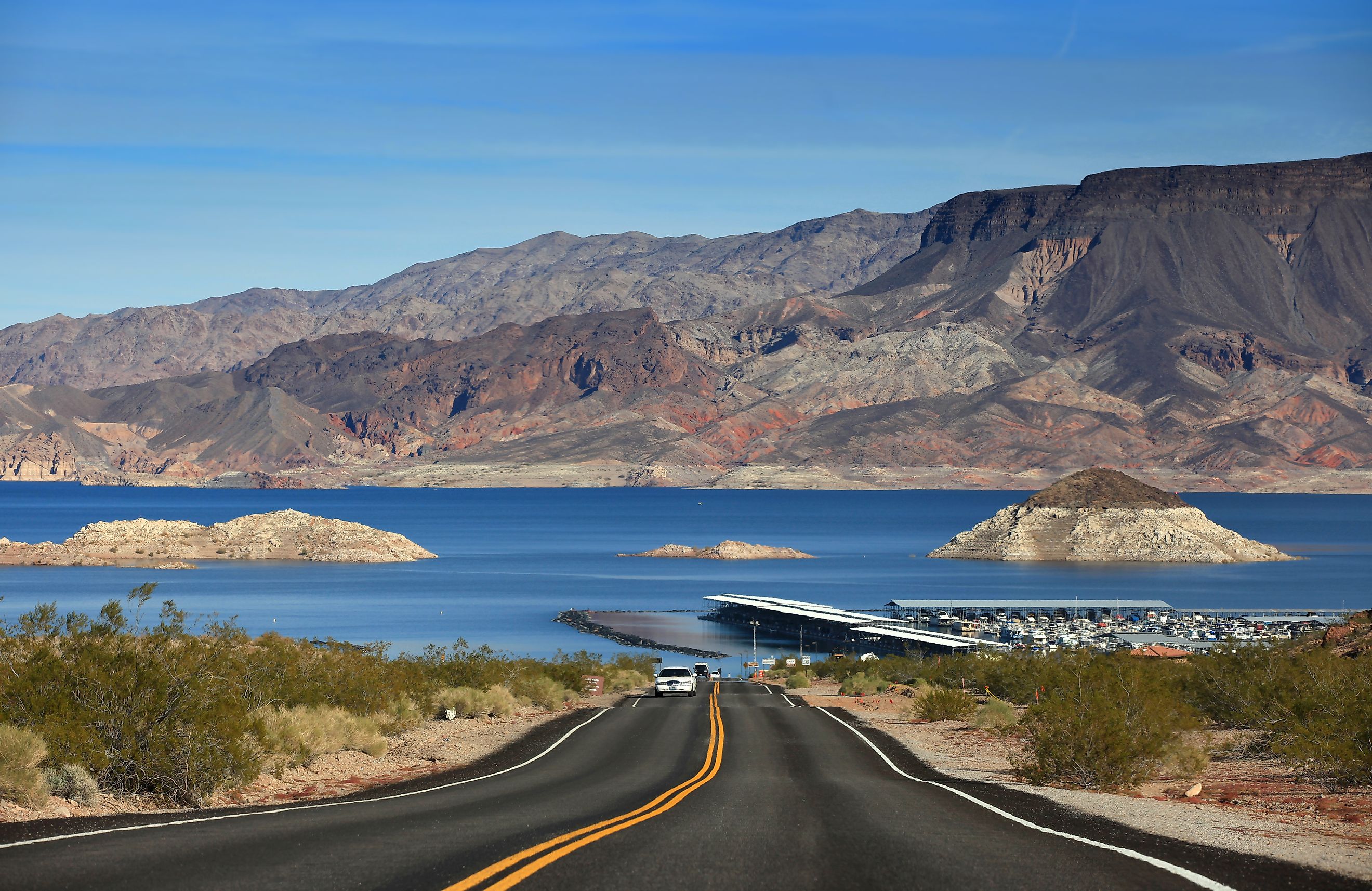
Lake Mead formed behind Hoover Dam after the dam was built on the Colorado River between 1931 and 1936, and it remains the largest reservoir in the United States by total capacity at about 28.9 million acre-feet. NASA has estimated that about 25 million people across the Lower Colorado River Basin rely on its water. In early August 2026, the lake dropped below its July 2022 record low of 1,040.58 feet. Reclamation data show it reached 1,037.18 feet on October 19 and 20, the lowest level since the reservoir began filling in the 1930s. That elevation still equals about 26% of the lake's usable capacity, which places Mead last on this list by percentage despite the new record. Arizona's top water official, Tom Buschatzke, has said publicly that he expects the lake to fall to 1,035 feet.
Why Percentages And Record Lows Tell Different Stories
Percent full and record elevation are separate measurements, which is how Lake Mead can set an all-time low while ranking as the fullest reservoir on this list. The smaller desert reservoirs fluctuate far more in a single bad year, and San Carlos Lake has run out of water at least 20 times since 1930, according to NASA. The Upper Snake system is the sharper warning for 2027, because its three largest reservoirs are all near 10% heading into winter. Water managers across the interior West now need a deep 2026-27 snowpack to rebuild storage before the next irrigation season. In South Texas, Lake Corpus Christi sat in single digits in April and reached about 80% after heavy rain in late summer, a reminder of how quickly one wet stretch can refill a reservoir in a flashy river basin.