How Much A Great Lakes Freighter Weighs Fully Loaded
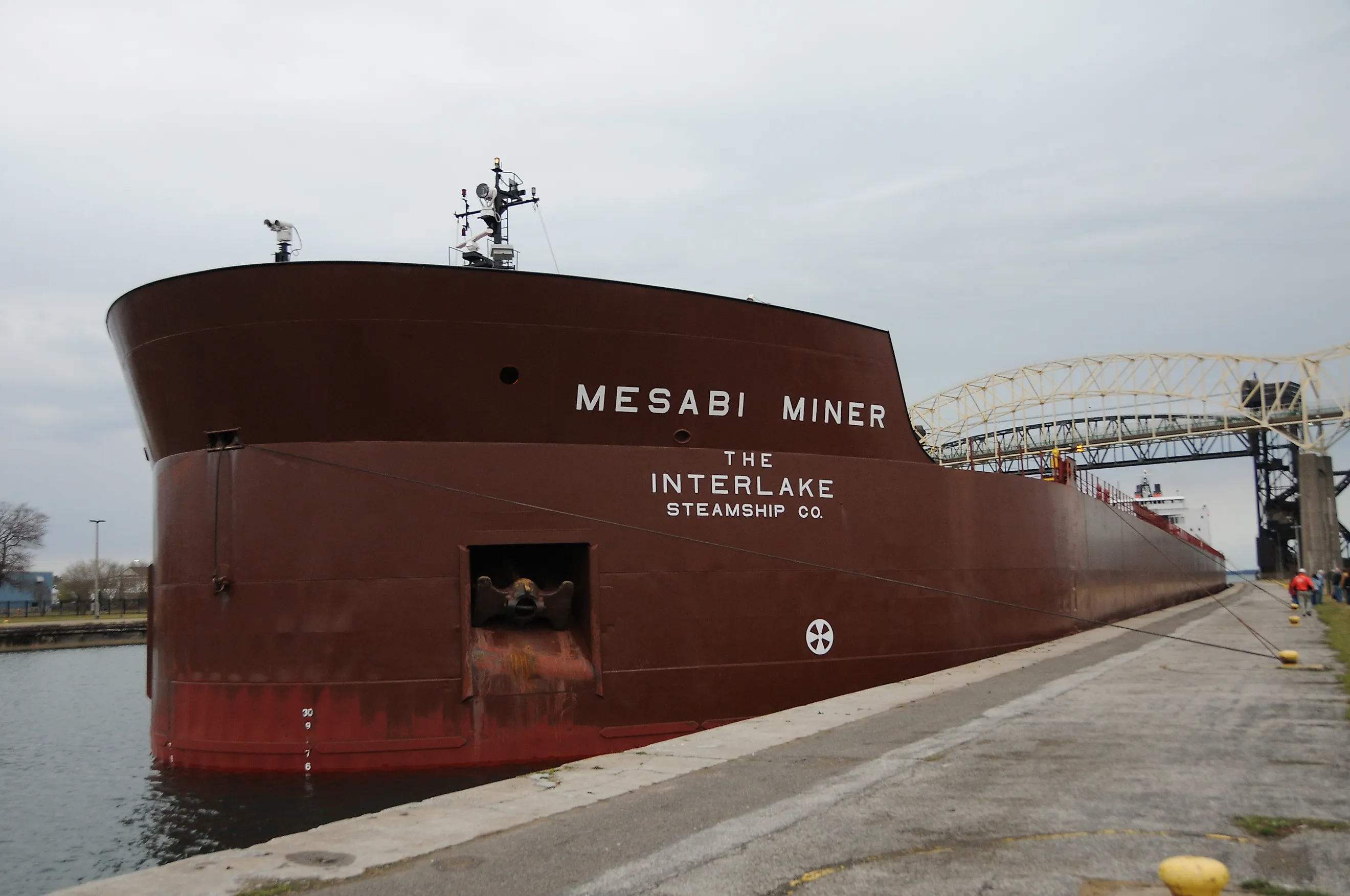
A full iron-ore load puts a Great Lakes freighter such as Mesabi Miner at an estimated 90,000 US tons, or about 180 million pounds. Its listed empty-ship weight and maximum pellet cargo alone total about 88,700 US tons, before fuel and supplies. That load travels aboard a vessel 1,004 feet long and 105 feet wide. Smaller lake freighters carry much less, and even the biggest ships cannot take their maximum cargo on every trip. At loading ports such as Two Harbors, Minnesota, the amount going aboard depends partly on the water beneath the ship. A few inches of usable depth can determine whether hundreds of tons of ore leave the dock.
Mesabi Miner's Cargo Weighs Almost Four Times The Ship

Mesabi Miner's listed lightship weight, covering the hull and permanently installed equipment, is about 17,848 US tons. Its maximum taconite cargo adds another 70,896 US tons. Taconite pellets are processed iron-bearing material carried to steel mills. They account for roughly four-fifths of that combined ship-and-cargo weight.
Those figures use the familiar American ton of 2,000 pounds. Shipping records also use long tons, each weighing 2,240 pounds. Mesabi Miner's specifications give its lightship weight as 15,936 long tons and its taconite capacity as 63,300 long tons.
Fuel increases the total further. The ship's listed fuel-oil supply alone weighs about 586 US tons. Water carried for use aboard and other operating supplies also contribute to the loaded weight.
Cargo Capacity And Total Ship Weight Measure Different Things

Paul R. Tregurtha, the Great Lakes' longest ship at 1,013.5 feet, can carry 76,160 US tons of taconite pellets. That is the operator's 68,000-long-ton capacity converted into American short tons. The vessel itself adds substantial weight to that cargo. Its coal capacity is different: 71,000 US tons. Coal occupies more space per ton than ore pellets, so cargo type helps determine when the holds are full.
The 639-foot Mark W. Barker has a listed capacity of about 26,000 tons, less than half Tregurtha's pellet capacity. Its smaller dimensions allow deliveries into Cleveland's Cuyahoga River.
Those cargo weights differ from the gross tonnage listed in a ship's registry, which measures enclosed size using a volume-based calculation. It cannot be added to cargo weight. Confusingly, the ore trade also calls a 2,240-pound long ton a "gross ton."
A Loaded Freighter Pushes Aside Its Own Weight In Water

As ore pours into a freighter, the hull settles lower. More of the hull goes underwater, pushing aside additional water. The upward buoyant force increases until it balances the weight of the ship and everything aboard. A vessel weighing 90,000 US tons therefore displaces 90,000 US tons of lake water. This total floating weight is called displacement. The hull's enclosed space lets a steel ship displace that much water before water reaches its open deck. Adding cargo increases the submerged portion, which increases the ship's draft: the vertical distance between the waterline and the bottom of the hull. Mesabi Miner's broad, long hull spreads its load over a large underwater footprint. Its draft changes as cargo is loaded or removed, even though its length and width stay the same. A loaded passage and a return trip with empty holds can expose noticeably different amounts of the ship's painted sides.
A Few Inches Of Water Can Leave Hundreds Of Tons Ashore

Lake Superior's deep water gives a freighter plenty of room beneath its keel. The constraints appear along the route, especially in dredged harbor approaches and connecting channels. The ship must pass its shallowest usable stretch with adequate clearance underneath. Loading to a ship's maximum cargo capacity makes no sense if that load puts its bottom too close to the channel bed.
A single inch of lost draft can reduce a large freighter's cargo by hundreds of tons. The amount varies by vessel, and a shallower allowable draft requires a lighter load. Low lake levels can reduce the available depth. Sediment accumulating in a harbor can do the same, which is why dredging affects the tonnage delivered on each sailing. A ship with space remaining in its holds may already be carrying the heaviest load its route permits.
Unloading Replaces Some Cargo Weight With Ballast Water

At the receiving dock, a self-unloading freighter can shed tens of thousands of tons within hours. Paul R. Tregurtha uses an onboard conveyor system and a 260-foot boom to empty its five cargo holds in about eight hours. Removing cargo reduces the ship's weight; taking on ballast offsets part of that reduction.
The crew adjusts water in dedicated ballast tanks to keep the ship properly balanced and operating safely. Ballast helps maintain stability and sufficient immersion for propulsion. It also helps control trim, the difference between the drafts at the bow and stern.
An empty cargo hold therefore does not mean the ship has returned to its bare lightship weight. Fuel remains aboard, and ballast can add a substantial load of its own. Crews coordinate cargo handling and ballast operations because both change the ship's weight and how that weight is distributed.
The changing waterline also provides a way to weigh a shipment. Surveyors read draft marks painted on the hull and use the ship's own tables to work out its displacement. Comparing readings before and after loading reveals the weight added aboard. They account for changes in ballast and fuel so those weights do not get mistaken for cargo. Water density enters the calculation, too. The readings also need adjustment for trim, since the bow and stern can sit at different depths. The painted numbers show how deeply the freighter sits in the water. Its tables translate that depth into weight.