How Many Islands Are In The Great Lakes
The Great Lakes are much closer to an inland sea than traditional lakes, especially in light of their large number of islands. Estimates put the total number of islands in the Great Lakes at close to 35,000. If calculated based on available figures, the number is closer to 31,000 islands. However, these islands are not spread out evenly, with the vast majority of them sitting in Lake Huron, and only a tiny amount within the smallest lake by volume: Lake Erie.
Lake Huron's vast network of islands

Lake Huron has more than 30,000 islands, accounting for more than 85% of the total islands in the Great Lakes. Because of these islands, Lake Huron has the longest overall shoreline of all the Great Lakes, accounting for 3,827 miles.
Scientists categorize these islands into three general types. The first are limestone and dolostone features, including the Manitoulin Island, while the second are archipelagos in Georgian Bay and the North Channel, and small groups of islands nestled in the Saginaw Bay. Saginaw Bay, which covers about 1,143 square miles, has the largest freshwater coastal wetland system in the US.
The islands here tend to be largely undisturbed and tiny, such as the 252-acre Charity Island on the Saginaw Bay, whose only human residents were lighthouse operators from 1857 to 1939. Lake Huron also contains the largest freshwater island in the world at Manitoulin Island, with a length of 100 miles and an overall area of 1,068 square miles. The island is accessible by ferry or a swing bridge in Ontario.
There are human-occupied islands as well in Lake Huron, such as Mackinac Island. About 8 miles of shoreline, this island is a popular summer destination, where the only way to get around is on foot, bike, or by horse-drawn carriage, as cars are banned here.
Lake Superior's national park island

Lake Superior has more than 400 islands, with some estimates putting that number closer to 500, ranking it second in terms of overall island coverage. These islands are concentrated mainly in two archipelagos: one around a national park, and another on a national lakeshore.
At 850 square miles, Isle Royale National Park protects both the 45-mile-long by 9-mile-wide island itself and more than 400 islands in an archipelago surrounding Isle Royale. This island was formed by the end of the last Ice Age, but also has evidence of much older geological events, such as a billion-year-old greenstone lava flow that left behind copper underneath layers of volcanic rock. Due to its remote nature and difficult winter conditions, Isle Royale National Park is the only national park that shuts down during the winter.
The other major island archipelago is the Apostle Islands National Lakeshore with 21 islands along the Bayfield Peninsula. They often draw in visitors due to their beautiful red sandstone cliffs, with caves hidden beneath the water, and a large number of historic lighthouses. In 2026, there was a proposal to redesignate these islands into a national park.
Lake Michigan's bear islands and isolated kingdom

Lake Michigan has more than 100 islands, with the largest concentration being in its northern section. As the lake is entirely within U.S. borders, all of these islands are owned by the U.S. Despite this smaller number, several of the islands have held immense cultural importance to Native Americans, including North and South Manitou Islands.
These islands are today part of the Sleeping Bear Dunes National Lakeshore, which hearkens back to an Anishinaabek legend. According to the story, a mother bear was attempting to cross the lake to reach the shore with her two cubs. Unfortunately, they drowned and became two islands just off the shoreline. Geologically speaking, the islands were part of a ridgeline of limestone that was covered by glacial debris, and today only the top of this limestone is visible as islands.
The largest island in Lake Michigan is Beaver Island, a 58-square-mile feature that is part of an eight-island archipelago. This island was first found by the French in the 1600s, but it is best known for being a "kingdom" led by James Jesse Strang. This Mormon leader move his folllowers to this island in 1847, where he ruled as a king. He was assassinated in 1856, and his followers were driven off, but historic buildings still exist from that time period in the village of St. James.
Lake Ontario's island entry into a vast archipelago

Lake Ontario is the smallest of the Great Lakes by surface area at 7,340 square miles, and contains more than 100 islands. Some of these are sanctuary islands such as Galloo Island, a 2,000-acre feature about six miles off the New York coast, which contains an 1820 lighthouse and former accommodations. During Prohibition, the island was used by bootleggers.
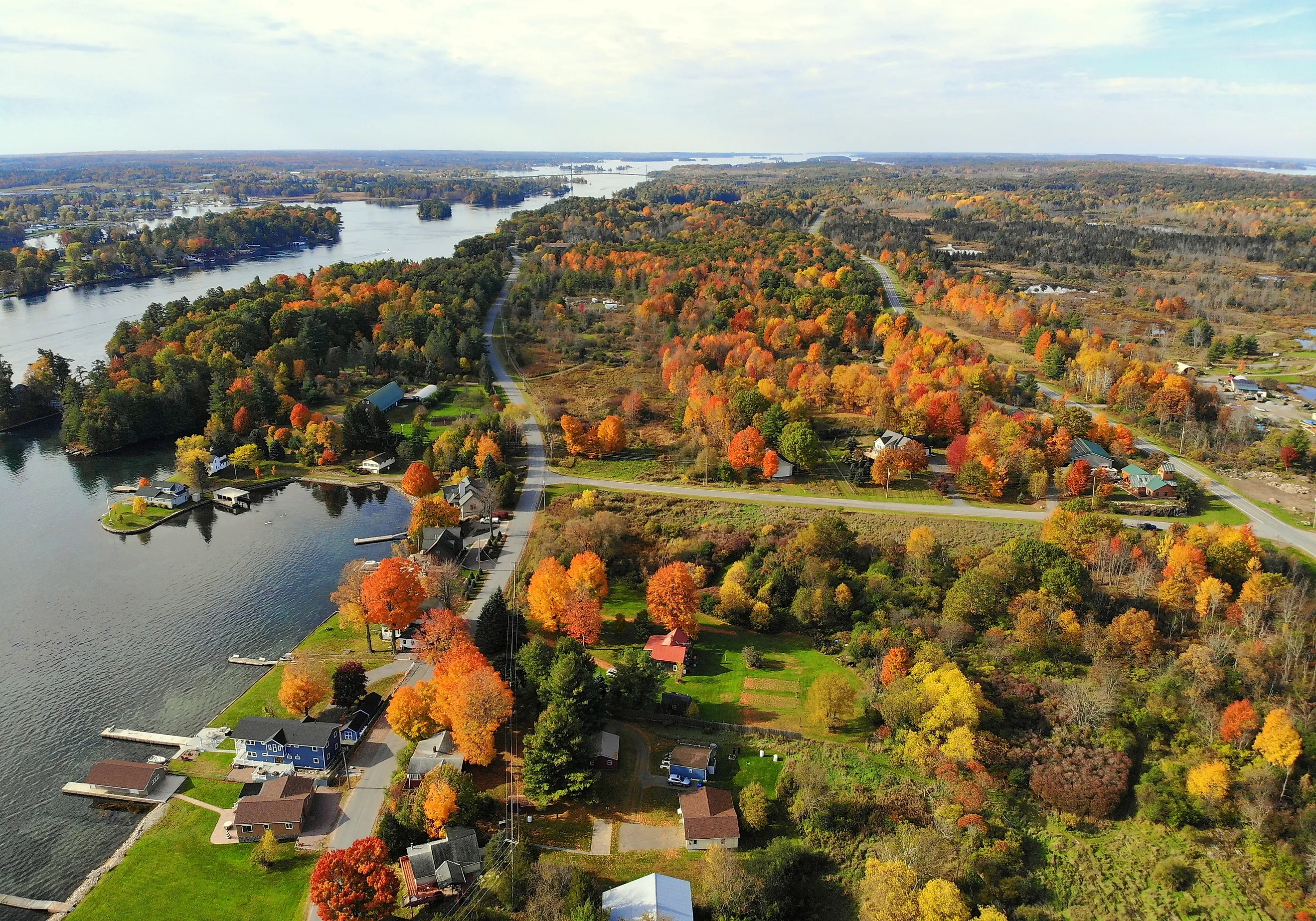
Although the lake itself doesn't have many islands, the point where it flows into the St. Lawrence River contains an archipelago of more than 1,800 islands known as the Thousand Islands. At the very tip of this archipelago is the largest island contained within Lake Ontario: Wolfe Island.
At 18 miles long by 5 miles wide, it is about 48 square miles. At one time, it produced a lot of cheese, with Kraft having a factory on the island. Today, Wolfe Island is a popular recreational spot, home to the Big Sandy Bay Beach, cycling trails through farmland and lakeshore, restaurants, and an art gallery.
Lake Erie's shallow islands

Lake Erie has between 30 and 50 islands, depending on estimates. Either way, it has the fewest number of islands in its shallow waters, with an average depth of 62 feet and a maximum depth of 210 feet, the shallowest of any of the Great Lakes. Most of its largest islands are located on the southern end of Lake Erie towards Ohio.
Many of these islands today are state parks, such as Middle Bass Island State Park. In the 19th century, this island was a major winemaking facility, with Lonz Winery operating on the island. The rich sediments along Lake Erie made for rich wine-producing grapes. In fact, locals often called Ohio's Lake Erie islands the Wine Islands.
Ohio's islands also contain ancient grooves left behind by glaciers that flowed over limestone. Kelleys Island has a prominent glacial groove, which was protected from quarrying by the Kelley Island Lime & Transport Company.
The largest island on Lake Erie is on the Ontario, Canada side: the more than 10,000-acre Pelee Island. Today, it has a winery, hiking trails, beaches, and a lighthouse.
There are more islands under the surface
An island is essentially a portion of land that is surrounded by water, but there are land features that are found just under the surface of the Great Lakes as well. Commonly known as shoals, some of them are ancient, such as a 1.1 billion-year-old Superior Shoal, a volcanic rock formation located under 20 feet of water in Lake Superior.
Islands in the Great Lakes are what remains of the land prior to the formation of the lakes themselves, which reached roughly their present levels around 3,000 years ago, thousands of years after the last Ice Age ended. While most of these islands are relatively isolated and small, others contain natural wonders from the redstone cliffs of the Apostle Islands to the wilderness of Isle Royale National Park.