The Best Places to Visit in Michigan's Upper Peninsula
Michigan's Upper Peninsula is rugged, sparsely populated, and a roaring good time. Its sprawling wilderness and laid-back towns invite four-season adventurers to buck the beaten path and delve into one of America's lesser-known treasures. I was fortunate enough to roll through this part of The Great Lake State earlier in the summer. I was greeted with pleasant conditions and friendly faces the whole way. Here are some of the standout places I found.
Mackinac Island

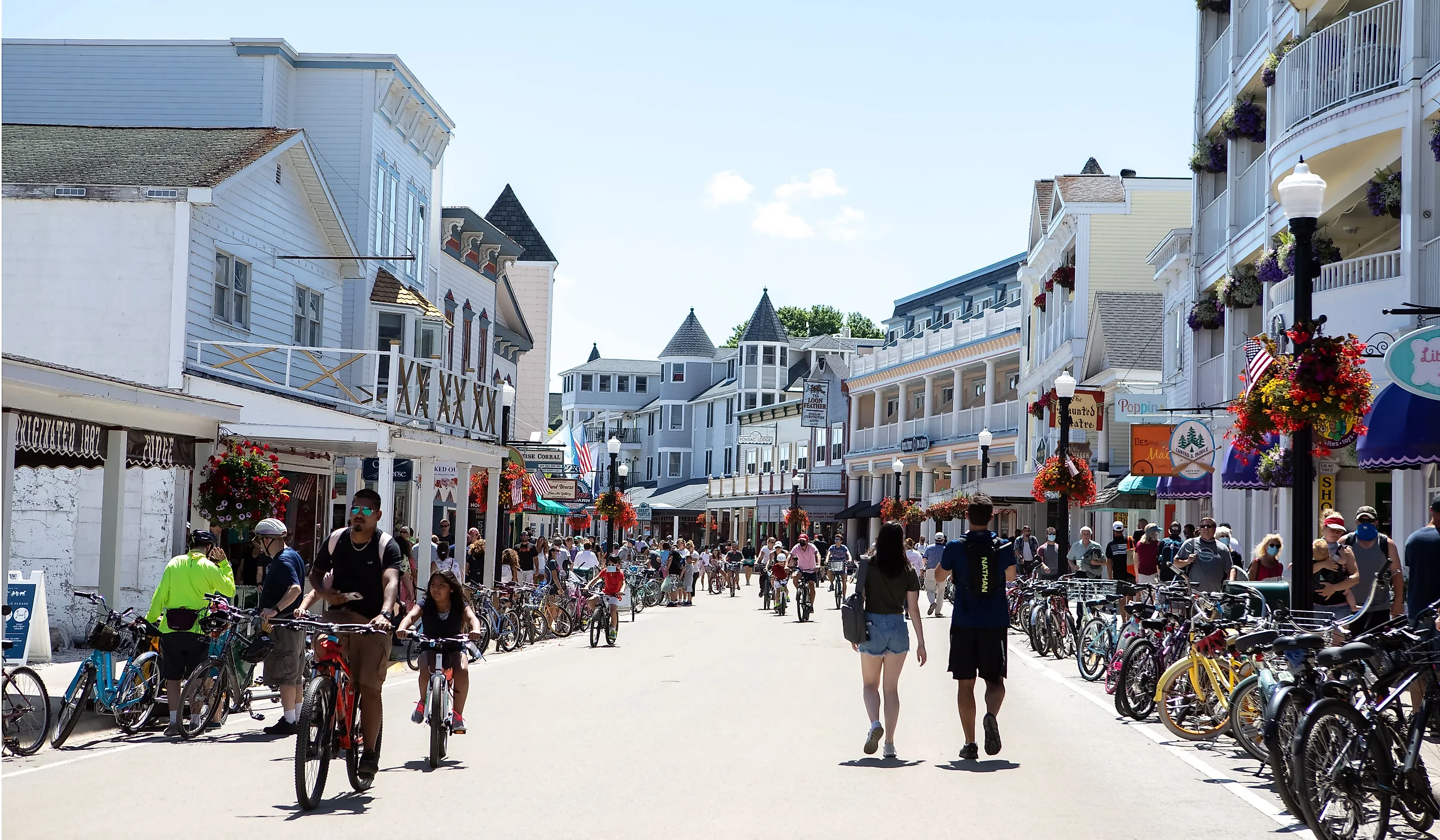
This first one comes with a bit of an asterisk (seeing as it floats between the Upper and Lower Peninsula), but Mackinac Island is so enthralling that it deserves to kick off our list. A 20(ish)-minute ferry ride from either St. Ignace or Mackinaw City brings visitors to a truly magical and timeless enclave. Mackinac Island has been car-free since the turn of the 20th century. Instead, the hordes of summertime tourists (and a handful of permanent residents) can traverse the 4.35 square-mile island by foot, bicycle, or even horse-drawn carriage (there are approximately 500 working horses on site).
Since the first point of arrival (i.e. Main Street) is dense with commercial attractions, I chose to start things off on foot. After perusing the Victorian architecture, touring Fort Mackinac, hiking onwards to the iconic Arch Rock, and treating myself to the local culinary delights (the fudge is world-famous for a reason), I then rented a one-speed bike for $11/hour and did a leisurely lap of the 8-mile perimeter road, which also doubles as the Native American Cultural History Trail. 82% of this forested limestone rock falls within the Mackinac Island State Park boundary. So even though the initial strip looks quite developed (albeit in a tasteful way), the majority of the island is composed of serene nature.
St. Ignace

Speaking of St. Ignace, this seat of Mackinac County is more than just a ferry port for Mackinac Island. St. Ignace has a rich history (it is the third-oldest continuously-inhabited city in the US), it is a designated Michigan Trail Town (a sliver of the over 4,600-mile North Country National Scenic Trail passes along the waterfront), it has a cool state park of its own (i.e., Straits State Park) that overlooks the incomparable Mackinac Bridge, it has an engaging main street (i.e., North State Road), and, perhaps most importantly, it is the gateway to the entire Upper Peninsula. I only had 24 hours in St. Ignace on the bookends of the Mackinac Island excursion, but it was enough to leave an imprint and stoke curiosity for the future.
Munising

From St. Ignace, my girlfriend and I cut across to the southern shore of Lake Superior. The first major community we encountered was Munising - a cute, welcoming, but generally unassuming spot that served us well for a lunch break and offered several roadside viewpoints (there are a lot of them between here and Marquette). With that said, Munsing is also a launching point for the hardwood forests, ice caves, and 42 miles of expressive sandstone shoreline that constitute Pictured Rocks National Lakeshore. Last but not least, Munsing is a stone's throw from the 13,500-acre Grand Island - which visitors can explore by foot, bike, or bus (which is operated by the ferry service and includes a 3-hour narrated tour of all the hot spots).
Marquette

Marquette was the surprise hit of my Upper Peninsula road trip. The largest city on the Upper Peninsula is vibrant and unpretentious and strikes a perfect balance between creature comforts and classic northern wilderness. North 3rd Street and Washington form about a mile-long, L-shaped downtown social scene - most of which is within view of the largest of the Great Lakes. Live music drew us to Blackrocks Brewery, which is one of the better craft beer setups that I encountered (and Michigan has a lot of them). In between bands, I strolled the rest of the aforementioned L, as well as a few random tangents. Each building and each business has a unique look to it while somehow also fitting within a shared overall theme. There are stately red-brick structures, a matinee-theater-turned bistro (i.e., Delft), classy distilleries, alternative taverns, understated bookstores, colorful street murals, waterfront gazebos, and on and on it goes. Marquette has a large footprint, and so it also incorporates natural attractions such as Sugarloaf Mountain and Presque Isle Park - the latter of which we'll explore a bit further.
Two Natural Attractions:
Michigan maintains 103 state parks and five national parks, but it also boasts a slew of local parks, lookouts, falls, etc. Since they are smaller in scale (though not in impact), they are easy for visitors to skip over. That's the beauty of an exploratory road trip. Sometimes a highway sign catches you at just the right moment, and sometimes a bathroom break leads to an unexpected find. Here are two such spots that I'd like to present to prospective Upper Peninsula travelers.
Presque Isle Park

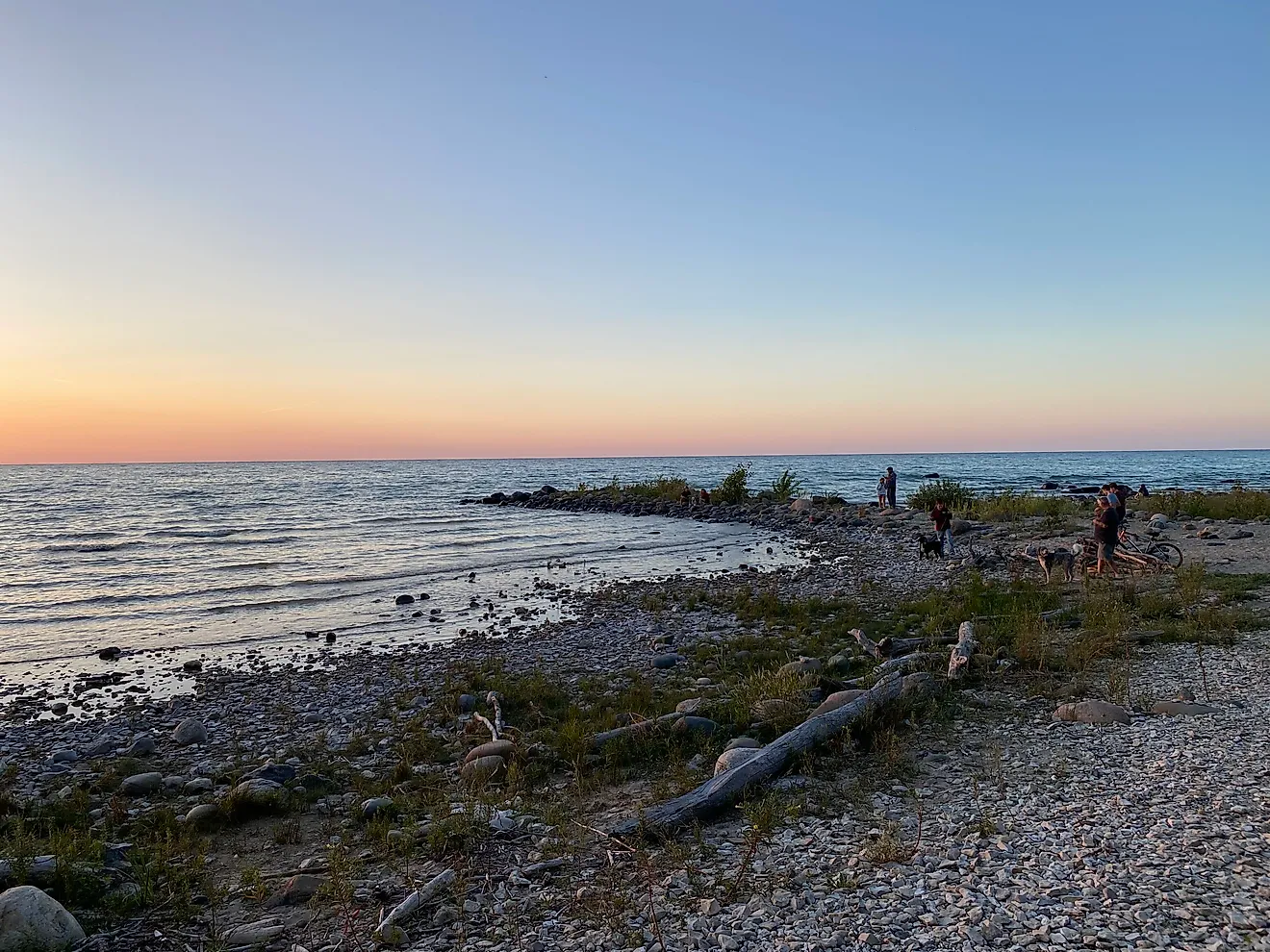
Though it falls within Marquette's city limits, Presque Isle Park sits far enough beyond downtown that the uninitiated could easily talk themselves out of making the side trip. That would be a mistake. Presque Isle Park is large, immaculate, and full of wooded trails, pebble beaches, hidden coves, and stunning shorelines (don't miss the "Black Rocks,'' after which the local brewery takes its name). This micro peninsula makes a great place for a morning jog, a sunset stroll, or an all-day summer hang. On a sunny Friday evening in June, there were just enough people to create a sense of community but not so many as to detract from the introspective experience.
Canyon Falls

During my trip from Marquette to the Keweenaw Peninsula, a fortunate pee stop led me to the Canyon Falls trailhead—one of those happy van life accidents. This brief yet scenic woodland walk runs alongside the Sturgeon River and offers a glimpse of the expansive North Country Trail. While the main highlight isn't the tallest waterfall you'll ever encounter, the modest effort required to reach it, along with the surrounding forested canyon scenery, makes the turnaround point quite rewarding.
Keweenaw Peninsula

I wrote extensively about the Keweenaw Peninsula in a previous piece, so I won't go into too much detail here. Just know that no trip to northern Michigan is complete without visiting this geo-cultural gem. The Keweenaw Peninsula, located in the northwest corner of the state, extends far into Lake Superior as if reaching toward the Canadian shore across the water. Because of this, it has a unique natural, social, and historical character. Get one last taste of small-town life at the welcoming hub of Houghton, learn about the area's copper mining history at Quincy Mine or the Keweenaw National Historical Park Visitor Center in Calumet, take a side trip to the charming village of Eagle Harbor, and head up Brockway Mountain for a panoramic view of the lush green forests, the deep blue waters, and our final stop on this Upper Peninsula adventure…
Copper Harbor

Copper Harbor is the northernmost community in Michigan, located at the tip of the Keweenaw Peninsula. Its remote location has given it a unique character, with vibrant, trinket-filled shops, and a welcoming, eccentric community. If you're searching for your people but haven't found a place to call home, don't miss a visit to Copper Harbor. It offers a great spot for a long weekend getaway and marks the beginning of Highway US 41, which extends all the way to Miami, Florida. The town also serves as the gateway to Isle Royale National Park (more details shortly). Additionally, the outskirts are home to Estivant Pines Nature Sanctuary, Michigan’s last old-growth white pine stand, and nearby is Fort Wilkins Historic State Park, another famous Michigan fort. We would have stayed much longer if not for some car trouble—an unfortunate part of van life.
Parting Thoughts: Isle Royale National Park

In my article about the Lower Peninsula, I included several Food for Thought segments where I encouraged both myself and readers to visit additional places with rave local reviews. The ultimate mental feast has to be Isle Royale National Park—one of the least-visited national parks in the country. But make no mistake, its low attendance isn't due to a lack of attractions. Instead, it’s because it can only be reached by a lengthy ferry ride or a hired seaplane, combined with minimal infrastructure (just hiking trails and campsites), and authentic wildlife (wolves and moose). These factors keep the casual crowds away. However, I personally yearn to see what’s probably the wildest place in the contiguous United States. So, the next time I visit Copper Harbor or Houghton (another ferry port and the park's mainland headquarters), I definitely will.