8 Snake Infested State Parks In The Great Lakes
The Great Lakes region has exactly two rattlesnake species across eight states and one province, which makes it one of the least venomous parts of the country. Michigan has 18 snake species and one of them is venomous. What the region does have is an unusual concentration of rare and protected snakes, including one that was federally endangered, recovered, and is now held up as a conservation success. The parks below hold the most snakes in the region. Almost none of them hold anything dangerous.
Kelleys Island State Park, Ohio

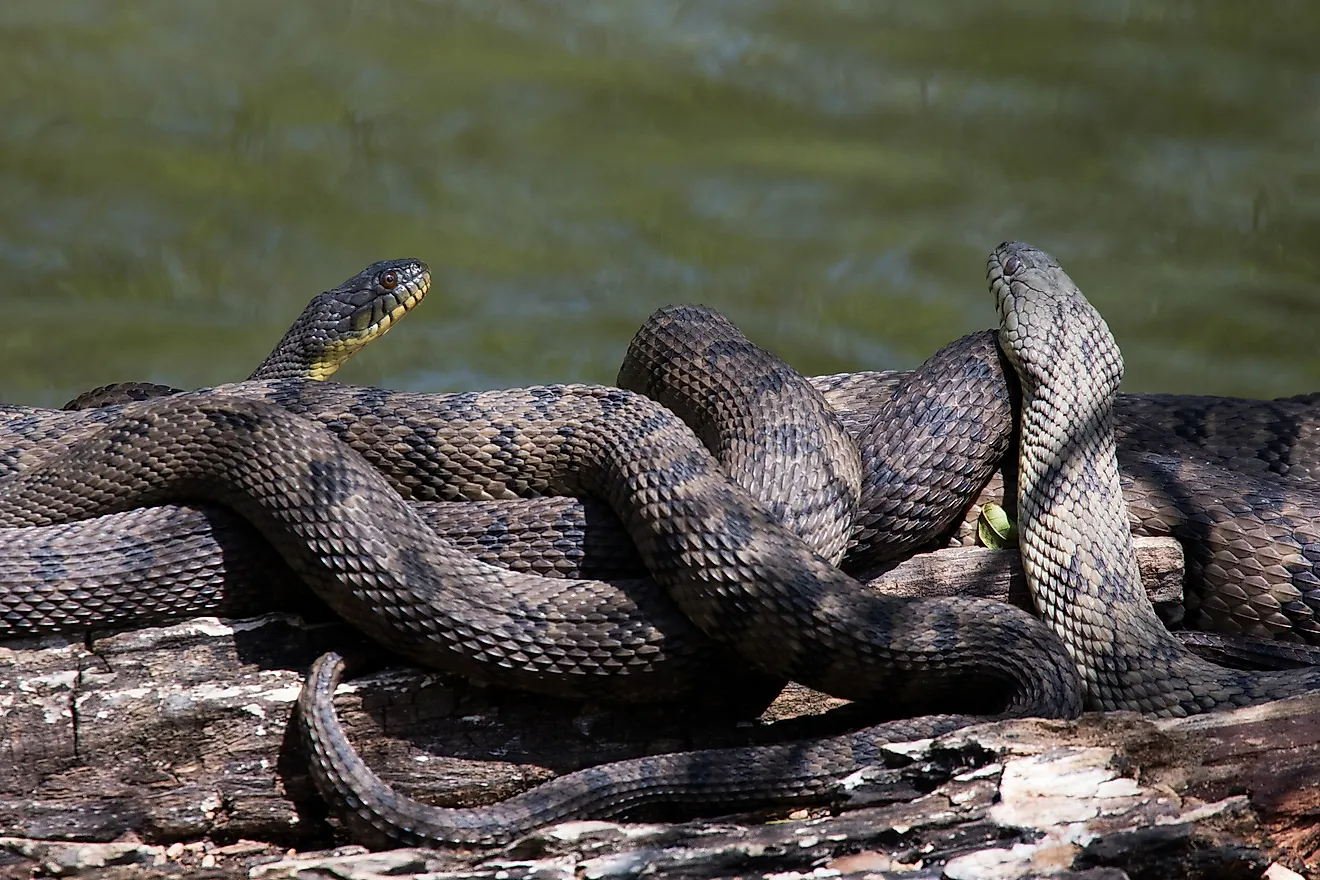
The best snake story in the Great Lakes belongs to a subspecies found nowhere else on Earth. The Lake Erie watersnake is restricted to the rocky shorelines of the western Lake Erie islands, and Kelleys Island is one of its strongholds. It was listed as federally threatened, recovered strongly enough to be removed from the list, and is now cited as one of the clearer endangered species successes in the Midwest.
It is entirely harmless, it is numerous on the limestone shoreline, and it has an unexpected job: it eats enormous quantities of invasive round goby, which now make up the bulk of its diet.
Devil's Lake State Park, Wisconsin

Wisconsin's most visited state park is also widely described as one of the most snake-heavy places in the state. The 374-acre lake sits in the Baraboo Range inside quartzite bluffs, and the park supports northern watersnakes, red-bellied snakes, black rat snakes and timber rattlesnakes. Of those, only the timber rattlesnake is venomous.
The bluffs are the reason. Talus slopes and rock outcrops with southern exposure are exactly what timber rattlesnakes need for communal winter dens, and Devil's Lake has them in quantity.
Indiana Dunes State Park, Indiana
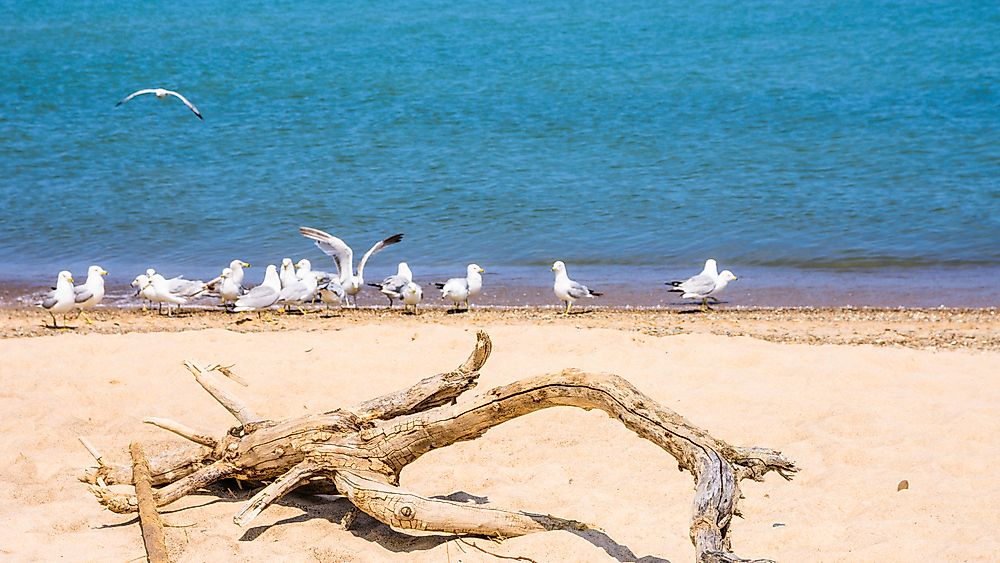
The dunes at the southern tip of Lake Michigan compress an extraordinary number of habitats into a small area, and the reptile list reflects it.
Sand, marsh, oak savanna and wetland sit within a few hundred meters of each other, supporting eastern hognose snakes, fox snakes, garter snakes and watersnakes. The hognose in particular is a dune specialist and a world-class actor, flattening its neck and playing dead when alarmed.
Nothing here is venomous. The hognose is the one most often reported as a rattlesnake and is entirely harmless.
Peninsula State Park, Wisconsin

Door County's limestone peninsula produces habitat you would struggle to design on purpose. The Niagara Escarpment runs through the park as exposed dolomite cliff, cracked and fissured, with shoreline below and mixed forest above. Those fissures hold heat and provide secure overwintering space, which is why rocky escarpment country consistently supports more snakes than the surrounding land.
Door County is north of the timber rattlesnake's Wisconsin range, so the species here are garter snakes, watersnakes, red-bellied snakes and smooth green snakes.
Ludington State Park, Michigan
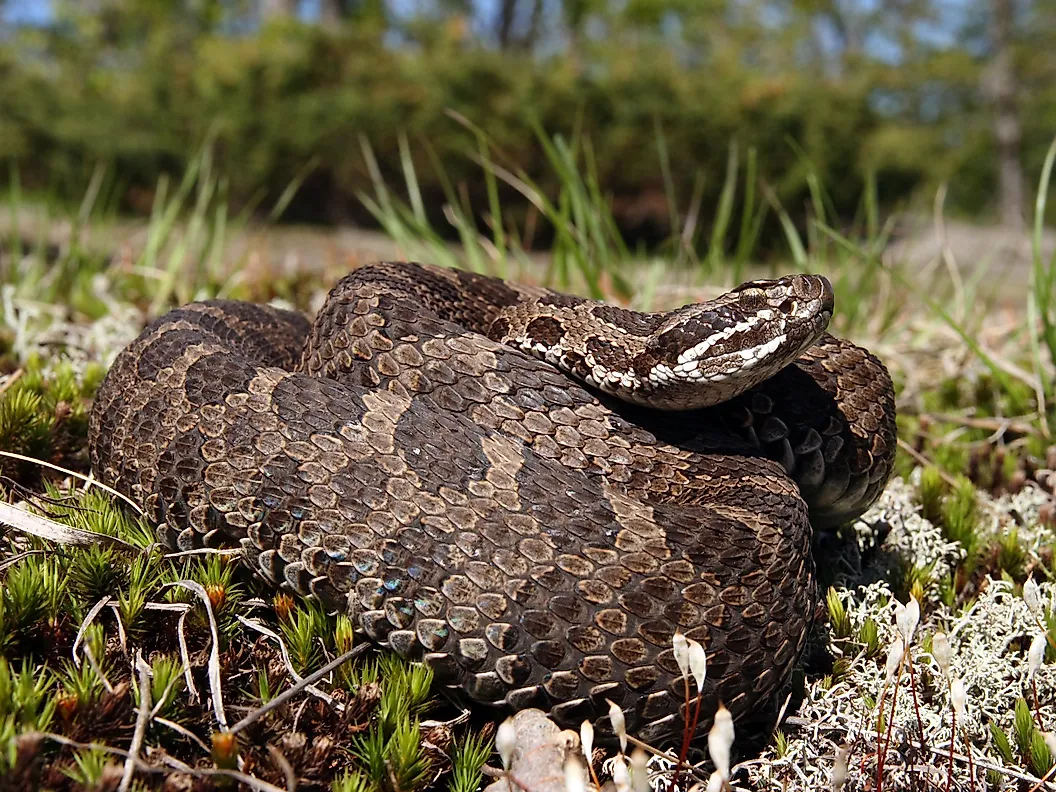
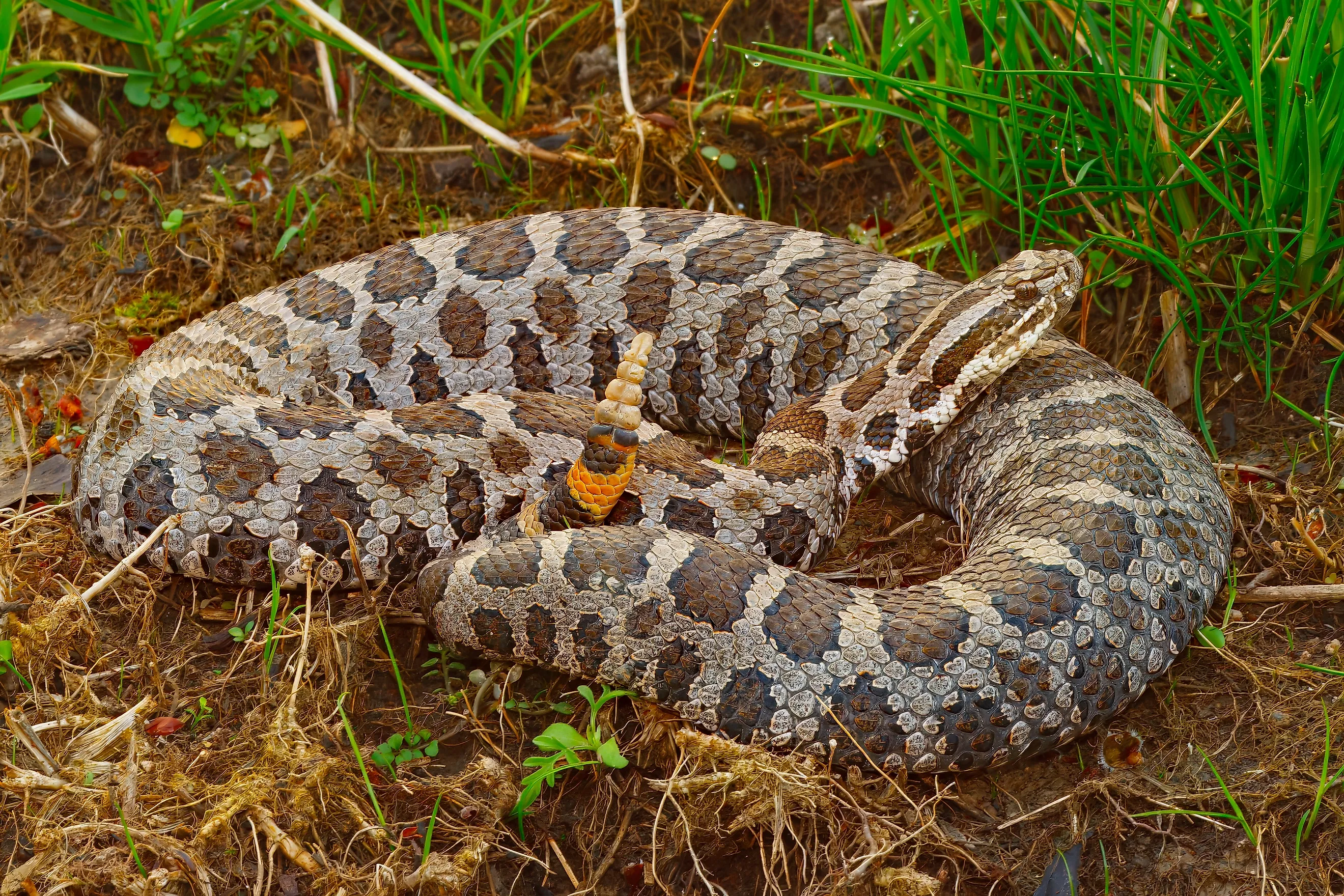
Michigan holds more eastern massasauga populations than any other state or province in the species' range, which makes it the last stronghold for a federally threatened animal.
Ludington sits between Lake Michigan and Hamlin Lake with dunes, marsh and wet meadow, which is the habitat the massasauga wants. The species is a wetland rattlesnake, nicknamed the swamp rattler, rather than a rock-and-talus one.
Encounters are rare because the snake is shy and declining. Michigan poison control centers report about 16 massasauga bites in a typical year across the entire state.
Presque Isle State Park, Pennsylvania

Pennsylvania's only seashore is a sand spit curling into Lake Erie, and it is the busiest state park in the state.
The peninsula holds lagoons, ponds, marsh and beach across a small area, supporting northern watersnakes, eastern garter snakes, brown snakes and eastern fox snakes. Watersnakes bask on the breakwaters and rock groins and are reported as rattlesnakes with great regularity.
There are no venomous snakes on Presque Isle. Pennsylvania's timber rattlesnakes are a forested-mountain species found well inland.
Illinois Beach State Park, Illinois

The last remaining stretch of natural shoreline in Illinois runs six and a half miles along Lake Michigan, which makes it a genuine rarity.
The park protects dune and swale habitat, a repeating pattern of sand ridges and wet troughs that supports eastern fox snakes, garter snakes, brown snakes and Dekay's brownsnakes. The eastern fox snake is a Great Lakes coastal wetland specialist and state-listed.
Fox snakes vibrate their tails in dry vegetation when alarmed, which sounds convincingly like a rattle and accounts for a large share of the park's rattlesnake reports.
Pinckney And Waterloo Recreation Areas, Michigan

These adjoining units in southeast Michigan form one of the largest blocks of protected land in the Lower Peninsula, and they hold the state's best-known massasauga country.
The landscape is glacial: kettle lakes, fens, wet prairie and oak upland, which is the mosaic the massasauga depends on. It needs wetland for summer and crayfish burrows or similar for winter, often within a short distance of each other.
Habitat fragmentation is the species' main threat, and large connected blocks like these are why Michigan still has the populations it does.
What The Region Actually Holds

Set against the southern states, the Great Lakes snake list is short and heavily protected. Only two rattlesnake species occur in the entire region: the eastern massasauga, federally threatened, and the timber rattlesnake, absent from Michigan entirely. Michigan lists five of its 18 species as endangered, threatened or special concern, including the copper-bellied watersnake and the eastern fox snake.
The massasauga averages 24 to 30 inches, is among the smallest rattlesnakes in North America, and delivers correspondingly less venom. Michigan's wildlife agency describes it as timid and notes it avoids people whenever possible.
The Short List

Kelleys Island for the recovered Lake Erie watersnake, Devil's Lake for timber rattlesnakes in the Baraboo bluffs, Indiana Dunes for habitat diversity, Peninsula for escarpment fissures, Ludington and the Pinckney-Waterloo block for massasaugas, Presque Isle for basking watersnakes and Illinois Beach for the fox snakes of the last wild shoreline.
Infested is the wrong word for most of it. The Great Lakes hold fewer snake species than almost anywhere south of them, more protected ones than most places anywhere, and a regional rattlesnake so retiring that the entire state of Michigan logs around sixteen bites a year.