10 Prettiest Great Lakes Towns to Visit
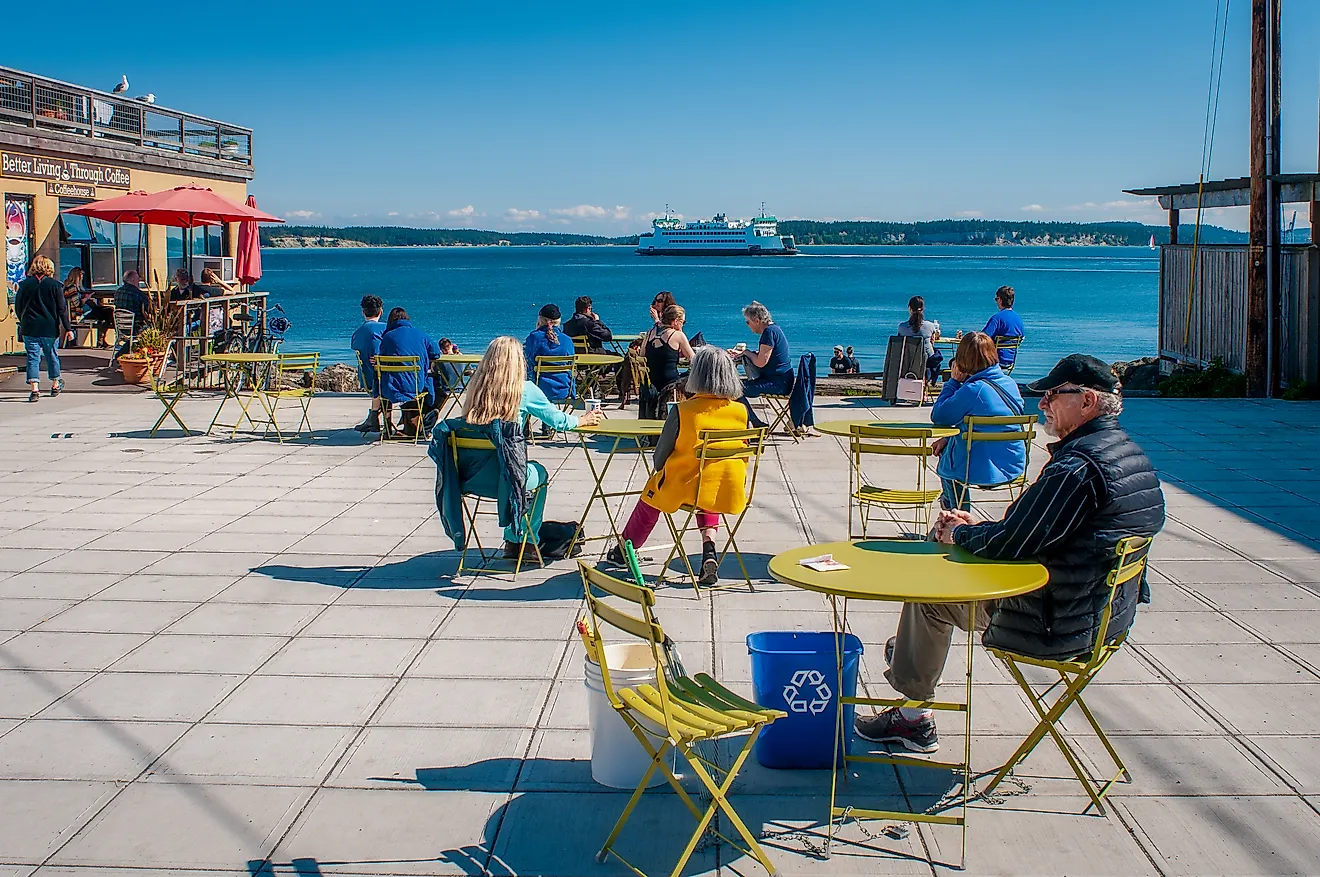
The Great Lakes Region runs on its small towns. Sister Bay anchors the elbow of Door County. Traverse City watches over Grand Traverse Bay. Grand Marais sits on the western edge of Lake Superior. Mackinaw City marks the Straits where Lake Huron meets Lake Michigan. The ten towns ahead each deliver a different angle on lake-and-shoreline life.
Sister Bay, Wisconsin

Sister Bay sits in Door County's elbow on the Green Bay side, around 90 minutes north of the city of Green Bay. Waterfront Park, the largest public waterfront in Door County, runs nearly 2,000 feet of continuous shoreline with soft sand, large grassy areas, a marina, and a beachfront gazebo. Al Johnson's Swedish Restaurant, family-owned since 1949, is famous for the goats grazing on its grass roof every summer (yes, real goats). The Dorr Hotel downtown opens onto Green Bay views and runs a Scandinavian theme that fits the village's heavy Swedish-American heritage. Cave Point County Park, a short drive south, holds limestone sea caves carved by Lake Michigan waves on its 19-acre headland.
Traverse City, Michigan

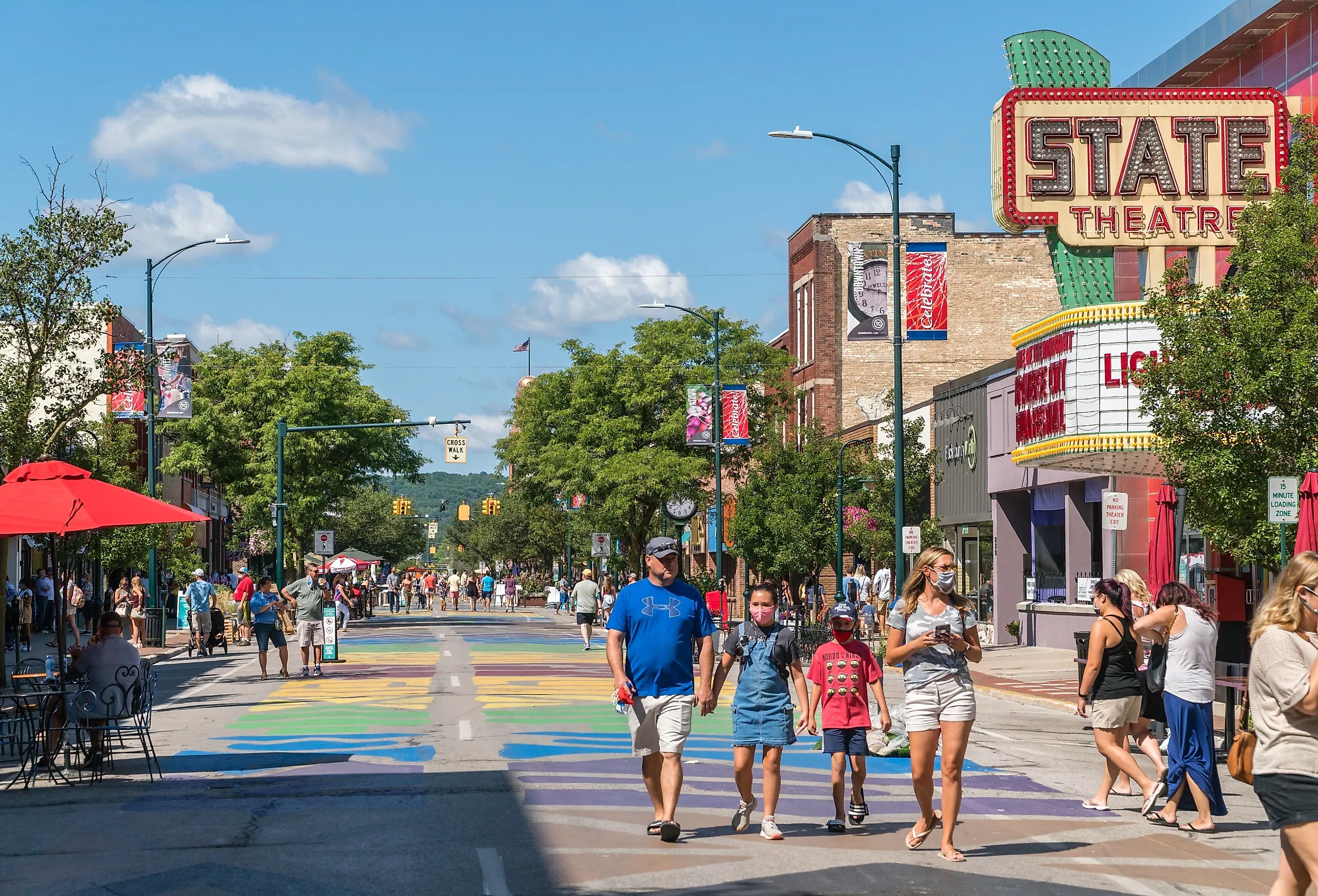
Traverse City sits on Grand Traverse Bay in the northwest corner of Michigan's Lower Peninsula and is the unofficial capital of cherry country (the National Cherry Festival each July draws around 500,000 visitors). Clinch Park on the bay holds a sandy beach and a popular summer splash pad. The Sleeping Bear Dunes National Lakeshore, just 30 minutes west, is part of the world's largest freshwater dune system, with the Dune Climb rising 130 feet of soft sand for anyone willing to put in the work. Boardman Lake covers about 300 acres just south of downtown for kayaking and quiet paddleboarding. Front Street downtown runs around 50 independent restaurants, breweries, and shops, and the 25-acre Botanic Garden at Historic Barns Park rounds out a weekend with formal gardens and fairy-themed trails.
Grand Marais, Minnesota

Grand Marais is the last real town on Minnesota's North Shore before the Canadian border, perched on Lake Superior's western edge. Artist's Point juts a few hundred yards into the lake at the mouth of the harbour and remains the town's photographic anchor, especially at sunrise. The Angry Trout Café on the harbour serves Lake Superior whitefish and lake-trout dishes from a sustainable kitchen that has been running since 1988. Sivertson Gallery curates Lake Superior and Arctic-themed art, and Voyageur Brewing Company's rooftop deck makes the afternoons go fast. Judge C.R. Magney State Park just up the shore holds Devil's Kettle, a waterfall on the Brule River where half the water vanishes into a pothole and (as confirmed by a 2017 dye study) actually does rejoin the river downstream.
Mackinaw City, Michigan

Mackinaw City sits at the very tip of Michigan's Lower Peninsula at the Straits of Mackinac, where Lakes Huron and Michigan meet. Colonial Michilimackinac Historic State Park holds the reconstructed Fort Michilimackinac, a French and later British trading-and-military post built around 1715 and now a working open-air museum with daily musket demonstrations. Old Mackinac Point Lighthouse, built in 1892 right next to the fort grounds, opens for tours through summer. From here, ferries run year-round (weather permitting) to Mackinac Island, home to Fort Mackinac and its Officer's Stone Quarters (Michigan's oldest building, completed in 1781). Original Murdick's Fudge, operating since 1887, has been the family fudge spot for four generations and sits inside the Mackinaw Crossings shopping centre. Headlands International Dark Sky Park, about two miles west of downtown, was Michigan's first designated International Dark Sky Park and runs year-round stargazing programs.
Marquette, Michigan

Marquette is the largest city in Michigan's Upper Peninsula (around 20,000 residents) and a college town built around Northern Michigan University. The 1866 Marquette Harbor Lighthouse, painted bright red, sits on a small bluff at the entrance to the harbour and is open for tours through the Marquette Maritime Museum. Sugarloaf Mountain, a short drive north, climbs about 470 feet via two trail options (one paved, one rugged) to a sandstone summit with views over Lake Superior and the Huron Mountains. Presque Isle Park on the city's north end runs a 2.1-mile loop drive past beaches, picnic areas, and the famous Black Rocks where locals jump into Lake Superior in summer. Blackbird, an independent bookshop on West Washington Street, and the Upper Peninsula Children's Museum round out the rainy-day options.
Munising, Michigan

Munising sits at the western entrance to Pictured Rocks National Lakeshore, the federal park whose 200-foot sandstone cliffs are the reason most visitors come to the Upper Peninsula. Pictured Rocks Cruises runs daily boat tours along the cliffs, and Glass Bottom Shipwreck Tours operates over three sunken ships in the bay (the Bermuda, the Steven M. Selvick, and the Herman H. Hettler) for visitors who want to see the wrecks without diving. Munising Falls and Miners Castle are both within easy hiking distance. The Dogpatch Restaurant on East Superior Street has been a town fixture since 1986 with hearty Upper Peninsula breakfasts. Alger Underwater Diving Preserve protects ten shipwrecks across 113 square miles of clear lake bottom for divers willing to suit up.
Petoskey, Michigan

Petoskey is named for its rocks. The Petoskey stone, the state stone of Michigan, is a fossilized colonial coral from the Devonian period (around 380 million years old) found along the local shoreline and polished to a honey-brown gloss. Sunset Park on Little Traverse Bay is the place to look at sunset, with the bay opening straight west. The Gaslight District downtown holds independent restaurants, the 1875 Stafford's Perry Hotel, and the still-running 1911 Restaurant. Ernest Hemingway spent his boyhood summers in nearby Walloon Lake, and the City Park Grill on Lake Street was one of his regular drinking spots (his stool is still pointed out). The North Country Trail, the longest national scenic trail in the country at 4,800 miles, runs through the heart of town for hikers passing through.
Ludington, Michigan

Ludington sits on Lake Michigan halfway up the Lower Peninsula and runs as both a vacation town and a working ferry port. The S.S. Badger car ferry, a 1953 coal-fired steamship, still makes the 60-mile crossing to Manitowoc, Wisconsin each summer, the last operating coal-fired passenger steamship in the United States. Ludington State Park, 5,300 acres on the north side, runs three campgrounds along the Big Sable River, miles of dune-and-pine trails, and the 1867 Big Sable Point Lighthouse (climbable in season, with a 130-step interior). The Ludington Pier Light at the breakwater is the photo magnet downtown. House of Flavors Restaurant on Ludington Avenue has been making its own ice cream on-site since 1948.
Two Harbors, Minnesota

Two Harbors anchors the Minnesota North Shore about 25 miles up Highway 61 from Duluth and runs around 3,800 residents. The 1892 Two Harbors Light, still active, is the oldest operating lighthouse in Minnesota and houses a small museum and a bed-and-breakfast inside the keeper's quarters. The Breakwater Lighthouse at the harbour entrance is the spot to watch lake freighters loading taconite at the CN ore docks. Split Rock Lighthouse, about 20 miles up the shore, sits 130 feet above Lake Superior on a sheer cliff and is one of the most-photographed lighthouses in the country (built 1910 after a 1905 storm sank 29 ships in one night). Judy's Café in downtown Two Harbors runs the homemade pies the area is known for.
Grand Haven, Michigan

Grand Haven sits where the Grand River meets Lake Michigan, with the bright red 1839 South Pierhead Inner Light and the 1905 South Pierhead Lighthouse linked along the recognizable catwalk pier. Grand Haven State Park runs 48 acres of beach right next to downtown for swimming, sunbathing, and sunset photographs. The Grand Haven Musical Fountain, billed as the world's largest synchronized musical fountain, runs nightly shows in summer with water choreographed to music and lights. Rosy Mound Natural Area south of town climbs through dune-and-pine forest to a Lake Michigan overlook with wooden boardwalks. Fricano's Pizza, operating since 1949, is the local Italian-American spot that locals will defend in any pizza argument.
The Third Coast's Prettiest Towns
Often called America's Third Coast, the Great Lakes hold more than 10,000 miles of shoreline and a small town for every hundred miles of it. The ten above each carry a defining feature: Sister Bay's Swedish goats, Traverse City's cherries, Mackinaw City's Straits, Petoskey's fossil coral, Ludington's coal-fired ferry. None of them are mistakes for a weekend, and many of them reward a full week. The Mediterranean is fine, but the Great Lakes are closer.