The Deepest A Fish Has Ever Been Caught In A US Lake
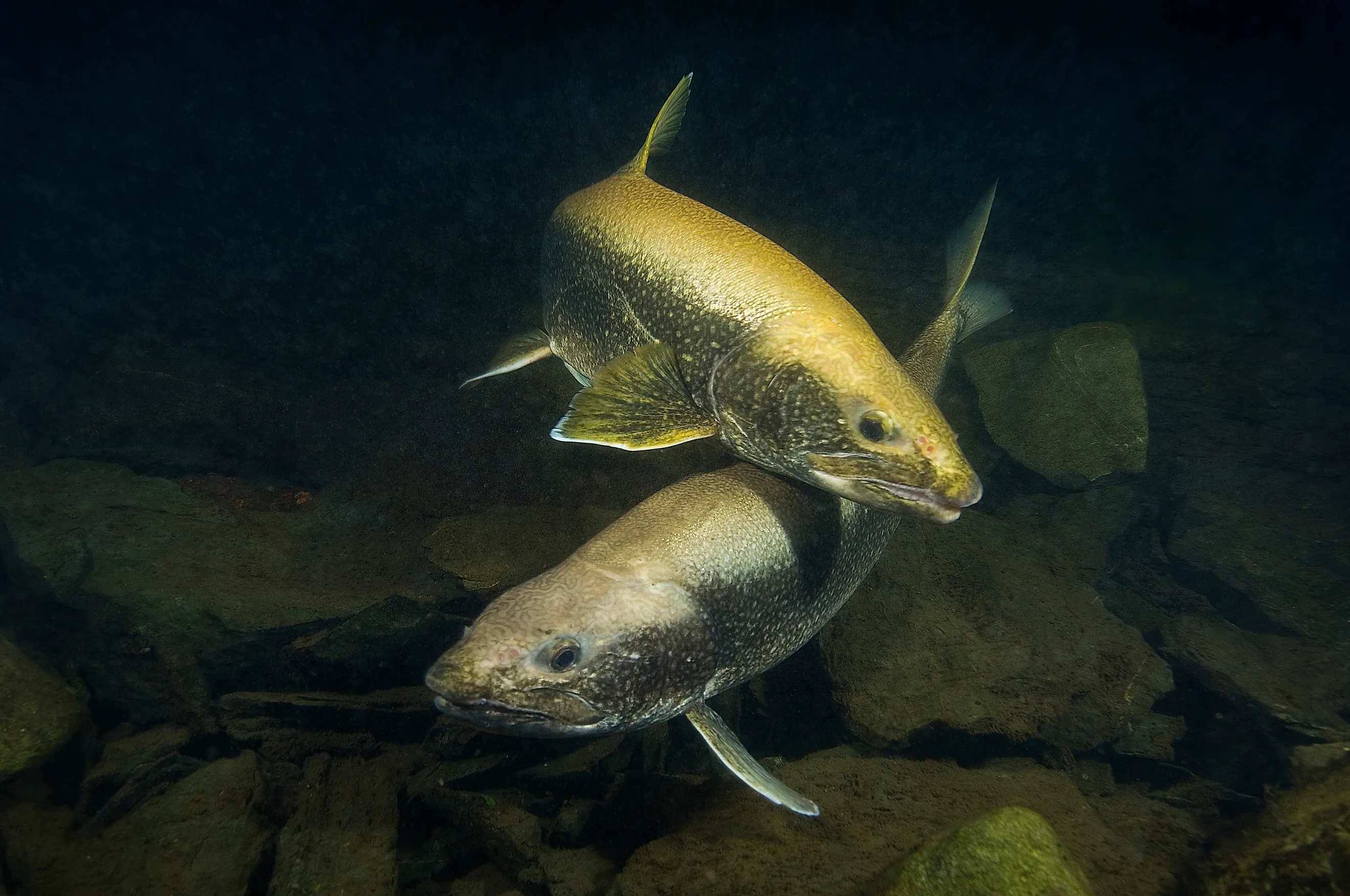
The deepest a fish has ever been caught in a US lake was 1,332 feet, at the bottom of Lake Superior. The fish was a Salvelinus namaycush, specifically the siscowet morphotype of lake trout. At this depth, pressure is immense, and sunlight is nonexistent.
These trout were first uncovered by fisheries research biologists, who have been carefully examining this population of deep lake fish, along with changes to their weight that have been observed in recent years, as some have fallen well below their normal weight and have been nicknamed zombie fish.
Lake Superior

The Great Lakes themselves are so large by land area and water volume that they have often been called an inland sea. They hold close to 20% of all surface freshwater on Earth. Out of all the Great Lakes, Lake Superior is the largest by several metrics.
For one, its surface area is 31,700 square miles, the largest freshwater lake on Earth. If saline lakes are considered, it's the second largest, only just behind the saline Caspian Sea. It has a total water volume of 2,900 cubic miles. This is more than all the other Great Lakes combined. The only lakes on Earth with more water volume are Lake Tanganyika in East Africa and Lake Baikal in Russia.
Lastly, among the Great Lakes, it is very deep, with an average depth of 483 feet and a maximum depth of 1,332 feet. The only other Great Lake to come close to this depth is Lake Michigan, which has a maximum depth of 925 feet.
Due to this depth, Lake Superior is the coldest of the Great Lakes on average, ranging from just above freezing to below 60 degrees Fahrenheit in the summer months. With its colder temperatures, only hardy cold-water fish can survive, with just over 80 fish species living in the water, including the lake trout.
Lake trout

Salvelinus namaycush, better known as lake trout, is one of the most iconic fish in the Great Lakes. They are native to the northern U.S. and Canada, and prefer to live in deep bodies of water, usually greater than 50 feet, which makes them ideal for the Great Lakes and their tributaries.
They are the largest of the freshwater fish that live in the lake and can grow from 36 to 50 inches. They are also quite large compared to other fish, reaching 40 pounds. The largest ever caught weighed 102 pounds.
They grow large by eating other fish in the lake. However, at one point, lake trout were nearly eliminated from the Great Lakes due to the impact of an invasive species known as the sea lamprey, which attached itself to lake trout and killed them by draining their blood. By the mid 1960s, the lake trout had nearly disappeared from the lake.
In order to combat this trend, the Great Lakes Fishery Commission embarked on a two-pronged mission: to kill sea lampreys and to restock Lake Superior with lake trout. It removed sea lampreys through a lampricide along with barriers, cutting down its population by 90% in key areas. It also restocked Lake Superior and the other Great Lakes with lake trout. By autumn 2024, lake trout had officially recovered their population in Lake Superior.
Siscowet morphotype

The siscowet morphotype of lake trout is the main ecomorph of lake trout that can live all the way at the bottom of Lake Superior.
They are found in all parts of Lake Superior at its shallow depths at just above 650 feet, from 650 feet to 1,290 feet, and at its deepest spot at 1,332 feet. They are most commonly found at depths between 300 and 600 feet.
They have a large fat content, mostly of omega-3 fatty acids. This body fat can make up to 70% of its body, which is necessary to allow it to survive in deep water. In Lake Superior, siscowets mainly eat freshwater whitefish and burbot, a freshwater cod.
Unfortunately, some deepwater siscowets are showing signs of a major health problem that is making them much skinnier than expected.
What's causing the zombie fish phenomenon?

Scientists have identified a growing number of much skinnier siscowet lake trout that have become known as zombie fish. They are identified as such because they only have about a third of the fat content of other healthier lake trout.
They were first identified in 2015 and, since then, have grown significantly in number to about 20% of fish caught. In one catch, around 50% of the catch consisted of zombie fish.
Shawn Sitar, a research biologist at the Michigan Department of Natural Resources, was one of the first to identify the presence of siscowet in the deepest parts of Lake Superior, and he is now investigating what is causing this zombie fish issue.
Some of these zombie fish have deformed spines as well. Currently, scientists do not believe that this phenomenon is caused by a disease, but rather by a current lack of food in the deepest parts of Lake Superior.
Sitar himself notes that this phenomenon is only impacting the deep-water siscowets, not the other three morphotypes of lake trout in Lake Superior, and is likely due to some kind of interruption in the availability of food. In June 2026, scientists did a dive into Lake Superior to catch zombie fish and test for any pathogens to rule out any possibility of disease, contaminants, or a sea lamprey attack.
Putting Lake Superior's depth into perspective

At the bottom of Lake Superior, which is sometimes called Superior Maximus, the pressure is intense, at 600 pounds of pressure per square inch, which is 40 times the amount on the surface. In many ways, it's similar to the bottom of the ocean, as there is no sunlight this far down, meaning that the fish that live this deep down have adapted to live here, such as the whitefish, which has large eyes, or the deepwater sculpin with its highly sensitive eyes, and the fatty siscowet lake trout. However, only the hardiest of creatures can survive at this depth, meaning that any interruption in the food chain can lead to the current issue of zombie fish in Lake Superior. Due to the extreme depths, these fish are not usually caught by fishers, but are instead captured by scientists looking to research what life is like on Superior Maximus.