The Roman Empire During the Flavian Dynasty
Throughout Rome's long history, various dynasties sat at the head of the empire. The Julio-Claudians, Severans, and Nerva-Antonines are perhaps the most famous, but another dynasty, the Flavian, is often overlooked. Although their successive rule was short-lived, it certainly left its mark on Roman society and made long-lasting changes to the empire. While their edicts and decisions might not seem groundbreaking today, the Flavian Dynasty had a profound impact on Rome in terms of domestic and foreign policy.
Who Were The Flavians?

The Flavians were a small and obscure family only a few centuries before their dynasty ascended to the throne. Ironically, the Flavians gained much of their wealth, power, and influence under the rule of the previous Julio-Claudian dynasty.
Titus Flavius Petro, the grandfather of Vespasian, served as a centurion under Pomey during the brutal civil war between Julius Caesar. Although he did not have the most famous military career, Titus was able to marry into a wealthy family, which he used to jump-start his political ambitions. Titus's son, Sabinus, became a wealthy tax collector in the Roman province of Asia (modern-day Turkey). He also tried his hand at banking, which earned him even more wealth. He also strategically married into a powerful patrician family. He and his new wife soon welcomed two sons into the world. His sons Vespasian and Sabinus II were taught the ins and outs of the Roman aristocracy from a young age. By the time they reached adulthood, both had been granted seats in the Roman Senate and were some of Rome's most influential people.
The Rise Of Vespasian

Vespasian had quite a successful career in politics and held numerous offices. He also had a fruitful stint in the Roman military. Vespasian played a significant role in the invasion of Britain in 43 AD, gaining respect from his soldiers and other generals alike.
In 68 AD, Emperor Nero took his own life after mounting pressure from both the Senate and the military. His sudden death not only ended the Julio-Claudian dynasty but also threw the Roman Empire into another civil war. This chaotic period is known as the Year of the Four Emperors. Galba, Otho, Vitellius, and Vespasian all claimed the now-vacant imperial throne in Rome. Fortunately for Vespasian, he was in Judea at the start of the civil war, preparing to suppress a Jewish revolt.
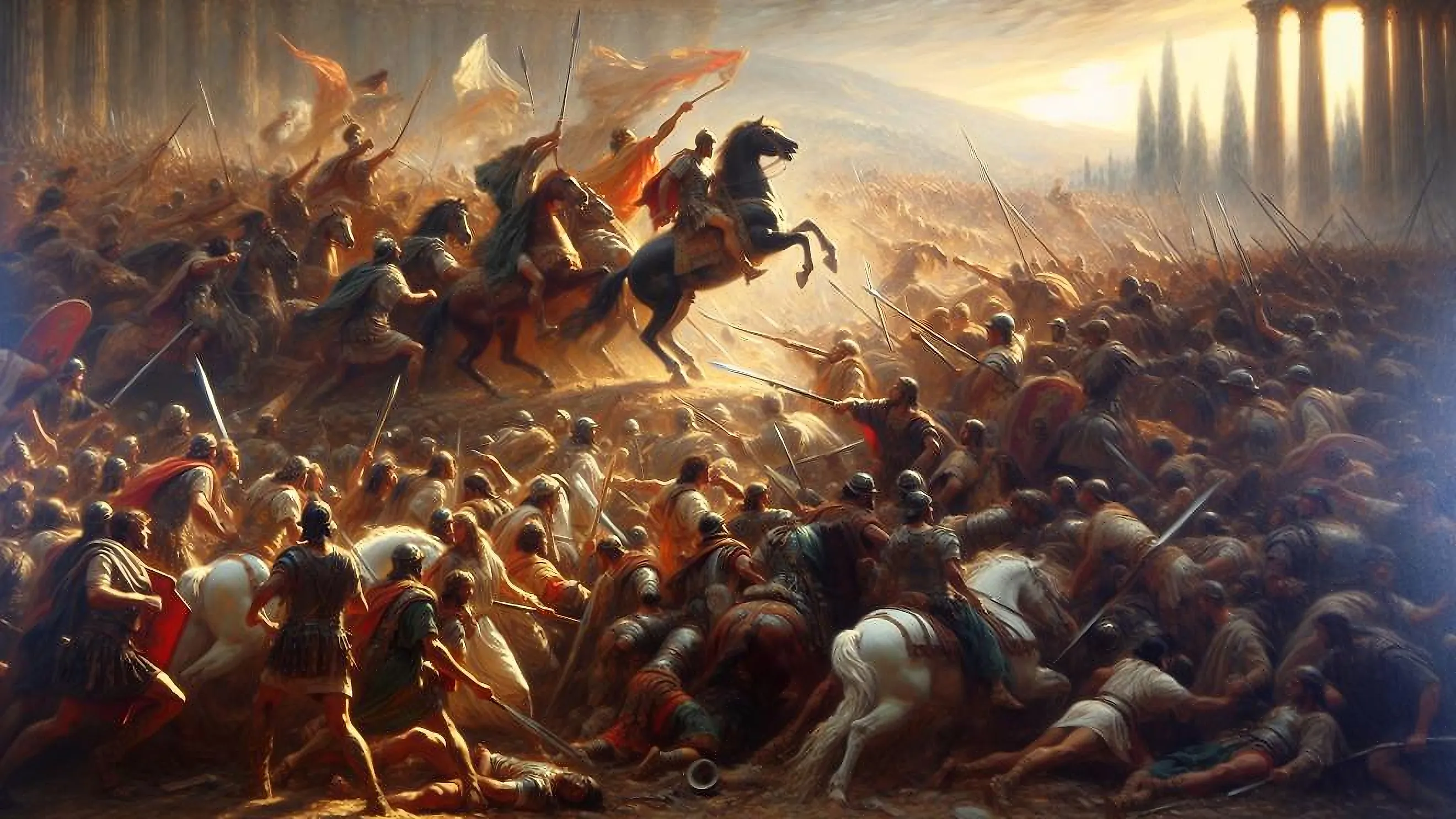
Upon hearing the news of Nero's death, Vespasian ordered his forces in Judea to his trusted ally Titus and sent a group of his other legions to march on Rome. Vespasian himself quickly moved into Egypt to oversee Rome's grain supply. Galba and Otho both died shortly after the conflict began, leaving only Vitellius. Vitellius and Vespasian's legions fought at the Second Battle of Bedriacum, resulting in a decisive defeat for Vitellius and his allies. Vespasian's army then marched into Rome. Since Vespasian was the only remaining claimant, he was declared emperor on December 21, 69 AD. However, it took him another year in Egypt to consolidate his power before he finally felt ready to return to Rome in 70 AD.
The First Flavian Emperor (69 AD -79 AD)

When Vespasian returned to Rome, he quickly repealed the hated laws that Nero had enacted. He also pardoned many members of the Roman aristocracy who had taken up arms against him during the war. Vespasian was often preoccupied with financial policies and tax reforms. The Roman Empire's treasury had nearly gone bankrupt several times during Nero and Caligula's reigns, and Vespasian made sure not to repeat those mistakes.
The Roman Empire fought many wars during this period as it continued expanding. Although Vespasian was cautious with his spending, he did not hesitate to invest heavily in his legions. Undoubtedly, the most enduring part of Vespasian's legacy was the construction of the Colosseum in Rome. Although Vespasian died just a year before its completion, he was able to see his vision gradually come to life. Vespasian died in 79 AD and was succeeded by his son Titus. This smooth transfer of power between Vespasian and his son brought relief to many Romans who had experienced their fair share of civil wars and political upheaval.
The Rule Of Titus (79 AD - 81 AD)

Although there were no major challenges to Titus's claim to the throne, many Roman aristocrats still worried about the new emperor's abilities. The Roman elite soon eased their concerns as Titus began to show his governing skills.
Titus is mainly remembered for being emperor during the devastating natural disaster that destroyed Pompeii. In 79 AD, Mount Vesuvius erupted, burying nearby towns and settlements in a cloud of ash and destroying entire buildings with flowing, hot lava. Titus was exceptionally generous to the victims of this tragedy and also helped out after a massive fire swept through a large part of Rome in 80 AD. He worked tirelessly to launch a new building campaign in Rome, restoring old structures and constructing new ones. He also oversaw the completion of his father's dream, the Colosseum. The First Jewish-Roman War ended dramatically during this time, resulting in the complete destruction of Jerusalem.
The rule of Titus was tragically cut short after the emperor caught a fever and died in 81 AD. Only serving two years as emperor, Titus still left a lasting image as a kind philanthropist who cared for the common man. He was deified along with his father by the Senate after he died.
Domitian: The Last Flavian (81 AD - 96 AD)

Domitian, Titus's younger brother, became emperor only a day after his brother died. He would go on to rule longer than any member of the Flavian dynasty and was the longest-ruling emperor since Tiberius. Taking after his father, Domitian focused on the economy early in his rule. He revalued Roman coins, revitalizing the economy and giving the common people more purchasing power.
He was also highly active on the military front. He passed new laws that strengthened the Roman border provinces and launched military campaigns in the British Isles and Dacia (modern-day Romania). The Dacians in particular were a stubborn and vicious enemy and even managed to deal devastating defeats to the Roman legions. Despite these setbacks, he was able to secure a satisfactory peace deal with the Dacians and at least ensured there would be no more fighting between the two peoples for the foreseeable future.
Domitian was generally liked by both the people and the Roman ruling classes, but as he grew further into his reign as emperor, he became paranoid. He started to openly accuse his senators of plotting against him and often questioned their loyalty. This eventually led to Domitian ordering mass executions of his perceived political rivals. The erratic and unpredictable behavior of Domitian led to his assassination in 96 AD by a group of conspirators that included members of the Praetorian Guard, political officials, and even his own wife. He was succeeded by his close friend Nerva, who then founded the Nervan-Antonian dynasty.
Although the rule of the Flavians did not last as long as the other political dynasties of Rome, they were responsible for either overseeing or directly facilitating some of the most iconic and legacy-defining moments of the Roman Empire. During their rule, the Roman Empire was brought back to an era of general stability and growth, which would become less common later.