Rome's Most Corrupt Rulers
If you were a Roman Emperor, would you stage a shipwreck to try to drown your mother like Nero did? Absolute power often invites corruption. This was frequently the case in the Roman Empire, where the emperor had more or less supreme authority to flex their ego. Not all rulers were corrupt, but enough were to the point where it permanently stained the institution of emperorship. Names like Nero and Caligula are still notorious thousands of years later for their abuses. Here are the Roman Empire's worst examples of corruption.
Caligula (37 to 41 AD)

Caligula is often remembered as one of the worst and most corrupt rulers in Roman history. This wasn't preordained. The son of the beloved general Germanicus, many cheered his accession to the emperorship at the young age of 24 in 37 AD. According to most accounts, the first few months of his reign were characterized by tolerance and restraint. He recalled political exiles, reduced some taxes, and enjoyed broad public support.
Late in 37 AD, Caligula suffered a mysterious illness. Ancient writers treated it as the point when his personality changed, but there is no way to know whether the illness caused his later behavior. Afterward, their accounts increasingly describe corruption, despotism, and erratic conduct. He executed perceived political opponents, humiliated the Senate, and generally behaved in a manner unbecoming of the most powerful person in the Mediterranean world. One crucial element of all this was his spending. His predecessor, Tiberius, was fiscally conservative and accumulated significant wealth in the state treasury. Ancient sources claim that Caligula rapidly depleted much of it through public games, banquets, personal luxuries, construction projects, and large payments to soldiers. According to these accounts, when funds ran low, he turned to wealthy Romans, frequently accusing them of treason and other crimes as an excuse to confiscate their wealth. Suetonius and Cassius Dio also state that Caligula levied taxes on things like food, legal transactions, and prostitutes, though the surviving evidence is too limited to confirm every detail.
In general, many of the more outlandish stories about Caligula, including one about him planning to make his horse consul and others about him having incestuous relationships with his sisters, need to be taken with a grain of salt. The surviving accounts by Suetonius, Cassius Dio, and Josephus are generally hostile to Caligula, so their works should be understood in that context. Regardless, there is strong evidence that his reign was corrupt and despotic. He was assassinated by officers of the Praetorian Guard in 41 AD.
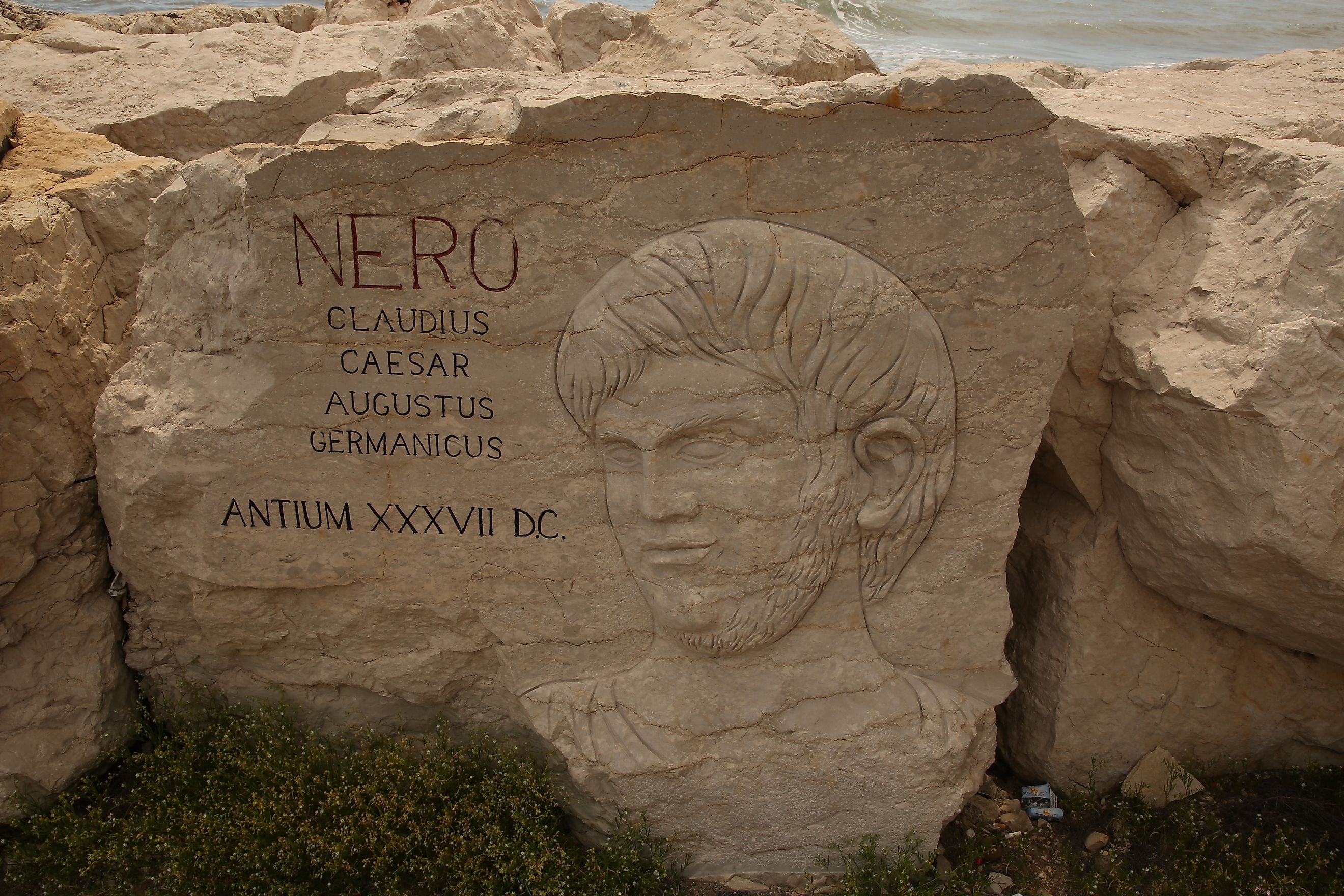
Nero (54 to 68 AD)

Nero is also often brought up as one of the worst emperors in Roman history. Much like Caligula, his reign started fairly moderately. Becoming emperor at the age of 16, he was heavily influenced in the early years by his mother, Agrippina the Younger, his tutor, the philosopher Seneca, and the Praetorian prefect Burrus. He reduced some taxes, cut rewards for informers, and publicly promoted clemency.
As he got older, Nero wanted more independence. He thus ordered his mother killed in 59 AD and sidelined Seneca, whom he later forced to commit suicide in 65 AD. With those restraints weakened, Nero could focus more heavily on what he really wanted: becoming an artist. The young emperor therefore spent extensively on festivals, fights, banquets, and public performances. To help fund his spending, he increasingly relied on treason charges and the confiscation of wealthy Romans' property. Nero also used gifts and payments to secure the loyalty of soldiers and members of the Praetorian Guard.
Perhaps the clearest example of Nero placing his own interests above the public came after the Great Fire of Rome in 64 AD. Three of the city's 14 districts were completely burnt down, and another seven were badly damaged. Contrary to popular belief, there is no reliable evidence that Nero started the fire. He was away from Rome when it began and returned to organize relief efforts. He opened public buildings and his own gardens to displaced residents, brought in food, and introduced new building rules. Nevertheless, he badly damaged his reputation by ordering the Domus Aurea, or Golden House, to be constructed across part of the area cleared by the fire. A vast and extravagant palace complex, it reinforced the belief that Nero had used the tragedy for his own benefit. Nero also blamed Christians for the fire and, in turn, ordered them to be persecuted and executed. The sheer brutality of this affair further contributed to Nero's unpopularity. Ultimately, Nero's extravagance and repression helped cost him the support of the Senate, the Praetorian Guard, and provincial governors. Forced to flee from Rome in disgrace, Nero committed suicide in 68 AD.
Commodus (180 to 192 AD)

If Caligula and Nero were the worst emperors in Roman history, Commodus was the most disappointing. The son of the beloved emperor Marcus Aurelius, many had high hopes when he became the sole emperor of Rome in 180 AD. He had co-ruled with his father for the previous three years.
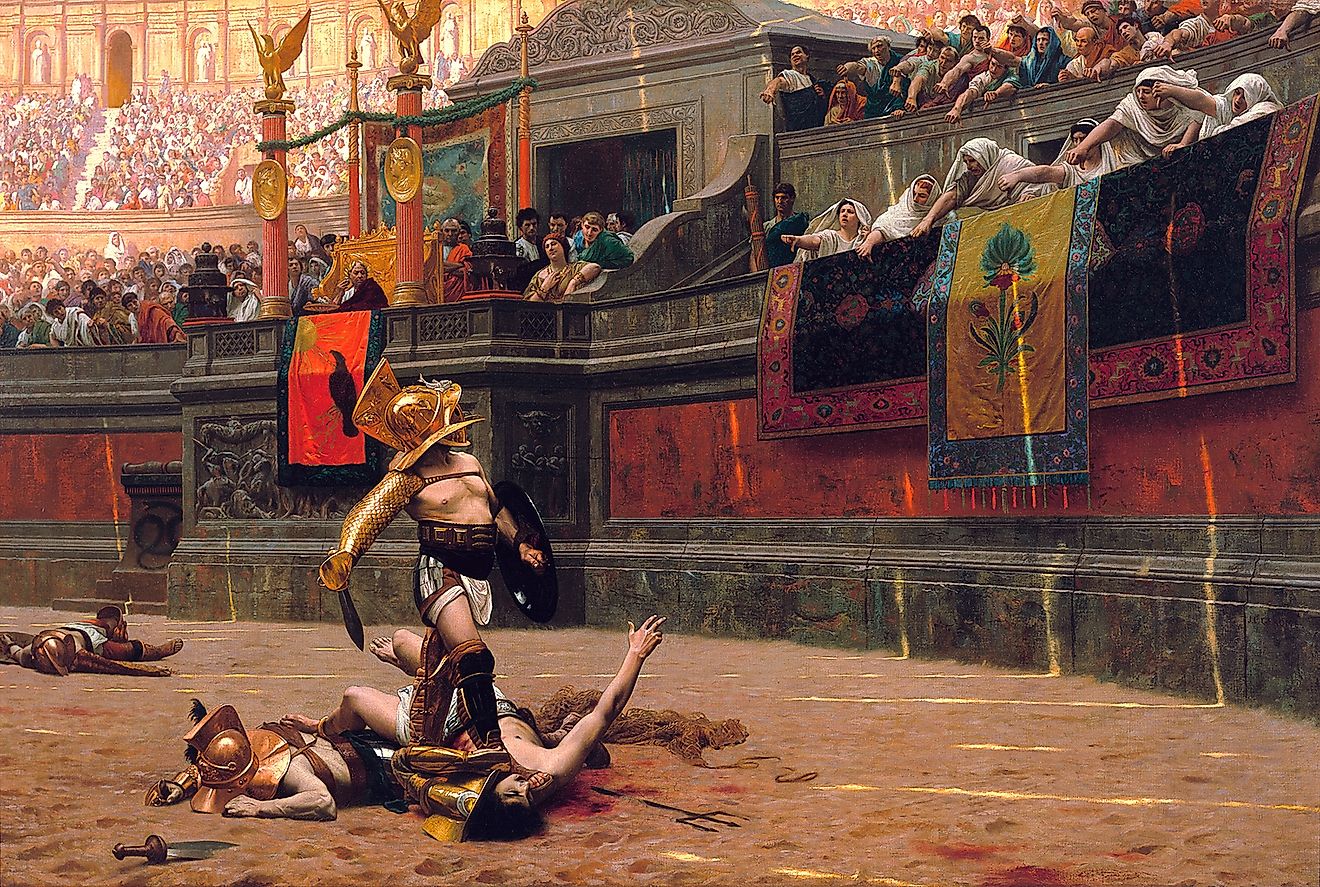
Unlike Aurelius, Commodus had little interest in ruling. He quickly concluded military operations along the Danube River and returned to Rome, where he delegated many responsibilities to advisers such as Perennis and Cleander. As Commodus increasingly focused on his interest in fighting as a gladiator and portraying himself as Hercules, the Roman counterpart of the Greek hero Heracles, corruption spread in his government. Cleander in particular was notorious for selling government offices to the highest bidder. Ancient sources also describe confiscations of wealth following accusations of conspiracy or treason. Commodus allowed this corruption and benefited from it, while his own spending, favoritism, and political violence made the problem worse. In 192 AD, he was assassinated in a plot organized by members of his own court.
Elagabalus (218 to 222 AD)

Elagabalus is perhaps less well known than Nero, Caligula, and Commodus. But those who are familiar with him frequently place him among the worst Roman emperors in history. Elagabalus became emperor at the age of 14 in 218 AD. Like Nero, his early years were dominated by older figures, the most notable of whom was his grandmother, Julia Maesa. His court became associated with favoritism, extravagant spending, and the sale of offices, although some of the most detailed accusations come from the unreliable Historia Augusta.
Some key details separated Elagabalus from his predecessors. Ancient historians filled their accounts with sensational claims about his private life, but many are impossible to verify. Elagabalus did use imperial resources in an attempt to elevate the Syrian god Elagabal above traditional Roman state cults. He built an elaborate temple, staged lavish religious festivals, and moved important Roman sacred objects into the new sanctuary. Doing so alienated many Roman elites and members of the Praetorian Guard, who saw his policies as an attack on traditional religion. In 222 AD, the Praetorian Guard killed Elagabalus and his mother after shifting its support to his cousin Severus Alexander, whom Julia Maesa had promoted.