The Roman Empire Was More Violent Than You Think
Violence was a fundamental part of the Roman Empire. But when people think about it, they often consider the famous wars and massacres. While certainly significant, violence existed and manifested in lesser-known ways as well. The institutionalization of slavery, and the fact that the supposedly most peaceful and prosperous period in Roman history rested on decades of violent struggle, are aspects that help us gain a more comprehensive understanding of the Roman Empire.
The Roman Empire Was Built On Genocide, Civil War, And Assassinations

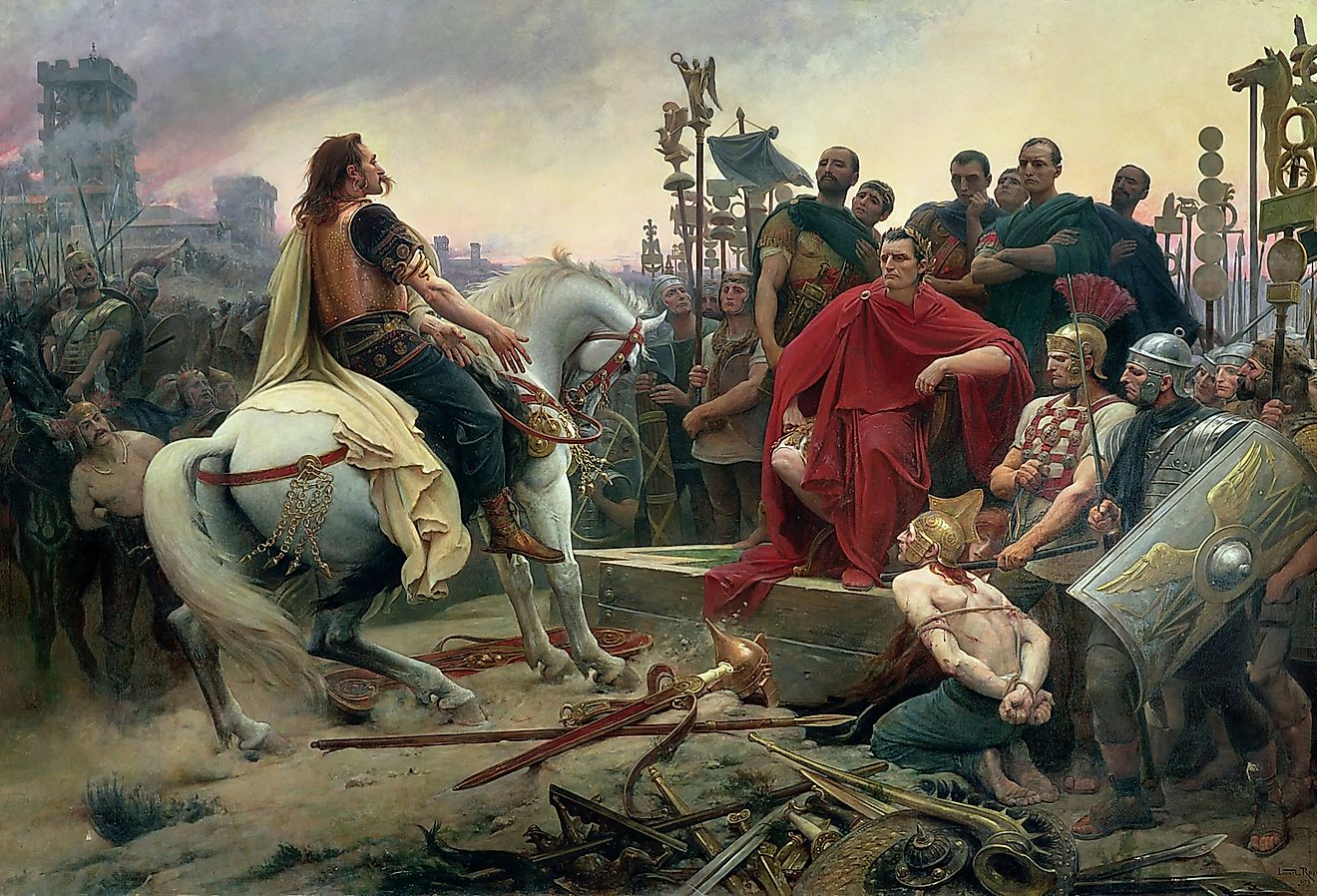
In 58 BCE, Julius Caesar invaded Gaul (modern-day France, Belgium, and Luxembourg). His campaign over the next eight years was genocidal, as he bragged about killing up to a million people and wiping out entire Gallic tribes. Even though the truth of these claims is questionable, the body count was undoubtedly very high. Caesar also emerged from the campaign with immense personal popularity and wealth, which made many back in Rome nervous. This ultimately led to a power struggle between him and the Senate that spiralled into a civil war in 49 BCE.

The war ended in 45 BCE, and Caesar declared himself dictator for life the following year. This wouldn't last long, since he was assassinated about two months later. Rome once again descended into civil war, first between the assassins and Caesar's allies and then between Octavian, who controlled the Western Republic, and Mark Antony, who controlled the Eastern Republic. The war came to a climax in 31 BCE when Octavian defeated Antony (and his ally and lover Cleopatra) at the Battle of Actium. Antony committed suicide the next year, leaving Octavian as the undisputed ruler of Rome. He subsequently renamed himself Augustus.

In 27 BCE, Augustus became Rome's first emperor, marking its official transition from Republic to Empire. With this, he ushered in 200 years of relative peace and prosperity. Known as the Pax Romana, it is often considered the height of Roman civilization. However, as noted in the previous paragraphs, it took shape in the context of genocide, civil war, and assassinations. While it is impossible to rewrite history, it is reasonable to posit that the desire for peace and stability, produced by decades of conflict, was a major contributing factor to the Pax Romana (on top of Augustus' meaningful administrative reforms).
The Roman Empire (Possibly) Couldn't Have Functioned Without Slavery

Slavery was a foundational component of Roman civilization. Contrary to what many believe, slaves weren't just agricultural workers. While some occupied roles on major estates called latifundia, many served domestically as cooks, cleaners, teachers, gardeners, and nurses. Slaves could also work in urban environments as craftsmen, shop assistants, construction workers, or entertainers. Particularly unlucky slaves worked the mines, where they were subjected to toxic fumes and cave-ins. Finally, perhaps most surprisingly, slaves sometimes occupied sophisticated roles as business administrators, managers, or doctors.

All of these examples demonstrate how integral slavery was to every aspect of Roman life. While the exact numbers vary depending on the particular time, historians estimate that slaves made up between 10 and 20 percent of the Roman Empire's population. Some therefore argue that all of Roman civilization couldn't have existed without slaves, though others question this. Rome wasn't as slave dependent as a society like Classical Athens, where estimates hold that slaves made up between 25 and 50 percent of the entire population. Regardless, slavery was undoubtedly important. At the very least, the Roman Empire would have been very different without it.
Torture Was Often Used Strategically

Torture was institutionalized in the Roman Empire. Rather than being used indiscriminately, it was tied to societal status, political power, and criminal investigations. Torture was most commonly reserved for slaves. Many Romans believed that slaves would naturally lie to protect themselves or their masters. Torture was thus seen as a necessary measure to extract truthful information. It was also used to discourage revolts. Consider the Third Servile War. Occurring from 73 to 71 BCE, it was the slave revolt that Spartacus led against the Romans. After repressing it, the Romans crucified the 6,000 surviving slaves along the Appian Way, a famous road that linked Rome and Capua. Through that display, the Romans warned other slaves that if they revolted, they risked the same fate. This was just one grotesque yet strategic use of torture.
Domestic Life Could Be Violent

When people think about violence in the Roman Empire, they often consider the political sphere. This is for good reason. As previously noted, it was the site of seemingly countless civil wars and assassinations. However, it is important not to overlook the violence often present in everyday domestic life. Slaves certainly had the worst of it, but Roman citizens experienced it as well. The Roman Empire was patriarchal. The senior male figure held legal authority (known as patria potestas) over his wife and children. This meant that violence was often used as a means of reinforcing that authority. Sexual exploitation was also used in a similar manner. Not all patriarchs used their authority in this way, but if they did, the other family members had no meaningful recourse.
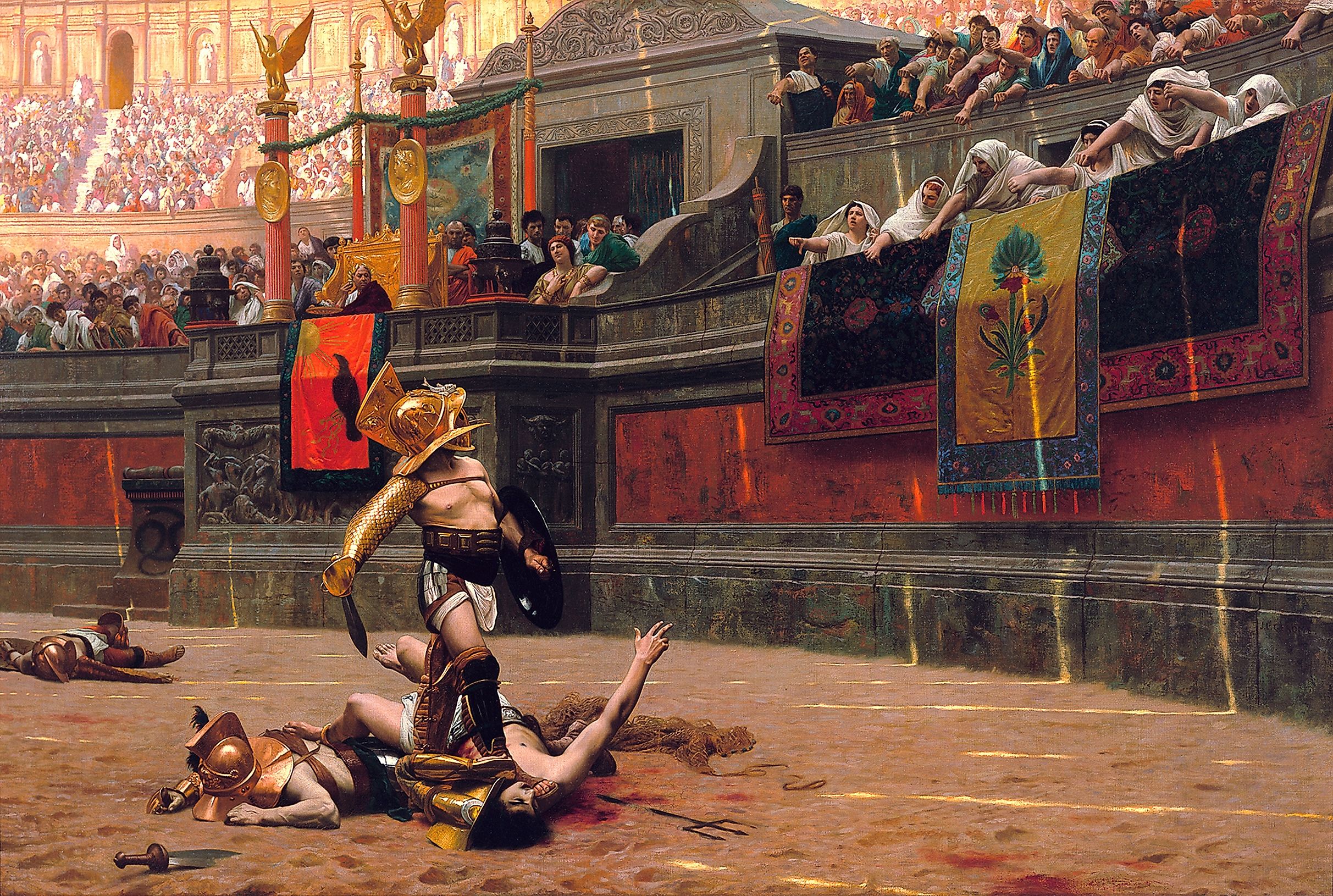
Perhaps most famously, violent spectacle was a common source of entertainment for regular Romans. In the amphitheaters, organizers staged gladiator fights, hunts, mass executions, and animal attacks. Historians caution against using these events as an excuse to portray the Romans as uniquely bloodthirsty. Some Romans genuinely enjoyed them, but others did not. Even so, the omnipresence of violent spectacle in everyday Roman life reflected a society that heavily valued strength, power, and warfare.
Impact And Legacy
Everyone knows the Roman Empire was violent. War, genocide, and assassinations defined its existence. But violence frequently manifested in lesser-known and unexpected ways. Consider the Pax Romana. Widely considered the peak of Roman civilization, it followed, and possibly would have been impossible without, decades of bloodshed. Some historians also argue that Rome couldn't have functioned without slavery. Slaves were subjected to brutal torture as well. Finally, violence was a core component of everyday life, both through the patriarchal structure of the household and via entertainment in the amphitheatres.