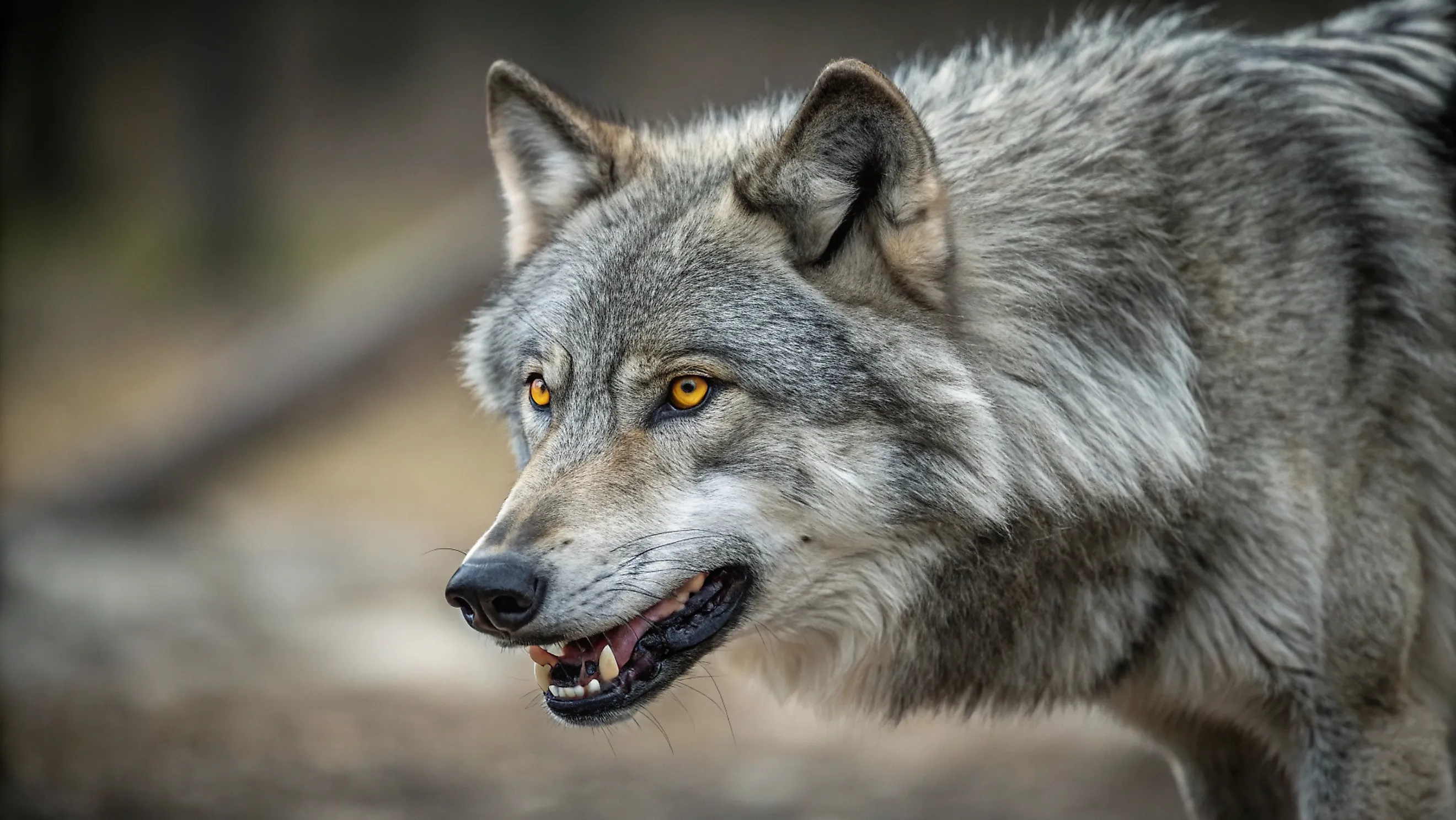
The American Mountains With The Most Wolves
Wolves inhabit several mountain ranges across the US, including the remote Alaska and Brooks Ranges, the Rocky Mountains, and the Cascades. Gray wolves once occupied much of the contiguous United States, but persecution, government predator-control programs, and habitat changes nearly eliminated them from the Lower 48 by the mid-20th century. Small populations survived in northern Minnesota and on Isle Royale in Michigan, while wolves remained widespread in Alaska. Federal protections, reintroduction programs, and natural migration have since returned gray wolves to several western mountain regions. The Northern Rockies now support some of the country's largest populations outside Alaska and the Great Lakes, and wolves are establishing territories in Oregon, California, and Colorado.
Wolf Species Found In The United States

Two wolf species are native to the United States: the gray wolf (Canis lupus) and the endangered red wolf (Canis rufus). Gray wolves are much more widespread and include several geographically distinct populations. Although scientists have historically recognized numerous gray wolf subspecies, classifications have changed as genetic research has improved understanding of their relationships.
The northwestern wolf (Canis lupus occidentalis) is commonly associated with western Canada and portions of the northern United States. Wolves historically classified as Great Plains wolves (Canis lupus nubilus) occur in the western Great Lakes region, including Minnesota, Wisconsin, and Michigan. Alaska also supports the Alexander Archipelago wolf (Canis lupus ligoni), a distinctive population associated with the coastal rainforests and islands of Southeast Alaska, including portions of Tongass National Forest. Subspecies boundaries are not always clear, and wolves in different regions can share ancestry.

The Mexican gray wolf (Canis lupus baileyi), commonly called the lobo, is one of the most endangered gray wolf subspecies in North America. Reintroduction and conservation efforts have helped restore populations in Arizona and New Mexico. According to the Mexican Wolf Interagency Field Team, at least 319 Mexican gray wolves were documented in the wild at the end of 2025, up from 286 in 2024.
Red wolves are a separate species native to the eastern and south-central United States. They are generally smaller than gray wolves and have reddish-brown coloration. Today, the only wild population lives in eastern North Carolina. As of August 2026, the United States Fish and Wildlife Service estimated 22 to 23 adult and subadult red wolves in the wild, along with approximately 14 to 15 pups. Another 295 red wolves were maintained in captive conservation facilities. Unlike gray wolves, red wolves are not associated with the western mountain populations discussed below.
Alaska Range (Alaska)

Alaska supports the largest gray wolf population of any US state, with an estimated 7,000 to 11,000 animals. The Alaska Department of Fish and Game reports that wolves inhabit approximately 85% of the state's land area, including much of their historical range. The Alaska Range, which extends across south-central Alaska and includes Denali, provides extensive habitat for wolves that depend heavily on moose and caribou. Wolves have never been listed as threatened or endangered in Alaska, where populations remain widespread. However, their abundance fluctuates with prey availability, hunting and trapping, and natural mortality. Wolf densities also vary considerably across the state, with some of the highest concentrations occurring in Southeast Alaska rather than the Alaska Range.
Denali National Park and Preserve maintains one of North America's longest-running wolf monitoring programs. National Park Service biologists use radio collars, aerial observations, and field surveys to track wolf packs and changes in their territories. The park's extensive monitoring records have documented substantial fluctuations in wolf numbers over time. Wolves in the Denali region occupy large territories, and some packs move across park boundaries into surrounding areas where wildlife management regulations differ. The Alaska Range therefore provides both important protected habitat and an opportunity to study how wolves respond to changing environmental conditions.
Brooks Range (Alaska)

The Brooks Range stretches across northern Alaska, extending from the western interior toward the Canadian border. Wolves inhabit much of this remote mountain region, including areas surrounding Gates of the Arctic National Park and Preserve and the Arctic National Wildlife Refuge. The Brooks Range contains some of the least-developed wolf habitat in the United States. Unlike states that publish a single annual estimate of wolf population, Alaska monitors wolves through a combination of regional studies and wildlife management units. These units do not align precisely with mountain boundaries, making it difficult to establish a comprehensive population count for the Brooks Range.
Wolves in this region depend heavily on caribou, particularly where migrating herds move through mountain valleys and surrounding tundra. Moose and Dall sheep also provide prey in suitable habitats. Their movements and population densities can change with seasonal prey availability, severe weather, and fluctuations in caribou numbers. The Brooks Range remains an important part of Alaska's extensive wolf habitat, although populations are generally more dispersed than in some southern regions of the state.
Northern Rocky Mountains
The Northern Rocky Mountains support one of the most significant gray wolf populations in the contiguous United States. Wolves were reintroduced to central Idaho and Yellowstone National Park in 1995 and 1996, helping establish populations that subsequently expanded into surrounding mountain regions. Idaho, Montana, and Wyoming now support established wolf populations, although their numbers and management policies differ. Population estimates published by these states cover their respective jurisdictions, not only the mountainous portions of each state.
Idaho

Idaho contains extensive wolf habitat in the Sawtooth, Bitterroot, and other mountain ranges of central and northern Idaho. These forests and mountain valleys provide habitat for elk and deer, two important prey species. According to figures released by the Idaho Department of Fish and Game in July 2026, the state's estimated wolf population was 1,129 in May 2025, down from 1,688 in May 2020. This represents a decline of approximately 33% over five years.
Idaho has expanded hunting and trapping opportunities as part of its wolf-management program. State wildlife officials have identified increased hunting and trapping as an important factor in the population decline. Despite the reduction, wolves remain established across substantial portions of Idaho's mountainous terrain, particularly in the central and northern parts of the state.
Montana

Montana's wolves occupy mountain ranges and forested valleys across western Montana, including portions of the Bitterroot Mountains, the Cabinet Mountains, and the surrounding Northern Rockies. These regions provide access to elk, deer, and other prey. Wolf populations expanded following reintroduction efforts in neighboring states and natural recolonization from Canada.
Montana Fish, Wildlife & Parks released two statewide wolf population estimates in its 2026 reporting. The established Integrated Patch Occupancy Model estimated approximately 1,094 wolves, while a revised version of the model produced a preliminary estimate of 725. The newer model had not yet completed peer review at the time of release, so the figures should not be interpreted as evidence of an abrupt population collapse. Instead, they reflect different methods of estimating the population and suggest that earlier estimates may have overstated wolf abundance. Montana continues to manage wolves through regulated hunting and trapping while monitoring their distribution and population trends.
Wyoming

Wyoming's wolf population is concentrated primarily in the northwestern part of the state, especially around Yellowstone National Park and the Greater Yellowstone Ecosystem. Mountain ranges such as the Absarokas and Tetons provide important habitat, while Yellowstone's elk herds have long been central to wolf research and recovery. The Wyoming Game and Fish Department reported at least 253 wolves statewide in 2025, compared with 330 in 2024. Its reporting included 132 wolves in the state's Wolf Trophy Game Management Area, 84 in Yellowstone National Park, and nine on the Wind River Reservation, with additional animals recorded elsewhere.
Yellowstone has played an especially important role in the return of wolves to the American West. Wolves were reintroduced to the park in 1995 and 1996 after being absent for decades. Since then, researchers have studied their hunting behavior, pack dynamics, and ecological relationships with elk and other wildlife. Wolves remain firmly established in the Greater Yellowstone Ecosystem, although population numbers fluctuate and management regulations differ inside and outside the national park.
Southern Rockies (Colorado)

Colorado represents one of the newest chapters in gray wolf restoration. Wolves historically inhabited the state's Rocky Mountains but were largely eliminated by the 1940s. Following voter approval of a reintroduction initiative in 2020, Colorado Parks and Wildlife began releasing wolves into western Colorado in December 2023. Additional wolves were released in 2025.
Colorado's May 2026 wolf report documented at least 32 wolves, including adults and pups. By September 24, 2026, the reported number had increased to 45, including 20 pups born that year. Four reproducing packs had been documented, along with other wolves moving through the state's western mountain regions. The Southern Rockies provide suitable habitat for wolves, with extensive forests, alpine valleys, and elk and deer populations. However, Colorado's wolf population remains small compared with those in the Northern Rockies. Wildlife officials continue to monitor wolf movements, reproduction, and conflicts with livestock producers as the reintroduction program develops.
Cascades (Washington)

Washington's Cascade Range is another important area for returning gray wolves, particularly in the northern part of the state. Wolves were largely eliminated from Washington by the 1930s, but natural recolonization eventually brought them back. The state's first confirmed breeding pack in modern times was documented in 2008. According to the Washington Department of Fish and Wildlife's 2025 Gray Wolf Conservation and Management Annual Report, published in April 2026, Washington had a minimum of 270 wolves in 49 packs at the end of 2025. This represented an increase of approximately 17% from the previous year. The statewide count included 23 successful breeding pairs.
Most of Washington's established wolf packs are located in the eastern part of the state, although wolves also inhabit the North Cascades recovery region. The mountainous terrain provides extensive forest cover and access to deer and other prey. The 2025 report documented two newly confirmed packs in the North Cascades recovery region. Wolves were also detected moving through the South Cascades and Northwest Coast recovery region during the year, but no established packs or breeding pairs were confirmed there at the end of 2025. Washington's recovery demonstrates how wolves can naturally recolonize mountain habitat without direct reintroduction. However, their uneven distribution also shows that statewide population growth does not necessarily mean wolves are established throughout an entire mountain range.
Blue Mountains, Wallowa Mountains, And Cascades (Oregon)

Oregon has become another important state for gray wolf recovery in the Pacific Northwest. Wolves began returning naturally from neighboring populations in Idaho during the late 1990s and early 2000s. Their strongest foothold developed in northeastern Oregon, particularly around the Blue Mountains and Wallowa Mountains, where forested slopes and remote valleys provide habitat for wolves and their prey. According to the Oregon Department of Fish and Wildlife's 2025 Wolf Conservation and Management Annual Report, the state had a minimum of 230 wolves at the end of 2025. This represented an increase of approximately 13% from the previous year's minimum count of 204. Wildlife officials also documented 30 packs and 23 breeding pairs across the state.
Although northeastern Oregon remains an important center of wolf activity, wolves have gradually expanded into other regions, including portions of the Cascade Range and south-central Oregon. This expansion has been particularly significant because dispersing wolves from Oregon have helped recolonize areas of neighboring California. Oregon's wolves primarily hunt elk and deer, although conflicts occasionally occur when wolves prey on livestock. The state manages wolves under its Wolf Conservation and Management Plan, which includes population monitoring and measures intended to reduce livestock conflicts. Oregon's recovery illustrates wolves' ability to expand into suitable mountain habitat when connected populations are available nearby.
Cascades And Sierra Nevada (California)

Gray wolves have also returned to California after being eliminated from the state during the early 20th century. Their modern recovery began in 2011, when a wolf known as OR-7 crossed into California from Oregon. This was the first confirmed wild gray wolf in the state in decades. California's first documented breeding pack in modern times, the Shasta Pack, was identified in 2015, although it is no longer active. The California Department of Fish and Wildlife reported 55 known wolves in the state at the end of 2025, up from 50 the previous year. Nine packs were documented at the end of 2025. The population has continued to change as wolves establish new territories and disperse between California and neighboring states.
California's wolves are concentrated in the northern part of the state, particularly in areas associated with the southern Cascade Range, the northern Sierra Nevada, and the Modoc Plateau. Known packs have occupied portions of Lassen, Plumas, Siskiyou, and Shasta counties. These areas contain extensive forests and populations of deer and other prey, providing conditions that can support breeding wolf packs.
Unlike Colorado, California has not conducted a state-led wolf reintroduction. Its wolves returned through natural dispersal, primarily from Oregon. Gray wolves remain protected under both federal and California endangered species laws. Wildlife officials use GPS collars, remote cameras, and field observations to monitor the growing population and investigate livestock conflicts. Although California's wolf population remains relatively small, established breeding packs demonstrate that the species is again occupying parts of its historical mountain habitat.
Recovered Wolf Populations

The return of wolves to the Rocky Mountains and western Cascades represents a major conservation achievement after decades of persecution and population decline. Wolves remain widespread across Alaska, while reintroduction and natural dispersal have restored breeding populations to several regions of the contiguous United States. Their recovery has been particularly significant in Idaho, Montana, Wyoming, and increasingly in Oregon and California.
However, wolf recovery is uneven. Some states have recorded population growth, while others have reported declines influenced by wildlife management policies and other factors. Colorado's newly established population also remains at an early stage of recovery. Continued monitoring and habitat connectivity will be important to the long-term future of wolves in these mountain regions. Their return demonstrates that populations can recover across extensive landscapes, although their continued presence depends on local conditions and management decisions.