The Most Wolf-Dense Regions in the United States
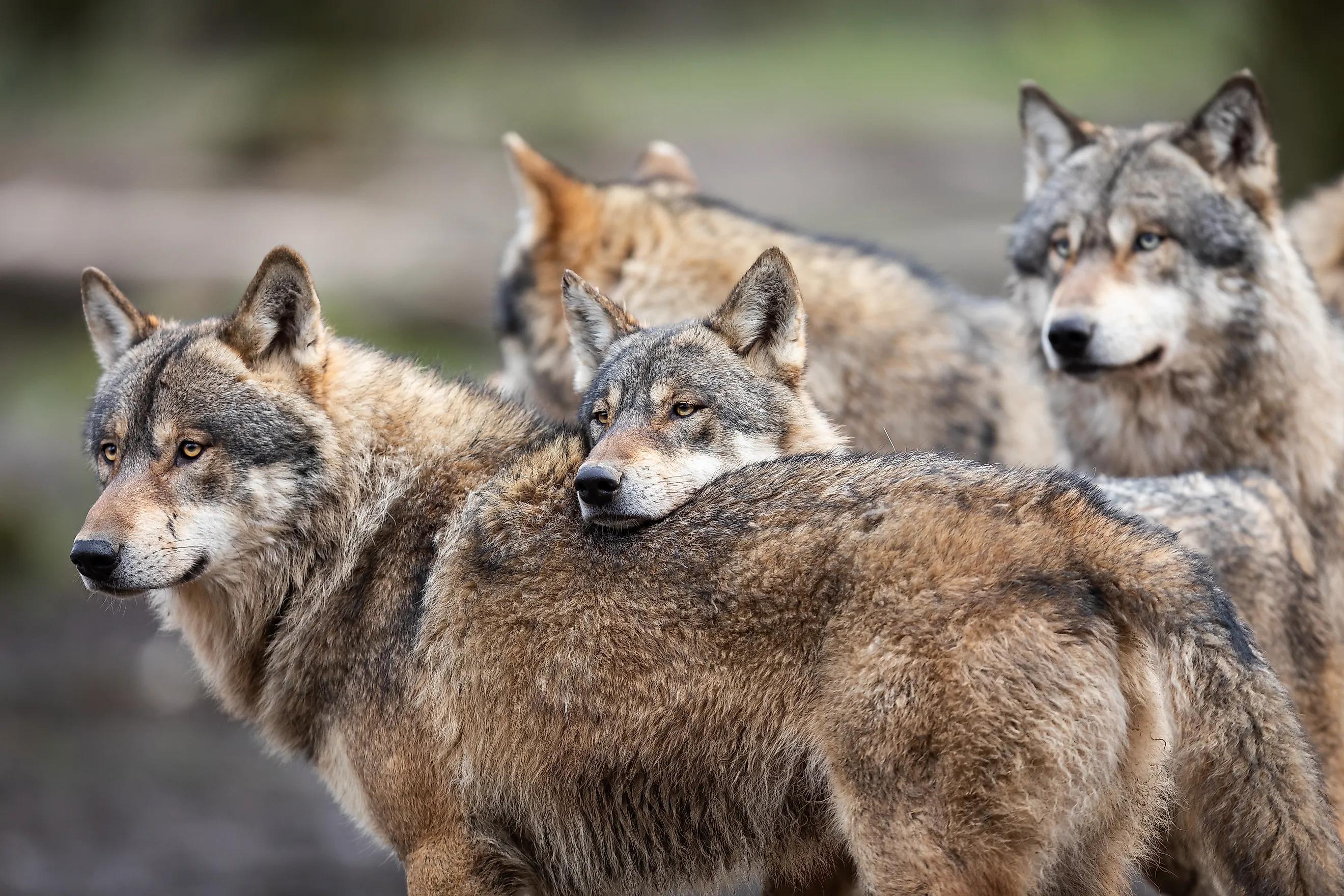
Four regions account for nearly all wolf activity in the United States: the Great Lakes, the Northern Rockies, the Pacific Northwest, and Alaska. Each holds a distinct population shaped by terrain, prey, and decades of shifting legal status. With roughly 18,000 wolves now living across the country, these four regions tell most of the story of where the species stands today and what traveling or living alongside them actually looks like.
The Great Lakes Region: Minnesota, Wisconsin, and Michigan

The highest wolf density in the contiguous 48 states is not in the Rockies or the Pacific Northwest. It is the Great Lakes. The wolves here are usually classed as the eastern timber wolf (Canis lupus lycaon), though their exact status is genuinely unsettled: studies have variously treated Great Lakes wolves as lycaon, as the Great Plains wolf (C. lupus nubilus), as an admixture of the two, or as a distinct species (C. lycaon), and federal agencies have repeatedly reverted to C. lupus lycaon in the absence of consensus. Whatever the label, the population is the largest in the Lower 48. According to data compiled by the Wolf Conservation Center and the International Wolf Center, Minnesota anchors the region with roughly 2,691 wolves, followed by Wisconsin at more than 1,200, and Michigan at about 762.
Three connected landscapes give the Great Lakes their wolf density. Superior National Forest covers more than 3.9 million acres in northeastern Minnesota, where boreal forest, wetlands, and lakes provide denning habitat and the white-tailed deer that sustain packs year-round. Within the forest lies the 1.09 million-acre Boundary Waters Canoe Area Wilderness, a network of lakes and portage routes that doubles as some of the continent's best wolf territory. And then there is Isle Royale National Park, a roadless island in Lake Superior that has hosted one of the longest-running predator-prey studies on Earth, tracking wolves and moose for more than six decades. Paddlers camping in the Boundary Waters often report hearing wolf howls carry across the water at dusk.
Minnesota is the only state in the contiguous 48 where wolves never fully disappeared. Wisconsin and Michigan wolves descended from that surviving population, spreading naturally across the region. Federal protections in both states have been challenged repeatedly in court, and their long-term status remains unresolved under the Endangered Species Act.
The Northern Rockies: Montana, Idaho, and Wyoming

No wolf story in America is more widely told than the Yellowstone reintroduction of 1995. The U.S. Fish and Wildlife Service and the National Park Service released 14 gray wolves captured in Alberta, Canada, into Yellowstone National Park, followed by 17 more in 1996. The Northern Rockies today support about 2,490 wolves: Idaho leads with roughly 1,150, Montana with approximately 1,091 per the most current statewide estimate, and Wyoming with 253 as of the end of 2025. That is Wyoming's lowest count in 20 years, following a canine distemper outbreak that hit Yellowstone and northwestern Wyoming hard.
The Greater Yellowstone Ecosystem remains the most studied wolf habitat, but the region's wolf density extends well beyond the park. The Northern Rockies offer a rare combination of vast, undisturbed terrain, low road density, and prey populations of elk, deer, and bison large enough to sustain dozens of packs across several states.
Beyond Yellowstone, the Frank Church-River of No Return Wilderness in central Idaho, the largest contiguous wilderness area in the Lower 48 at about 2.4 million acres, gives wolves room to range with minimal human contact. Glacier National Park in northwestern Montana, against the Canadian border, serves as a corridor for wolves moving between U.S. and Canadian populations.
The Pacific Northwest: Washington, Oregon, and Northern California

The Pacific Northwest is an active front for wolf recovery, with Washington, Oregon, and Northern California supporting more than 550 wolves. Washington counts at least 270 in 49 packs as of late 2025, Oregon tallies 230 as of April 2026, and California is home to more than 50 wolves across roughly 10 active packs, depending on the count and season.
Washington's wolf population was near extinction by the 1930s. The first resident pack was documented in Okanogan County in 2008. Since then, according to the Washington Department of Fish and Wildlife's 2025 annual report, the population has grown at an average of about 21 percent per year, rebounding after a brief dip in 2024. Wolves are most abundant in the northeastern corner of the state, where many packs occupy areas in and around the Colville National Forest, though the species has steadily pushed westward into the Cascades.
Oregon's wolves are anchored in the Blue Mountains and Wallowa Mountains of the eastern part of the state, while California's activity centers on Lassen National Forest and the Siskiyou-Modoc corridor near the Oregon border. Wolf sightings in Oregon's central Cascades have increased steadily, a sign that westward range expansion is underway. In 2024, Oregon recorded 69 confirmed livestock depredation events, down slightly from 73 in 2023, while the Oregon Department of Agriculture awarded nearly $790,000 in grants to 13 counties for conflict prevention, most of it supporting non-lethal deterrents. The trend points toward continued growth, but recovery here demands active management to navigate the overlap between wolf territory and working rangeland.
Alaska: The Last Frontier for Wolves

Alaska supports the largest wolf population in the United States, far exceeding any other state, with an estimated 7,000 to 11,000 wolves across a landmass larger than Texas, California, and Montana combined. Abundant and varied prey, including caribou, moose, and Dall sheep, paired with vast wilderness and a thin human population, create conditions wolves have used for millennia.
Denali National Park and Preserve is the center of Alaska's wolf-watching. At over 6 million acres, the park counted 56 wolves across 10 to 11 packs in both its spring and fall 2024 surveys, according to National Park Service monitoring. The 92-mile Denali Park Road is the main artery for wildlife viewing, and the wolves of the park's eastern packs, historically including the well-known Toklat wolves, have at times stayed remarkably calm around visitor buses. The Park Service tracks wolf sightings along the road, and rangers are the best first resource for where packs have turned up recently.
Dawn is the prime window for wolf sightings in Denali. Wolves travel and hunt low and fast across gravel bars and creek beds, and an early bus ride, before the valley floor warms and animals move into cover, offers the best odds. For those who do not see one, the park still delivers in scale and silence, with the animals out there somewhere in a landscape the size of New Hampshire.
The Arctic National Wildlife Refuge and the Kenai Peninsula round out Alaska's wolf landscape. The refuge, one of the most ecologically intact places left in North America, supports wolves whose territories overlap with large caribou herds and whose lives play out almost entirely beyond human observation. Population dynamics across the state largely track prey: wolf numbers rise and fall with caribou and moose through multi-year boom-and-bust cycles that wildlife managers watch closely.
Wolves are part of the Alaskan landscape in a way that has no equivalent in the Lower 48. Hikers, anglers, and backcountry travelers encounter them with some regularity across the state's roadless interior. The Alaska Department of Fish and Game notes that wolves rarely pose a threat to people, though the same precautions used in bear country, securing food and garbage and staying alert in remote terrain, apply just as well.
Living and Recreating Safely in Wolf Country

Wolf country is safer than its reputation suggests. A study by Linnell, Kovtun, and Rouart (2021), published by the Norwegian Institute for Nature Research as NINA Report 1944, examined wolf attacks worldwide between 2002 and 2020 and identified 489 relatively reliable cases involving human victims, the overwhelming majority in Asia and involving rabid animals. In Europe and North America combined, the report found roughly a dozen attacks across the 18-year window, two of them fatal, both in North America. With an estimated 60,000 wolves sharing the two continents with hundreds of millions of people, the authors concluded that the risk of a wolf attack is above zero but far too low to calculate. For comparison, domestic dogs cause an estimated 4.5 million bites a year in the United States and roughly 30 to 50 deaths, according to the Centers for Disease Control and Prevention.
Both modern North American fatalities trace back to habituation, the process by which wolves lose their wariness of humans through repeated exposure to food or close contact. The 2005 death in Saskatchewan occurred near a remote mining camp where an open garbage dump had conditioned local wolves to associate people with food. The 2010 fatality in Alaska, confirmed through DNA analysis as predatory, remains the only documented case of its kind in the state's history. More recently, two non-fatal bites near Yellowknife, Northwest Territories, in September and October 2024 prompted wildlife officers to euthanize a wolf as a precaution. In nearly every documented case of wolf aggression, the animal had already lost its natural wariness of people.
If you encounter a wolf, stand tall, make noise, and back away slowly without turning your back or running, which can trigger a chase. Making yourself look bigger, by raising your arms or holding a jacket or pack overhead, can discourage a curious approach, and throwing objects near (not at) an advancing wolf can startle it off. Unlike with bears, playing dead does not work; if attacked, fight back. The best prevention is simple: never feed wolves or leave food accessible, secure food and garbage, keep pets leashed, and avoid known den sites. For ranchers, fladry, livestock guardian animals, and prompt carcass removal remain the most field-tested non-lethal deterrents, backed by compensation programs in most western states.
A Future of Coexistence

The arc is clear: gray wolves were largely eliminated from most of the contiguous United States by the mid-20th century. Today they hold stable populations across the Great Lakes, the Northern Rockies, the Pacific Northwest, and Alaska, with range expansion and recolonization continuing in suitable habitat across several of these regions. Research from Yellowstone documents what that return has meant ecologically, from shifts in elk behavior to the recovery of riparian vegetation and the return of beaver to drainages where they had been absent for decades.
That recovery remains incomplete and contested. As Ausband and Mech noted in their 2023 BioScience analysis, future wolf management will mean navigating social divides, managing human tolerance, and confronting livestock conflict in landscapes where wilderness and agriculture intertwine. The decisions made by wildlife managers, policymakers, ranchers, and citizens in the coming decades will determine whether wolves keep expanding their range or stay confined to existing strongholds.
Where Wolves Still Roam
For the traveler, the hiker, or the wildlife enthusiast heading into wolf country, the most useful thing to carry is not fear; it is context. Wolves are wary and intelligent, and in the overwhelming majority of encounters they are actively avoiding people. A howl across a Minnesota lake, a brief sighting on a Yellowstone ridge, a set of tracks crossing a backcountry trail in the Cascades: these are the signs of a population that came back from near zero, which by any measure is a significant ecological recovery.