The American Mountains With The Darkest Night Skies
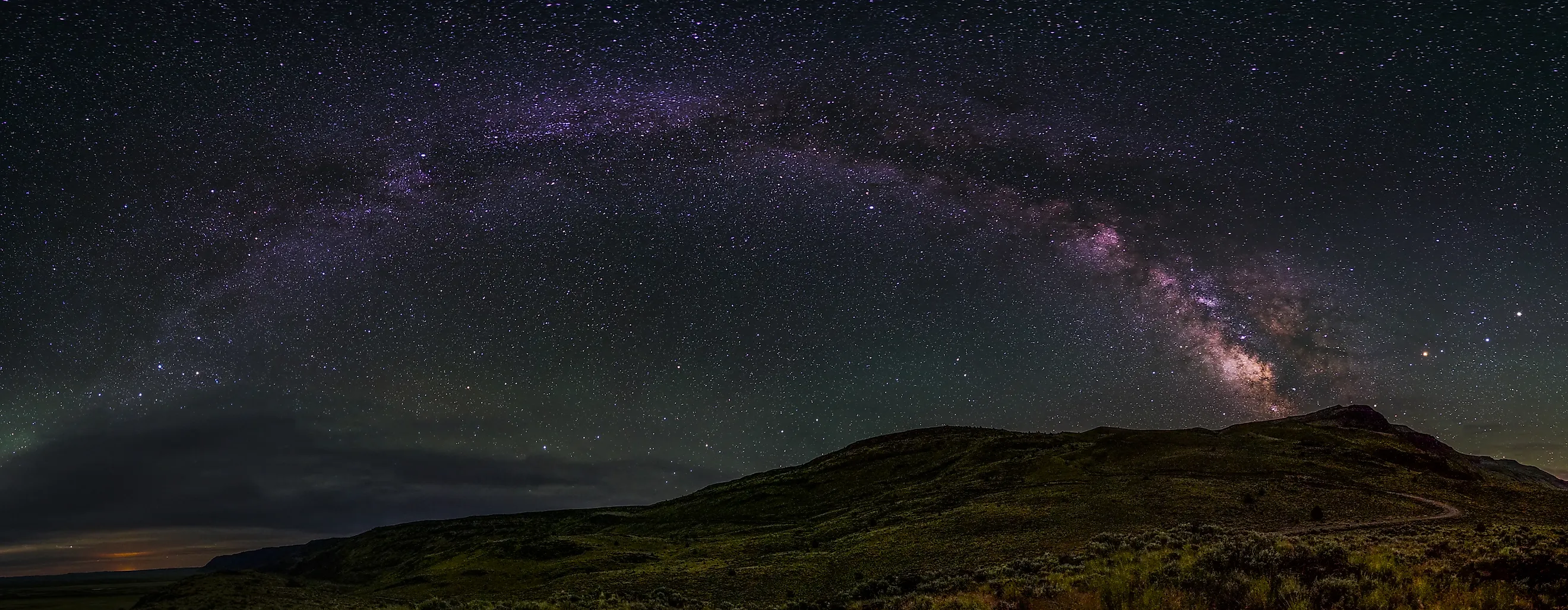
More than 99% of the US population lives under light-polluted skies, according to a 2016 study published in Science Advances. With streetlights, brightly lit parking lots, arenas, and passing headlights brightening the night, it can be easy to forget how dark the sky actually is and how many stars appear when you get away from populated areas. Seeing that many stars for the first time can make you pause and remember where you truly are. You are on a rock spinning through space, surrounded by a universe filled with stars, planets, and galaxies larger than anything you can imagine. A remote mountain excursion can combine a dark sky encounter with a day of hiking and sightseeing. After sunset, bright stars emerge above the slopes and ridgelines. These American mountains lie within officially designated dark sky locations that protect natural darkness and the views of the universe it reveals.
Capulin Volcano, New Mexico
In northeastern New Mexico, Capulin Volcano sits among volcanic cones, mesas, and buttes in one of the darker areas of the lower 48 states. These landforms help shield the night sky from distant lights, while the rugged terrain has discouraged development in the area. The extinct volcano rises about 1,300 feet above the surrounding plains, reaching an elevation of 8,182 feet (2,494 meters). The cinder cone belongs to the Raton-Clayton Volcanic Field, near the foothills of the Sangre de Cristo Mountains. In 2016, Capulin Volcano National Monument earned International Dark Sky Park designation.
During daylight, the Crater Rim Trail follows a paved, one-mile loop with approximately 300 feet of elevation change. The climb reaches the volcano's highest point, with extensive views all the way into Colorado, Oklahoma, and Texas on clear days. Stargazing does not require climbing the cone after sunset. Overnight camping is prohibited in the Night Sky Viewing Area near the visitor center, but the area remains open 24 hours a day for observing the stars.
Sunset Crater Volcano, Arizona

Sunset Crater Volcano offers dark-sky viewing about a half-hour drive from Flagstaff, a city that has regulated outdoor lighting for decades to control light pollution. City and county lighting codes help limit the artificial light in the area. In 2016, Sunset Crater Volcano National Monument received International Dark Sky Park designation jointly with Wupatki and Walnut Canyon National Monuments. The summit reaches 8,039 feet (2,450 meters) in northern Arizona's San Francisco Volcanic Field. Local observatories, Flagstaff officials, and area land managers work together to reduce light pollution, helping keep the sky above Sunset Crater dark despite nearby Flagstaff.
The Lava Flow Trail parking lot serves as a gathering place for nighttime astronomy events, where rangers and volunteer astronomers help people explore the sky with telescopes. Observation takes place below the mountain, since the summit is closed to hiking. Before sunset, the one-mile Lava Flow Trail winds through the Bonito Lava Flow at the cone's base and includes a paved, accessible quarter-mile upper loop. Roads and designated trails normally remain open around the clock, allowing a daytime mountain hike to move into an evening of stargazing.
Wheeler Peak, Nevada

At Wheeler Peak, a clear, moonless night can reveal a sky crowded with stars, the Milky Way, and even the Andromeda Galaxy without a telescope. The mountain rises to 13,063 feet (3,982 meters) in eastern Nevada's Snake Range, making it the state's second-highest peak. Not many people live in this part of Nevada, and the surrounding mountain ranges help block the glow of distant cities. Great Basin National Park, which includes Wheeler Peak, earned International Dark Sky Park designation in 2016. The park uses red exterior lights, motion sensors, and reduced exterior lighting to keep it dark. Staff also measure sky brightness monthly. A handheld device called a Sky Quality Meter is one tool used for sky-brightness surveys, measuring brightness when pointed overhead.
Mather Overlook, along Wheeler Peak Scenic Drive, is one of the National Park Service's recommended stargazing locations. There is no need to reach the summit to experience the mountain's dark surroundings. For a daytime climb, Wheeler Peak Summit Trail covers 8.6 miles round trip and gains approximately 3,100 feet. The strenuous route crosses exposed terrain where there can be high winds and thunderstorms, so rangers recommend starting at dawn during the summer hiking season. An evening at the overlook is a less challenging way to spend time there, letting darkness reveal celestial objects far above Nevada's ridgelines.
Hart Mountain, Oregon

Hart Mountain lies within a region that DarkSky International identifies as part of the largest contiguous dark-sky zone in the US. In 2024, Hart Mountain National Antelope Refuge became part of the Oregon Outback International Dark Sky Sanctuary, covering approximately 2.5 million acres in southeastern Oregon. Not many people live in the surrounding area, so there is very little light pollution. Hart Mountain rises sharply above Warner Valley, forming a massive ridge lifted along a geological fault. Its highest point, Warner Peak, reaches 8,017 feet (2,444 meters), according to the US Fish and Wildlife Service.
An overnight stay makes it possible to watch the sky darken. Hot Springs Campground, near the western side of Warner Peak, offers the chance to enjoy the hot springs and stay for an evening of stargazing. Camp Hart Mountain and Post Meadows provide two other camping options within the wildlife refuge. Camping is free and available on a first-come, first-served basis, but subject to seasonal closures. The camps have vault toilets, but most have no drinking water, so campers need to bring their own water.
Mount Locke, Texas

Mount Locke is home to an observatory that reports the darkest skies of any research observatory in the continental US. McDonald Observatory has telescopes on Mount Locke and neighboring Mount Fowlkes in the Davis Mountains of West Texas, near Fort Davis. Mount Locke reaches approximately 6,800 feet (2,073 meters), much higher than the surrounding desert. Both mountains lie within the Greater Big Bend International Dark Sky Reserve, which received its dark-sky designation in 2022. McDonald Observatory works with nearby businesses and communities to reduce light pollution. Its Night-Sky Friendly Recognition Program recognizes businesses and organizations that use lighting designed to limit glare and direct light downward.
Mount Locke offers an opportunity to see what celestial objects look like through a research telescope. On selected evenings, the observatory opens its 82-inch Otto Struve Telescope, near the summit, for group viewing programs. Depending on the season and conditions, subjects can include Saturn, the Whirlpool Galaxy, and the Orion Nebula. The staff help participants look through the telescope and explain the objects in view. Advance booking is required, and program dates depend on the observatory's research schedule.
Telescope Peak, California

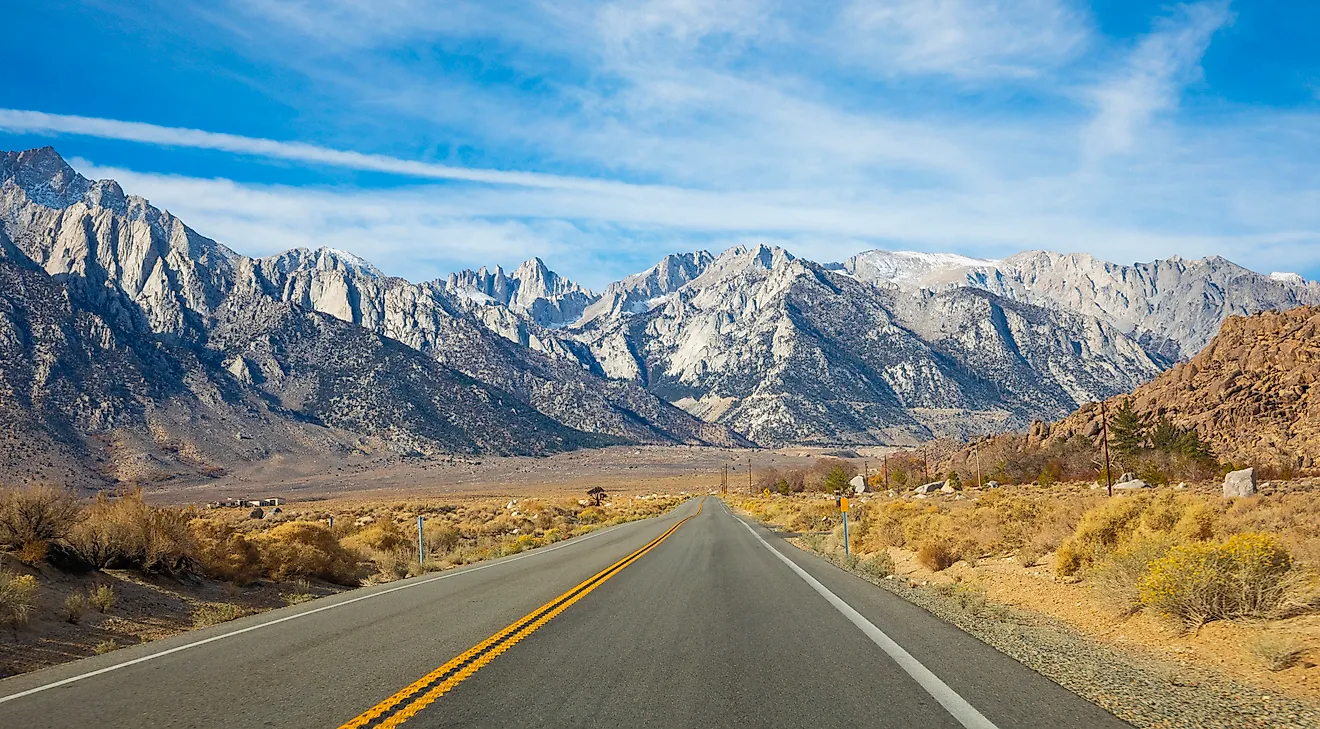
Telescope Peak overlooks Death Valley in a landscape recognized for some of the darkest skies in the US. It is the highest mountain in Death Valley National Park at 11,049 feet (3,368 meters) in California's Panamint Mountains. Its distance from major cities helps limit light pollution across the park, which received International Dark Sky Park designation in 2013. Under clear, moonless skies, the Milky Way is clearly visible instead of disappearing in the glow of artificial lights. The mountain can add another dimension to the viewing experience with a high-elevation camping trip above the desert floor.
Mahogany Flat Campground, at the Telescope Peak trailhead, provides an overnight base for spending time on the mountain. The campground has no water, and the National Park Service recommends a high-clearance vehicle with four-wheel drive for the final 1.5 miles of road, which is very rough. A daytime summit hike covers 14 miles round trip with approximately 3,000 feet of elevation gain. The difficult route passes ancient bristlecone pines before reaching a narrow summit ridge. Camping at the trailhead, however, provides an evening beneath the stars without necessarily climbing to the summit.
Mountains Beneath A Sky Full Of Stars
Darkness is part of what makes these mountains worth exploring. At Mount Locke, people can use a powerful telescope to view distant galaxies. Around Wheeler Peak, the Andromeda Galaxy can often be seen with the naked eye. A summit hike can fill daylight hours, while an overlook or campsite offers plenty to see after sunset. As the ridgelines fade into darkness, the stars reveal how much lies above and beyond the landscape.