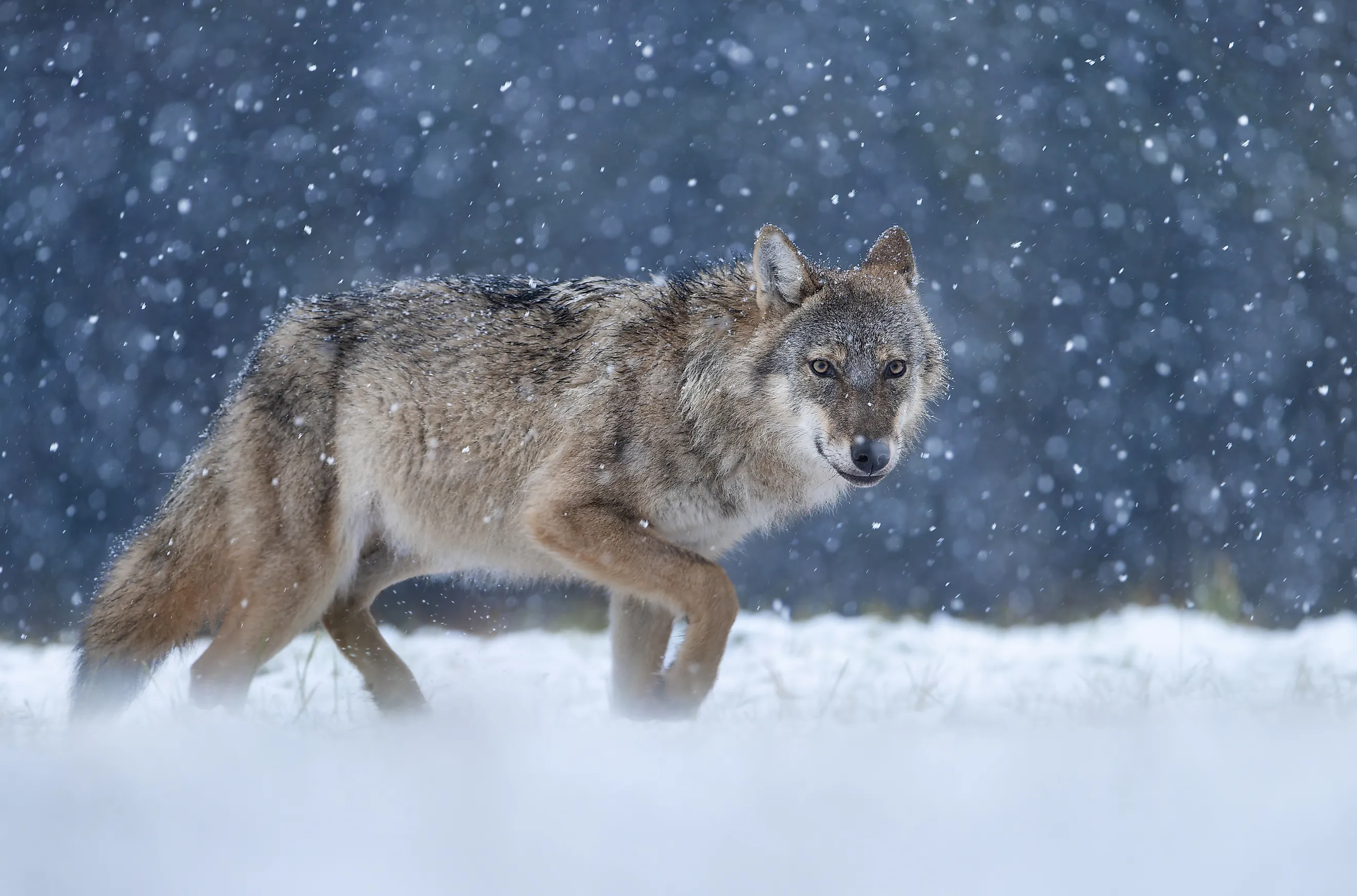
The National Parks Where You Can See Wolves In The Wild
Gray wolves (Canis lupus) have been apex predators in North America's ecosystems for thousands of years, but by the mid-20th century, they were nearly eradicated. Over time, wolves have been reintroduced to the Greater Yellowstone Ecosystem, reestablishing packs throughout Yellowstone and Grand Teton National Parks. In 1910, Glacier National Park was home to several of the last surviving wolf packs in the contiguous United States. Voyageurs National Park, on the other hand, was not established until 1975 and is the only national park in the contiguous United States where wolves were never extirpated. While wolves are notoriously elusive and sightings are far from guaranteed, these national parks across the US are among the most likely spots to see them in the wild.
Yellowstone National Park, Wyoming, Montana, and Idaho

Yellowstone National Park is one of the best places in the world to see wolves in the wild. This was not always the case, however. In the 1800s, westward expansion brought settlers and their livestock into direct conflict with them. Between 1914 and 1926, at least 136 wolves were killed in the park, and by the 1940s, they were nearly extinct in the area. Between 1995 and 1996, 31 gray wolves from western Canada were relocated to Yellowstone, and as of January 2026, there were at least 84 in the park, spread across eight different packs.
Wolves are most commonly seen in the Lamar Valley in the park's northeast corner. Other areas in the park include Elk Creek, where the oldest wolf in the park currently lives, as well as Blacktail Plateau and the Hayden Valley. They are easier to view in the winter as their dark coats contrast with the snow on the ground.
Grand Teton National Park, Wyoming

As it is in the Greater Yellowstone Ecosystem, when Yellowstone introduced wolves between 1995 and 1996, some wolves dispersed southward towards Grand Teton National Park. In 1999, a wolf pack denned in Grand Teton and produced a litter of pups, the first in the park in over 70 years. By the end of 2024, there were 46 wolves in the park spread across six different packs. Generally, they move freely between Yellowstone and Grand Teton, following migrating elk and moose herds through the Snake River corridor.
Wolves are typically spotted in quieter areas of Grand Teton around Buffalo Fork drainage, Spread Creek, and Pacific Creek regions. Elk Ranch Flats is an easily accessible turnout that has particularly good viewing opportunities. Since Grand Teton is smaller and has denser forests, wolves are harder to see, although their howls can be heard throughout the valley early in the morning.
Denali National Park and Preserve, Alaska

As of fall 2025, there were nine different packs and 54 wolves counted in Denali National Park and Preserve. Denali's wolves are among the longest-studied wild populations. The research that began in 1939 continues to this day. While Denali is regarded as one of the best places to see them in the wild, particularly in the eastern region of the park, sightings remain unpredictable. When they are spotted, it's usually along the park's sole road, Denali Park Road. Certain factors dictate sightings, such as den locations and kill sights. If they make a kill near the road, they will often remain in the area for several days, creating a brief viewing window before they move on.
Glacier National Park, Montana

By 1910, wolf packs had nearly vanished from the contiguous United States. Several of the last surviving packs were in Glacier National Park and were eliminated by 1936. The park was free of wolves for approximately 50 years until the 1980s, when members of the Magic Pack in Canada denned and gave birth to a litter of five pups in the North Fork area. Now, there are an estimated six to eight packs in the park. Wolves are most abundant in the North Fork area, although they can also be seen along the Camas Road, with many sightings occurring at dusk. The Polebridge area on the park's west side also offers some of the highest chances of seeing a wolf.
Voyageurs National Park, Minnesota

Unlike other national parks, the gray wolves of Voyageurs National Park were never extirpated from the region. In fact, Voyageurs is the only national park in the contiguous United States that has never lost its wolf population. The remote wetlands of Voyageurs discouraged human settlement, while the shared border with Ontario allowed wolves to cross and avoid people. Consequently, the wolf population is much greater. According to recent winter counts, there were 66 wolves and 16 packs in and around the park. They are most often seen in the winter, moving along the shorelines of Rainy, Kabetogama, Namakan, and Sand Point Lakes. They tend to be more active when temperatures are lower and the park is less crowded. Although less common, wolves can also be seen crossing the park entrance roads.
Isle Royale National Park, Michigan

Wolves first arrived in Isle Royale National Park in the late 1940s. They likely crossed an ice bridge that joined the island to the Canadian mainland in the winter of 1948. The population has fluctuated from 50 animals in 1980 to just two individuals between 2016 and 2018. Their population is affected by several factors, such as the availability of moose, their primary food source, the spread of canine disease, and inbreeding.
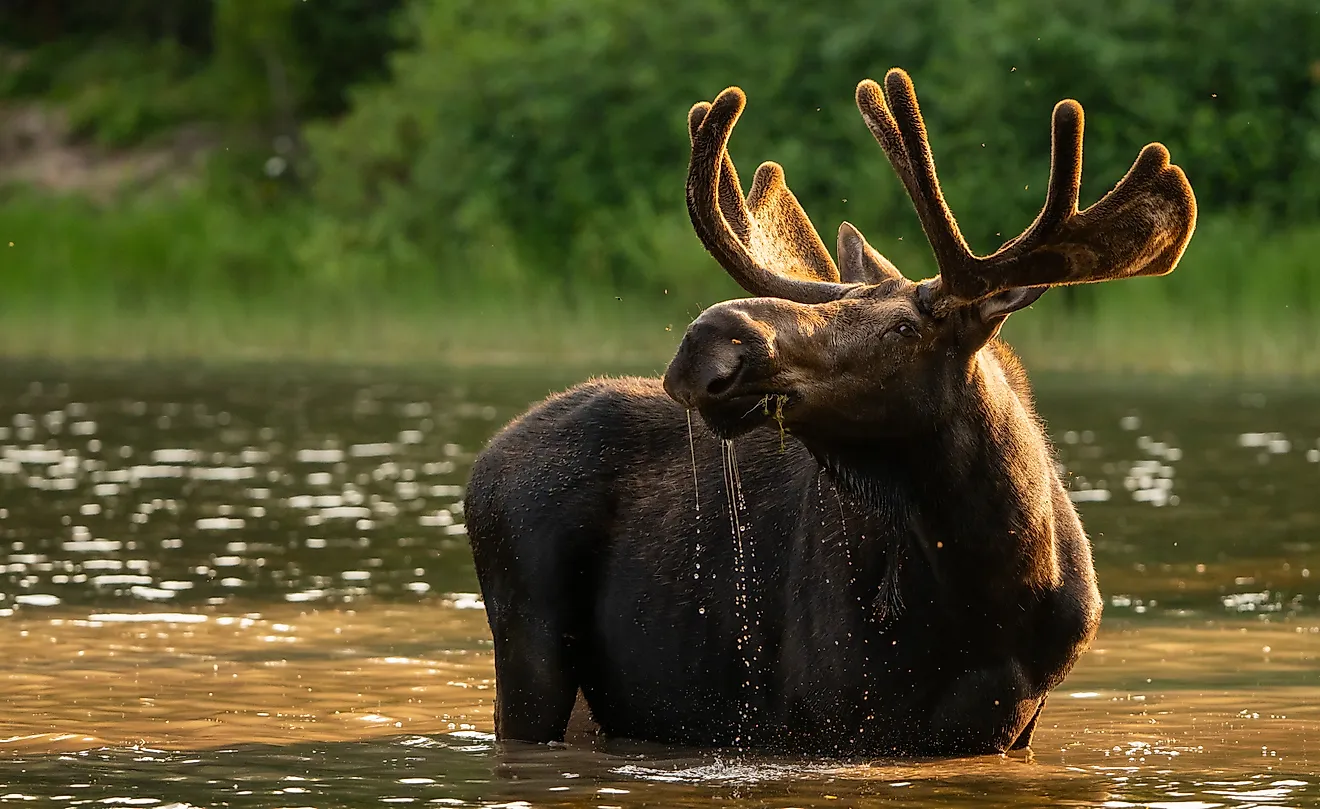
As of the 2026 winter survey, there were an estimated 37 wolves on the island. They are most commonly observed along lakeshores, open areas, and hiking trails, though not often. Moose are frequently sighted at Washington Creek, Ojibway Lake, Feldtmann Lake, and Hidden Lake, which generally suggests that wolves inhabit the area as well, preying on older animals and calves.
Wolves in the Wild

America's national parks offer some of the best opportunities to see gray wolves in their natural habitat. Each national park's wolf population has its own history shaped by geography, prey, and its relationship with humans. However, as with any wildlife, sightings are not guaranteed. Although Grand Teton is relatively small, its forests are dense enough for wolves to go unnoticed, while Voyageurs is remote, rugged, and its border with Canada allows wolves to migrate freely.







.jpg)