How Many Cities Get Their Water From Lake Michigan
Lake Michigan supplies some or all of the municipal drinking water in at least 96 cities across four states. That includes 34 in Illinois, 29 in Michigan, 24 in Wisconsin, and nine in Indiana. Many villages and townships also use lake water, bringing the broader number of communities served to more than 200. Cities receive it through their own treatment plants or by purchasing treated water from another utility.
The connections reach well inland. Naperville receives Lake Michigan water through the DuPage Water Commission, while Grand Rapids pumps its supply inland from a lakeshore treatment plant. Waukesha began switching in 2023. Joliet and its partners are preparing for a 2030 connection, so their planned service is separate from the cities already receiving lake water.
Chicago Supplies About 120 Suburbs

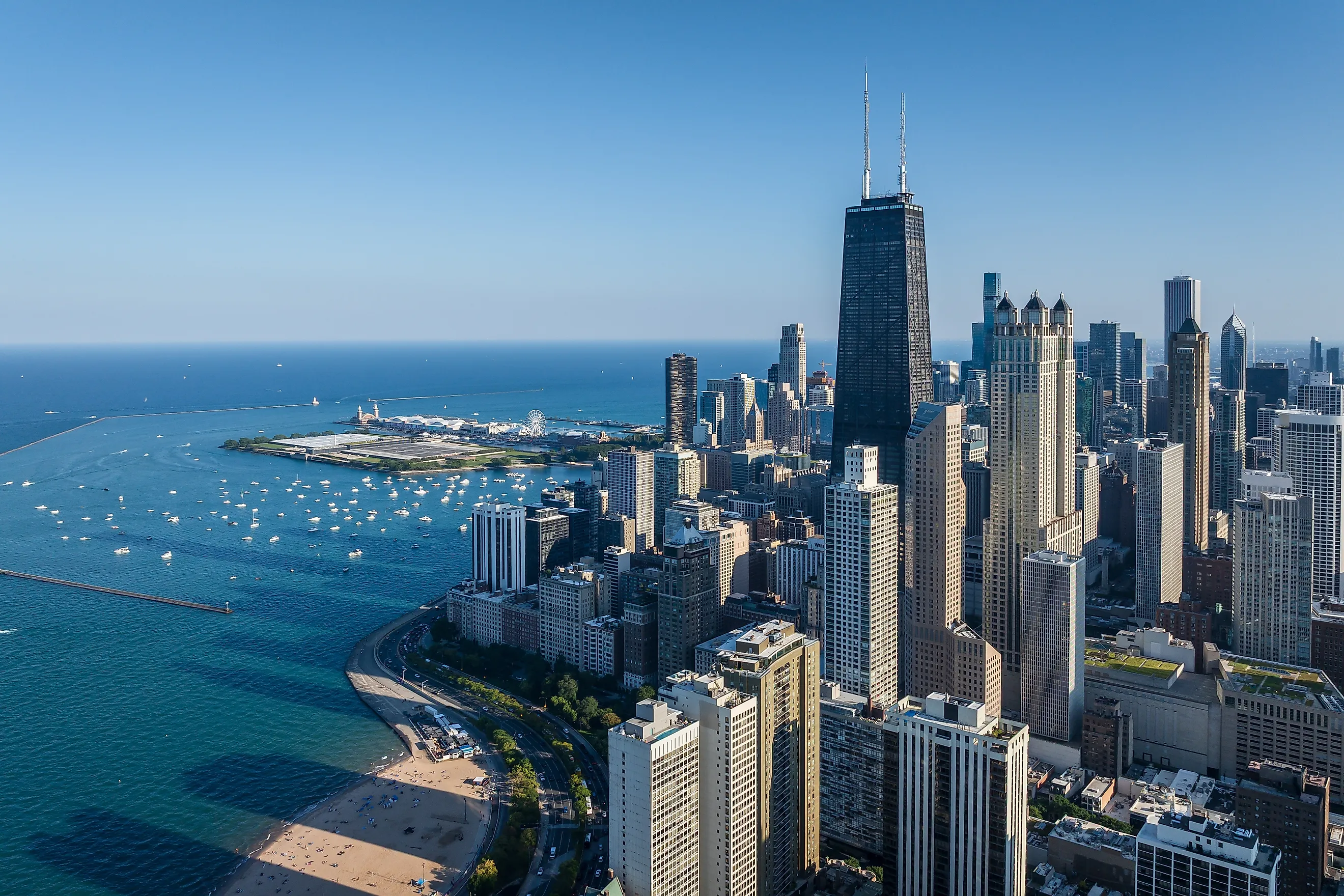
Chicago's Jardine and Sawyer purification plants treat Lake Michigan water for the city and about 120 suburbs. Jardine stands near Navy Pier; Sawyer occupies a South Side lakefront site near Rainbow Beach. Suburban utilities can buy treated water directly or receive it through another supplier.
The DuPage Water Commission buys water from Chicago and resells it to local utilities, including those serving Naperville and Wheaton. Those utilities then distribute it to customers. A resident's water bill can carry the name of a suburban utility even though Chicago treated the supply beside the lake.
Across northeastern Illinois, 172 municipalities used Lake Michigan water as of 2021, according to a University of Illinois Chicago study. That figure includes villages as well as cities. Chicago's suburban customers are part of this larger group, which also includes communities supplied through other lake-water systems.
Separate Water Networks Serve The Other Three States

Milwaukee Water Works supplies more than 920,000 people in Milwaukee and 16 surrounding communities, according to its 2025 water-quality report. Farther north, the Central Brown County Water Authority delivers Lake Michigan water treated by Manitowoc Public Utilities to seven member communities. De Pere and Allouez are among them. Each member maintains its own local utility, while the authority operates the pipeline delivering water to those systems.
Indiana has separate suppliers, too. Hammond Water Works draws from Lake Michigan and sells treated water to the city of Whiting and the nearby town of Munster. On the Michigan shore, Holland and Muskegon operate their own lake-water treatment plants. Muskegon's plant also supplies eight neighboring communities, including Norton Shores and Roosevelt Park.
Grand Rapids Gets Its Water Through An Inland Connection

The Grand River runs through Grand Rapids, but Lake Michigan supplies the city's drinking water. Its water system also serves nearby cities, including East Grand Rapids and Kentwood. Treatment takes place on the lakeshore before the water is pumped inland. The regional distribution network contains more than 1,300 miles of water mains and 16 storage tanks.
Grand Rapids once drew drinking water from the Grand River and treated it at a plant on Monroe Avenue. A later pipeline brought Lake Michigan water to that plant. In 1962, the city opened its Lake Michigan Filtration Plant on the lakeshore, and both facilities operated for decades. Expanding the lakeshore plant to a capacity of 135 million gallons per day in 1992 allowed the Monroe plant to close.
Waukesha Must Send Water Back To The Lake

Waukesha began changing to Lake Michigan water in October 2023 to replace groundwater affected by high radium concentrations. Milwaukee supplies its drinking water. Waukesha lies outside the Great Lakes basin, where water naturally drains toward a different river system.
The Great Lakes Compact generally prohibits new diversions outside the basin, with limited exceptions. Waukesha qualified as a community in a county that straddles the basin boundary. Its approval requires it to return a volume of treated wastewater approximately equal to its annual withdrawal. A separate pipeline carries that treated wastewater to the Root River, which flows into Lake Michigan.
The utility also serves some residents of the City of Pewaukee. Those customers switched with Waukesha, even though Pewaukee's own municipal utility uses groundwater.
Joliet And Five Neighbors Plan To Connect In 2030

Joliet and five partner communities rely primarily on a declining groundwater aquifer. They formed the Grand Prairie Water Commission to obtain treated Lake Michigan water through Chicago. Crest Hill is the other city in the group. Channahon, Minooka, Romeoville, and Shorewood are villages. Joliet announced a 100-year water purchase agreement with Chicago in 2023.
The project calls for a 62-mile regional transmission network, with delivery targeted for 2030. In March 2026, the EPA announced a $610 million loan supporting the change for almost 300,000 residents. Chicago will supply treated water at its Southwest Pumping Station site. New pumping facilities and transmission mains will carry it toward Joliet for distribution through the existing local system. The commission's estimated program cost is nearly $1.45 billion through completion.
Illinois' Lake Michigan withdrawals are governed by a Supreme Court decree, and the state allocates water among users. Existing suppliers can help make more of that limited allocation available by reducing leaks and improving conservation. Water escaping beneath a suburban street has already been treated and pumped there, using part of the supply without reaching a household. Expanding access therefore involves work on local distribution systems as well as new regional pipelines. In Joliet, the planned connection will feed the existing city network. The commission's construction program includes upgrades to other water infrastructure alongside the transmission mains that will bring Chicago's treated supply to its new customers.