The American Reservoirs That Have Never Been Full
Most reservoirs fill up sooner or later, given a wet enough year. But a strange handful of American reservoirs have never gotten there, not once since the day the dam was finished. In some cases, the water they were built to hold simply never showed up, leaving behind enormous, expensive dams standing guard over dust and mud. Here are the reservoirs that are, in effect, permanently waiting.
O.C. Fisher Reservoir, Texas

Near San Angelo in west Texas, O.C. Fisher Reservoir was impounded in the late 1960s with a conservation capacity of more than half a million acre-feet. In the five-plus decades since, it has never once climbed to that full-pool line. Even the famously wet years of the 1980s, which topped up reservoirs all over the region, could not push it over the threshold. During recent droughts it has sunk to genuinely startling lows, at times sitting at just 1 or 2 percent full, with the shoreline the engineers imagined stranded far out across dry, cracked ground.
E.V. Spence Reservoir, Texas

Also out in west Texas, E.V. Spence Reservoir has the melancholy distinction of having spent its entire operating life below conservation pool. Since the day it was impounded, records show it has never filled to the level engineers drew on the map as "full." The complete shoreline they envisioned when the project was finished is simply a mark the water has never managed to reach, not in a single wet year, not once. Like its neighbors, it delivers water and recreation when conditions allow, always short of the line.
Sanchez Reservoir, Colorado

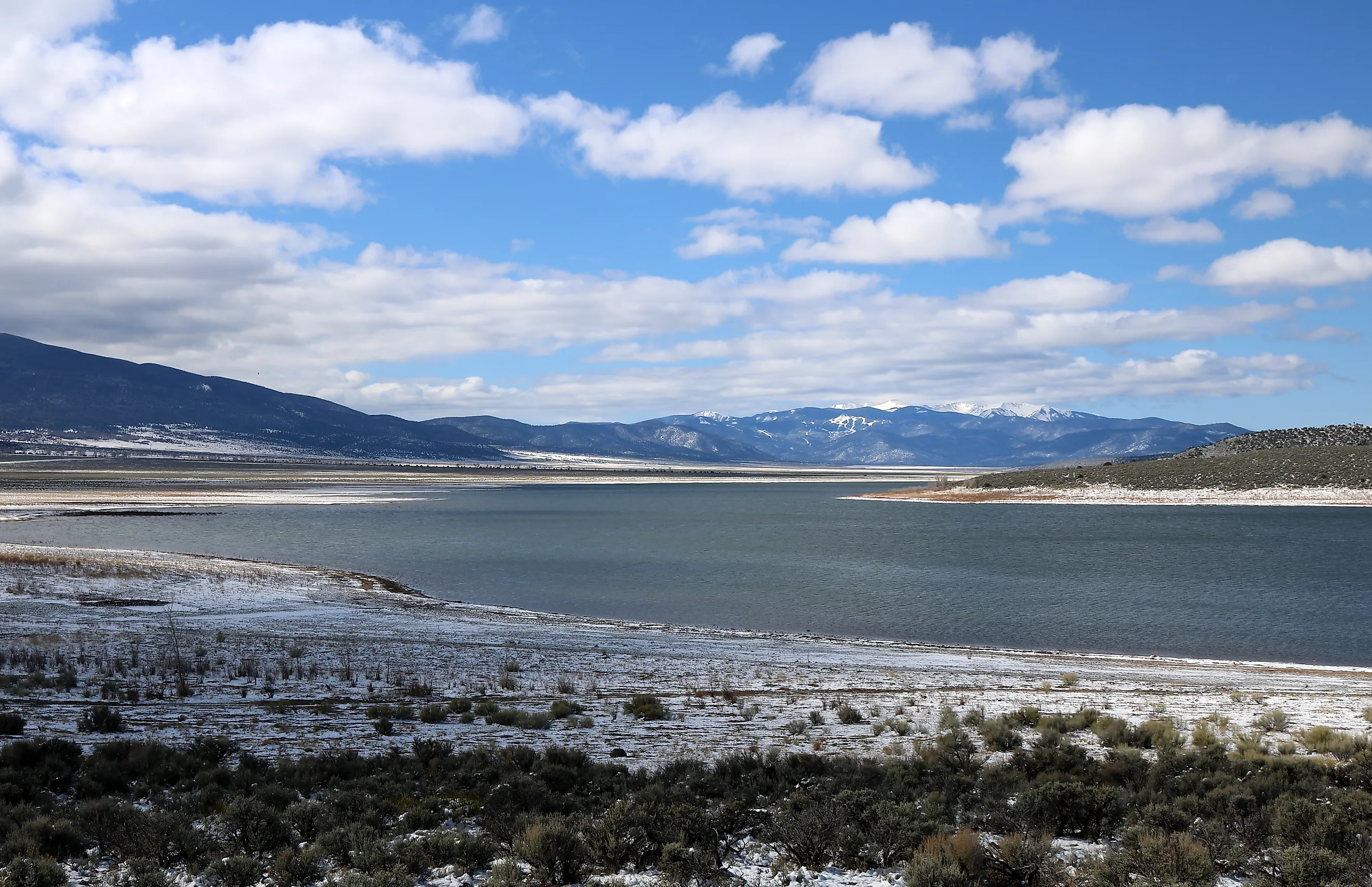
The oldest of the bunch, Sanchez Reservoir in southern Colorado, dates all the way back to 1912. It faces a double handicap. Its earthen dam leaks a great deal, letting water slip away faster than it should, and the surrounding region is chronically short on rain. Between the persistent leaking and the persistent drought, the reservoir simply never manages to reach its full capacity. More than a century after it was built, it remains perpetually under-filled, a quiet, long-running example of a dam that has always held less than it was meant to.
Optima Lake, Oklahoma
Optima Lake is the undisputed champion of empty. The US Army Corps of Engineers finished the three-mile-long Optima Dam near Guymon, in the Oklahoma Panhandle, in 1978, spending roughly 50 million dollars to build a reservoir designed to hold more than 600,000 acre-feet of water and draw millions of tourists. It has never held more than about 5 percent of that. The problem was cruelly simple: during the decade it took to build the dam, the Beaver River that was supposed to fill it slowed to a trickle, as heavy pumping from the Ogallala Aquifer drained the groundwater that fed the river. Today Optima is essentially a dry bowl, its towering dam guarding a puddle. One engineer noted that had it been finished in 1968 instead of 1978, it probably would have filled just fine. It stands as a monument to how fast the water math can turn against you.
Why a Reservoir Never Fills

These are cautionary tales that share a few common threads. Sometimes the river itself was simply overestimated, with the dam sized for a flow that drought, upstream irrigation, or aquifer pumping no longer delivers, exactly what starved Optima. Sometimes fierce evaporation in a hot, arid basin steals more water than the inflow can ever replace. Sometimes the dam leaks, or decades of sediment quietly eat away at the storage space. And increasingly, a warming, drier climate means the optimistic wet assumptions baked into mid-20th-century dam projects no longer hold true. In the end, a dam is only ever as full as the water that reaches it. For these reservoirs, that water never came, a standing reminder that you can build the dam, but you cannot make it rain.