Why Hoover Dam’s Concrete Is Still Getting Stronger 90 Years Later
Most people picture concrete as finished the moment it hardens. Hoover Dam tells a stranger story: the concrete poured into Black Canyon in the 1930s has been getting stronger ever since. The reason starts inside the cement, where water reacts with cement particles to form the compound that binds the whole mass together, and that reaction can keep going long after the surface feels solid. Tests completed in 1995 measured strength gains across roughly 60 years, and the dam is now about 90 years old, still holding back Lake Mead between Nevada and Arizona. But the chemistry is only half of it. Two decisions the builders made in the 1930s did just as much to keep the structure sound, and neither is visible to anyone standing on the dam today.
Water Keeps the Cement Reaction Going
Concrete hardens through a chemical reaction called hydration. When Portland cement meets water, it produces binding compounds, chiefly calcium-silicate hydrate. These bind the sand and larger stones into a solid mass. Unreacted cement can keep producing more of that binding material when enough moisture remains available.
Most strength develops during the first few weeks, but the familiar 28-day strength test is a measurement checkpoint. It does not mark the end of all chemical activity. Continued hydration can increase strength later, with the amount depending on the mixture and its conditions.
Water was important during Hoover's construction, too. The National Park Service describes crews assigned to spray freshly placed concrete during summer. Keeping the surface moist supported curing in the desert heat. Once concrete has dried sufficiently, the reactions responsible for further strength gain cannot continue without water.
Tests Found Stronger Concrete After 60 Years
Hoover's mass concrete was specified for a 28-day compressive strength of about 3,000 pounds per square inch. That measurement describes resistance to crushing under a load. It matters in Black Canyon because water pressure produces compressive forces within the dam's curved wall.
Decades later, engineers tested cores taken from the dam itself. A Bureau of Reclamation report records about 7,290 psi for six-inch cores of 60-year-old Hoover concrete. The design specification and those later cores are not matched specimens, so the pair is not a precise record of strength doubling in place. The later value nevertheless documents substantial resistance to crushing after six decades. Reclamation's comparison used Hoover as a reference for concrete that had performed well with age. The cores came from material that had spent those years inside the working dam, with its reservoir already in place.
The Builders Removed Heat Through Steel Pipes

The same reaction that hardens concrete releases heat. At Hoover's scale, that created a construction problem: the interior could stay hot while the outside cooled and contracted. Engineers calculated that a single continuous pour could have taken 125 years to cool to the surrounding temperature. Uneven cooling would have produced damaging stresses.
Workers instead built the dam in columns, adding concrete in five-foot lifts. One-inch steel pipes carried river water through the fresh concrete, followed by chilled water supplied by a refrigeration plant. The cooling operation was completed in 1935. The often-repeated 125-year figure describes the hypothetical uncooled construction, not the dam's actual cooling schedule. After cooling, workers filled the pipes with grout and injected grout into joints between the columns. Interlocking grooves and grouted joints allowed the separate columns to function together as one structure.
The Stones Helped Hoover Avoid Internal Damage
The chemistry of the stones inside concrete can determine whether it deteriorates. At Hoover, builders used aggregate collected from Colorado River deposits upstream of the construction site. Reclamation later described that aggregate as essentially nonreactive.
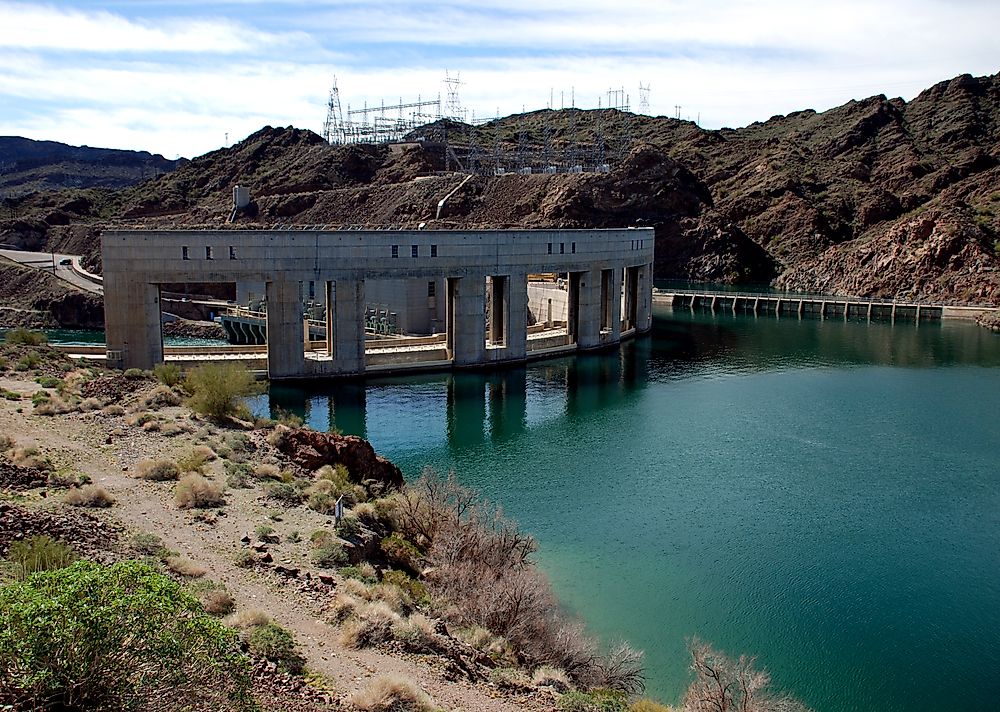
That distinction becomes clear downstream at Parker Dam. Its builders used similar low-heat cement and even some equipment previously used at Hoover. Parker's aggregate came from the Bill Williams River and was susceptible to alkali-silica reaction. In that reaction, alkalis in the concrete react with susceptible silica in the aggregate. The resulting gel can absorb moisture and expand, cracking the surrounding material. Reclamation's 2005 report documented poorer concrete performance at Parker, while Hoover showed little deterioration. Damage within Parker was uneven: some lower sections had strong concrete, while upper sections performed poorly in testing.
The Canyon Walls Carry Part of the Water's Force

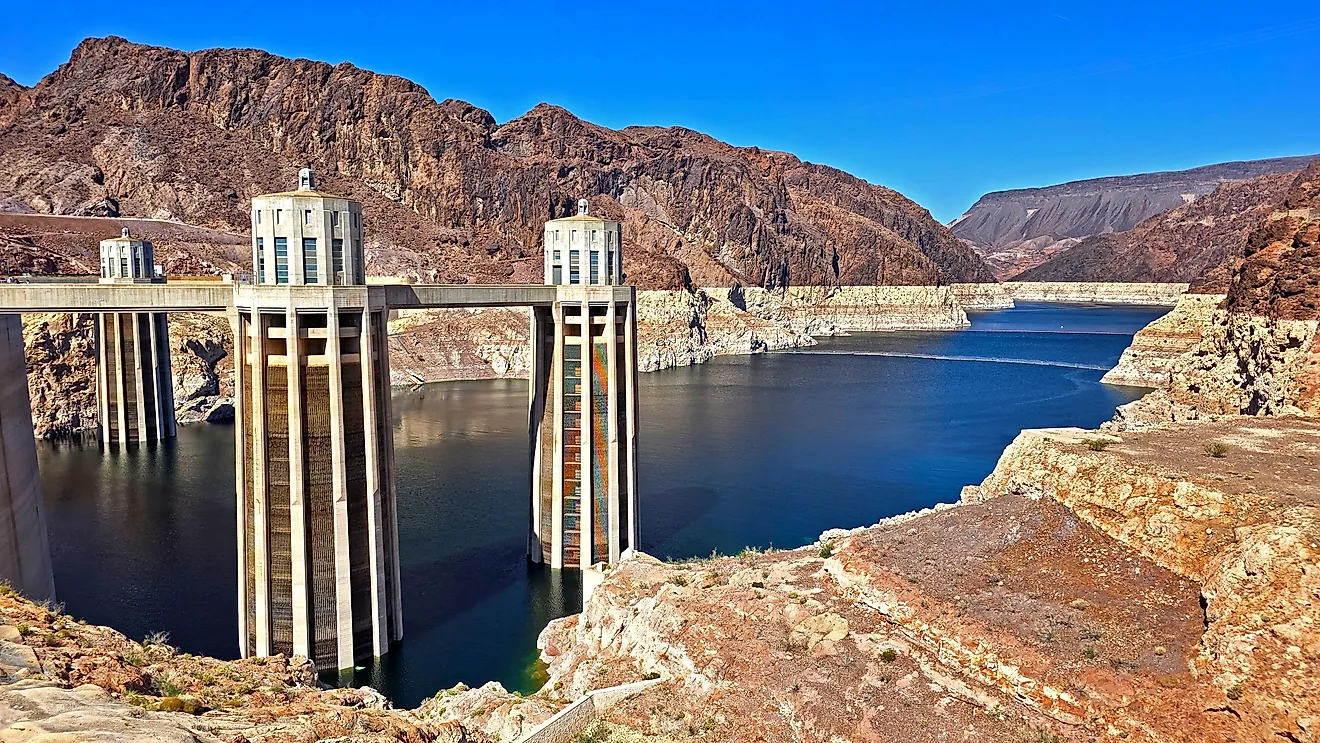
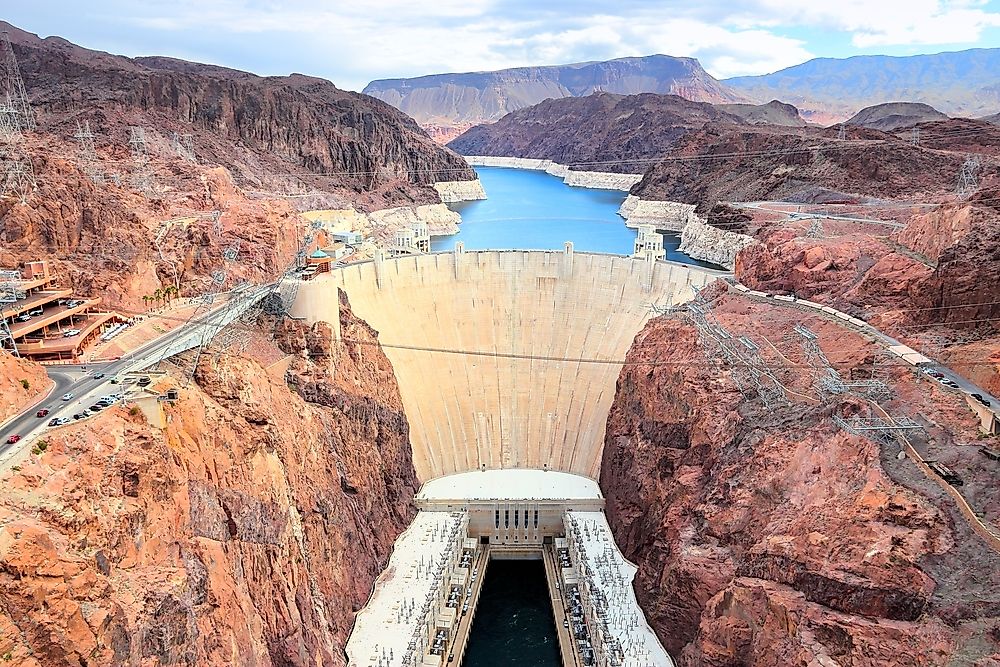
Strong concrete works within a carefully chosen shape at Hoover. The dam curves across Black Canyon, with its convex side facing Lake Mead. Water pressure transfers through that arch into the rock on either side. The dam's weight also helps resist the reservoir's push, which is why engineers call it an arch-gravity dam.
The thickest concrete lies at the bottom, where the dam measures 660 feet across its base. It narrows to about 45 feet at the crest. Below and beside it, the foundation and abutments consist of hard volcanic rock called andesite breccia. Before construction, crews removed loose material to reach sound rock. Over much of the foundation, excavation extended 110 to 130 feet below the river's original low-water surface to reach the supporting rock.
The Dam Depends on More Than Its Concrete

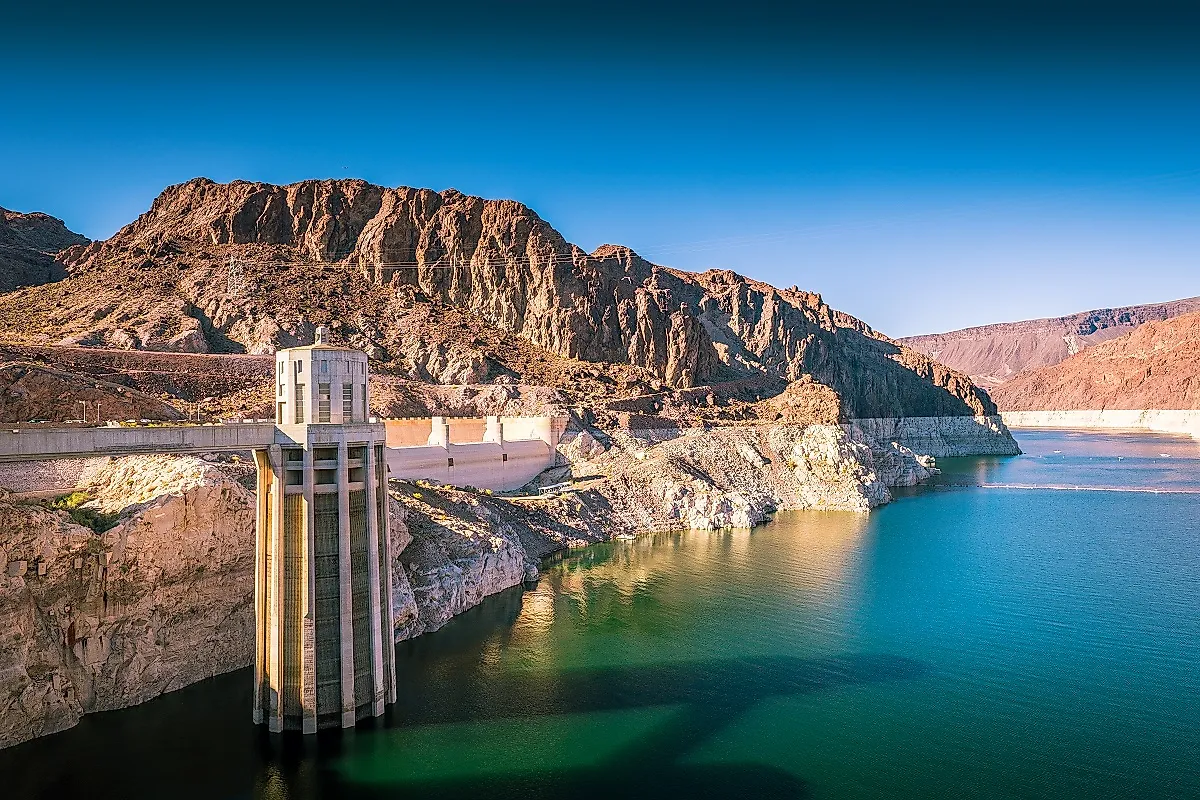
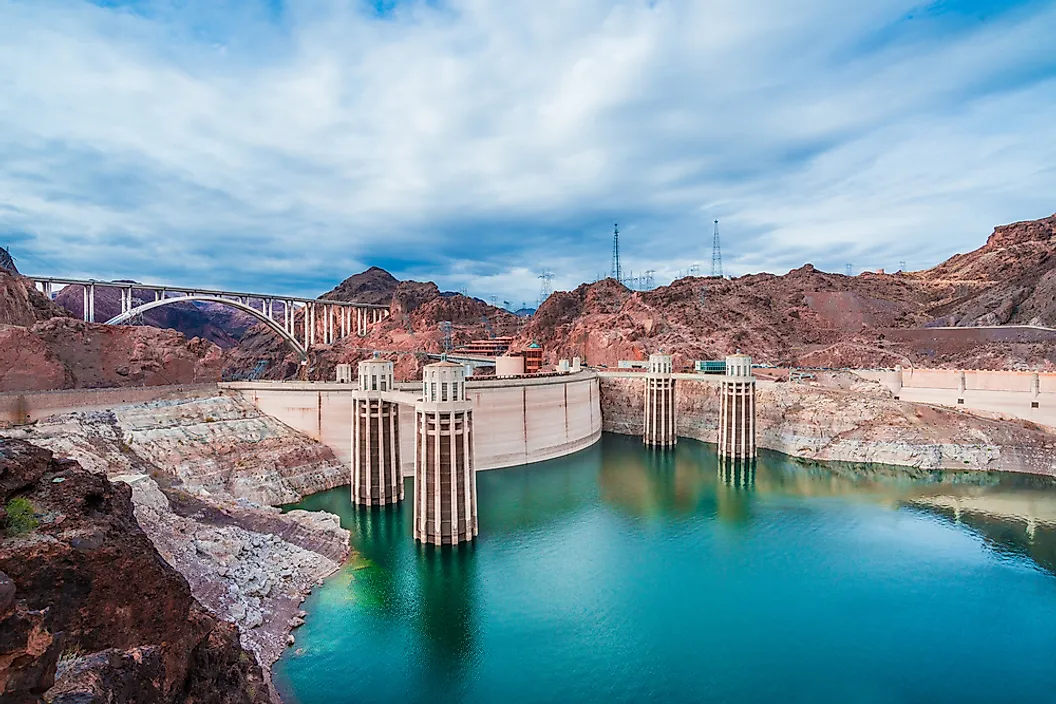
Hoover's long-lasting concrete supports a project that still requires machinery and maintenance. A concrete strength test cannot establish the condition of its gates or generating equipment. Behind the dam, hoists on the intake towers raise and lower gates to admit Lake Mead's water. Large pipes carry that water toward the powerhouses below, where turbines turn generators. An outlet system also allows releases to bypass the turbines when needed. These routes keep reservoir water moving through and around the concrete barrier in controlled passages. After passing through the generating equipment, the water returns to the Colorado River beneath the dam, continuing downstream through Black Canyon.