The Native Great Lakes Fish Making A Comeback
The Great Lakes have long existed in a precarious balance between nature and human needs, providing water, food, and livelihoods to millions. Yet the very presence of those millions of humans has had devastating effects on the ecosystems in and around the lakes. Native fish populations experienced severe decline beginning in the late 19th century through the expansion of human settlements along the lakeshores and rapid industrialization, as overfishing, habitat loss, pollution, and invasive species took their tolls on the five lakes and their tributaries. Mass harvesting of fish such as trout, whitefish, herring, and sturgeon decimated populations, with little chance of recovery at the rate of commercial fishing during the 20th century. Spawning grounds were lost with the draining of wetlands and the expansion of urban shorelines, while industrial waste, raw sewage, and agricultural runoff devastated the lakes' ecosystems. By the 1960s, native fish populations had collapsed, but in recent years, native Great Lakes fish are returning due to the efforts of activists, citizen groups, and governmental and non-profit agencies through restocking native fish populations and restoring the water and shoreline environments.
Lake Superior

As the largest, deepest, and coldest of the Great Lakes, Lake Superior tends to fare better than the other four when it comes to ongoing threats such as algae blooms. Lake Superior is positioned at the beginning of the chain of lakes, draining one into the next, through Lake Huron and Lake Michigan, then down to Lake Erie, through the Niagara River into Lake Ontario, and then out to the Atlantic by way of the St. Lawrence River. This also preserves the relative purity of Superior's water. However, the problems facing the Great Lakes by the mid-20th century did not leave Lake Superior unscathed. There was a 95% drop in fish due to the invasive sea lamprey that travelled with freighters entering the lake. Commercial fishing yields collapsed, from 4 million pounds down to just 210,000 pounds annually by 1964.
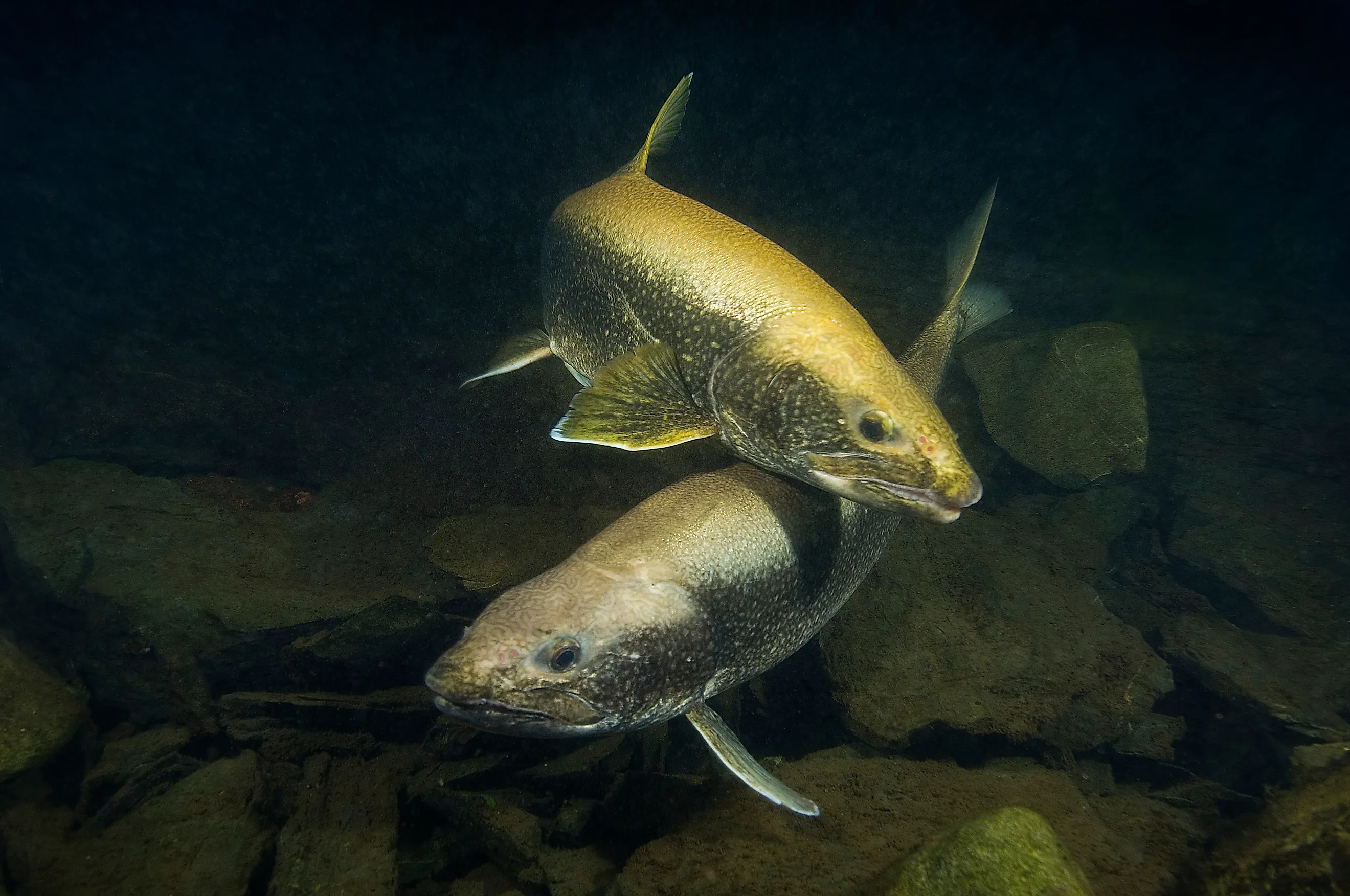
Efforts to restore the lake began in the 1970s, as governments on both sides of the border began taking the conditions of the Great Lakes seriously. Cleanup efforts were combined with restocking the lake's native fish populations through hatcheries. Lake trout fully recovered to a self-sustaining level in many areas of the lake, while lake herring (or cisco) stabilized, with healthy native populations returning. This was vital as the lake herring, through their foraging activities, supports the broader ecosystem of the lake. In November 2024, the Great Lakes Fishery Commission announced that Lake Superior's lake trout had been restored to self-sustaining populations similar to those before the 1940s. There was also a reduction of hatchery stocking by 74%, and in some areas, the hatcheries were eliminated as natural reproduction took over.
Lake Huron

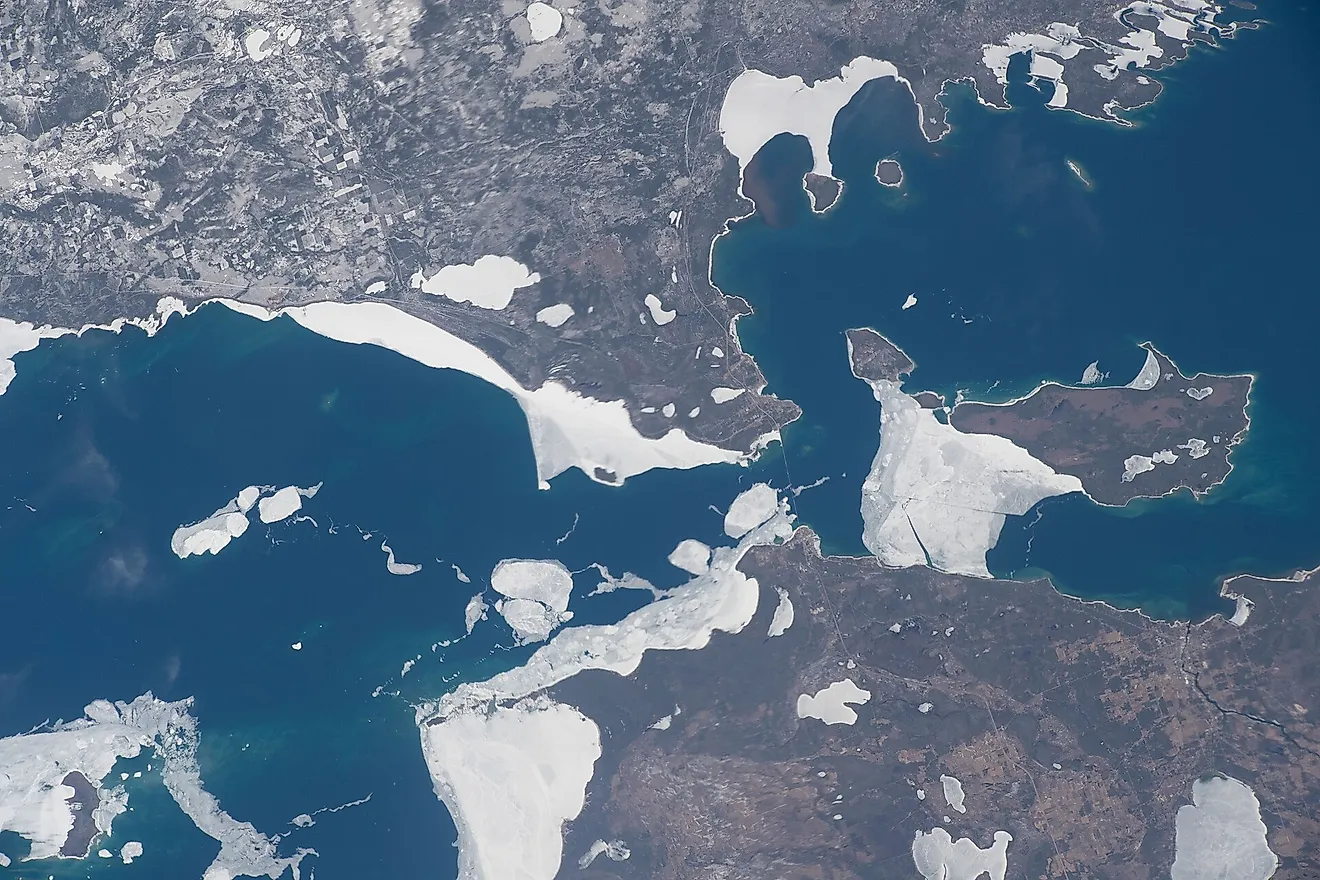
The decline of fish stock and the overall impact on the water quality of Lake Huron was driven by overfishing, habitat destruction, and invasive species. The shoreline of Lake Huron is significantly less industrialized and urbanized than Lake Erie, Lake Ontario, or Lake Michigan. Pollution directly from industry is less of an issue with Huron, although shipping and agriculture do have an impact, as does resource extraction. The world's largest salt mine is in Goderich, Ontario, on the shores of Lake Huron, with tunnels running extensively under the lake bed, about 1,800 feet (550 meters) below the surface of the water. Much of the northern portions of the lake and around Georgian Bay are largely rural, forested, and pristine. However, hydrologically, Lake Michigan and Lake Huron are a single body of water, at the same elevation, and are connected through the Straits of Mackinac, with water flowing in both directions. As such, the pollution from Lake Michigan's highly urbanized and industrialized shore does find its way to Lake Huron.
With the population collapse of apex predators like lake trout and the loss of deepwater cisco species by the 1970s, invasive species such as the alewife began to thrive. The non-native Chinook, coho, and pink salmon had been introduced through stocking programs in the 20th century for angler-focused tourism and in an effort to control the alewife populations. With a dramatic collapse of the invasive alewife populations, native species were able to successfully reproduce and rebalance much of the ecosystem. The non-native salmon species' primary food source was alewives, and with salmon stocking programs stopped and the food source disappearing, the non-native salmon rapidly declined. The lake trout rebounded mostly through lake-wide sustained natural reproduction from wild fish, without the extensive use of hatcheries. Likewise, the walleye has made a dramatic resurgence without the aid of stocking programs. The recovery of deep water zones has resulted in the return of bloater chub and slimy sculpin.
Lake Michigan

Lake Michigan, the only Great Lake entirely within the United States, is highly industrialized and urbanized, with major cities such as Chicago along its shores. The historic decline of native fish began with the collapse of lake trout, as well as deepwater ciscoes and lake whitefish. In addition to pollution stemming from sewage, industrial waste, and agricultural runoff, overfishing, habitat loss to urban development, and invasive species like sea lampreys and quagga mussels had devastating effects on native fish species. However, through efforts to clean up and manage waste and runoff, restoring vital wetland habitats, and careful restocking of select native species, there have been significant recoveries. Through natural reproduction and moving away from hatcheries, the lake trout has rebounded to healthy levels. Lake sturgeon have had success as well, although this was done through multi-agency river reintroduction and spawning protection. Recent scientific research has shown that lake sturgeon can live over 100 years, giving hope for long-term population stability.
Lake herring, or cisco, have made important recoveries, which in turn positively impact shoreline habitats where they forage. Cisco are also a food source for native predators like lake trout. Native freshwater drum, never a popular fish for human consumption and thus often ignored, have been found to have a positive ecological impact as they consume invasive mussels. While some native species are recovering well, lake whitefish is an important fish as a cornerstone of Indigenous heritage and as a regional cuisine in communities along the lakes, with Lake Michigan whitefish being a crucial tourist draw at lakeside dining establishments. However, whitefish continue to struggle due to invasive quagga and zebra mussels that strip nutrients and damage the deep-water food chain. Damming and neglected coastal wetlands remain obstacles to full recovery. Tribal and state restoration efforts continue to work towards wetland restoration and reopening historic fish pathways.
Lake Erie

Lake Erie, the most polluted of the Great Lakes, continues to struggle, particularly with algae blooms. A major lake for the fishing industry in the 20th century, there was a devastating decline in native fish species, and by the 1970s, much of Lake Erie consisted of dead zones where no aquatic life could exist. This was the result of industrial and urban waste, overfishing, agricultural runoff (eutrophication), and invasive species. An iconic native fish species, the blue pike, was officially declared extinct in 1983 by the US Fish and Wildlife Service, although it was probably gone by 1975.
Walleye, with historic lows of 100,000 in the 1970s, rebounded in recent decades to millions of adult fish, with positive environmental and economic effects. Reef building in connecting waterways such as the Detroit River has re-established localized spawning runs for lake sturgeon, who are likewise making a strong comeback. Native lake trout have rebounded through natural reproductive means, while cisco have benefited from hatcheries and stocking, as well as strict catch limits and active reintroduction programs.
Lake Ontario

The lowest-lying of the Great Lakes, and the recipient of the outflow from all the lakes in the system, Lake Ontario continues to face challenges. The lake is highly urbanized and industrialized, particularly on the Canadian side. It is home to over 9 million people in Ontario, according to the most recent numbers from 2021. The decline of native fish species is due to overfishing, dam construction, deforestation, as well as invasive species, and industrial and urban waste, decimating the native Atlantic salmon and lake trout. Lake trout natural reproduction zones have shown slow but steady progress in recent years. This is part of coordinated US-Canadian stocking adjustments and invasive sea lamprey control. With targeted deepwater coregonine (freshwater whitefish) restoration in the eastern basin, there has been a resurgence of cisco to the lake. Locally extinct by the late 19th century due to deforestation and dams, Atlantic salmon have been returning to tributaries like the Don River, and through the efforts of the Lake Ontario Atlantic Salmon Restoration Program.
Back From The Brink
Native fish species have been making a remarkable comeback on the Great Lakes. With the lowest points of the mid-20th century behind them, the outlook for the lakes is cautiously positive, and they are far from being fully restored. Some fish populations are doing well, while others struggle. Fifty years of conservation efforts have yielded results, but major issues remain. Invasive species remain the greatest long-term threat, while climate change has warmed the lakes, with negative impacts on species that thrive in cold water, as well as supporting the growth of harmful algae blooms. Likewise, polyfluoroalkyl substances, known as "forever chemicals," pharmaceuticals, and microplastics are newer threats to the lakes, and this needs to be addressed before the lakes can be declared saved.