What Happens To The Navajo Nation If Lake Powell Keeps Dropping
About 30% of Navajo families live without running water, and the reservoir that could supply some of them is shrinking. Lake Powell already helps power Navajo homes and supplies drinking water to LeChee, near Page, Arizona. If it keeps falling, the consequences will arrive long before the lake runs dry. Boat access is already strained, and losing hydropower could raise electricity bills. For western Navajo communities awaiting a pipeline Congress has yet to fund, the uncertainty starts before a single pipe is laid.
Minimum Power Pool and Dead Pool at Glen Canyon Dam

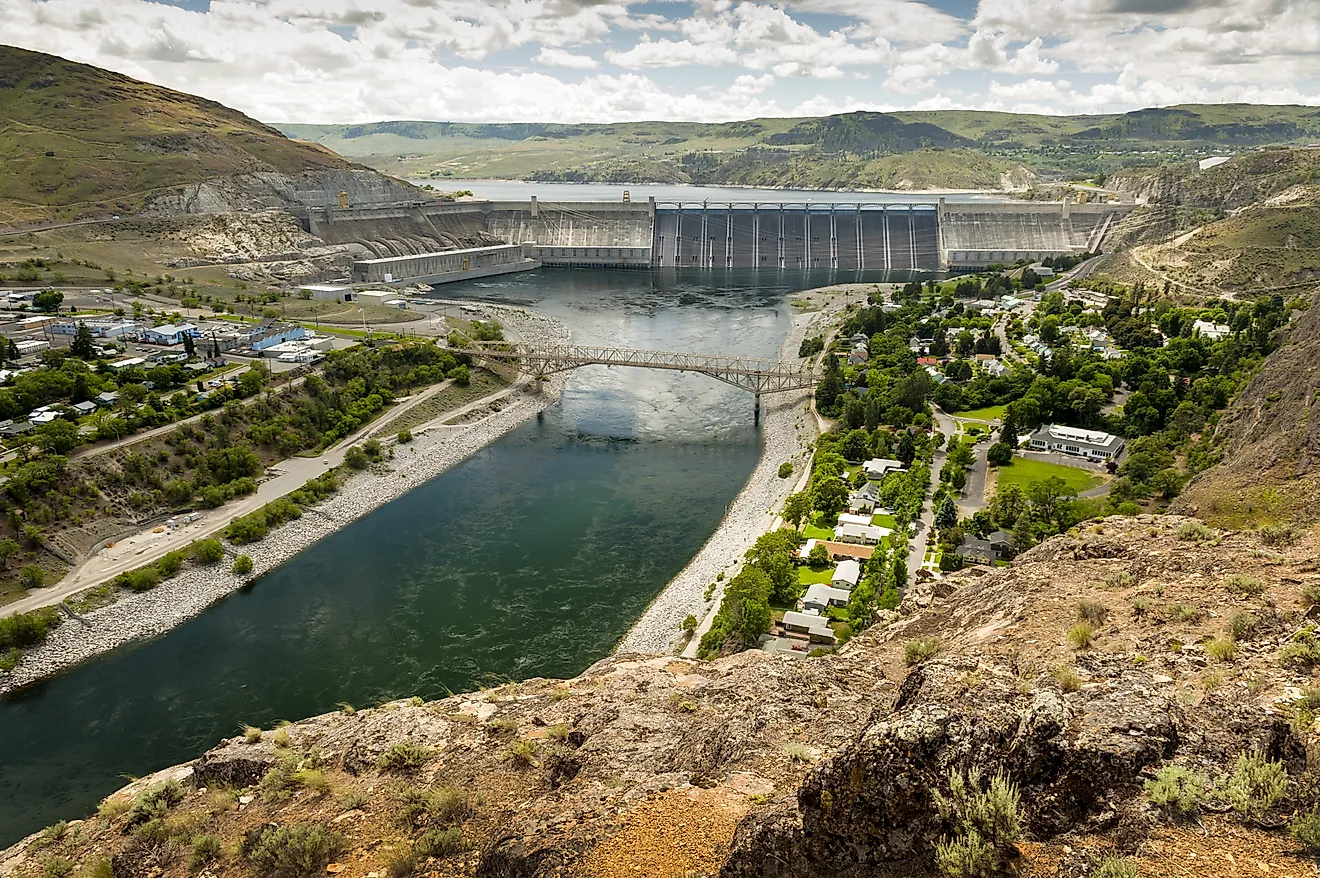
Every Navajo tie to Lake Powell depends on how high the water stands against Glen Canyon Dam, on the Colorado River beside Page. At 3,490 feet, the surface drops below the penstocks, the large pipes that feed the dam's eight generating units and their 1,320 megawatts of capacity. Below that elevation, water can leave the reservoir only through the river outlet works, four 8-foot pipes set at about 3,370 feet. At that lower mark, called dead pool, about 120 feet below minimum power pool, water can no longer be released downstream through the dam.
The outlets are a fragile backup. After test releases in 2023, the Bureau of Reclamation reported cavitation damage inside the outlet tubes in 2024, and the agency has warned that the pipes may be useless at 3,394 feet, well before the lake reaches dead pool.
Boat Access on the Navajo Side Is Already Strained

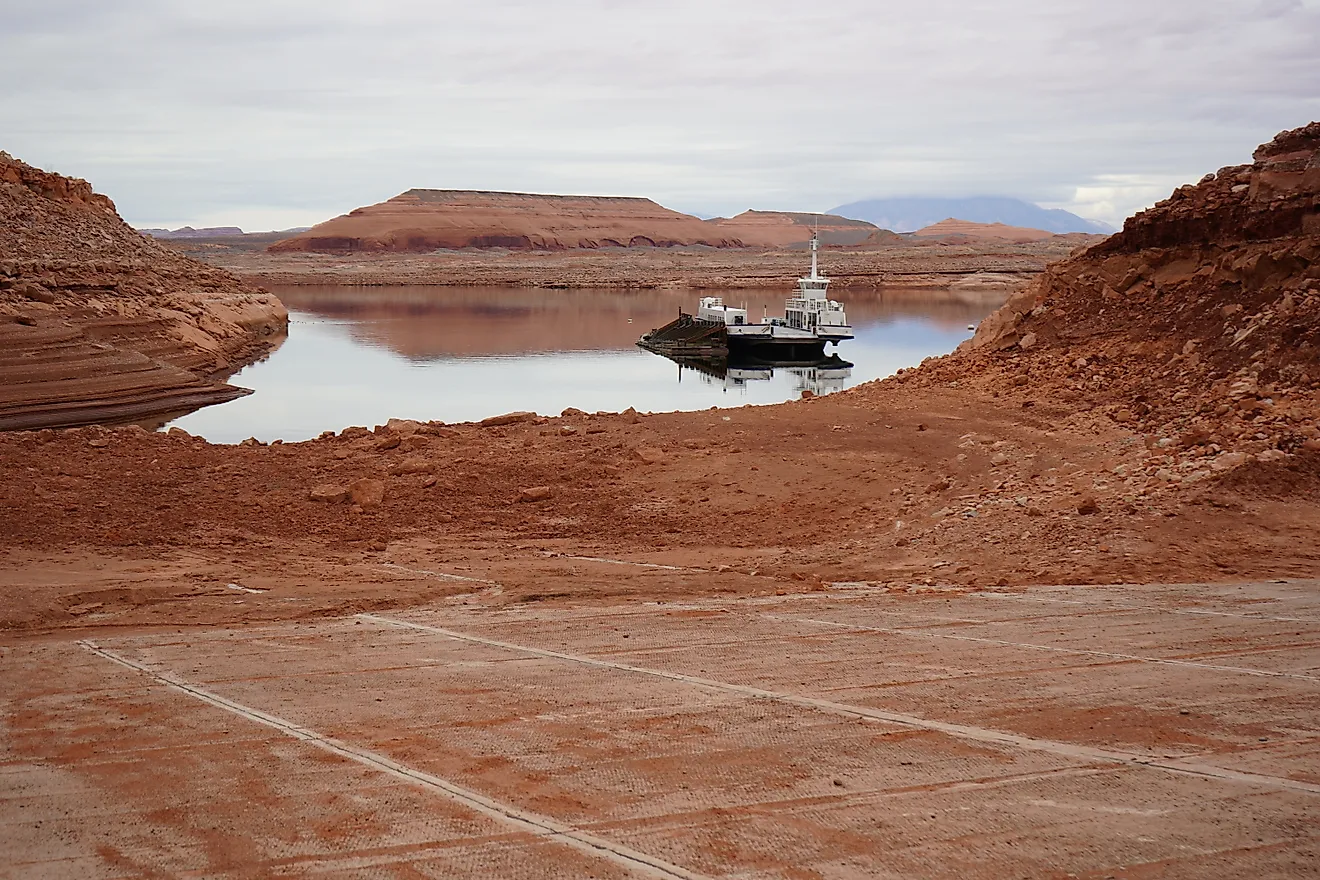
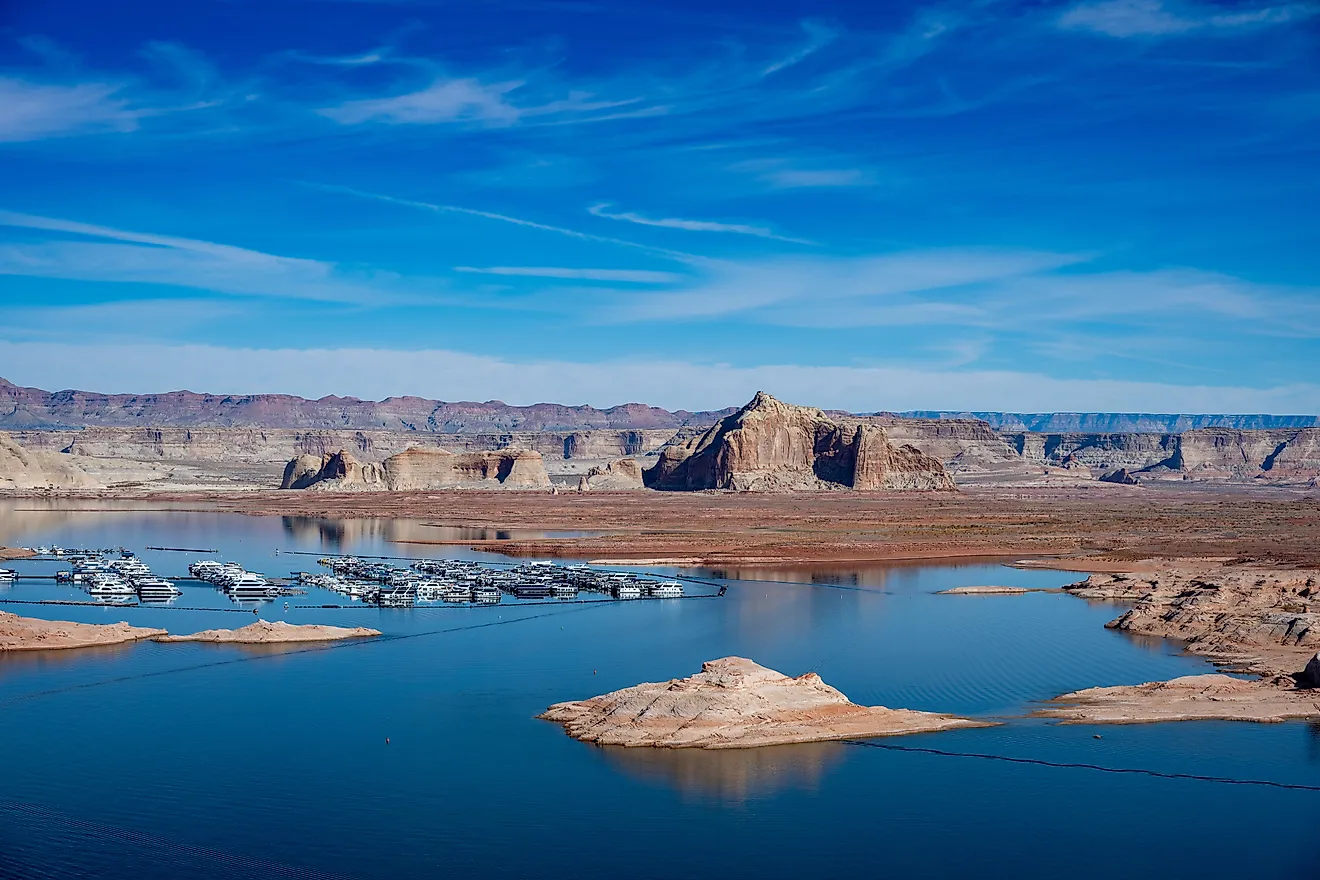
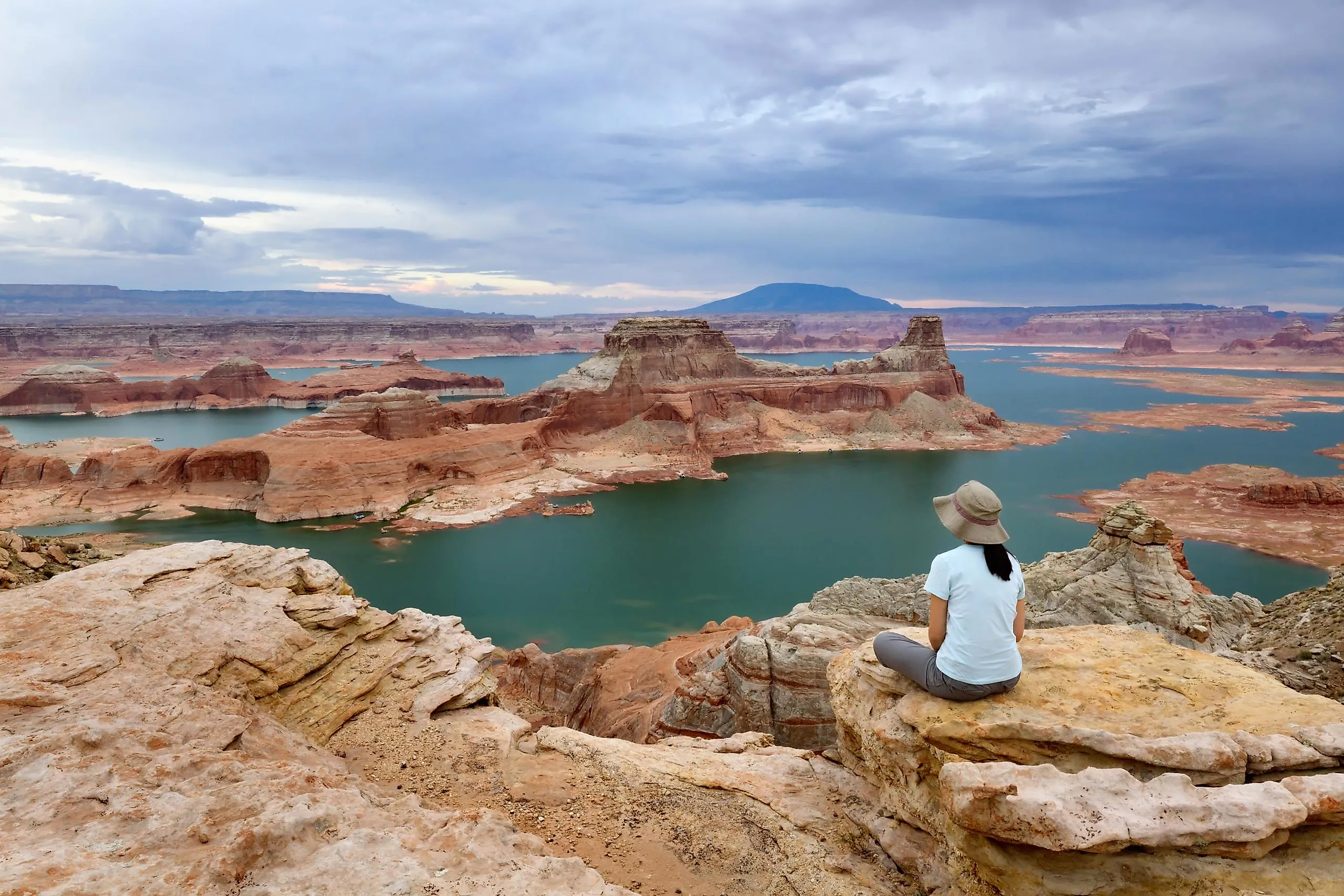
The Navajo Nation's shoreline ties are the first affected, at elevations well above minimum power pool. Antelope Point Marina sits on the Navajo side of the lake under a Navajo Nation lease signed in 2002, and in September 2026 the National Park Service approved a project to maintain access to the marina, with completion expected in the coming months. Farther up the lake, Rainbow Bridge, which is sacred to the Navajo people, is reached by a four-hour boat trip or a 14-mile hike around Navajo Mountain that requires a Navajo Nation permit. The Park Service says that at recent lake levels, the monument's docks do not reach land, so boaters have to beach their boats or swim.
Inland, the Lake Powell Navajo Tribal Park takes in Upper and Lower Antelope Canyon, where guided tours are required. The park drew more than 1.2 million visitors in 2024, a postpandemic record, and many of them stay in Page, one of the towns where visitors to Glen Canyon National Recreation Area and Rainbow Bridge spent $518.2 million that year.
What Happens to Navajo Electricity at 3,490 Feet

The electricity from Glen Canyon Dam's turbines travels a federal route before it reaches Navajo homes. It enters the Colorado River Storage Project, the network of dams whose power the Western Area Power Administration sells, and part of that power is allocated to the Navajo Tribal Utility Authority, which carries it across the reservation to its 43,000 electric customers. Hydropower makes up 40% of the utility's generation resources, and Glen Canyon's share of that supply would stop at minimum power pool. WAPA would then have to buy electricity elsewhere, and NTUA has told Reclamation, in comments on the dam's long-term operating plan, that peak-hour replacement power costs two to four times as much as hydropower.
By the utility's count, 35% of people on the Navajo Nation live below the poverty line, and NTUA wrote that hydropower "is necessary for our Navajo people to be able to pay their electric bills." Reporting on the dam's output in February 2026 warned of higher power prices for customers in metro Phoenix and on the Navajo Nation, whose utilities, Salt River Project and NTUA, both belong to the Colorado River Energy Distributors Association.
LeChee's Tap Water Comes From the Lowest Intake

LeChee, a Navajo community near Page, gets its drinking water through Glen Canyon Dam. The City of Page pulls water out of Lake Powell at the dam, treats it, and delivers it to LeChee and to Page's own residents, about 7,500 people. The system's older intakes are at 3,480 and 3,462 feet, and as the lake fell, Reclamation added a new connection in December 2022 through two bypass tubes in the dam that can reach water as low as 3,362 feet. With that connection, Page and LeChee stay supplied even if Lake Powell drops to 3,370 feet, the elevation of dead pool, and the tubes can draw water eight feet below that.
About a Third of Navajo Families Already Haul Water

Beyond the Page system, about 30% of Navajo families live without running water, according to the Navajo Water Project, which estimates that hauled water costs them at least 72 times more than piped water. University of Arizona researchers reported in 2020 that some families drive as far as 40 miles to fill their containers. A drought emergency the Nation declared on June 9, 2026, listed about 7,500 stock ponds across the reservation as vulnerable. Without running water, these homes have no pipe connecting them to Lake Powell, and the two routes that could carry lake water to more Navajo communities are an old power plant's lake pumps and a pipeline still waiting on Congress.
The Old Power Plant's Water Right and Lake Pumps

For decades, a coal plant on Navajo land near Page drew its cooling water from Lake Powell. The Navajo Generating Station held rights to 34,100 acre-feet of Colorado River water, usable only in northeastern Arizona, and a 1968 Navajo Tribal Council resolution directed the Interior Department to return that water "to the Navajo Tribe for their exclusive use and benefit" if the plant ever closed. The station shut down for good on November 18, 2019.
The plant's lake pump station became Navajo Nation property after demolition, and when the lease site was returned in March 2024, the Navajo Tribal Utility Authority was set to take possession of its lake pumps. In 2021, then-President Jonathan Nez said the pump station could supply water to LeChee and surrounding communities, possibly through the Western Navajo Pipeline.
The Pipeline Western Navajo Towns Are Waiting For

In May 2024, the Navajo Nation Council voted unanimously to approve the Northeastern Arizona Indian Water Rights Settlement, which would pay for that pipeline. At an estimated $1.7 billion, the pipeline would carry water out of Lake Powell to Coppermine, Tuba City, and Cameron on the western reservation, and on to Hopi villages, with Reclamation given until the end of 2040 to finish it. Every gallon would come out of the same reservoir whose decline led Reclamation to build Page a deeper intake connection in 2022.
The Nation had already lost a water case at the US Supreme Court in 2023. In Arizona v. Navajo Nation, the justices ruled 5-4 that the 1868 treaty between the Navajos and the United States "did not require the United States to take affirmative steps to secure water for the Tribe."
The settlement bill, S. 953, calls for about $5.136 billion in federal funding. At its first Senate hearing, on March 11, 2026, the Interior Department said it had "significant concerns with the overall cost" and raised reevaluating the pipeline's size and scope. Colorado, New Mexico, Utah, and Wyoming also sent letters to the Senate Indian Affairs Committee that spring objecting to parts of the deal, among them how it treats a reservation that lies in both the Upper and Lower basins. "We shouldn't be punished for being in two basins," Navajo Nation President Buu Nygren said. By July, the settlement had stalled, and by August, the federal fund for Indian water settlements was empty.
Laid against the face of Glen Canyon Dam, the Navajo Nation's losses would come like rungs on a ladder, with the marina and Rainbow Bridge docks near the top and LeChee's tubes at the bottom, eight feet under dead pool. The families hauling water at 72 times the cost of a tap stand off the ladder entirely, and the pipeline meant to reach western towns like Tuba City and Cameron would draw from the same reservoir. The lake rose this fall. After heavy storms around the Four Corners, the San Juan River supplied about a third of October's inflow, and Lake Powell ended the month near 3,532 feet, about 15 feet above its September low. Reclamation's October 2026 minimum-probable forecast, the dry case it uses for planning, still takes the lake to about 3,497 feet by the end of September 2027, seven feet above the elevation where Glen Canyon's share of Navajo hydropower would stop.