The Biggest Cities on the Great Lakes
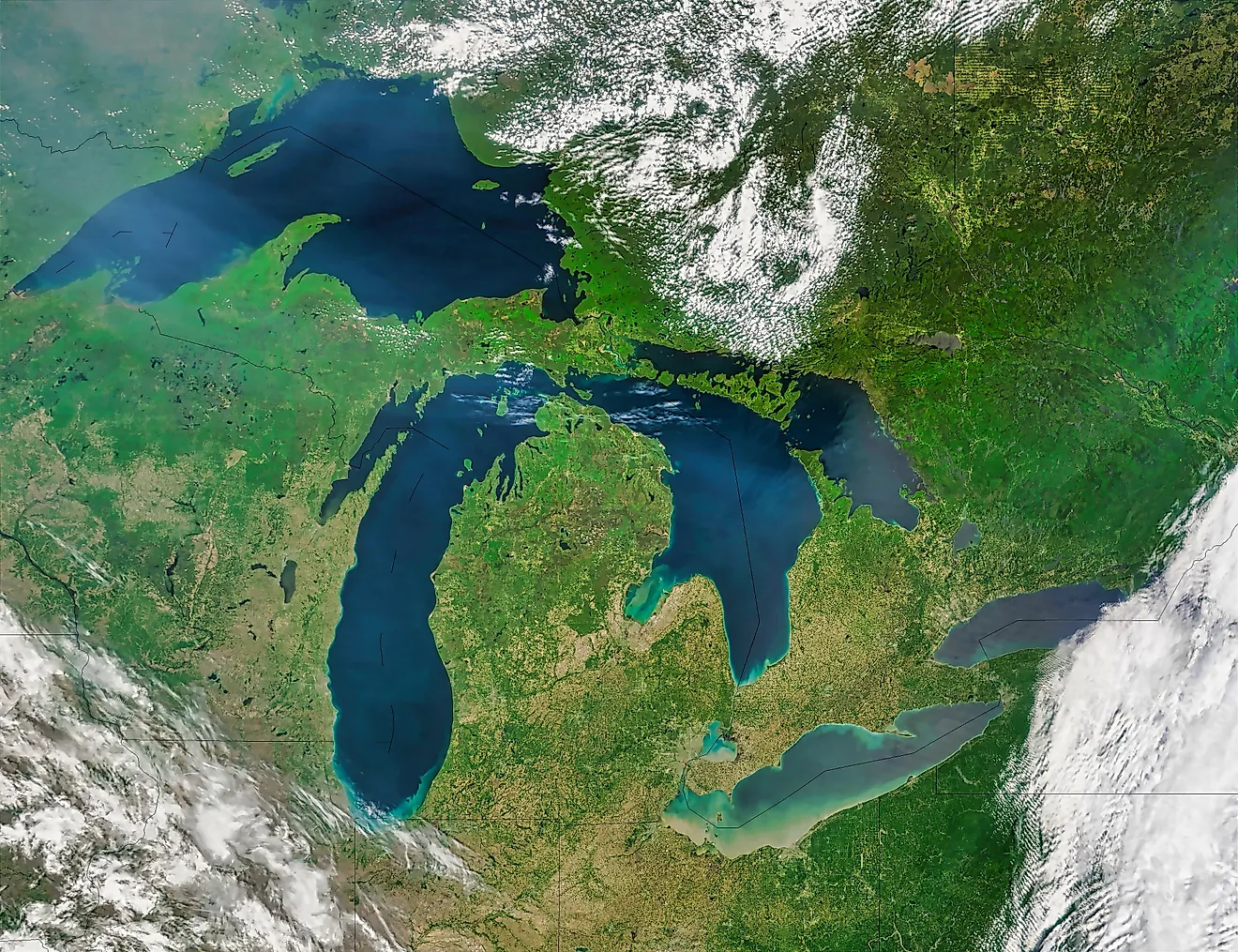
The Great Lakes are a chain of five connected freshwater lakes, Superior, Michigan, Huron, Erie, and Ontario, that straddle the border between Canada and the United States in east-central North America. Together they hold about a fifth of the world's surface fresh water, Lake Superior is the largest freshwater lake on Earth by surface area, and all five rank among the largest lakes in the world. Water moves east through the system and eventually reaches the Atlantic by way of the St. Lawrence River, a route that turned the lakes into one of the continent's great shipping corridors. Roughly 35 million people live in the Great Lakes basin, and the largest of their cities line the shores below, ranked here by the population within their official limits.
1. Toronto

Toronto, the capital of Ontario and the largest city in Canada, sits on the northwestern shore of Lake Ontario. Its 2021 population of about 2.79 million makes it the biggest city anywhere on the Great Lakes. Toronto anchors the Golden Horseshoe, the densely built band of cities curving around the lake's western end that is home to roughly nine million people and is the most populous region in Canada. Over the past two decades the waterfront has shifted from industrial docks toward parks, condominium towers, and the islands just offshore, though the Port of Toronto still handles cargo and cruise traffic on the lake.
2. Chicago

Chicago, the third-largest city in the United States, lies on the southwestern shore of Lake Michigan, the only one of the Great Lakes contained entirely within the United States. The city proper held about 2.75 million people in the 2020 census, and its metropolitan area, often called Chicagoland, is home to nearly 9.5 million, the largest metro economy on the lakes. Chicago grew into a national rail and shipping hub thanks to its position where the Great Lakes meet the water routes leading toward the Mississippi River system. Its lakefront is now lined with parks, beaches, and the bold architecture that gave the city its reputation, including some of the world's first skyscrapers.
3. Mississauga

Mississauga sits on Lake Ontario immediately west of Toronto, blending into it as part of the Greater Toronto Area. With about 718,000 residents as of 2021, it is the third-largest city on the Great Lakes and one of the biggest suburbs in Canada. The Credit River runs through the city and empties into Lake Ontario at Port Credit, a former lakeside village now known for its marina and waterfront promenade. Mississauga is also home to Toronto Pearson, Canada's busiest airport, which sits just inland from the lake.
4. Milwaukee

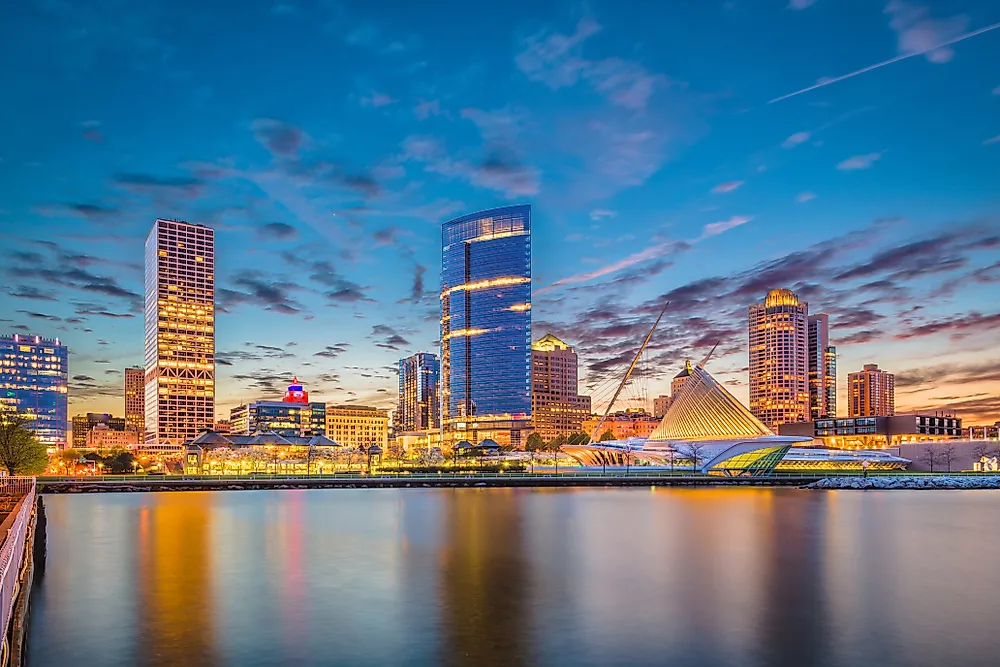
Milwaukee is the largest city in Wisconsin and stands on the western shore of Lake Michigan, where three rivers, the Milwaukee, the Menomonee, and the Kinnickinnic, meet before flowing into the lake. Its 2020 population was about 577,000. The city grew on brewing, shipping, and heavy industry, and German immigration shaped much of its culture; each summer it still hosts Summerfest, billed as one of the world's largest music festivals, on its lakefront grounds. The Santiago Calatrava-designed wings of the Milwaukee Art Museum, which open and fold above the shoreline, have become the city's signature image.
5. Hamilton

Hamilton lies at the western tip of Lake Ontario, about 35 miles southwest of Toronto, and had roughly 569,000 residents in 2021. It has been a Great Lakes port since the 1820s, and its harbor, Hamilton Harbour, is shielded from the open lake by a natural sandbar that ships pass through by way of the Burlington Canal. Long known as Canada's steel capital for the mills along its bayfront, the city has more recently leaned into its waterfalls, its escarpment trails, and a growing arts scene as the heavy industry by the water has shrunk.
Major United States Cities On The Lakes

South of the Canadian shoreline, a string of American cities lines the lower lakes, most of them on Lake Erie. Cleveland, Ohio, is the largest, with about 373,000 people in 2020. It spreads along the Erie shore where the Cuyahoga River meets the lake, a river so polluted during the industrial era that it repeatedly caught fire, an embarrassment that helped spark the modern environmental movement. The cleaned-up lakefront now holds the Rock and Roll Hall of Fame and the revived Flats entertainment district.

Buffalo, New York, sits at the eastern end of Lake Erie, where the lake drains into the Niagara River on its way toward Niagara Falls; it grew wealthy as the western terminus of the Erie Canal and counted about 278,000 residents in 2020. Toledo, Ohio, anchors the opposite, western end of Lake Erie at the mouth of the Maumee River, while Rochester, New York, sits on Lake Ontario where the Genesee River reaches the shore. Detroit is often grouped with these cities but is a special case: it lies on the Detroit River, one of the channels that connect the lakes, rather than directly on a lake shore, which is why it does not appear on a strict list of Great Lakes cities.
The Great Lakes Compact
Because so many people and industries depend on the lakes, Canada and the United States have built a framework to protect them. On the American side, the Great Lakes Compact became federal law in 2008, binding the eight Great Lakes states to manage their water withdrawals and, with narrow exceptions, to bar the diversion of water out of the basin. A parallel agreement covers Ontario and Quebec on the Canadian side. The goal is to keep the lakes from being drained to supply distant, drier regions, a real concern given that the system holds such a large share of the planet's accessible fresh water.
The Largest Cities On The Great Lakes By Population
The cities below are ranked by the population within their municipal limits, using the most recent national censuses, 2020 in the United States and 2021 in Canada. Metropolitan figures would reorder the list, since Chicago's metro area is far larger than Toronto's city proper.
| Rank | City | State/Province | Population |
|---|---|---|---|
| 1 | Toronto | Ontario | 2,794,356 |
| 2 | Chicago | Illinois | 2,746,388 |
| 3 | Mississauga | Ontario | 717,961 |
| 4 | Milwaukee | Wisconsin | 577,222 |
| 5 | Hamilton | Ontario | 569,353 |
| 6 | Cleveland | Ohio | 372,624 |
| 7 | Buffalo | New York | 278,349 |
| 8 | Toledo | Ohio | 270,871 |
| 9 | Oakville | Ontario | 213,759 |
| 10 | Rochester | New York | 211,328 |
| 11 | Burlington | Ontario | 186,948 |
| 12 | Oshawa | Ontario | 175,383 |
| 13 | Whitby | Ontario | 138,501 |
| 14 | St. Catharines | Ontario | 136,803 |
| 15 | Kingston | Ontario | 132,485 |
| 16 | Ajax | Ontario | 126,666 |
| 17 | Thunder Bay | Ontario | 108,843 |
| 18 | Green Bay | Wisconsin | 107,395 |
| 19 | Pickering | Ontario | 99,186 |
| 20 | Erie | Pennsylvania | 94,831 |
Where Water Shapes The City
What ties these cities together is the water itself. The lakes gave them their start as ports for timber, grain, iron ore, and coal, fed the factories that made the region an industrial heartland, and now supply drinking water to tens of millions of people. As heavy industry has faded, many of the cities have turned back toward their shorelines, trading working docks for parks, trails, and waterfront neighborhoods. The Great Lakes remain the defining feature of every city on this list.