The Largest Squid Ever Found Off The US Coast
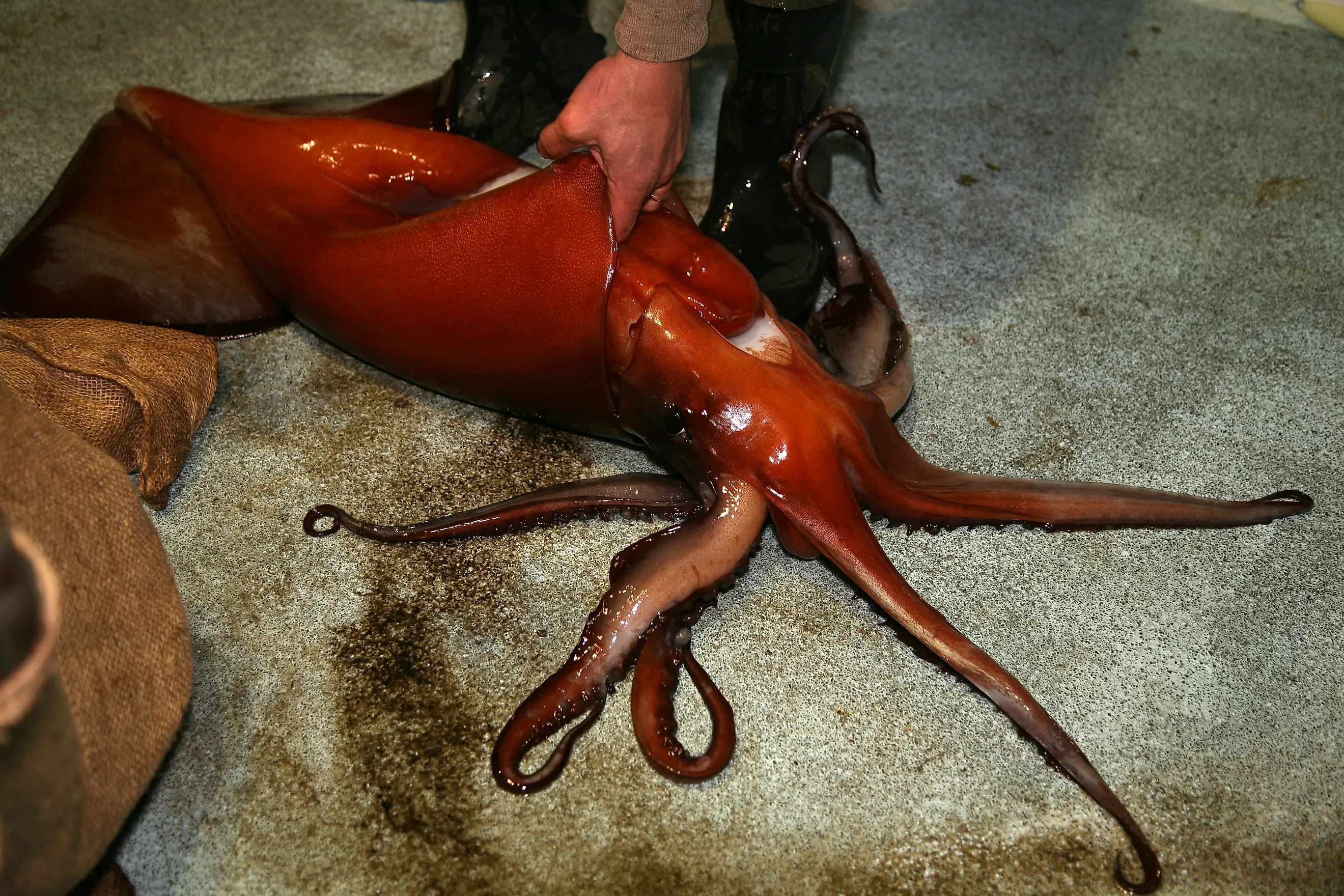
In early 1980, staff at the Parker River National Wildlife Refuge on Massachusetts' Plum Island found something on the beach that looked like it had crawled out of a sailor's nightmare. It was a dead giant squid weighing about 440 pounds. With its long feeding tentacles intact, scientists estimate it would have stretched roughly 30 feet from end to end. More than four decades later, it remains the largest giant squid documented in US waters. It was also only the third giant squid ever found stranded on American shores, which says a lot about how rarely these deep-sea animals turn up anywhere near land.
The Plum Island Giant

By the time it reached the sand, the Plum Island squid was badly battered. The waves had stripped away its two long feeding tentacles and most of its maroon skin, so the body that remained measured only about 9 feet (2.7 m). It was still so heavy that it reportedly took 10 men to haul it off the beach. Smithsonian squid expert Clyde Roper put its intact length at about 33 feet (10 m), and other estimates land closer to 30 feet, which still makes it only a medium-sized giant squid by the standards of the species.
The squid, a female, was first preserved and displayed at the New England Aquarium in Boston, where crowds lined up to see a real sea monster. Roper later hauled it to the Smithsonian's National Museum of Natural History in Washington, D.C., in the back of a truck, and according to the museum, a skeptical police officer pulled him over on the way. The specimen went on to become one of the museum's best-known displays.
A Gulf Of Mexico Catch

The next largest US specimen came from a very different stretch of the country's coastline. In July 2009, scientists aboard the NOAA research ship Gordon Gunter pulled up a giant squid in a trawl net while surveying the deep waters off Louisiana. It measured just over 19.5 feet (6 m) and weighed 103 pounds (47 kg). It was only the second giant squid ever recovered from the Gulf of Mexico. The first had been found floating dead off the Mississippi Delta in 1954.
Scientists already knew giant squid lived in the Gulf, because pieces of them had turned up in the stomachs of sperm whales, but this was the first one captured during scientific research there. It was sent to the Smithsonian, where it joined the Plum Island squid in the national collection.
The First Giant Squid Filmed In US Waters

For years, every giant squid in US records was either dead or dying. That changed in June 2019, when a NOAA-funded expedition lowered a special camera called the Medusa into the Gulf of Mexico about 100 miles (160 km) southeast of New Orleans. The camera used a dim red light that most deep-sea animals cannot see, along with a glowing lure designed to look like a jellyfish. A juvenile giant squid, estimated at 10 to 12 feet (3 to 3.7 m) long, swept in, wrapped its arms around the lure, and then backed away. It was the first giant squid ever filmed in US waters, and only the second ever recorded on video in the wild.
How Big Can A Giant Squid Get?
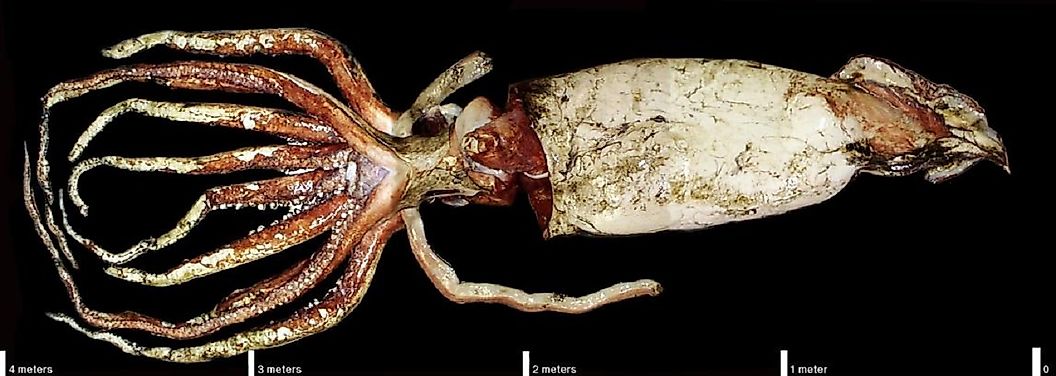
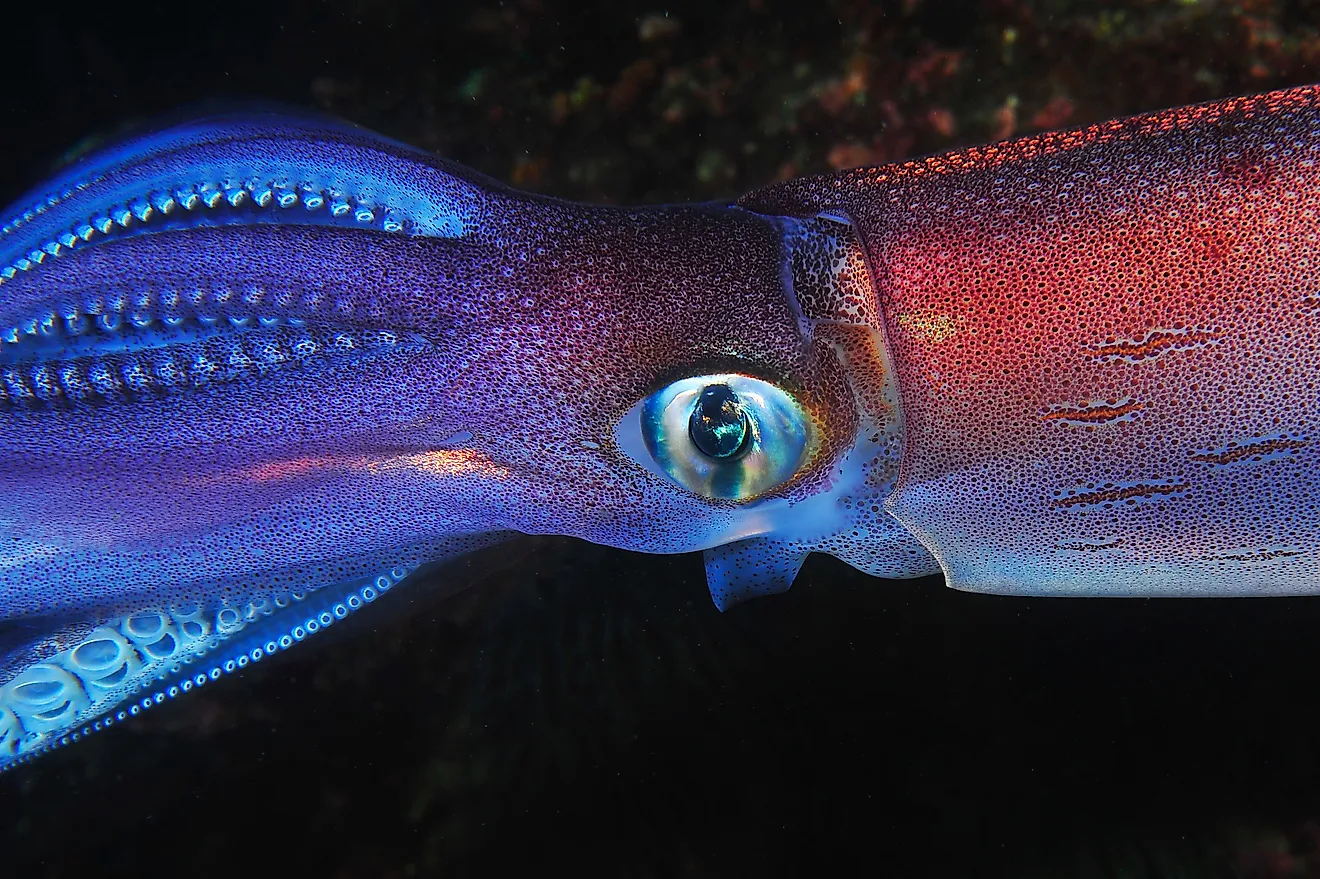
The Plum Island squid was big, but it was nowhere near the record. According to the Smithsonian, the longest giant squid ever measured by scientists reached about 43 feet (13 m), including its tentacles. Most of that length comes from the two feeding tentacles, which can stretch far beyond the body to snatch fish and other squid. Giant squid also have some of the largest eyes of any animal, about the size of dinner plates, which help them spot predators in near-total darkness.
The giant squid is not even the heaviest squid on Earth. That title goes to the colossal squid of the Southern Ocean around Antarctica. It is shorter but far bulkier, and it has never been found anywhere near US waters.
The Only Predator That Finds Them Easily
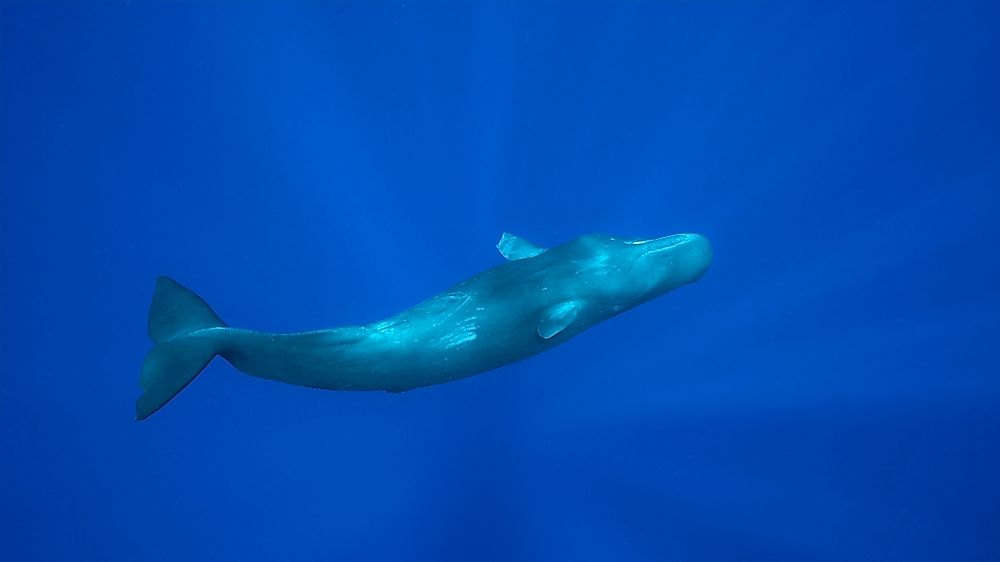
Most of what scientists know about giant squid comes from the animals that hunt them. Sperm whales dive thousands of feet to feed on giant squid, and their stomachs often hold squid beaks, the hard, parrot-like mouthparts that survive digestion. Many sperm whales even carry circular scars from the suckers of squid that fought back. Off the US coast, the whales likely find far more giant squid than people ever will.
Still Waiting For A Bigger One
Plum Island's 30-foot giant has held its title for more than four decades, not because giant squid off the US are small, but because they almost never come to the surface. These animals live hundreds to thousands of feet down, along the steep continental slopes off New England and in the deep Gulf of Mexico, where few people ever go. With better deep-sea cameras now exploring US waters, the next record-breaker may be filmed alive long before one ever washes ashore.