How Quagga Mussels Are Outcompeting Zebra Mussels in the Great Lakes
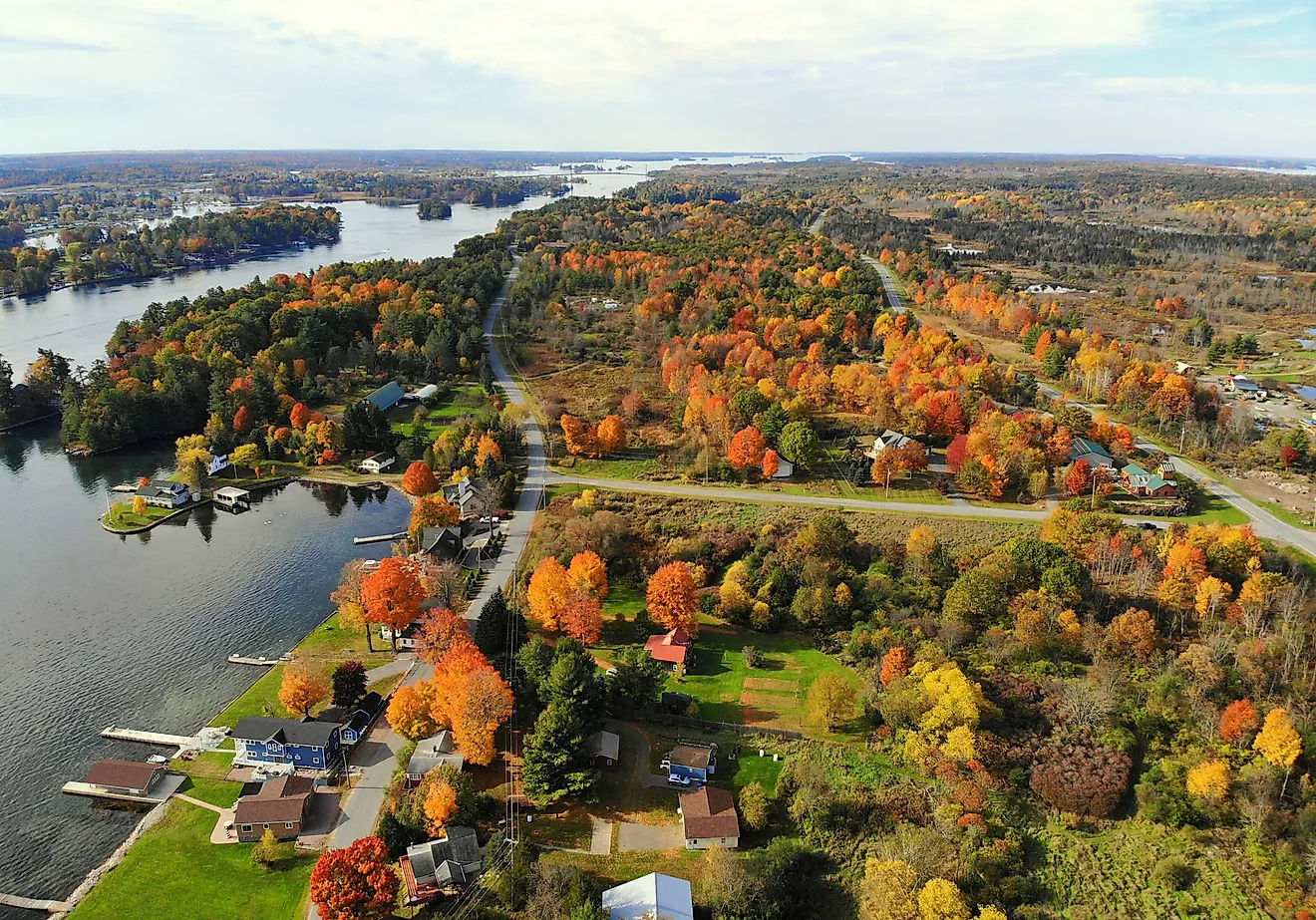
Nothing ruins a Great Lakes beach day like a shore lined with millions of mussels, or wads of green, slimy algae washing in with the waves. Both adulterations to North America's freshwater phenoms are caused directly, and indirectly, by the invasion of small, striped Dreissenids known as zebra mussels (Dreissena polymorpha) and quagga mussels (Dreissena bugensis). Both are named after African mammals (with the quagga being an extinct subspecies of zebra), both originated in Eastern Europe, and both infected the Great Lakes Region in the late 1980s. But it is the more adaptable quagga mussel that is now outcompeting its mollusk cousin, with a population exceeding hundreds of trillions, and wreaking havoc on some of the planet's largest sources of freshwater. So just what is a quagga mussel? How did it get here? Why is it such a problem? And what can be done to quell the invasion?
Introducing The Quagga Mussel

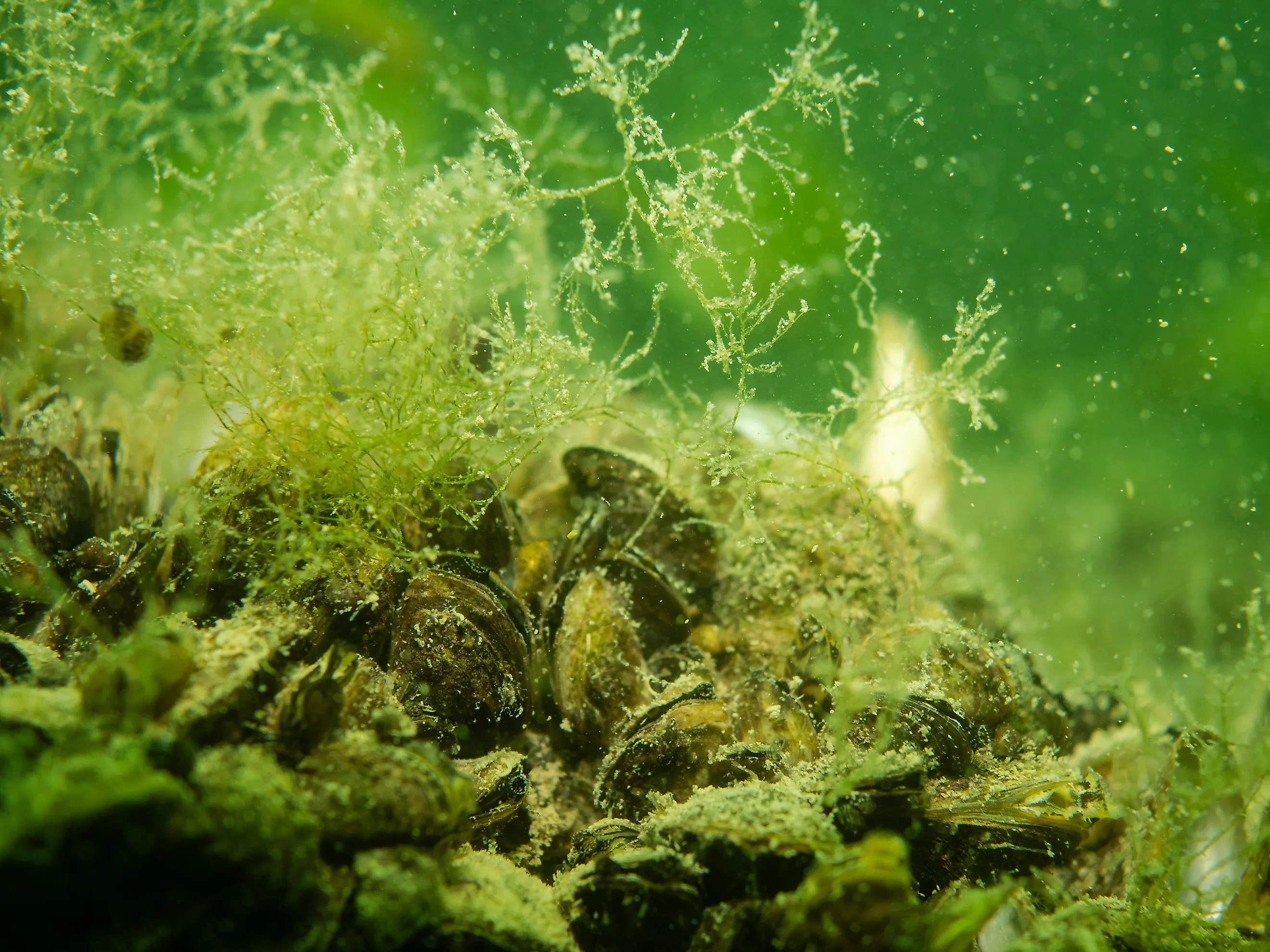
Everyone living around the Great Lakes is familiar with the zebra mussel. Its cousin, however, though more pervasive and severe in its ecological impact, still sinks below the layman's radar. This is probably because of its obscure name (stemming from the titular subspecies of South African plains zebra), and the fact that the two invasive mussel species, having similar concentric markings, are lumped colloquially together. In actuality, the quagga mussel is larger and rounder than the zebra mussel, but is still 3-4 times smaller than the freshwater mussels native to the Great Lakes, reaching only about 3/4 of an inch on average. Quaggas also exude a lighter base coloration compared to zebras. Native mussels are oval shaped, and greenish or dark brown in color.

Quagga mussels, as with zebras, are native to Eastern Europe, specifically Ukraine's Dnipro River and other parts of the Black Sea and Caspian Sea regions. This aquatic, bivalve mollusk thrives in freshwater, but also low salinity water bodies. Whereas zebra mussels require hard surfaces to latch onto, and shallower, warmer waters, quaggas can adapt to sandy/muddy lake bottoms, at depths of over 400 feet, where the waters are cool and calm. Quagga mussels live for three to five years, and produce up to one-million eggs (actually, free-floating larvae) each season. These unique traits have allowed the quagga mussel to outcompete the zebra, even though the latter got a head start in the Great Lakes.
Where Are They Found?

Quagga mussels have migrated out of Eastern Europe into the waterways of Central and Western Europe, and are now documented in all five of North America's Great Lakes. It is believed that the zebra mussel arrived stateside in 1988, via the Saint Lawrence Seaway, with the quagga following suit the following year (though, it was not initially identified as a novel subspecies). The first verified encounter with the hyper-invasive mollusk occurred on the northern shore of Lake Erie, near the town of Port Colborne, Ontario. This makes sense given the Welland Canal, which, beginning in Port Colborne, connects freighters with Lake Ontario via a series of locks.

In this era of a commercially connected globe, ships bearing all sorts of goods regularly cross continents. Before leaving port, they must flood water tanks in order to lower their center of gravity, thereby increasing stability on the high seas. Upon arrival, this ballast water is discharged, along with all sorts of invasive organisms. Beginning in 2006, stricter protocols were implemented regarding ballast water, but back in the 80s, these tiny mussels were granted safe passage into a whole new world of possibilities.
Today, quagga mussels are found in Lake Erie, Lake Ontario, Lake Michigan, Lake Huron, parts of Lake Superior, Lake St. Clair, Lake Simcoe, throughout the St. Lawrence River, and in some inland waterways of New York, Ohio, Michigan, and Pennsylvania.
Why Are Quaggas Bad?

Recently, the Joint U.S.-Canadian Committee of Advisors to the Great Lakes Fishery Commission issued a statement to the U.S. Congress saying that:
"Invasive mussels continue to fundamentally alter the Great Lakes ecosystem and threaten the fish populations, communities, and economies that depend on these waters..."
These multitudinous harms relate, first and foremost, to how prolifically quagga mussels propagate. Exact population figures are impossible to pin down, but the Great Lakes Environmental Research Laboratory of the National Oceanic and Atmospheric Administration estimates that there are nearly 500 trillion quagga mussels in Lake Michigan alone!
Such tremendous quantities of invasive species disrupts the food chain. Quaggas consume phytoplankton, leaving other small organisms, such as the shrimp-like Diporeia with a diminished food supply. Small fish that consume Diporeia then face a similar deficit, as do the larger fish that, in turn, consume them. Hence why local populations of whitefish, yellow perch, salmon, and lake trout are on the decline. Certain species of fish can consume quagga and zebra mussels, but they are not as nutritious, and (being the bottom feeders that they are) contain more contaminants than their typical food sources.
This rampant consumption of phytoplankton has also shown a counterintuitive impact on water quality. The reduction in particulate means clearer waters, yes. But as sunlight penetrates deeper, more aquatic vegetation is able to flourish, and not the kind we like. On that note, quagga mussels are more selective than their native counterparts, omitting toxic algae from their diet, thus creating a surplus in the water (the great closer of beaches!). Making matters worse, quagga mussels have a longer siphon than zebra mussels, meaning they are able to live and feed beneath aquatic vegetation.
It can't be understated how the sheer number of quagga and zebra mussels in the Great Lakes overwhelms everyday life and industry. Clumps of these invaders clog up pipes and engines, causing millions of dollars in damages to city councils, power plants, and private boat owners.
Since invasive mussels completely engulf rocks, fish have difficulty spawning. This not only harms the ecosystem but significantly impacts the multi-billion-dollar commercial fishing industry. Likewise, those mussel-strewn piers, groynes, and even beaches can keep crowds from returning to otherwise popular lakewise towns, harming mom n' pop economies. Removing clusters is costly and time intensive, so for the time being, the best offense is a good defense.
What Can We Do?
Fisheries and Oceans Canada (DFO) asks boaters and beach-goers to take the following steps if they come across any quagga or zebra mussels. Remember, invaders are quite small, and native mussels are more oval shaped, and greenish or dark brown in color.
- Take Photos
- Note the exact location (GPS co-ordinates are best), the date of observation, and any key identifying features.
- E-mail the Ontario branch, call the Invading Species Hotline (1-800-563-7711), or report online at www.eddmaps.org
Ontario's Invasive Species Act also requires that boats and other nautical equipment be cleaned, drained, and dried before transportation. The DFO recommends following any additional provincial or state-specific guidelines when moving water craft. Boats and fishing gear are the biggest human-driven source of the invasive mussel spread. These shelled trouble-makers can survive for 3-5 days out of water. But it isn't just mature mussels that are transported. Quagga mussels produce microscopic, free-floating larvae that can hitch rides in the wells of recreational boats.
In an effort to control and eradicate the outbreak, bipartisan Michigan lawmakers recently introduced new legislation. If passed, the Save the Great Lakes Fish Act would issue $500 million (USD) over the next decade to the Great Lakes Fishery Commission, as well as relevant local, state, and tribal authorities. So one last thing you can do is call or write your political representatives and let them know you support this initiative.
The Strongest Mussel
Zebra mussels once made up 98.3% of all mussels collected from Lake Michigan in the year 2000. But by 2005, quagga mussels already constituted 97.7% of collections. That's quite a shift! The domination of one invasive mollusk over another, let alone the dozens of native mussels, owes to the quagga's subtle adaptive abilities. It can live in deeper, colder waters, and on a variety of surfaces. It can reproduce at astonishing rates. And few natural predators can put a dent in the ever-growing populations. Overwhelmed, the Great Lakes are struggling to foster healthy populations of fish, buffer the blooms of harmful algae, and keep their beaches, boats, and water systems clear. So now that you know a little more about quagga mussels, be vigilant with your boat's hygiene (especially if you're crossing the Atlantic), and report to the proper authorities any shell clusters that catch your eye.