The Lakes With the Most Native Fish Species in North America
North America is home to roughly 5,000 native fish species in total, including around 1,400 freshwater species, making it one of the most diverse temperate fish faunas on the planet. Many of the lakes with the highest native fish richness sit at biological crossroads, where major river systems meet, climates overlap, or large basins have persisted long enough for complex food webs to develop.
Travelers who fish, paddle, or explore shorelines rarely see most of the species beneath the surface. Yet biodiversity influences everything from trophy fisheries to water clarity and wetland health. The Great Lakes dominate any conversation about native fish diversity, but several large Canadian and borderland lakes also support remarkably rich native communities. Moving from the Great Lakes to the subarctic north and down to Mexico’s highlands, the following lakes are consistently recognized by fisheries agencies and biodiversity research as supporting some of the richest native fish communities on the continent.
The Lakes With the Most Native Fish Species in North America
| Name | State(s) / Province(s) | Approx. # of native fish species |
|---|---|---|
| Lake Superior | Minnesota (US), Ontario (Canada) | 34 |
| Lake Michigan | Michigan, Wisconsin, Illinois & Indiana (US) | 85+ |
| Lake Huron | Michigan (US), Ontario (Canada) | 55-65 |
| Lake Erie | Michigan & neighboring US states; Ontario (Canada) | 90 |
| Lake Ontario | New York (US), Ontario (Canada) | 55-60 |
| Great Bear Lake | Northwest Territories, Canada | 35-40 |
| Great Slave Lake | Northwest Territories, Canada | 24 |
| Lake Winnipeg | Manitoba, Canada | 60 |
| Lake of the Woods | Minnesota (US), Ontario & Manitoba (Canada) | 50+ |
| Lake Champlain | Vermont (US), Quebec (Canada) | 78 |
| Lake Okeechobee | Florida, US | 40+ |
| Lake Chapala | Jalisco & Michoacán, Mexico | 39 |
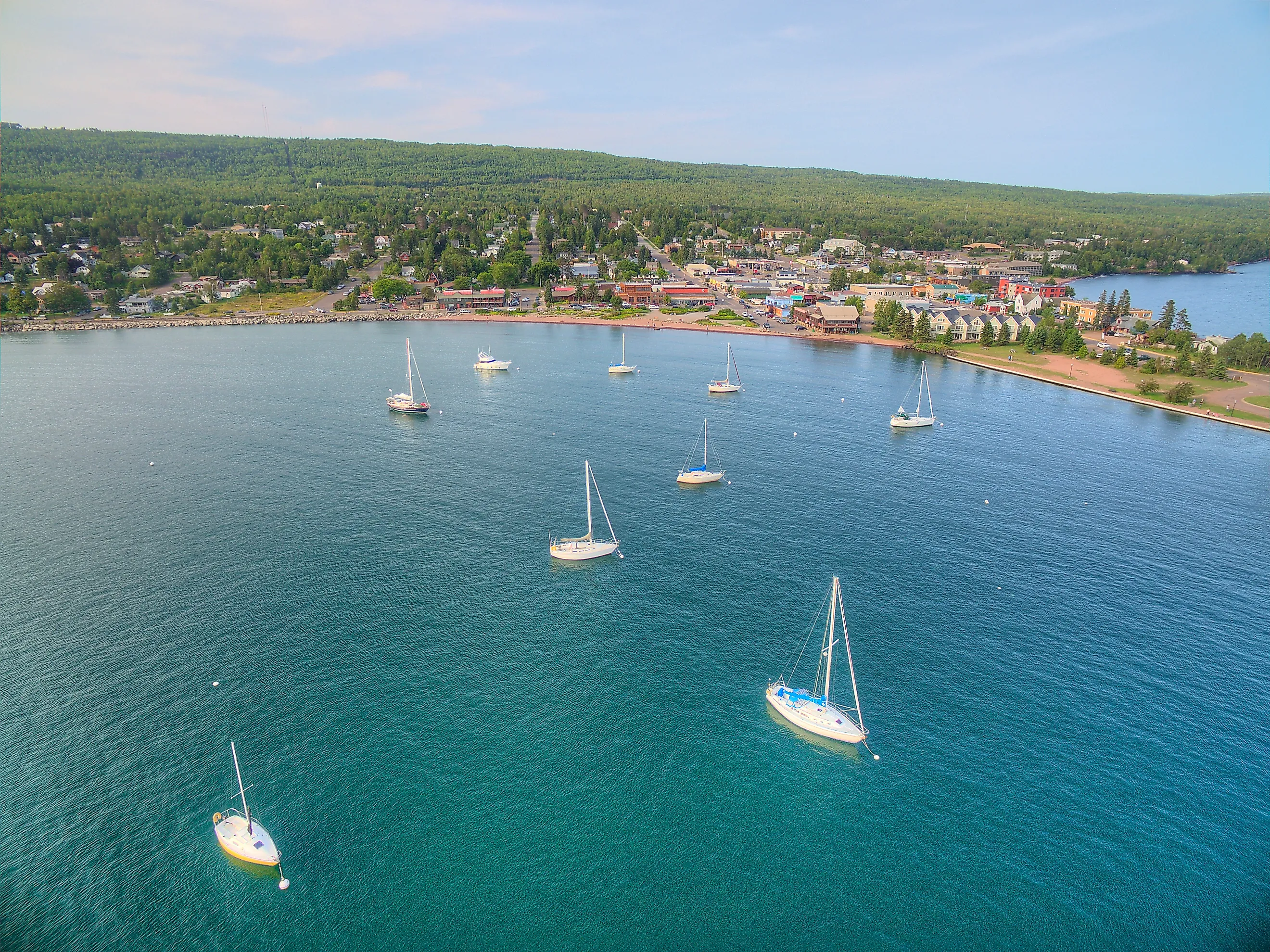
Lake Superior (Minnesota and Ontario)

The largest and deepest of the Great Lakes, Lake Superior supports more than 80 fish species in total, including about 34 native fish species adapted to cold, oligotrophic waters. Native deepwater sculpins (Myoxocephalus thompsonii), lake whitefish (Coregonus clupeaformis), coaster brook trout (Salvelinus fontinalis), and lake herring illustrate its cold-water heritage.
Superior’s immense size creates a wide range of habitats, from rocky shorelines in Minnesota to deep offshore basins near Ontario. Although invasive species such as sea lamprey (Petromyzon marinus) altered fish communities during the twentieth century, coordinated binational management has reduced their impact. Today, anglers travel from across the United States and Canada to fish for lake trout and salmon in fisheries supported by a mix of native and managed stocks.
Lake Superior demonstrates how large, ancient basins can maintain native diversity even under pressure. Its depth buffers temperature shifts, helping preserve cold-adapted species that cannot tolerate warming shallow lakes.
Lake Michigan (Michigan, Wisconsin, Illinois & Indiana)

Among the Great Lakes, Lake Michigan ranks near the top for native fish diversity. Fisheries surveys and regional biodiversity inventories commonly document roughly 85 native fish species historically present in its waters, with far more fish species recorded overall when introduced and transient fishes are included. Its diversity reflects both its immense size and its position within a network of tributaries that once offered multiple pathways for colonization from across the Midwest.
Native species include lake trout (Salvelinus namaycush), lake whitefish (Coregonus clupeaformis), yellow perch (Perca flavescens), lake sturgeon (Acipenser fulvescens), deepwater sculpins (Myoxocephalus thompsonii), multiple darters, and numerous minnows and suckers that thrive in nearshore wetlands and river mouths. Rocky reefs, sandy dune-backed beaches, drowned river mouths, and deep offshore basins create a mosaic of habitats that helps maintain this breadth of native life.
Like the other Great Lakes, Lake Michigan experienced major ecological change during the twentieth century from invasive species such as sea lamprey and alewife. However, long-term fisheries management and habitat work have restored native lake trout in many areas and stabilized several core populations. Today, the lake supports major commercial, recreational, and tribal fisheries while remaining one of North America’s most species-rich freshwater ecosystems.
Lake Huron (Michigan and Ontario)

Hydrologically linked to both Superior and Michigan, Lake Huron functions as a central hub within the Great Lakes system, and its habitat variety helps support a strong native fish community. Biodiversity inventories commonly place Lake Huron in the range of roughly 55 to 65 native fish species, reflecting a mix of cold-water and cool-water lineages shaped by glacial history and wide-ranging tributary inputs.
From the North Channel and Georgian Bay to sheltered wetlands and river mouths, the lake offers spawning and nursery habitat for lake trout (Salvelinus namaycush), lake whitefish (Coregonus clupeaformis), ciscoes (Coregonus spp.), walleye (Sander vitreus) in suitable areas, and lake sturgeon (Acipenser fulvescens). Nearshore zones also support a suite of minnows, suckers, and darters that drive food-web complexity well beyond what most visitors ever notice from the surface.
Like its sister lakes, Huron has faced disruption from invasive species and shifting forage dynamics, but basin-wide management has focused on stabilizing key native populations and protecting coastal wetlands. For anglers and boaters, that work shows up as resilient multi-species fisheries and healthier nearshore habitats that support both recreation and wildlife.
Lake Erie (Michigan and Ontario)

Among the Great Lakes, Lake Erie is one of the most species-rich and productive, with about 90 native fish species and more than 100 fish species in total when introduced species are included. Its relatively shallow depth allows sunlight to penetrate widely, increasing biological productivity. Native smallmouth bass (Micropterus dolomieu), yellow perch (Perca flavescens), lake sturgeon (Acipenser fulvescens), and numerous darters and minnows occupy habitats ranging from rocky reefs to vegetated shallows.
For anglers, Erie is synonymous with world-class walleye and perch fisheries. High biodiversity also supports waterfowl migration and the recreational boating industry along both American and Canadian shorelines. However, shallow lakes respond quickly to nutrient runoff. Algal blooms have periodically affected Erie’s western basin, underscoring the link between watershed management and fish health. When water quality improves, diverse native communities rebound quickly, demonstrating ecological resilience.
Lake Ontario (New York and Ontario)

As the easternmost Great Lake and the gateway to the St. Lawrence River, Lake Ontario sits at a major drainage crossroads that helps explain its strong native richness. Native fish lists typically fall in the range of roughly 55 to 60 species, supported by deep offshore habitat, productive nearshore zones, and a wide arc of tributaries and embayments that create spawning and nursery conditions for very different kinds of fish.
Native lake trout (Salvelinus namaycush) and lake whitefish (Coregonus clupeaformis) reflect the lake’s cold-water legacy, while species such as walleye (Sander vitreus), yellow perch (Perca flavescens), and lake sturgeon (Acipenser fulvescens) tie its biodiversity to tributary corridors and coastal wetlands. Historically, Lake Ontario also played an important role in Atlantic salmon (Salmo salar) ecology, and restoration-minded management continues to shape public interest in native species recovery.
Because it borders major urban and agricultural watersheds, Ontario’s biodiversity is closely linked to shoreline restoration, wetland protection, and water-quality work. For visitors, that translates into more fishable habitat, better access points, and a lake where native diversity is most visible near river mouths, bays, and rehabilitated coastal areas.
Great Bear Lake (Northwest Territories, Canada)

Far from the population centers of the south, Great Bear Lake is a subarctic giant known for exceptionally clear water and a cold-water fish community shaped by glacial history and long winters. Even though its productivity is lower than warmer southern lakes, native fish richness is still notable for such a northern basin, commonly estimated around 35 to 40 native species across the lake and its connected waters.
Lake trout (Salvelinus namaycush) anchor the ecosystem, alongside Arctic grayling (Thymallus arcticus), burbot (Lota lota), northern pike (Esox lucius), and several whitefishes and ciscoes (Coregonus spp.). Many of these species rely on intact shorelines, clean inflows, and stable seasonal cycles for spawning and juvenile survival—conditions Great Bear Lake has historically provided in abundance.
For anglers and wilderness travelers, the lake’s appeal is inseparable from conservation: maintaining water quality and preventing new invasions are central priorities. In a warming north, protecting cold-water habitat is increasingly important for keeping Great Bear Lake’s native community intact.
Great Slave Lake (Northwest Territories, Canada)

In Canada’s Northwest Territories, Great Slave Lake ranks among the deepest lakes in North America and supports a cold-water fish community shaped by glacial history. Its northern latitude and long ice cover might suggest low diversity, yet the lake contains a surprisingly robust assemblage of native species, with about 24 native fish species documented in its waters. Lake trout (Salvelinus namaycush), Arctic grayling (Thymallus arcticus), burbot (Lota lota), ciscoes in the genus Coregonus, and whitefishes form the backbone of its ecosystem.
The lake connects to the Mackenzie River system, which has allowed colonization by multiple northern species since the last Ice Age. For anglers, this diversity translates into world-renowned lake trout fisheries and productive whitefish harvests. However, cold-water systems are sensitive to warming trends. Fisheries managers monitor temperature shifts carefully because even small changes may alter spawning success or allow southern species to move northward. Recreational visitors benefit directly from these conservation efforts, as stable native populations sustain both guided expeditions and Indigenous subsistence fisheries.
Lake Winnipeg (Manitoba, Canada)

South of Great Slave Lake, Lake Winnipeg in Manitoba supports one of the most diverse native fish communities in Canada’s prairie region. Roughly 60 native fish species occur in Lake Winnipeg, more than in any other lake in the province. Fed by the Saskatchewan and Red River systems, the lake receives species from vast upstream watersheds. Walleye (Sander vitreus), sauger (Sander canadensis), channel catfish (Ictalurus punctatus), freshwater drum (Aplodinotus grunniens), and numerous minnows and suckers thrive in its productive waters.
Lake Winnipeg’s high nutrient load has increased biological productivity, which in turn supports complex fish communities. For anglers, this richness produces strong multi-species opportunities, especially for walleye, which drive both tourism and commercial harvest. At the same time, nutrient management remains a critical concern. Excess runoff can fuel algal blooms, reducing oxygen and threatening fish habitats. The lake illustrates how biodiversity and human land use remain tightly linked. Visitors who practice responsible boating and follow local catch regulations help protect this biologically rich system.
Lake of the Woods (Minnesota, Ontario & Manitoba)

Straddling the U.S.-Canada border, Lake of the Woods is a sprawling maze of islands, bays, and channels that creates a huge amount of edge habitat—exactly the kind of complexity that tends to boost fish diversity. Regional checklists commonly put the lake at 50+ native fish species, with its richness driven by varied depths, extensive wetlands, and connections to the Rainy River and Winnipeg River systems.
Walleye (Sander vitreus) and sauger (Sander canadensis) are iconic here, joined by northern pike (Esox lucius), muskellunge (Esox masquinongy), smallmouth bass (Micropterus dolomieu), lake sturgeon (Acipenser fulvescens), and a long supporting cast of minnows, suckers, and darters that thrive in weedy bays and rocky shorelines. That diversity translates into a genuinely multi-species experience for anglers and wildlife watchers alike.
Because the lake is shared across jurisdictions, management is inherently collaborative, and boater education matters: cleaning gear between lakes helps protect both native communities and the tourism economy built around them. When shoreline habitat remains intact, Lake of the Woods continues to deliver one of the strongest native-fish diversity profiles outside the Great Lakes.
Lake Champlain (Vermont and Quebec)

Bordering Vermont and Quebec, Lake Champlain occupies a unique biogeographic position between the Atlantic and Great Lakes drainages. This mixing zone has produced an unusually rich native fish community for a lake of its size, with about 78 native fish species and roughly 93 fish species in total when non-native fishes are included. Native species include lake trout, Atlantic salmon (Salmo salar), historically, walleye, northern pike (Esox lucius), and more than 80 documented freshwater species overall.
Champlain’s varied shoreline, from rocky promontories to sheltered bays, creates microhabitats that support different assemblages. Recreational anglers target bass tournaments and lake trout, while paddlers explore wetlands that serve as nurseries for minnows and sunfish. Because the lake connects to multiple river systems, invasive species management remains a priority. Education campaigns encourage boaters to clean equipment thoroughly, protecting the native richness that makes the lake both ecologically and economically valuable.
Lake Okeechobee (Florida)

Moving into subtropical climates, Lake Okeechobee in Florida supports one of the richest warmwater native fish communities in the United States. Biologists have recorded more than 40 native fish species in Lake Okeechobee, alongside several introduced species. Shallow, expansive, and ringed by wetlands, the lake provides ideal spawning habitat for largemouth bass (Micropterus salmoides), black crappie (Pomoxis nigromaculatus), bluegill (Lepomis macrochirus), and dozens of smaller forage species.
Okeechobee’s productivity drives a massive recreational fishing economy. Anglers from across the country pursue trophy bass in waters only a few feet deep. High native diversity also supports wading birds, reptiles, and other wildlife that depend on fish as prey. Water management decisions, including controlled releases and levee operations, directly affect habitat conditions. Maintaining native vegetation remains essential because plant beds provide shelter for juvenile fish. Visitors who respect seasonal closures and habitat restoration zones help preserve this southern biodiversity hotspot.
Lake Chapala (Jalisco and Michoacán, Mexico)

Mexico’s largest natural lake, Lake Chapala, sits at a lower latitude where freshwater biodiversity peaks. Surveys have documented about 39 native fish species in Lake Chapala, out of roughly 43 fish species present overall, making it one of Mexico’s most important endemic fish reservoirs. Historically, Chapala supported a remarkable array of endemic fish, including several species in the genera Chirostoma and Goodea. The lake lies within the Lerma-Santiago basin, a system known for high rates of endemism.
Although water withdrawals and pollution reduced some native populations during the twentieth century, restoration efforts and protected areas aim to stabilize remaining species. For visitors, Chapala offers cultural richness alongside ecological importance. Traditional fisheries still operate, and local cuisine often features native fish. Ecotourism initiatives increasingly emphasize habitat conservation, recognizing that biodiversity underpins both livelihoods and tourism appeal.
Biodiversity Beneath the Surface
From Great Lakes sturgeon and perch to subarctic lake trout and prairie-basin walleye, North America’s most native fish-rich lakes span climates, cultures, and conservation challenges. High species richness enhances recreational fishing, strengthens food webs, and increases ecosystem resilience. Yet biodiversity alone does not guarantee stability. Nutrient runoff, invasive species, habitat fragmentation, and water withdrawals can alter even the most diverse systems.
For outdoor enthusiasts, understanding native diversity adds depth to every cast or shoreline hike. Lakes that support many native fish species typically indicate complex habitats worth protecting. Responsible boating, adherence to local fishing regulations, and support for habitat and water-quality initiatives help ensure that these biologically rich waters continue to sustain both wildlife and human communities for generations.