How Many People Live In The Great Lakes Basin?
The Great Lakes Basin, the massive watershed surrounding the Great Lakes, is home to about 34 million residents and several of North America's largest municipal areas. If the wider Great Lakes region were an independent nation, it would rank as the third-largest economy in the world. According to Michigan Sea Grant, a program funded by the National Oceanic and Atmospheric Administration and the State of Michigan, the basin's residents account for approximately 32% of Canada's population and 8% of the U.S.'s population.
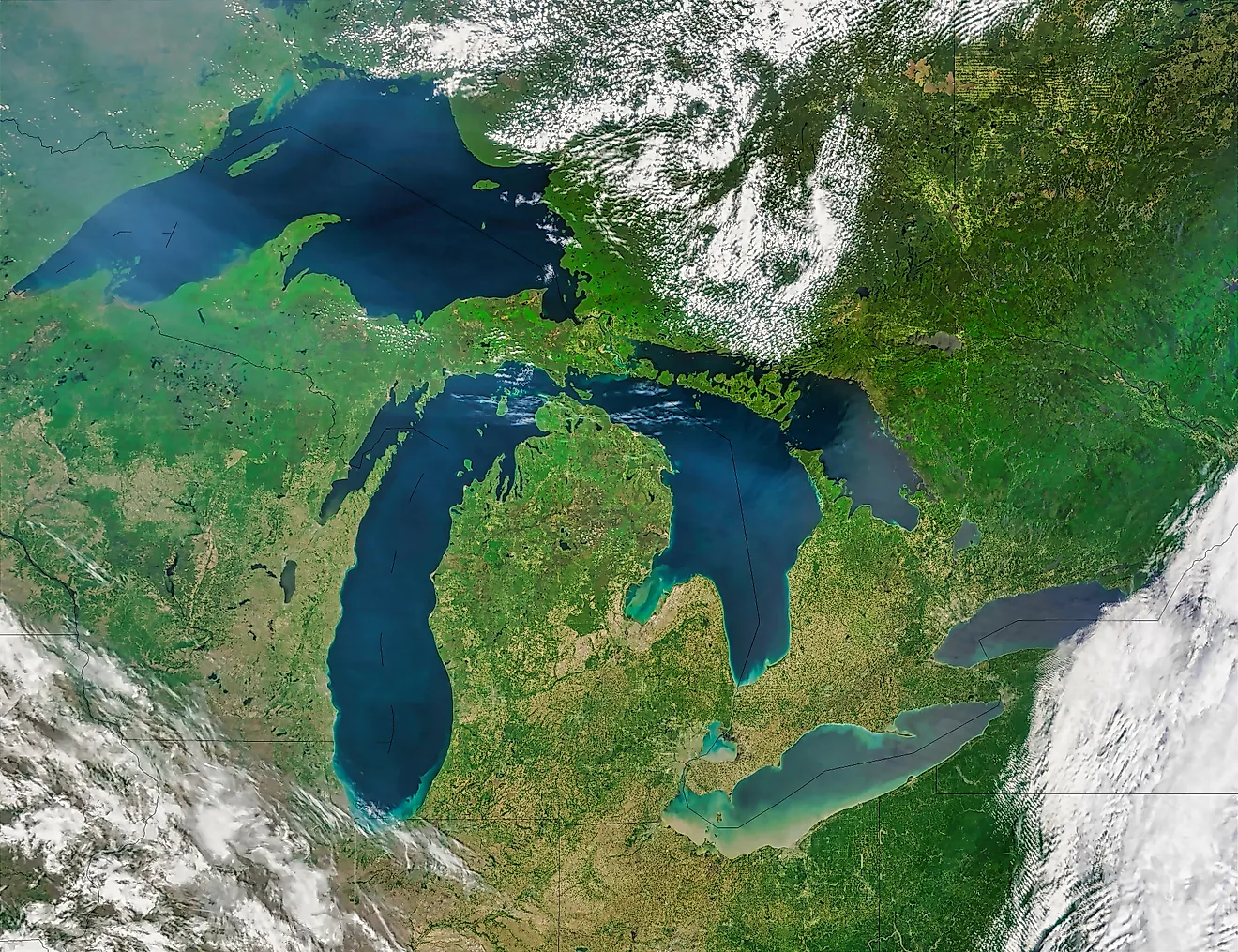
From east to west, the Great Lakes consist of Lake Ontario, Lake Erie, Lake Huron, Lake Michigan, and Lake Superior. These five interconnected lakes cover eight states in the U.S. and the Canadian province of Ontario. Because these lakes hold 20% of the world's surface fresh water, the population density of the basin directly influences the economic, environmental, and political stability of North America.
The economic output of the Great Lakes Basin supports over 51 million jobs in farming, manufacturing, and trade, with more than 200 million tons of cargo shipped through its waterways per year. At the same time, the basin's high population density increases ecological pressures, creating higher risks of chemical runoff, municipal sewer overflows, microplastic accumulation, and the fragmentation of natural habitats. Below is an overview of the population distribution within the Great Lakes Basin, by lake, ordered from highest to lowest density.
Who Lives Where in the Great Lakes Basin
Lake Erie

The most densely populated and urbanized of all of the basins, Lake Erie's basin is home to about 12 million residents, roughly 10 million in the U.S. and 2.5 million in Canada. Major metropolitan areas in this basin include Erie in Pennsylvania, Detroit in Michigan, Cleveland in Ohio, Buffalo in New York, and Windsor in Ontario.
Lake Michigan

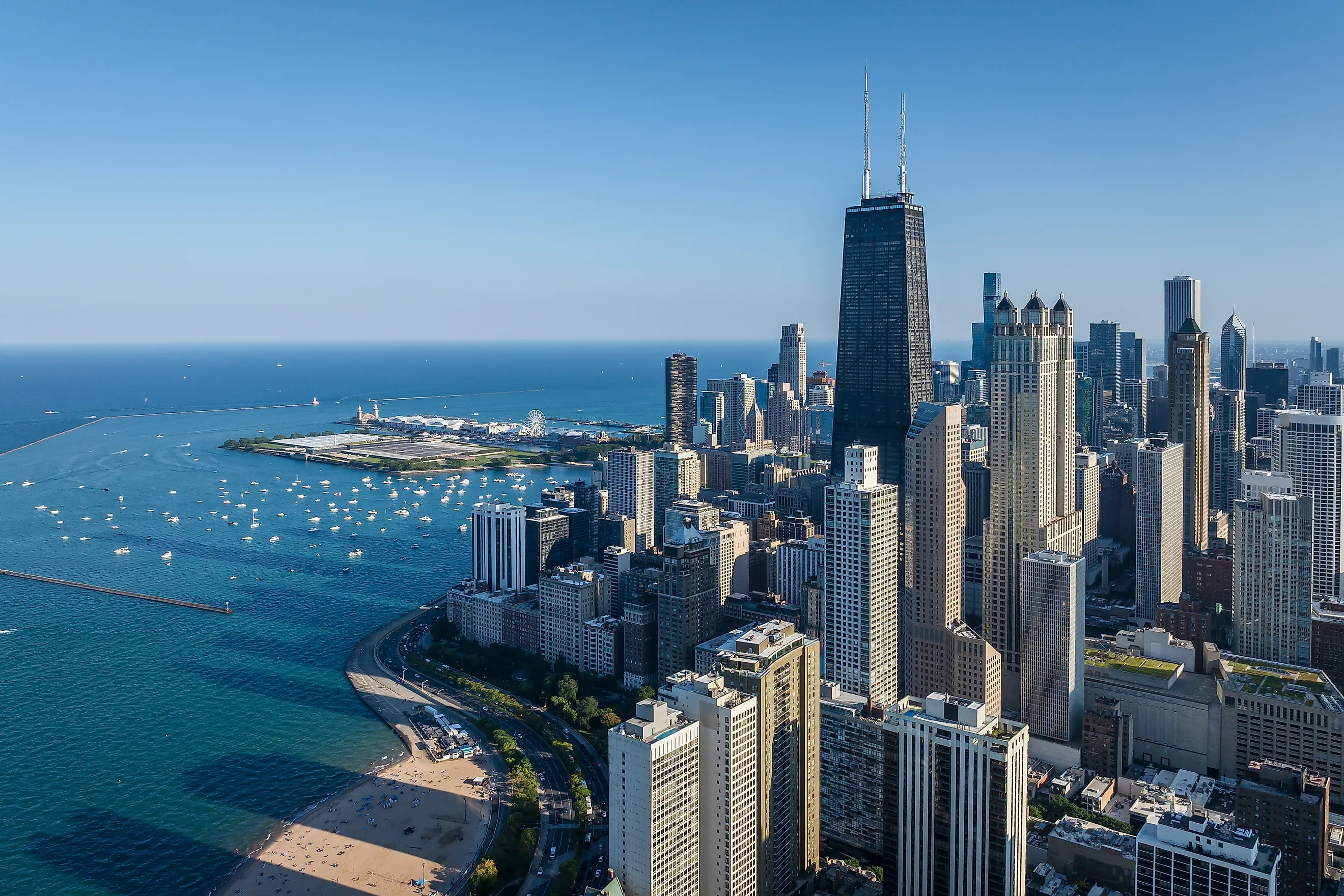
As the third-largest Great Lake by surface area, Lake Michigan's basin is home to 12 million people, all of whom reside in the U.S. It includes major urban areas such as Chicago in Illinois, Green Bay in Wisconsin, Gary in Indiana, Grand Rapids in Michigan, and Milwaukee in Wisconsin.
Lake Ontario

The Lake Ontario basin is home to approximately 9 million people in Canada and the U.S. Notably, the basin houses 25% of Canada's total population, containing more Canadian residents than any other watershed in the country. Though it is the smallest of the Great Lakes by surface area, its basin includes major cities such as Toronto and Hamilton in Ontario, along with Syracuse and Rochester in New York.
Lake Huron

Lake Huron is the second-largest Great Lake, and its surrounding basin houses 3 million people, split equally with 1.5 million residents in the U.S. and 1.5 million in Canada. While the basin lacks massive metropolitan hubs, its primary urban areas include Bay City and Saginaw in Michigan, the twin cities of Sault Ste. Marie in Ontario and Michigan, and Sarnia in Ontario.
Lake Superior

Although it is the largest of the Great Lakes by volume and surface area, Lake Superior's basin has the lowest population, with just over 600,000 residents distributed across vast, heavily forested rural lands in the U.S. and Canada. Cities within this basin include Superior in Wisconsin, Marquette in Michigan, Thunder Bay in Ontario, and Duluth in Minnesota.
The Future of the Great Lakes Basin
Various media outlets have frequently categorized Great Lakes cities like Buffalo and Duluth as long-term "climate havens" due to their reliable access to fresh water. However, a major study by researchers at the University of Michigan challenges this idea. The study notes that, while the Great Lakes region lacks the severe drought and sea-level risks facing other parts of North America, it remains vulnerable to localized climate disruptions. These include severe storms, sewer system overflows, and fluctuating lake levels. Researchers indicate that an unmanaged influx of climate-induced migration to the Great Lakes Basin could place additional strain on the basin's ecological and municipal infrastructure.
Protecting a Shared Border
Environmental agencies from the U.S. and Canada emphasize that protecting the Great Lakes Basin is the responsibility of both nations. Because millions of residents depend on the ecosystem for daily consumption and economic stability, regional resource preservation functions as an active logistical requirement for local governments. To manage these resources, the Great Lakes Compact was enacted in 2008. This legally binding agreement among the eight U.S. Great Lakes states prohibits the diversion of Great Lakes water outside of the basin's natural boundaries. A parallel international agreement commits the Canadian provinces of Ontario and Quebec to the same conservation goals.
Ultimately, managing a watershed that supports over 34 million residents requires balancing population growth with infrastructure capacity. Scientific assessments from regional planning agencies indicate that expanding urban footprints increase stress on municipal wastewater treatment and storm systems. Ensuring the long-term water quality of the basin depends upon updating public infrastructure to accommodate both higher usage volumes and the localized impacts of changing weather patterns.