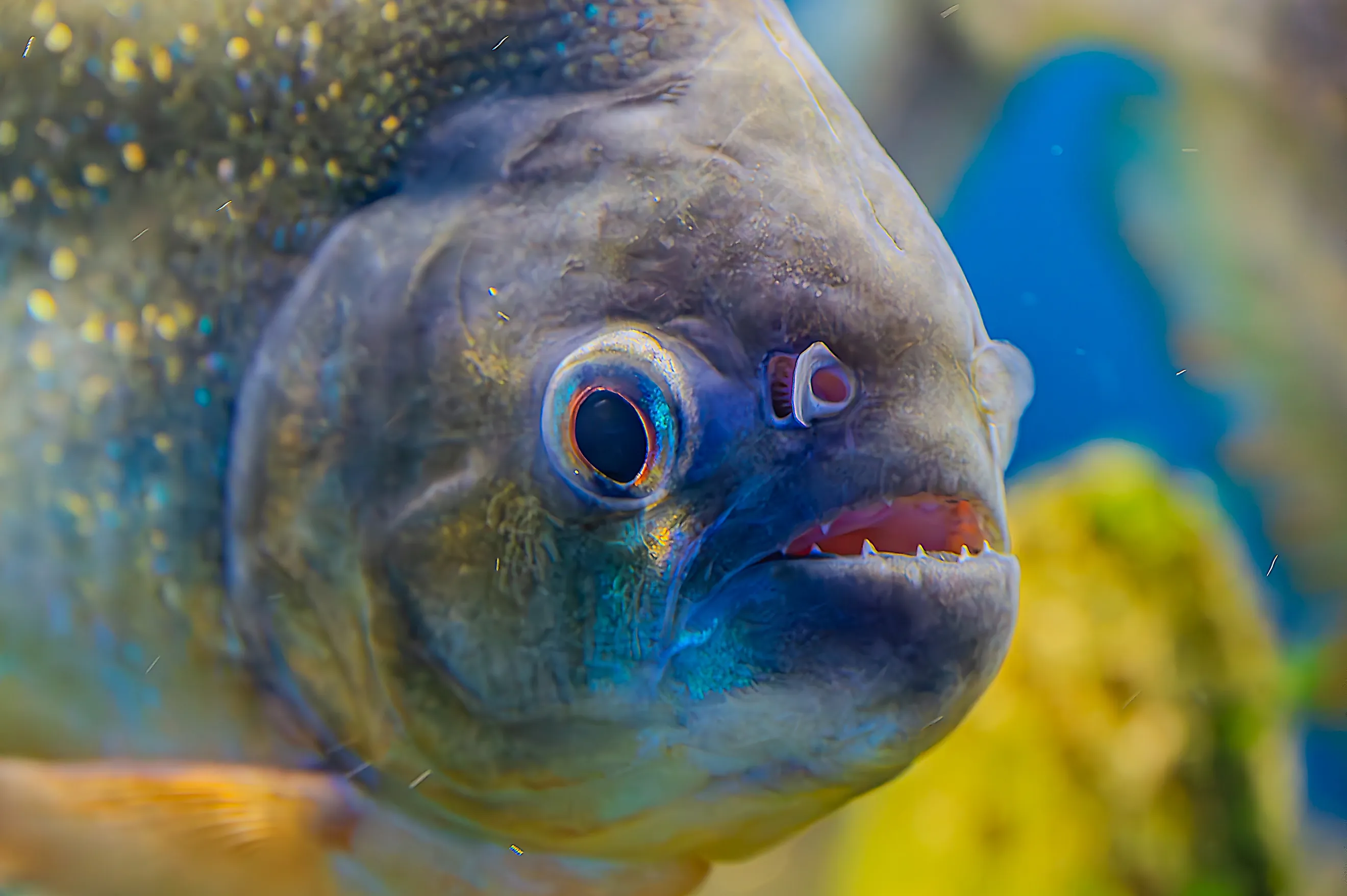
The US Rivers Where Piranhas Have Been Caught
Imagine reeling in a fish on the Mississippi River and finding a mouthful of razor-sharp teeth staring back at you. That really happened near South St. Paul, Minnesota, thousands of miles from the piranha's native Amazon. The US Geological Survey keeps the federal record of fish found where they don't belong, and its files show piranhas in more than a dozen states. Most turned up in ponds and lakes, but a handful came from moving water. Nearly all of them were pets dumped from home aquariums, a habit wildlife agencies work hard to stop. The good news is that none of these fish has ever started a wild population in the United States.
Mississippi River, Minnesota

America's most famous river has hosted at least one piranha. The fish turned up near South St. Paul in 2001, the same year another was found in a nearby pond. Minnesota has a history of these surprises, including a lake catch that local biologists first mistook for a harmless relative before experts confirmed it was the real thing.

That close call is a good reminder that identifying a piranha takes a careful look, even for professionals. The red-bellied piranha is the most common piranha in the aquarium trade, and it is usually the species behind US sightings, though the USGS notes that some fish may have been closely related species.
None of Minnesota's piranhas lasted long. These tropical fish need warm water to survive, and a Minnesota winter is about as far from the Amazon as a fish can get. Warm summer water in a big river like the Mississippi can keep a released pet alive for a few months, which is exactly when most of these surprise catches happen.
North Platte River, Nebraska

The town of North Platte, Nebraska, found piranhas two years in a row. The first showed up in Scout Creek, and the next appeared in a county drain just upstream of where it empties into the North Platte River. Both waterways feed the river, making this one of the rare places where piranhas have been documented in a Great Plains river system.

The location makes the find even more striking. The North Platte flows out of the Rocky Mountains through Wyoming and joins the South Platte at the city of North Platte to form the Platte River, a cold, shallow prairie river better known for catfish and the sandhill cranes that gather along it each spring. A tropical schooling predator has no business here, and like their Minnesota cousins, these piranhas didn't survive the cold.
Rocky River, Ohio

View of Rocky River in Autumn, Cleveland, Ohio.
One of the oldest river sightings comes from central Ohio, where a piranha was found in a pool beneath a bridge on the Rocky River near the small town of London. It remains Ohio's only confirmed piranha. The catch fits a familiar pattern in northern states. According to the USGS, piranhas there are usually hooked by surprised anglers in summer or found dead once the water cools in fall.

When a piranha does turn up, state wildlife agencies sometimes go to great lengths to make sure there are no others. The USGS reports that some agencies have treated an entire pond or lake with rotenone, a chemical that kills fish, just to remove a possible piranha. That response may sound extreme, but it reflects how seriously officials take any nonnative predator, even one with little chance of surviving the winter.
Snapper Creek Canal, Florida

Florida is the one state where a piranha might actually make it through the winter, so its wildlife officials take every report seriously. Florida and Texas both ban importing red-bellied piranhas for exactly that reason. In Miami, one was found in a flooded pit connected to the Snapper Creek Canal, part of the region's huge network of flood-control waterways. Florida is also the only state with records of the redeye piranha, a second species, mostly from ponds and pools around Miami. Rumors of piranhas in the Tamiami Canal were never confirmed, and later surveys found none.
Florida's caution has a history behind it. South Florida's canals stay warm all year and already hold a long list of nonnative fish, many of them escaped or released aquarium species that went on to establish breeding populations. A piranha would find plenty to eat there. In its native range, the red-bellied piranha hunts fish in schools, taking whole fish or nipping off fins and scales, and it also eats insects, crustaceans, snails, and plants.
The Usual Suspect, The Pacu

Many headlines about piranhas in American rivers are really about pacus, their bigger, mostly plant-eating cousins. Pacus turn up in US waters far more often than piranhas do, and plenty of them have been caught in rivers. The easiest way to tell the two apart is to look at the teeth. Piranhas have sharp, triangular teeth made for slicing. Pacus have flat, squarish teeth that look startlingly human and are built for crushing nuts and seeds.
The mix-up happens all the time, even among experts. A fish pulled from Alabama's Elk River once made the local newspaper as a piranha, but a closer look at the museum specimen showed it was a pacu. Pacus are popular aquarium fish when small, but they can grow far larger than most home tanks can hold, which is a big reason so many end up released into rivers and lakes. Pacus are generally harmless to people, though their powerful jaws mean they still deserve respect.
Why Piranhas Never Stick Around
Almost every one of these stories starts the same way. An aquarium pet outgrows its tank, gets released, and briefly survives in warm summer water before the cold sets in. Their fearsome reputation is also overblown. The USGS notes that many experts consider the danger piranhas pose to people greatly exaggerated, though they still need careful handling. The bigger worry is ecological, since released pets of any kind can harm native fish. The fix is simple. Never release an aquarium fish into the wild, and report any strange catch to your state's fish and wildlife agency or the USGS.