What Happens If Lake Powell Hits Dead Pool Before Lake Mead
On Reclamation's October 18, 2026 figures, Lake Mead sat 142 feet above dead pool and Lake Powell 151. By that measure Mead is closer, which makes the question in the headline look backwards. It is not, because the two reservoirs are not independent. Lake Powell's outflow is Lake Mead's inflow. If Powell reaches dead pool first, Mead stops receiving water and follows it down. If Mead goes first, Powell is upstream and entirely unaffected. The order matters enormously, and only one sequence takes the whole system with it.
The Numbers, As Of Last Week

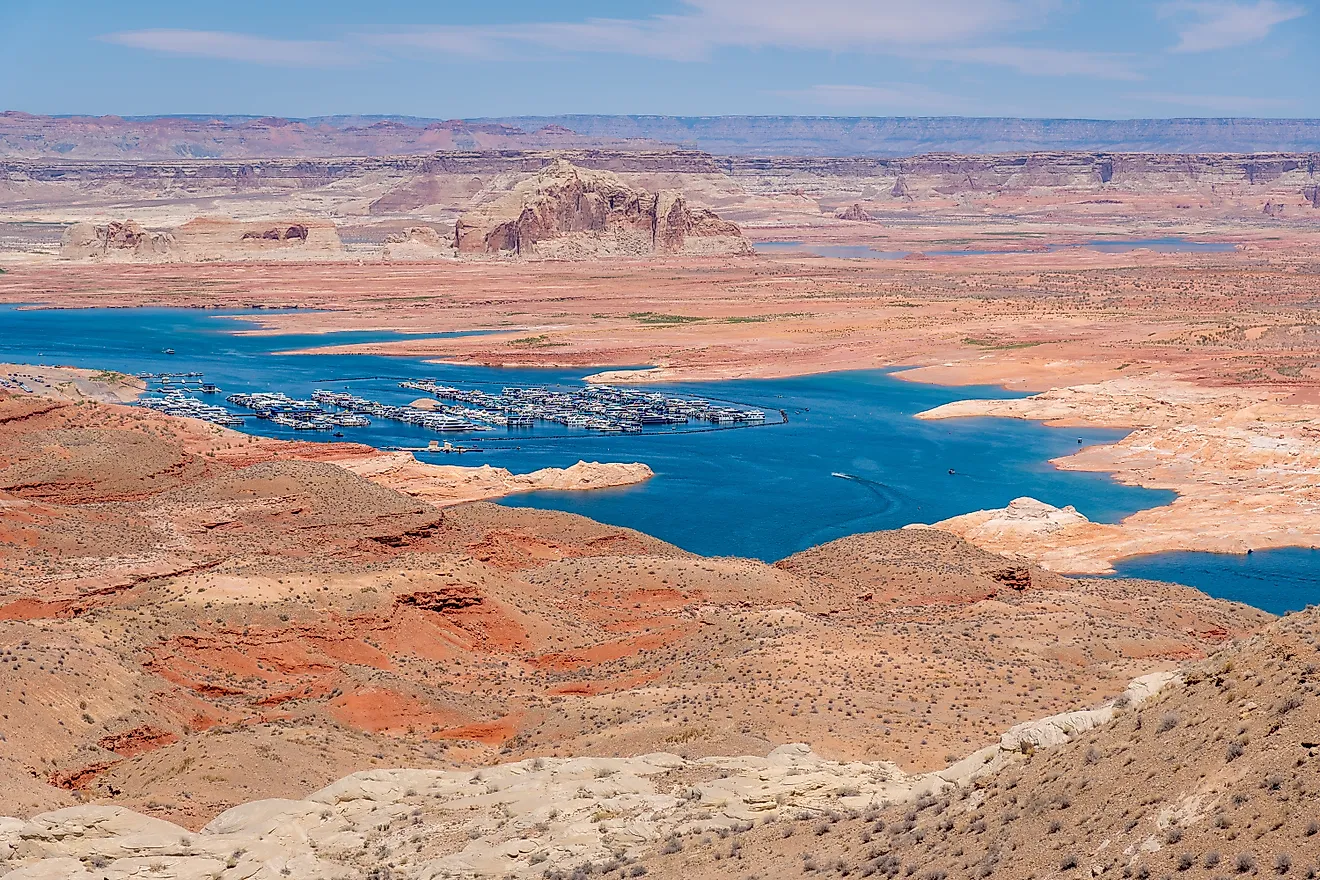
Both reservoirs have two thresholds that matter, and they sit a long way apart. Lake Powell's minimum power pool is 3,490 feet and dead pool is 3,370. On October 18 it stood at 3,520.55, leaving 31 feet above the point where hydropower stops and 151 feet above the point where water stops passing the dam.
Lake Mead's minimum power pool is 950 and dead pool is 895. It stood at 1,037.24, giving 87 feet and 142 feet respectively.
Mead Is Closer, Powell Is More Exposed
Those figures contain an apparent contradiction worth resolving, because both readings are correct.
Measured in feet to dead pool, Mead is 8 feet closer. Measured in feet to minimum power pool, Powell is 57 feet closer. The two reservoirs are approaching different thresholds at different speeds.
Powell will lose hydropower long before Mead does. Mead would reach dead pool slightly sooner if both simply kept falling at the same rate, which they will not, because the upstream one controls the downstream one.
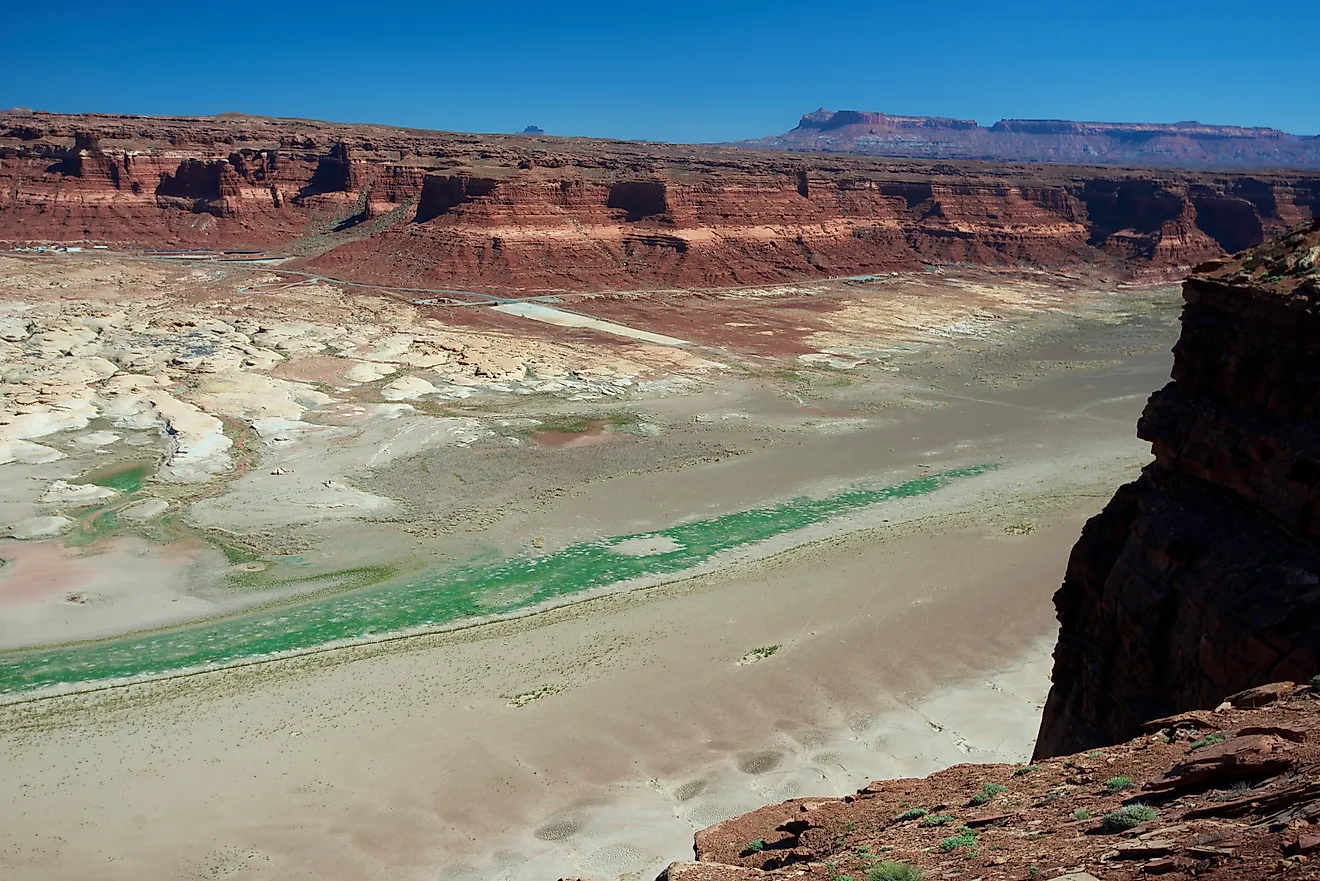
Powell Dead Pool Means Nothing Leaves

Dead pool is the elevation below which water cannot pass a dam by gravity, and at Glen Canyon it is a harder line than at Hoover.
Glen Canyon's river outlet works, the bypass tubes beneath the penstocks, sit at about 3,374 feet. Dead pool is 3,370. The gap between the lowest outlet and the point where the reservoir can no longer deliver anything is roughly four feet.
Below that line the dam physically cannot meet the delivery obligation the Colorado River Compact places on the Upper Basin. It stops being a management problem and becomes a plumbing one.
Mead Would Fall Fast
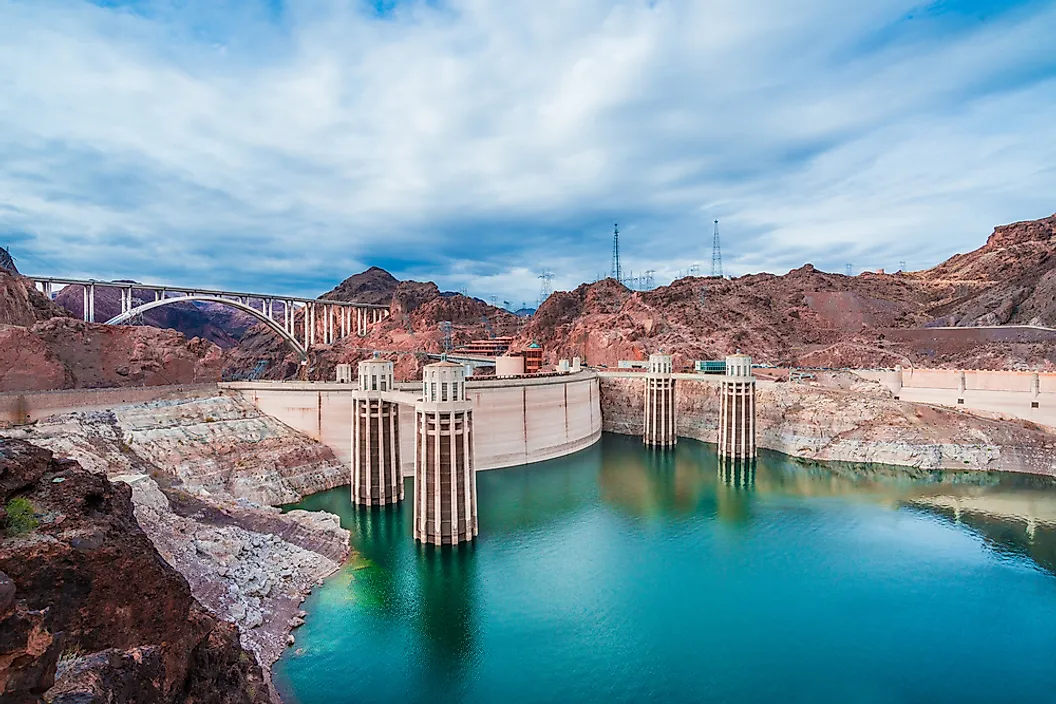
This is the mechanism that makes the Powell-first scenario the serious one. Lake Mead has almost no natural inflow. It is fed by releases from Glen Canyon Dam, which arrive on a schedule rather than from a watershed of its own. Cut that off and Mead continues to lose water to evaporation and downstream deliveries with nothing replacing it.
Mead's 142 feet of margin assumes the river keeps arriving. Without inflow, that margin becomes a countdown rather than a buffer.
The Grand Canyon Goes First
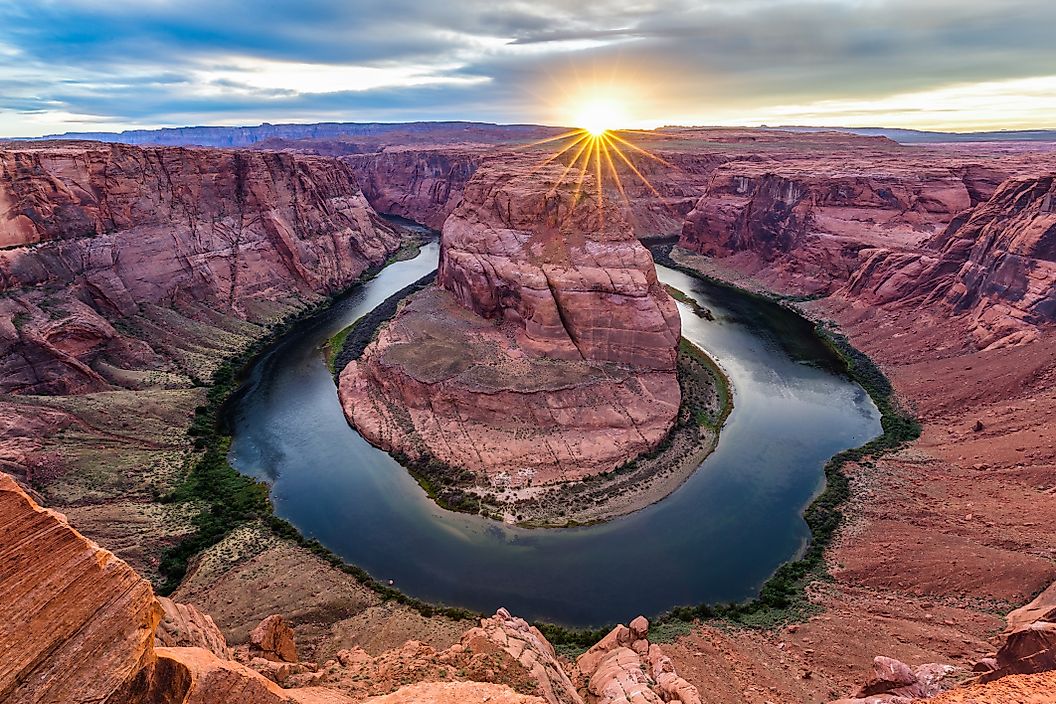
Between the two reservoirs sits 277 miles of national park, and it would notice long before Las Vegas did.
Everything flowing through the Grand Canyon comes out of Glen Canyon Dam. At dead pool the releases stop, which would leave the canyon dependent on the Paria, the Little Colorado and side-canyon tributaries, a small fraction of current flow.
The canyon already feels the decline. Warm releases are carrying invasive smallmouth bass into the last stronghold of the humpback chub, and no sediment-rebuilding flood has been run since 2023 because the water is not available.
The Reverse Scenario Is Contained
Run it the other way and the consequences stop at the dam.
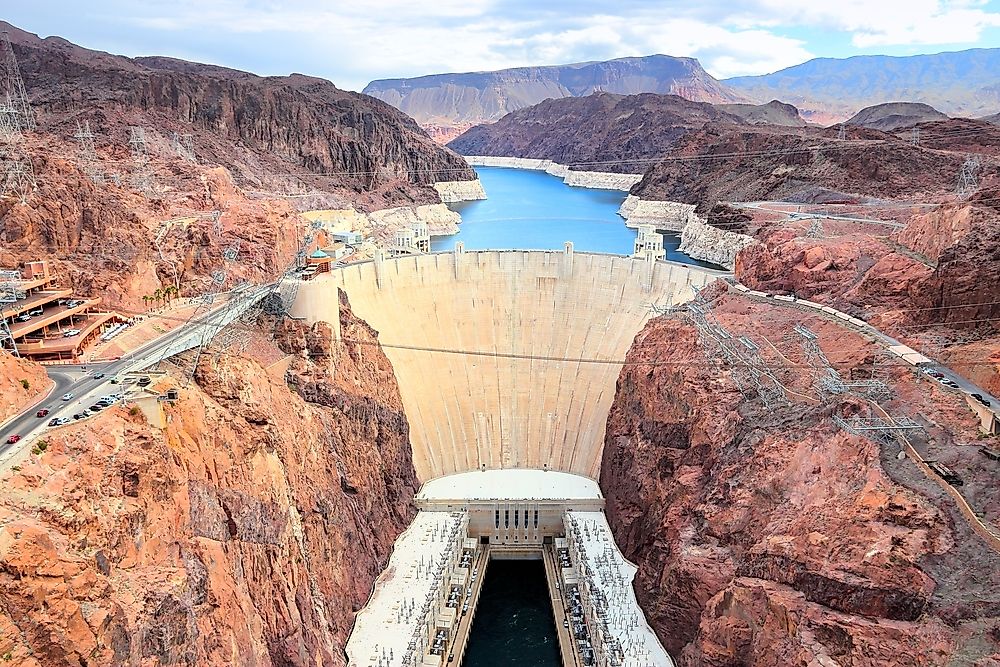
If Mead reached dead pool first, Powell would be unaffected. It sits 300 river miles upstream and receives its water from the Rockies, not from Mead. Glen Canyon would carry on generating and releasing exactly as before.
The damage would be severe downstream, for Arizona, California, Nevada and Mexico, but it would not propagate back up the system. That asymmetry is the whole reason the order matters.
Which Is Why Powell Gets Protected

Reclamation's recent operating decisions make a great deal more sense once that asymmetry is clear. For water year 2026 the scheduled release from Glen Canyon under the Mid-Elevation Release Tier was 7.48 million acre-feet. Reclamation cut it to 6.0 million, the lowest the current rules allow, specifically to hold water in Powell.
That decision transfers the problem downstream on purpose. Every acre-foot held above Glen Canyon Dam is an acre-foot that does not arrive at Hoover, which is part of why Mead set a record low in 2026 while Powell rose through the autumn.
Neither Is Close To It Yet

Proportion is worth keeping in view, because dead pool sits a long way below where either reservoir is now.
Powell has 151 feet to go and Mead 142. The thresholds that would actually bite first are the power pools, and even those are 31 and 87 feet away respectively.
Powell also rose 1.55 feet in the week to October 18 as autumn demand fell away, and sits nearly four feet above the record low it set in September. Dead pool is not a this-year problem for either reservoir.
What Would Have To Happen
Reaching Powell dead pool requires a sequence rather than one bad year. It would take several consecutive very dry winters with no meaningful snowpack recovery, continued releases to meet downstream obligations, and no agreement among the basin states to cut deliveries further. The current interim guidelines expire at the end of 2026, and their replacement is being negotiated now.
Reclamation has projected Powell could touch minimum power pool as early as December 2026 in some scenarios. Dead pool is another 120 feet below that.
The Short Answer

If Lake Powell reached dead pool first, Glen Canyon Dam would stop passing water, the Grand Canyon would lose most of its river, Lake Mead would be left with no inflow and would fall toward its own dead pool, and the Upper Basin would be physically unable to meet its Compact obligation.
If Lake Mead went first, Powell would carry on untouched. One reservoir failing takes the system with it and the other does not, which is why Reclamation has spent the past two water years holding water upstream and letting the downstream reservoir take the difference.