How Fast A Great Lakes Freighter Can Go
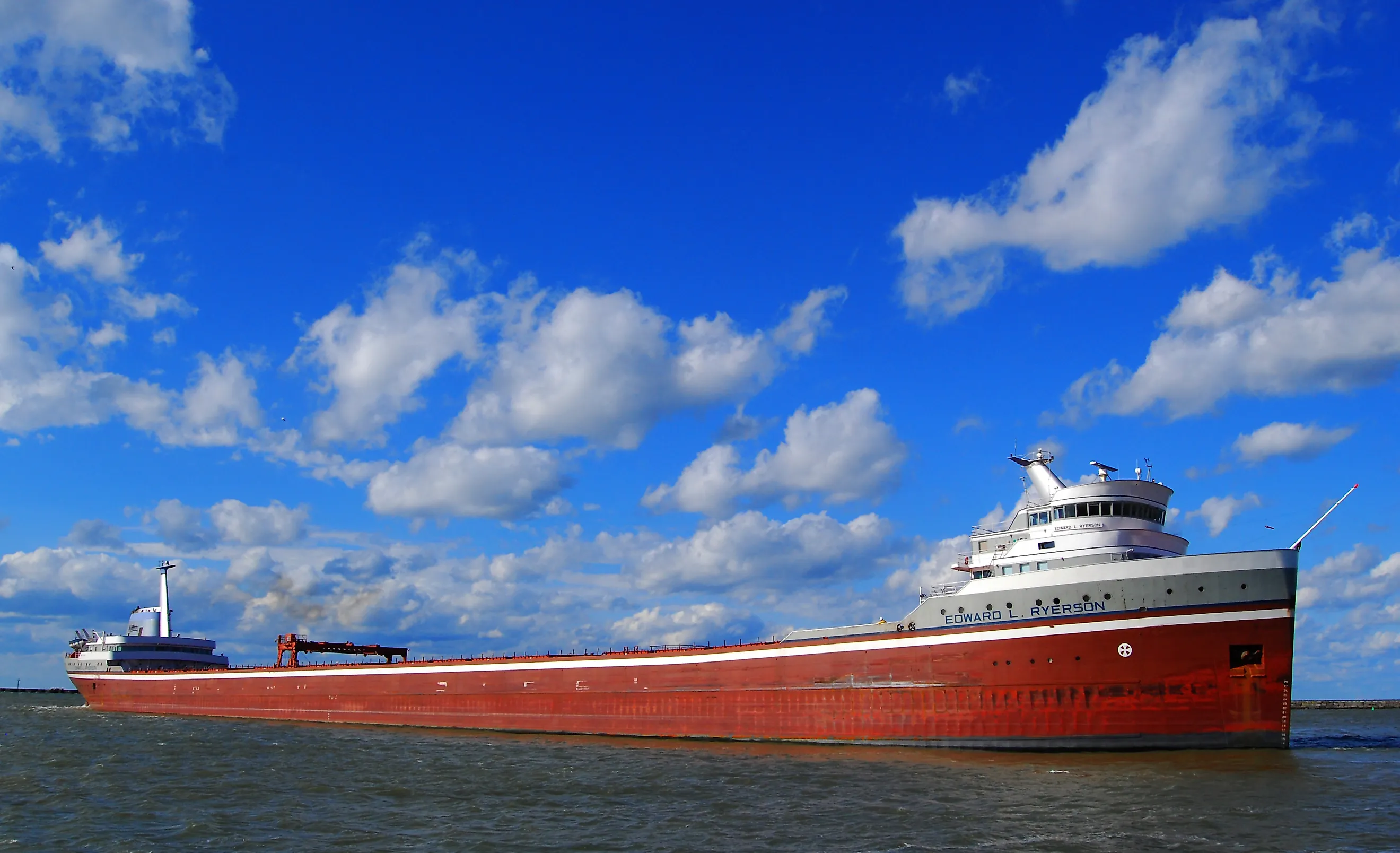
The Paul R. Tregurtha, the longest ship on the Great Lakes at 1,013.5 feet, is rated at about 17.8 mph, and most big lake freighters top out between roughly 16 and 18.5 mph. One older steamer, the Edward L. Ryerson, could reach 19 mph and was nicknamed "Fast Eddie" for it. Federal speed limits on the St. Marys, St. Clair and Detroit rivers are written in statute miles per hour, the same unit as a car's speedometer, so those figures line up with the numbers drivers see on Michigan highways.
Below the Soo Locks in Sault Ste. Marie, an upbound freighter may go no faster than 8 mph, and that limit is measured over the ground, on a river that flows against the ship the whole way. Past Port Huron and Detroit, big ships may not exceed 12 mph. Ice can slow a freighter far below any posted limit, and in April 2015, 18 freighters sat stuck in ice at the eastern end of Lake Superior.
Most Big Freighters Top Out Near 18 MPH

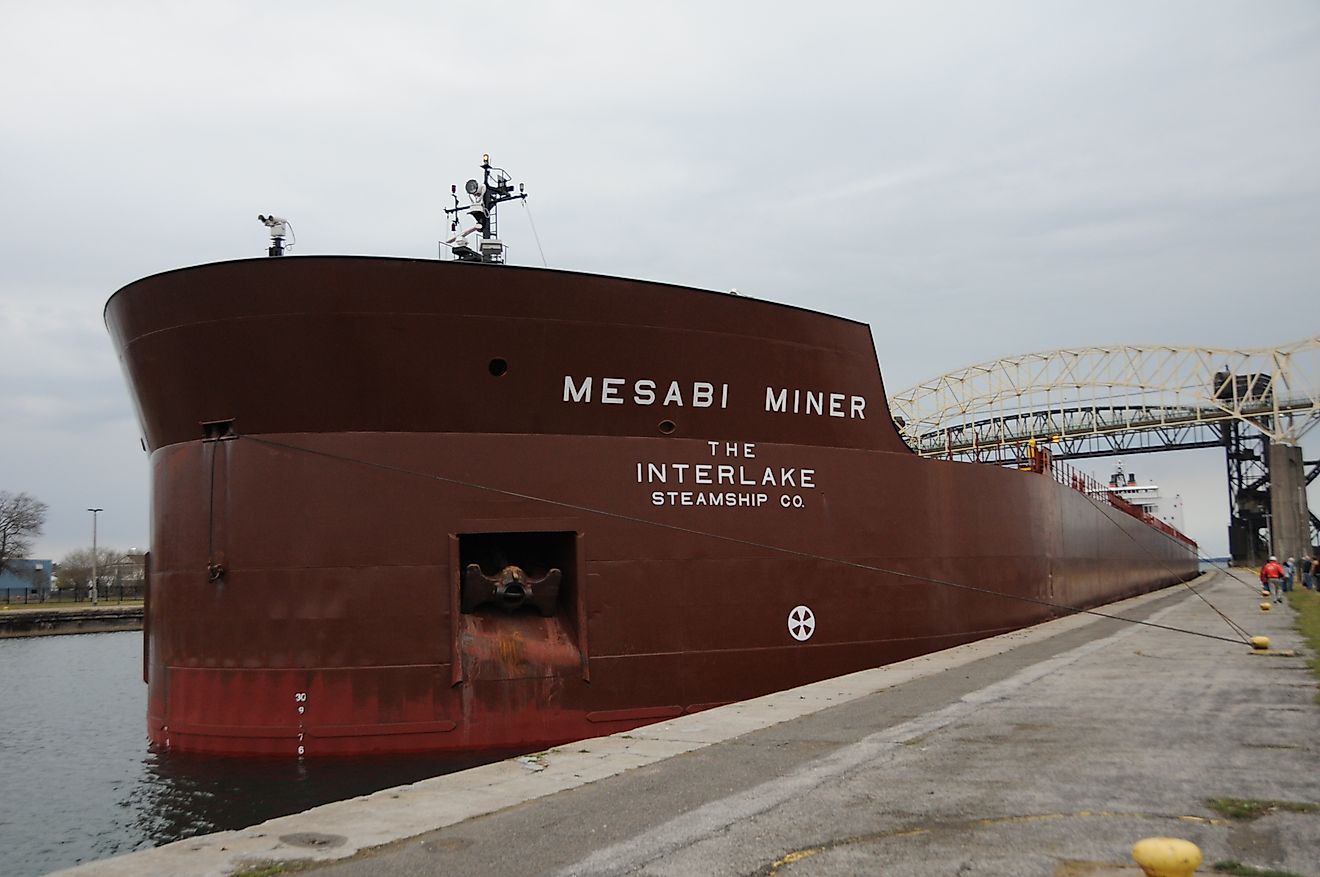
The thousand-foot freighters built in the 1970s and early 1980s carry speed ratings of about 14 to 16 knots. A knot is one nautical mile per hour, so those ratings work out to roughly 16 to 18.4 mph. The Tregurtha, built in 1981 at Lorain, Ohio, runs on two MaK diesel engines totaling about 16,000 horsepower and is rated at 15.5 knots. The James R. Barker and the Mesabi Miner carry the same rating, and the Edwin H. Gott sits at the top of the range at 16 knots.
The Edmund Fitzgerald, the longest ship on the lakes when it was launched in 1958 at 729 feet, ran on a 7,500-horsepower steam turbine and reached about 16.3 mph at full speed. On a travel-times display photographed at the Soo Locks, Detroit is about 24 hours away by ship and Duluth about 28, estimates that assume a steady speed and fair weather.
The Edward L. Ryerson Needed 2,400 More Horsepower For 2.7 More MPH

Built for Inland Steel, the 730-foot Ryerson entered service in August 1960 with a 9,900-horsepower General Electric steam turbine and a 20-foot propeller, the largest used on a lake freighter at the time. Its 19-mph top speed beat the Fitzgerald's by about 2.7 mph, with roughly 2,400 more horsepower behind it. The Ryerson last sailed in 2009 and has been laid up in Superior, Wisconsin, ever since.
According to the International Maritime Organization, the engine power a ship needs rises roughly with the cube of its speed. Slowing down by 10 percent lowers the fuel burned for propulsion each hour by about 27 percent and cuts the fuel used over a whole voyage by about 19 percent.
St. Marys River Speed Limits Are Measured Over The Ground

Every freighter moving between Lake Superior and Lake Huron travels the St. Marys River, a run of 63 to 75 miles depending on the route. Under federal rules, ships may go up to 14 mph near De Tour at the Lake Huron end, and through most of the river the limit is 12 mph or less, falling to 8 mph for upbound ships below the locks and 10 mph for downbound ships on the same stretch.
Those limits apply to speed over the ground, a ship's progress relative to the fixed riverbed rather than its speed through the water. At high flow, the water in Little Rapids Cut, just below the locks, moves about 2.2 mph toward Lake Huron, so an upbound freighter holding 8 mph over the ground there is pushing through the water at about 10 mph. According to the Coast Pilot, the federal navigation guide for the lakes, captains should check their speed by timing runs between fixed points, because the currents vary along the river and propeller revolutions alone will not show speed over the ground.
A Faster Ship Sits Lower In Shallow Water

A ship moving through shallow water creates an area of low pressure under its hull and settles deeper than it sits at rest, an effect called squat. Cut a ship's speed in half and its squat drops to about a quarter, since the effect grows roughly with the square of speed. Squat starts to matter once the water is less than about four times as deep as the ship's draft, a condition that fits the dredged channels between the lakes.
Little Rapids Cut is dredged to 27 feet. A freighter loaded to a 25-foot draft would have about 2 feet of water beneath its keel there when the river sits at its charted low-water level, before any squat is counted. Under Seaway regulations covering the Welland Canal and the rest of the St. Lawrence Seaway, captains must set speed with their ship's tendency to squat in mind so the hull does not strike bottom.
Captain Ernest McSorley Slowed The Edmund Fitzgerald Twice In Its Final Storm

The Fitzgerald left Superior, Wisconsin, at 2:15 p.m. on Nov. 9, 1975, loaded with taconite pellets, and soon reached full speed. The Arthur M. Anderson, sailing the same route, held a steady 14.6 mph, about 1.7 mph slower. Around 1 a.m. on Nov. 10, as the storm built over Lake Superior, McSorley radioed that he had reduced speed because of the rough conditions, and at about 3 a.m. the Fitzgerald pulled ahead of the Anderson.
By mid-afternoon, McSorley reported a list and damage on deck and said he would slow down so the Anderson could close the gap. After the Fitzgerald lost its radar a little later, he kept the ship slowed so the Anderson could come within about 10 miles and help guide it. The Fitzgerald sank that evening about 17 miles from the shelter of Whitefish Bay with all 29 crew members aboard.
Ice Can Slow A Freighter To A Crawl

The Soo Locks close each winter in mid-January and reopen in late March, a shutdown of about 10 weeks for traffic between Lake Superior and the lower lakes. Ice in the St. Marys River typically peaks at about 20 inches thick in the upper river and 26 inches in the lower river.
In April 2015, ice about 3 feet thick covered all of Whitefish Bay, with broken slabs piled as high as 8 feet, and 18 freighters were stuck in and around the bay. Ships moved by finding openings in the ice and sliding forward into the space they cleared, according to Mark Gill, the Coast Guard's vessel traffic director at Sault Ste. Marie. One freighter took a hole in a ballast tank before icebreakers cleared a path.
When The Lower Speed Limit Is The Harder Push

For a thousand-footer sailing between the late-March reopening of the Soo Locks and the January closing, the open lakes, which have no posted speed limits, are where its rated speed of about 18 mph comes into play. The same last few miles per hour that cost the most fuel on Lake Superior also make a loaded hull sit lower in the dredged cuts below the Soo. Once a ship enters the St. Marys, its direction of travel changes how hard it works. A downbound freighter holding its 10-mph limit over the ground in Little Rapids Cut rides the 2.2-mph current and moves through the water at under 8 mph. An upbound freighter posted at 8 mph on the same stretch is pushing through the water at about 10. On that stretch of river, the ship with the lower speed limit is the one working its engines harder.