10 Snowiest US States
The United States is one of the most geographically diverse countries in the world, spanning arid deserts, humid swamps, hardwood forests, snowcapped peaks, rolling prairies, and tropical islands. Unsurprisingly, snowfall varies widely from state to state, shaped by latitude, prevailing weather patterns, and proximity to features like oceans and mountain ranges. Places such as Florida may see snow only during rare cold snaps, while northern and high-elevation states experience longer winters that allow snow to accumulate and persist for months.
Below, we rank these states by average annual snowfall (in inches) from most to least snowy, using data from NOAA’s National Centers for Environmental Information (NCEI), and highlight the geographic and climatic factors that help explain their placement on the list.
The 10 Snowiest US States
| Rank | State | Average Snowfall (inches) |
|---|---|---|
| 1 | Vermont | 89.3 |
| 2 | Maine | 77.3 |
| 3 | New Hampshire | 71.4 |
| 4 | Colorado | 67.3 |
| 5 | Alaska | 64.5 |
| 6 | Michigan | 60.7 |
| 7 | New York | 55.3 |
| 8 | Massachusetts | 51.1 |
| 9 | Wyoming | 51.0 |
| 10 | Wisconsin | 45.8 |
1. Vermont - 89.3 inches

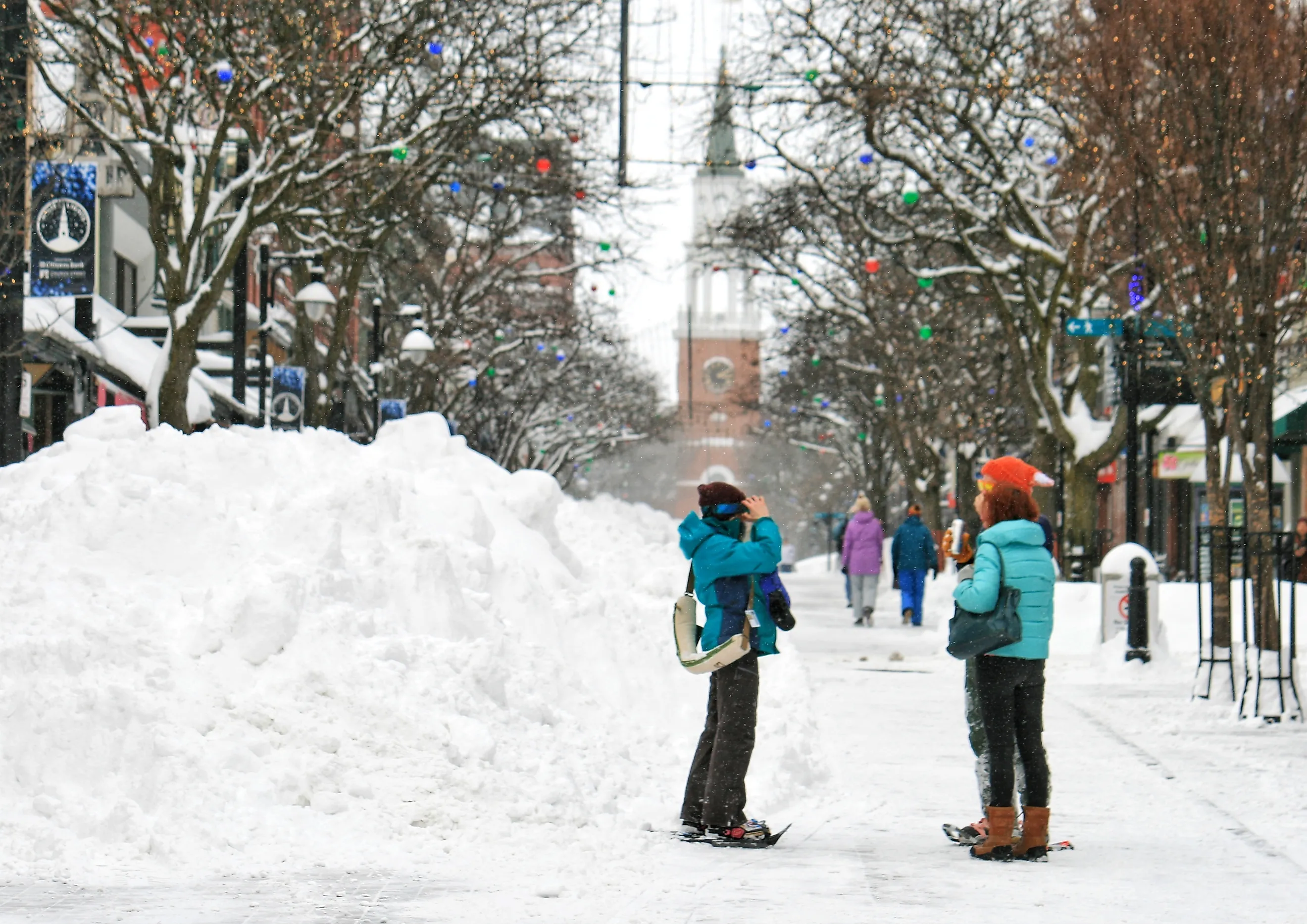
Topping out the list, Vermont’s reputation for heavy snowfall comes from its famously cold, lengthy winters and frequent exposure to northern storm systems. Fast-moving storms track across the interior of the Northeast, delivering repeated record-breaking snow events every winter rather than isolated major dumps. Snow cover here tends to last for long stretches, too, allowing accumulation to build steadily over time and making Vermont among the best places in the country to ski. Stowe, a particularly popular local resort, often sees an average of 314 inches per year alone!
This state's largely rural landscape also limits urban heat effects, helping its snow linger longer than in nearby metro areas along the Atlantic coast. The result is a very white winter season defined less by single extreme storms, like many of its neighbors, and more by sustained, reliable snowfalls throughout the winter. If you live in the east and love snowmobiling, snowboarding, downhill or nordic skiing, snowshoeing, or even good old-fashioned tobogganing, Vermont is the spot for you.
2. Maine - 77.3 inches

Maine’s latitude, prolonged winters, and exposure to Atlantic weather systems all add up to high snowfall records year after year. Like its neighbor, New Hampshire, cold air streams from north of the border dominate many of the winter months, allowing snow to fall frequently and for extended periods in the state's dense forests and mountains.
Along with the usual effects of the Atlantic on this coastal state's climate, interior and northern Maine actually receive more consistent snowpacks due to their distance from the ocean's temperature moderation. Furthermore, the higher elevations in western Maine, including the Longfellow Mountains, force moist air upward, and, as usual, back down in the form of snow that doesn't melt until long into spring. However, coastal areas still do see significant blizzards from time to time, and overall, Maine’s climate and rugged wilderness bring long-lasting winters across the board.
3. New Hampshire - 71.4 inches

New Hampshire’s prolific annual snowfall is driven by its location in the far north of New England and its craggy topography. The state notably sees sharp contrasts between coastal-influenced areas and mountainous inland regions as air from Canada routinely moves into the region during winter, setting the stage for frequent blizzards and other notable snow events.
The White Mountains, deep in New Hampshire's northern edge, play a major role by enhancing snowfall through elevation and orographic lift, with higher peaks receiving significantly more snow than the surrounding lowlands. These interior areas tend to see colder, drier snow as well, while southern portions experience a mix of heavy, storm-driven accumulations. Atlantic storms outside of the warmer months also bring widespread snowfall throughout the state, particularly during nor’easters.
4. Colorado - 67.3 inches

Colorado ranks among the snowiest states in large part due to its sheer elevation and mountain-dominated topography. Much of the state sits above 5,000 feet, with the Rocky Mountains running north to south down the middle, covering around half its land area and creating the ideal conditions for frequent snowfalls. Again, moisture carried east from the Pacific is forced upward as it hits the mountains, cooling rapidly and falling as snow through what is known as orographic lift.
Moreover, Colorado's Western Slope ranges in particular, such as the San Juan Mountains, Elk Mountains, and Sawatch Range, receive especially heavy snow due to their open exposure to westward-headed storm systems. Overall, very cold temperatures at high elevations allow snow to accumulate and persist here nearly year-round, supporting long winters and deep alpine snowpack across large portions of this world-renowned ski destination.
5. Alaska - 64.5 inches

Alaska is a destination that most would expect to see on this list. Coastal influences, extreme elevations, and prolonged winter conditions for more than half the year combine to make snowfall a defining feature across much of the country's most northerly state. With its immense size, latitude, and geographic diversity, snow can be found somewhere on the ground in Alaska at basically any time of year, as much of the state lies within the Arctic Circle, where long winters and consistently frigid temperatures allow ice to remain practically indefinitely.
Water-rich air from the Pacific and Arctic Oceans feeds frequent storms that move into southern and coastal Alaska, where peaks such as the Chugach Mountains and Alaska Range produce heavy snows. On the other hand, interior Alaska is colder and drier, but still accumulates snow through persistent winter systems, often seeing some of the coldest temperature drops in all of North America.
6. Michigan - 60.7 inches

Michigan has the longest freshwater coastline in the United States, surrounded almost completely by Lake Superior, Lake Michigan, and Lake Huron, all of which generate intense lake-effect snow during the state's notoriously cold winters. Cold Arctic air passing over these relatively warmer lakes picks up moisture, producing heavy snow, particularly along the western and eastern shores of the Upper and Lower Peninsulas.
Extreme northern parts of the state, namely the Upper Peninsula, receive consistently deep snow due to their dramatic elevations and exposure to storm systems coming from the northwest of the continent. Conversely, more inland areas of Michigan, like Detroit and Lansing, see comparatively moderate conditions.
7. New York - 55.3 inches

As with pretty much every other entry here, New York’s snowfall patterns are strongly influenced by its geography, which ranges from the Atlantic coastal plain to the Adirondack and Catskill Mountains. To add to that, lake-effect snow from Lake Ontario and Lake Erie further drives heavy accumulations in its western and upstate regions, notably in cities like Buffalo and Syracuse. In fact, the NFL's Buffalo Bills have even been known to repay fans or offer free tickets in exchange for assisting with winter shoveling duties at their open-roofed stadium!
The higher elevations of the Adirondacks and Catskills further amplify snowfall eastward toward the Hudson Valley, whereas more coastal areas, including New York City, also receive heavy snows on their own during nor’easters, though totals are generally lower than in the interior. Like in much of nearby New England, this combination of lakes, mountains, and Atlantic storms creates varied and often significant winter snow across the Empire State from year to year.
8. Massachusetts - 51.1 inches

Massachusetts is no stranger to long, drawn-out winters with its position in the northeastern United States and its varied geography. Winter storms from the Atlantic Ocean, including the famous (or infamous) nor’easters, frequently bring heavy snows, especially to coastal and central parts. The western half of the state, with its higher elevations in the Berkshires, tends to receive deeper snow build-ups, as cold air combines with moisture-laden systems and empties out into protected hilly areas.
This proximity to both the ocean and the interior landscapes of North America allows Massachusetts to receive a whole array of heavy, wet coastal snow and lighter, powdery inland snows, the latter being better for downhill sports and making it possible for the state to host several of New England's best ski resorts.
9. Wyoming - 51.0 inches

Wyoming’s snowfall is largely the result of its elevation and mountainous terrain, with this sparsely populated state sitting primarily on a high plateau in and around the Rocky Mountains. This famous range extends into the western and northwestern regions of Wyoming, acting as a natural barrier that forces moist air upward, where it eventually cools and releases precipitation in the form of snow.
This combination of cold Arctic air and moisture coming mainly from the Pacific Ocean is a mix that contributes mightily to consistent winter snowfall, particularly in the Teton, Wind River, and Bighorn ranges, all subranges of the Rockies. Indeed, snowfall is normally heavy in these areas, supporting a number of world-class ski resorts and winter recreation. Eastern Wyoming, while much flatter, still receives quite a bit of snow from winter storms moving across the plains, with the capital city of Cheyenne often seeing an average well over 60 inches per year.
10. Wisconsin - 45.8 inches

Wisconsin’s position in the upper Midwest and its proximity to Lake Michigan and Lake Superior put it at number 10 on this list. Cold Arctic air masses frequently move south across the region in winter, combining with moisture from the Great Lakes to produce what is known as lake-effect snow, particularly along the eastern side of the state. Northern Wisconsin, with its slightly higher elevations and dense forests, tends to accumulate the most snowfall, though central and southern areas still see their fair share of regular snow squalls during winter storms.
The state’s rolling hills and river valleys within its Driftless Area, a sizable swathe of land that was untouched by glacial movements during the last ice age, can also enhance localized snow totals by blocking sun and wind from causing melt. This has created the varied winter conditions that host a surprising amount of winter sports in an otherwise flat state, from snowmobiling routes to cross-country and downhill ski areas.
See These American Winter Wonderlands For Yourself
If you live in a place that doesn't normally see snow, a visit to any of the above-mentioned states will surely provide an experience like no other this winter. Whether you're looking to vacation at a ski resort or simply want to see what the world looks like under a thick blanket of white, a trip to any of these destinations can deliver exactly that. Conversely, if your aim is to escape the cold for a while, maybe stay away from anywhere on this list until later on in the spring.