How Climate Limits Venomous Snakes in the US
Across much of the United States, encounters between humans and venomous snakes follow a clear geographic pattern. Hikers, farmers, and gardeners in the Southeast and the Southwest are far more likely to cross paths with these reptiles than people living in colder northern states. While habitat loss and suburban expansion sometimes bring wildlife closer to human communities, the most powerful factor shaping where venomous snakes live, and where people encounter them, is climate.
Unlike mammals, snakes depend on environmental heat to regulate their body temperature. This physiological reality means temperature controls when snakes are active, how they hunt, and whether they can survive winter conditions. As a result, climate creates invisible boundaries across the landscape, defining where venomous species can thrive or where they cannot exist at all. In many parts of the country, these climatic limits form a natural buffer that keeps the snake population and the risk of encounters with people relatively low.
By examining these limits, the regional environments they depend on, and the ways human activity overlaps with those environments, we can better understand where encounters are most likely to occur and how people and wildlife can coexist safely.
Why cold weather stops snakes in their tracks

Snakes are ectothermic, meaning they rely on external heat, from sunlight, warm ground, or rocks, rather than internal metabolism to regulate their body temperature. As a result, climate plays a direct role in how, when, and where they can function. Unlike mammals, snakes must constantly balance warming and cooling to stay within a narrow thermal range. When temperatures drop too low, even basic biological processes begin to slow, which places limits on where snakes can survive.
Temperature affects nearly every aspect of a snake's biology. Warmer conditions increase metabolic rates, allowing snakes to move, hunt, and process food efficiently, while cold temperatures make them sluggish and inactive. For instance, digestion is especially dependent upon temperature; if a snake consumes prey and then experiences a sudden cold spell, the food may fail to digest properly. The immune responses also weaken in cooler conditions, making snakes more vulnerable to disease. Snakes' reproduction is similarly constrained, since stable warmth is essential for embryo development and successful births. This is particularly the case among venomous species such as rattlesnakes.
In the United States, these temperature requirements help explain why the diversity of venomous snakes is higher in the warmer Southwest and Southeast, where long warm seasons support greater snake activity. In contrast, colder northern regions shorten the active season and force snakes into prolonged brumation, a state similar to hibernation. In effect, long winters compress the time available for feeding, digestion, and reproduction, setting a natural northern boundary for many species.
Where venomous snakes reach their northern limits

One of the clearest ways climate limits venomous snakes is through the invisible boundaries that stop them from moving farther north. In the Midwest and Northeast, these limits are set not by how far a snake can travel, but by whether it can survive winter and still complete its life cycle during a short summer.
Copperheads, for example, reach their northern edge in places like central Massachusetts and southern New York, where they are confined to rock ledges that trap heat. If they move just a few miles north, the warm microclimates disappear, spring is delayed, and the feeding season is cut too short to allow them to survive.

The eastern massasauga rattlesnake faces a different but strict limitation in the Great Lakes region, where winter survival depends on wetlands that do not freeze entirely. These snakes rely on crayfish burrows that sit just below the frost line. If winters become colder or snow cover is too thin to insulate the ground, the entire population of snakes can be lost in a single season.

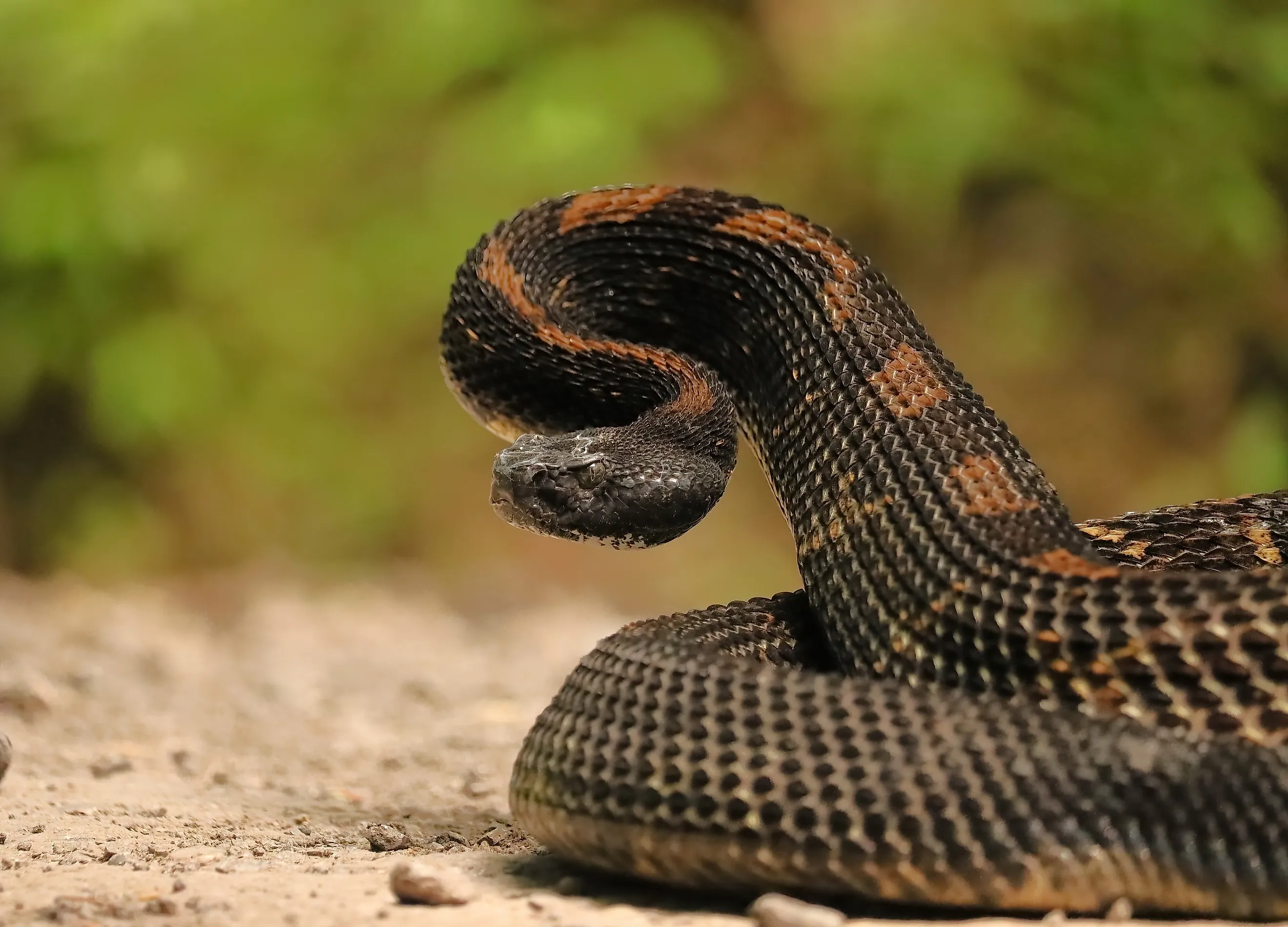
Another example is timber rattlesnakes, which push the boundary even further in states like Minnesota and New Hampshire, where they survive only because rocky den sites allow communal overwintering. Beyond these features, the ground remains cold for too long, which could shrink the warm window they need for digestion, gestation, and successful reproduction. These climate limits create a sharp northern cutoff, which also explains why venomous snake encounters drop dramatically beyond these regions.
A shifting boundary in a warming climate

Climate models suggest that as the average temperature rises, these invisible boundaries may gradually move. By mid-century, warming conditions could make parts of states such as Michigan, New York, and Pennsylvania more suitable for species like copperheads, potentially allowing them to expand into areas where they are currently rare or absent.

In effect, researchers emphasize that such changes would likely be gradual and shaped by habitat, prey availability, and winter survival, not temperature alone. Still, range shifts carry practical implications. For example, northern regions have less routine experience treating venomous snakebites compared to the southern United States, where medical facilities are more accustomed to managing envenomation and maintaining antivenom supplies. If climate conditions continue to shift, public health systems in newly suitable regions may need to adapt.
Practical awareness in snake country

In the United States, an estimated 7,000 to 8,000 people are bitten by venomous snakes each year, though only about five fatalities occur annually thanks to modern medical care. While fatal bites are rare, incidents still occur. For instance, in 2025, a Tennessee hiker died after picking up a timber rattlesnake. The fatality was linked to an allergic reaction rather than the venom itself, highlighting the importance of avoiding contact with snakes.
Understanding when and where snakes are most active can significantly reduce the chance of a surprise encounter. Hikers and outdoor workers are generally safest when staying on clear trails, avoiding tall grass or dense groundcover, and watching where they place their hands or feet near rocks and logs. These are common resting spots for snakes seeking warmth.

Also, wearing sturdy boots and long pants in snake-prone areas can reduce the risk of injury. Experts emphasize that most snake bites occur when people attempt to handle or disturb a snake, so the safest approach is simple. Keep a respectful distance and allow the animal to move away. With a little awareness of habitat and temperature conditions, encounters can often be avoided altogether.
Ultimately, where venomous snakes live in the United States has less to do with simple geography and more to do with temperature. Because snakes rely on environmental heat to regulate their bodies, cold winters and short summers create natural barriers that prevent many species from spreading farther north. These climate limits help explain why encounters with venomous snakes are much more common in warmer parts of the country. As the climate slowly changes, those invisible boundaries may shift as well, though the process will likely happen gradually and unevenly. By understanding how climate shapes snake habitats, people can better anticipate where encounters might occur and how humans and wildlife can continue to share the landscape safely.