Dolphin
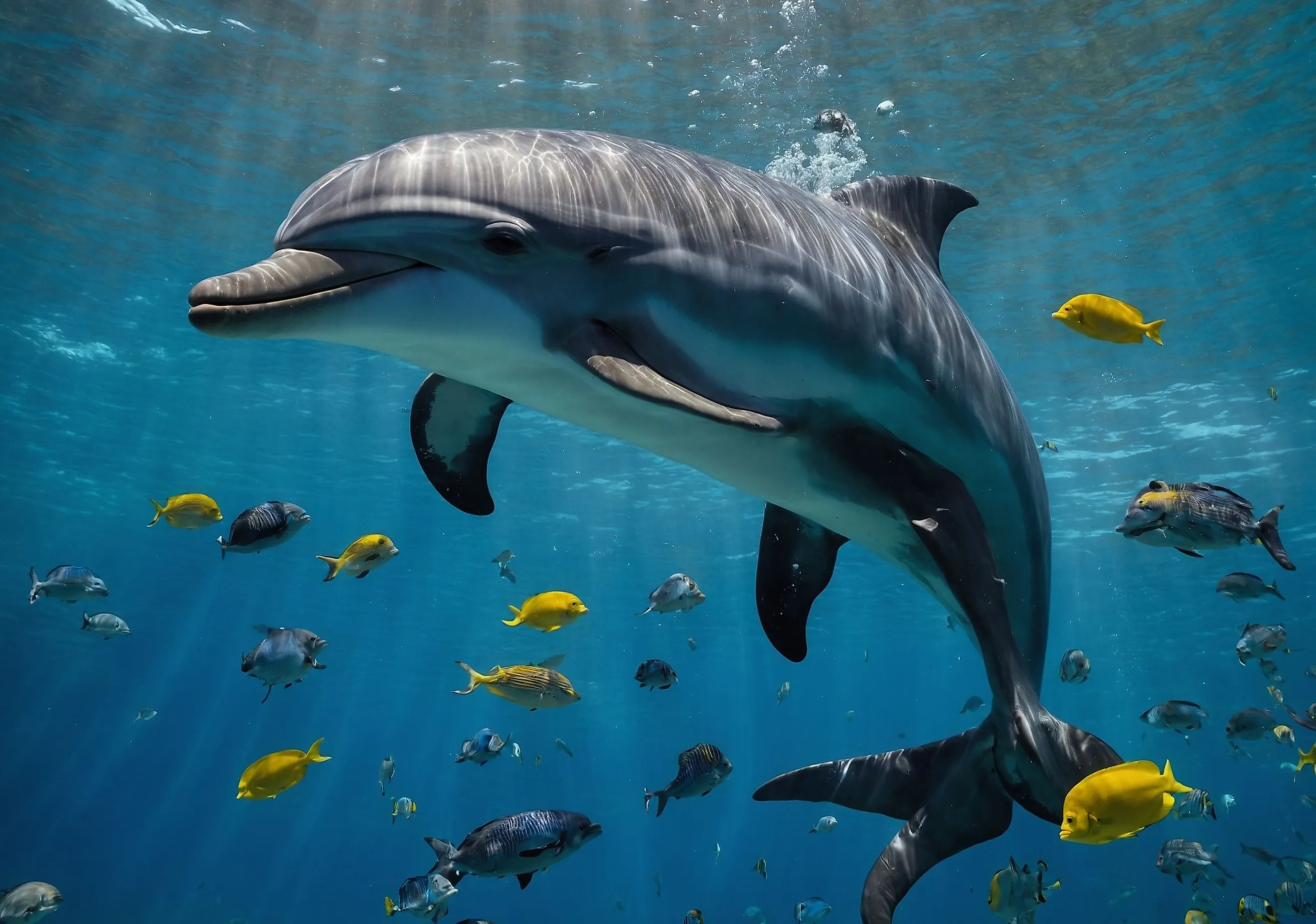
Dolphins are apex marine mammals that live in every major ocean basin on Earth. They have long drawn scientific and public attention for their agility, intelligence, and social nature.
As active predators, they regulate many prey species and help keep aquatic food webs in balance. Their population health reflects the overall health of an ecosystem. This underscores their importance in both scientific research and global conservation efforts. Studying dolphins gives a glimpse into the complexity of life beneath the waves.
Taxonomic Classification

Dolphins belong to the order Cetacea, the taxonomic group that includes whales and porpoises. In the cetacean group, most dolphins are part of the family Delphinidae, known as oceanic dolphins. This family has more than 35 species, such as small coastal dolphins, the Maui's dolphin, and the orca.
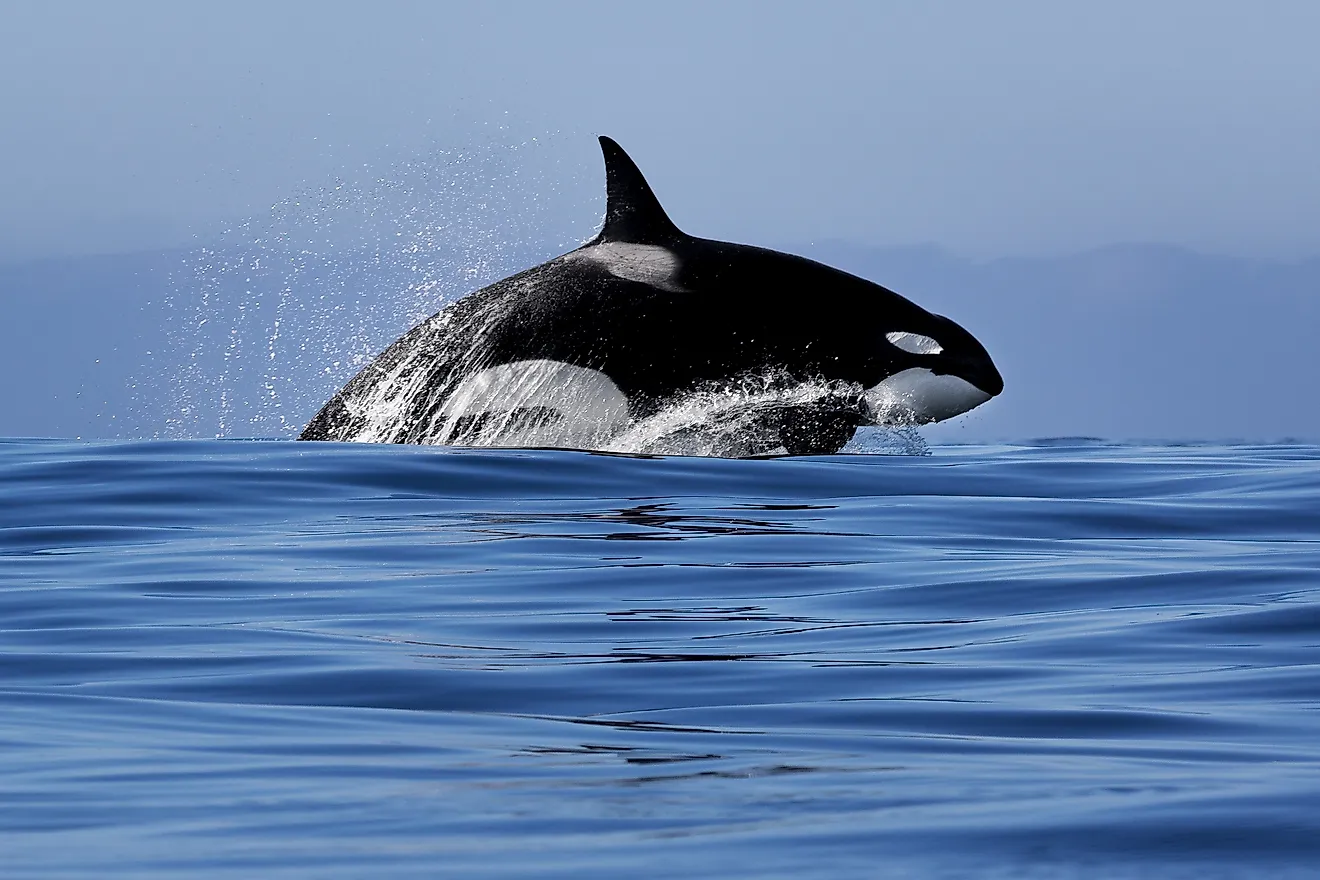
The dolphin family includes various species with distinct traits and ecological roles. Well-known species are the bottlenose dolphin (Tursiops truncatus), frequently studied for its cognitive abilities. The short-beaked common dolphin (Delphinus delphis) is another that is frequently observed in large offshore groups. The orca (Orcinus orca) is the largest member of the dolphin family and a top marine predator.
River dolphins belong to separate families within Cetacea. Yet they share evolutionary ancestry with oceanic dolphins. Their classification reflects millions of years of divergence as populations adapted to distinct freshwater systems.
Physical Description

Dolphins have streamlined bodies built for speed, flexibility, and endurance. Their sleek profile reduces drag and enables bursts of high speeds over 35 miles per hour. The tail fluke is powered by strong back muscles. It moves vertically as opposed to the side-to-side motion of fish tails. A dorsal fin stabilizes movement, and pectoral flippers support rapid steering and braking. Beneath their skin is a layer of blubber that insulates against cold and stores energy.
The body sizes of dolphin species vary widely. The Maui's dolphin (Cephalorhynchus hectori maui), which is critically endangered, reaches just over 4 feet in length. They are one of the smallest marine dolphin subspecies. On the other hand, the orca exceeds 26 feet and ranks among the ocean's apex predators. Dolphin coloration includes white, pale pink, light grey to blue-grey, brown, and black. They can be tri-colored, spotted, mottled, striped, or countershaded.
Despite differences in appearance and habitat, all dolphins share fundamental anatomical traits of toothed whales. They have a single blowhole and conical teeth.
Range and Habitat

Dolphins live in almost every ocean basin on Earth. They are found in warm equatorial waters, temperate seas, and subpolar regions. Some species favor shallow coastal zones rich in fish populations. Others inhabit pelagic waters far offshore.
The Pacific white-sided dolphin (Lagenorhynchus obliquidens) lives in the cooler waters of the North Pacific. They travel in pods in sizes of 10 to over 100 members. In contrast, Gray's spinner dolphin (Stenella longirostris longirostris) thrives in tropical and warm temperate seas. They rest in sheltered bays during daylight hours and hunt offshore at night.
Freshwater species such as the Amazon river dolphin (Inia geoffrensis) and the Indus river dolphin (Platanista minor) navigate murky river systems with seasonal flooding and shifting channels. They rely on echolocation to “map” what’s around them. They also have looser neck bones to turn their heads more easily and navigate tight, winding waterways.
Diet and Feeding Strategies

Dolphins' diets vary by region and species. Fish, crabs, and shrimp make up the primary food source for many coastal dolphins. The diverse diet of orcas includes salmon, seals, sea lions, sharks, and seabirds. Offshore dolphins tend to eat fish, squid, and jellyfish. Some pelagic dolphins, such as Risso's dolphin (Grampus griseus) can dive up to 1,500 feet off continental shelves to hunt deep-sea marine animals, including squid and octopus.
Echolocation is a key tool in their feeding strategies. Dolphins send out rapid bursts of clicking sounds that bounce off objects in the water. When the echoes return, dolphins can tell how big something is, how fast it's moving, and its distance. This natural sonar system lets them hunt even in dark or murky waters where visibility is low.
Cooperative hunting is also an integral component of their strategy. Pods herd fish together into dense formations, taking turns feeding. Some bottlenose dolphins cooperate to drive prey toward shore, briefly sliding onto mudflats to capture fish before wriggling back into the water.
In certain regions, such as in Laguna, Brazil, bottlenose dolphins even coordinate with fishermen. The fishermen share their catches in exchange for the dolphins' help. Working as a team, the dolphins drive mullet toward shore and signal to the fisherman when to cast their nets.
Behavior and Social Structure
Dolphins live in social units called pods. The group size depends on species and environment. A pod can be a handful of individuals or temporary aggregations of several hundred. These animals form deep relationships that last for years, supported through cooperative hunting, raising calves, playing, and communication.
Acoustic Communication

Their communication relies on a mix of sound, body language, and touch. Generally, dolphins make two kinds of sounds: clicks and whistles. Clicks are mostly used for echolocation. Whistles and burst-pulsed sounds contribute a larger role in social interactions. Some species, such as the bottlenose dolphin, develop a unique signature whistle that functions like a name. They can recognize and respond to these whistles even after long periods apart.
Body Language and Touch

Sound is central to dolphin communication, but it is not the only channel they rely on. Body language and touch are also important. A rapid tail slap on the surface of the water can signal agitation or serve as a warning. Leaping and breaching can help gather attention across distances, especially in active groups.
Dolphins can show affection, express aggression, and assert dominance through physical contact. They rub pectoral fins against one another, a behavior comparable to social grooming in primates. Mothers stay close to their calves, guiding them through subtle shifts in body position and nudges.
During cooperative hunting, dolphins coordinate their movements with remarkable precision. Shifts in body angle or speed communicate timing and intent without disrupting the group's formation. They also use synchronized swimming and breathing breaks to reinforce bonds.
Reproduction and Life Cycle

Dolphin gestation is between 9 and 17 months, depending on the species. Females give birth to a single calf, delivered tail first to reduce the risk of drowning.
Newborn calves surface quickly for their first breath. Maternal care is intensive during the early months, with calves nursing on nutrient-rich milk. Young dolphins swim in close formation beside their mothers, traveling in the pressure wave created by the mother's movement.
Learning plays a central role in development. As they grow, young dolphins observe hunting techniques, communication signals, and social rules within the pod. The juvenile phase lasts several years, allowing young dolphins to master complex behaviors essential to survival. Depending on the species, dolphins reach maturity between 5 and 12 years old.
Their lifespan varies by species. The Fraser's dolphin (Lagenodelphis hosei) is one of the shortest-lived, with a typical lifespan of about 18 years. Bottlenose dolphins can live 40 to 60 years. Orcas are the longest-lived species, with some reaching over 80 years in the wild.
Threats and Conservation Challenges

Industrial activity and commercial fishing are the most significant dangers to dolphins. Accidentally getting caught in fishing gear results in thousands of dolphin deaths each year. Entanglement in gillnets and trawl nets restricts movement and leads to drowning.
Chemical pollutants accumulate in marine food chains. Dolphins, as top predators, absorb high concentrations of toxins such as polychlorinated biphenyls (PCBs) and heavy metals. These substances impair immune function and reproduction.
Noise pollution disrupts communication and navigation. Commercial shipping, offshore drilling, and naval sonar introduce intense sound into habitats dependent on acoustic perception. It disorients them and the increased stress causes harm to their overall health.
Habitat alteration compounds these threats. Coastal development degrades nursery areas. River dam construction fragments freshwater habitats critical for species such as the Amazon and Indus river dolphins. Climate change alters sea temperatures and prey distribution patterns, adding another layer of uncertainty.
Conservation strategies include marine protected areas, fishing gear modifications, pollution controls, and long-term monitoring. International cooperation is essential for globally successful protection.
Protecting a Keystone Marine Mammal

Dolphins are highly intelligent and socially complex animals with a vital role in aquatic ecosystems. They help regulate marine populations, contributing to balanced ocean and river food webs. Their intricate communication systems, cooperative hunting strategies, and long-lasting bonds give valuable scientific insight into sophisticated animal social systems.
Safeguarding dolphins goes beyond protecting a single group of marine mammals. It supports the health of an entire aquatic ecosystem. Conservation measures and expansive pollution control policies are critical to their survival.