5 Most Snake-Filled Bodies Of Water In Florida
Florida is home to 44 native snake species that inhabit the state's swamps, rivers, and lakes. Florida is also home to several invasive species that have established populations, including the Burmese python from Southeast Asia and the boa constrictor from Latin America. Florida's humid tropical and subtropical climate, combined with the vast undeveloped wetlands of the Everglades, creates an ideal habitat for both native and non-native snakes.
For budding herpetologists, the state's waterways are a fascinating place to observe reptiles in the wild. For those suffering from ophidiophobia, it may be best to stick to the beach in Florida.
The Everglades

It would be faster to list which snakes do not live in the Everglades. At 1.5 million acres, the Everglades National Park is the largest subtropical wilderness in the United States. 29 species of snakes call the Everglades home. Some are common native species like the Eastern garter snake (Thamnophis sirtalis sirtalis), which hunts several aquatic animals like fish, frogs, and salamanders. Others are venomous, like the Eastern coral snake (Micrurus fulvius fulvius), which belongs to the same family as cobras and mambas. The boa constrictor (Boa constrictor) from Central and South America has also been discovered in the Everglades, but rather than established breeding populations, these are likely to be escaped pets.
Lake Okeechobee

It is larger than London. It is home to 30,000 American alligators (Alligator mississippiensis). With an area of 730 square miles, Lake Okeechobee is the third-largest freshwater lake entirely within the United States. It is home to 34 of Florida's native snakes, including the Florida cottonmouth (Agkistrodon conanti). It is also home to its invasive ones, such as the Brahminy blind snake (Ramphotyphlops braminus), which entered Florida from Asia through the soil of potted plants. Despite its established populations and its length of 6.5 inches, it has little impact on native species. As for the Burmese python, the largest specimen ever caught in Florida measured over 18 feet in length. Remember the 30,000 alligators that live in Lake Okeechobee? Burmese pythons are capable of consuming them. Needless to say, it is not advisable to swim in Lake Okeechobee.
St. Johns River

The St. Johns River corridor is rife with venomous snakes. The Eastern diamondback rattlesnake (Crotalus adamanteus), the Florida cottonmouth, and the Eastern coral snake all slither in or on the banks of the river. The nonvenomous Eastern indigo snake (Drymarchon couperi) is also native to the St. Johns River. It is blue-black in color. It reaches eight feet in length. And, it has developed an immunity to rattlesnake venom. Consequently, Eastern indigo snakes thrive in habitats where rattlesnakes, cottonmouths, and coral snakes are abundant so that they may readily cannibalize them, along with other reptiles, small mammals, and birds.
Apalachicola River

The Eastern indigo snake is also native to the longleaf pine habitat found on the banks of the Apalachicola River. The Apalachicola River flows from Lake Seminole on the border between Florida and Georgia, through the Panhandle, and into the Gulf of Mexico. Along this stretch of water, the Eastern indigo snake hunts the Southern copperhead (Agkistrodon contortrix). The Southern copperhead is limited to a small portion of the northern Panhandle, with habitat preferences primarily within low-elevation wet areas along the Apalachicola River, such as swamps, streams, rivers, and ravines.
Suwannee River

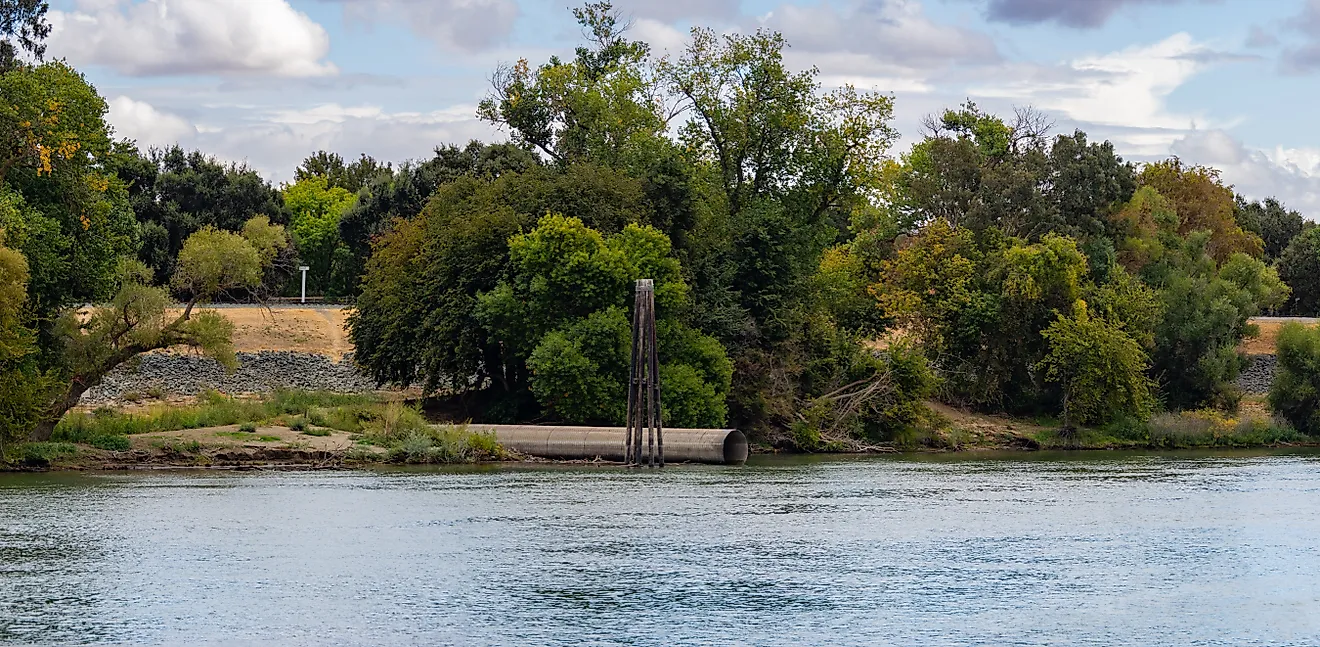
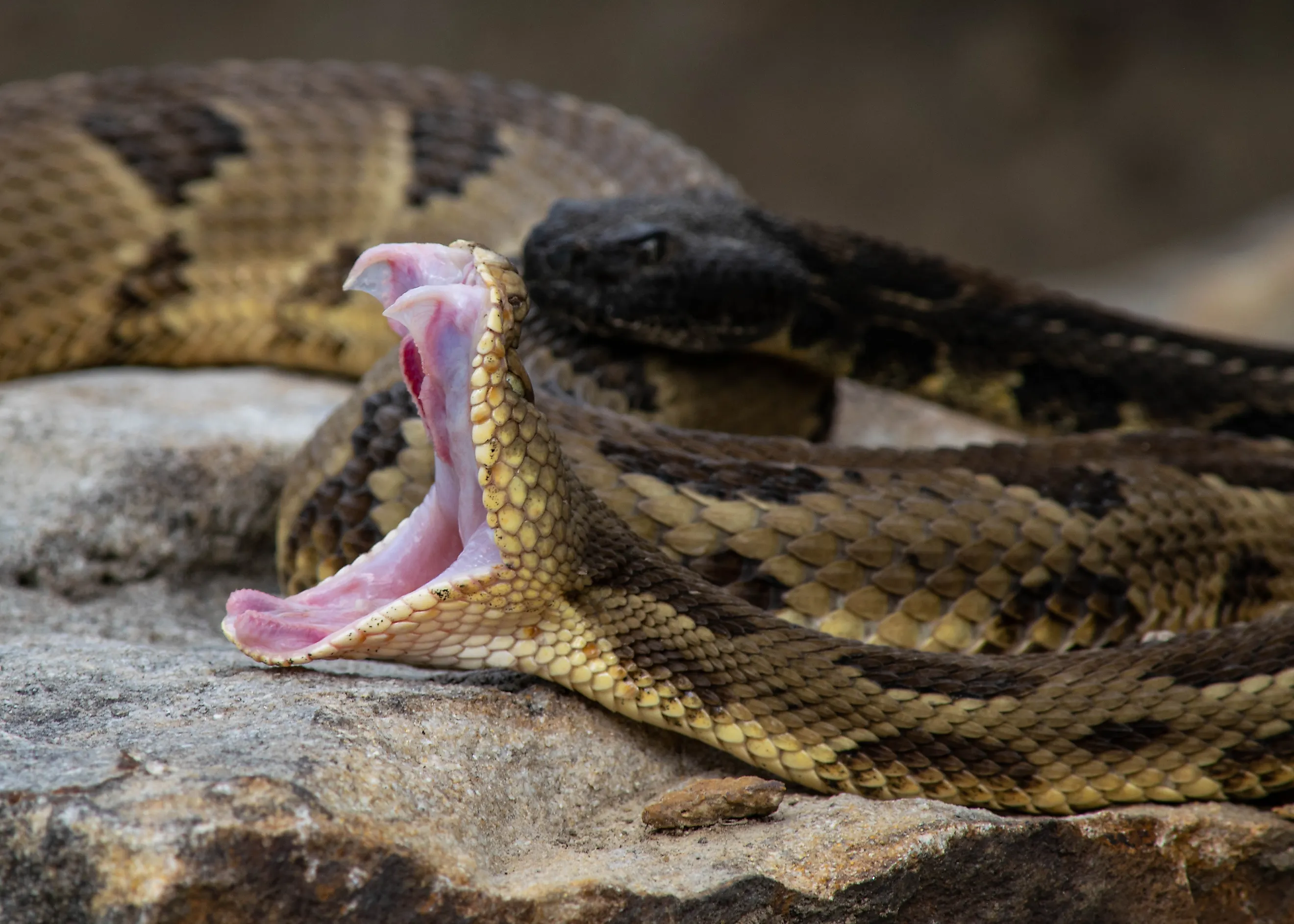
The Suwannee River rises from the Okefenokee Swamp in southeast Georgia. Much like the Apalachicola River, it flows in a southern direction through Florida before entering the Gulf of Mexico. Several species of harmless water snakes are commonly found in peninsular Florida, such as the brown water snake (Nerodia taxispilota), banded water snake (Nerodia fasciata), and Florida green water snake (Nerodia floridana). Although harmless, they will readily bite if cornered, captured, or otherwise threatened. Florida cottonmouths are also a fairly common snake in the swamps, marshes, and wetland edges of the Suwannee River. Water snakes are occasionally mistaken for Florida cottonmouth due to similarities in pattern and physical appearance. Other venomous snakes of the Suwannee River include the dusky pygmy rattlesnake (Sistrurus miliarius barbouri), which is found basking on trails, logs, or hiding behind rocks on bluffs above the river.
Snakes in the Swamps of Florida
Spending any time outdoors in Florida, whether it be visiting Everglades National Park or exploring hiking trails along the Suwannee River, one thing is guaranteed: you will encounter snakes. Florida has every type of snake: nonvenomous snakes, venomous snakes, and invasive snakes. While some invasive species continue to threaten native wildlife, their success showcases just how suitable Florida's warm climate and vast wetlands are for reptiles.