The Largest Whirlpool In American Waters
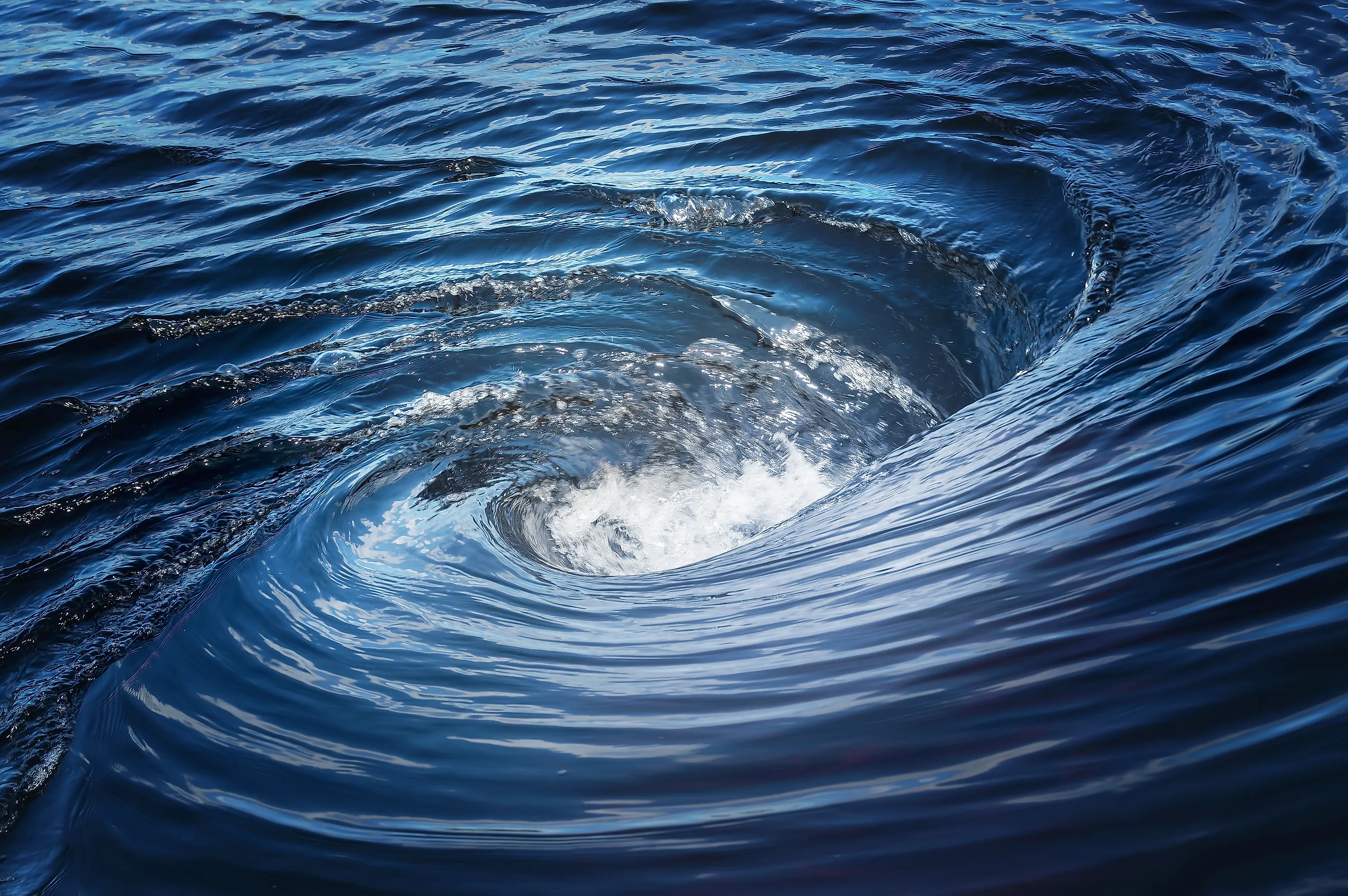
A giant whirlpool sounds like something out of a disaster movie, with boats being pulled toward a spinning wall of water and anything caught in its path disappearing beneath the surface. The reality is a little less dramatic, but Old Sow, a massive whirlpool near the coast of Maine, is still an impressive display of nature's power. Located between Eastport, Maine, and Deer Island, New Brunswick, Canada, this swirling phenomenon can reach more than 250 feet (76 meters) in diameter, making it the largest whirlpool in the Western Hemisphere, according to the National Oceanic and Atmospheric Administration (NOAA).
Unlike the giant funnels portrayed in movies, Old Sow does not act like a bathtub drain that automatically sucks everything underwater. Instead, it forms when powerful tidal currents meet a complicated underwater landscape, creating swirling eddies and turbulent water. Although these currents can be dangerous for small boats, they also help circulate nutrients through the surrounding marine ecosystem. Read on to learn what makes this enormous whirlpool spin, how dangerous it really is, and where else in US waters tidal currents have spun into whirlpools of their own.
Old Sow Is the Largest Whirlpool in the Western Hemisphere

Old Sow forms in the Western Passage of Passamaquoddy Bay, near the mouth of the Bay of Fundy. The whirlpool churns off the southwestern shore of Deer Island, New Brunswick, across the Western Passage from Eastport, Maine. Its position between the two communities makes it a natural attraction associated with both Eastport and Deer Island. According to NOAA, Old Sow varies in size but has been measured at more than 250 feet (76 meters) across. Smaller whirlpools, nicknamed "piglets," can form nearby, creating a larger area of churning water. However, the broad region of turbulence should not be confused with the diameter of the main whirlpool itself.
The name is just as memorable as the phenomenon. Local folklore suggests that Old Sow earned its name from the pig-like grunting sounds made by the churning water. Another explanation connects the name to "sough," an older English word associated with a sucking or rushing sound. Neither explanation is definitively established, but both suit a whirlpool known for its unpredictable movements.
Powerful Tides and Underwater Terrain Create Old Sow

The forces behind Old Sow begin with the enormous volume of water moving through the Bay of Fundy and into Passamaquoddy Bay. The Bay of Fundy is famous for its exceptionally large tidal range, caused in part by the bay's shape, depth, and natural period of oscillation. As the tide rises and falls, water moves through the region's narrow passages with considerable force. In the Western Passage, the current encounters a sharp turn, a deep underwater trench, an underwater mountain, and other currents moving in different directions. Part of the incoming flow separates from the main current, creating the circular motion that forms Old Sow. This interaction between tidal forces and the seafloor's shape is essential to the whirlpool's formation.
The surrounding waters can also produce smaller eddies, standing waves, and other turbulent features. Old Sow, therefore, does not always appear as a single, clearly defined funnel. Its activity varies with tidal conditions, and the most dramatic formations are not guaranteed to appear on any given visit. The Bay of Fundy's tides are impressive in their own right, but Old Sow demonstrates how the underwater landscape can transform that moving water into something even more unusual.
Old Sow Can Be Dangerous for Small Boats

A whirlpool more than 250 feet across might sound capable of swallowing an entire vessel, but Old Sow's actual hazards are more complicated than that. Its rotating currents and turbulent water can make navigation difficult, particularly for small boats, kayaks, and other craft that are more vulnerable to very strong currents. NOAA specifically warns that Old Sow can be dangerous to small-craft mariners. The surrounding currents can create difficult conditions, and the whirlpool's size and intensity vary with the tide. The danger comes from the movement of the water rather than from a permanent underwater funnel that automatically drags everything nearby beneath the surface.
Larger vessels are generally less affected by the localized turbulence, but that does not make the area suitable for careless navigation. Anyone traveling through the Western Passage should pay close attention to tidal conditions and local navigation guidance. Small-craft operators should avoid the area when strong tidal currents are running. For visitors hoping to witness the phenomenon, observing from a suitable shore-based vantage point is a safer option than entering the turbulent water. Deer Point, on Deer Island, offers a potential viewing location, although visibility depends on tidal conditions and the whirlpool's activity. Old Sow may be fascinating to watch, but it is not a natural attraction worth testing personal limits against.
The Whirlpool Also Supports Marine Life

Despite its intimidating appearance, Old Sow has an important ecological benefit. Its swirling motion helps bring nutrients and tiny marine organisms from colder, deeper water toward the surface. This process, known as upwelling, makes food more available to fish and seabirds living in the surrounding waters.
The movement of nutrients through the water helps support the local marine food web. Fish can benefit from the increased availability of small marine organisms, while seabirds take advantage of productive feeding grounds. In this way, the same currents that create challenging conditions for boaters also help circulate resources through the ecosystem. Old Sow is therefore more than a dramatic display of tidal power. It is part of a coastal environment shaped by the constant movement of water between the Bay of Fundy and Passamaquoddy Bay. Its ecological role is another reason to appreciate the phenomenon beyond its impressive size.
Other Whirlpools in US Waters

Old Sow is the best-known example, but it is not the only place in the United States where tidal currents spin into whirlpools. In northwestern Washington, Deception Pass squeezes the tide through a narrow, rocky channel between Whidbey Island and Fidalgo Island. Washington State Parks notes that the current here can reach 8.5 knots, churning up tide rips, boils, and whirlpools. These whirlpools form and fade with the current rather than settling into a single named vortex like Old Sow, and boaters are advised to make the crossing at slack water, when the current briefly eases.
On the East Coast, New York City's Hell Gate once had a far more fearsome reputation. This narrow tidal strait in the East River, between Astoria, Queens, and Randall's and Ward's Islands, combined converging tidal currents with rocks and reefs, producing whirlpools that made the passage notorious for shipwrecks. Over several decades, the US Army Corps of Engineers blasted the worst obstacles away, and on October 10, 1885, explosives destroyed Flood Rock, a nine-acre reef in the middle of the channel. The work tamed the strait, and Hell Gate is now a working shipping route rather than a maritime hazard.
Two Sides of Tidal Power on the Maine Coast
Old Sow shows how powerful tides and a complicated underwater landscape can combine to create one of the most remarkable whirlpools in the Western Hemisphere. Located near Eastport, Maine, and Deer Island, New Brunswick, it can reach more than 250 feet (76 meters) in diameter, although its size and intensity change with tidal conditions. Its turbulent currents demand caution from small-craft mariners, but the whirlpool also helps circulate nutrients that support fish and seabirds. For all its intimidating power, Old Sow is not simply a hazard in the water. It is a striking reminder that the same forces that can challenge boaters can also help sustain coastal marine life.