What Happens To Palm Springs If Lake Mead Hits Dead Pool
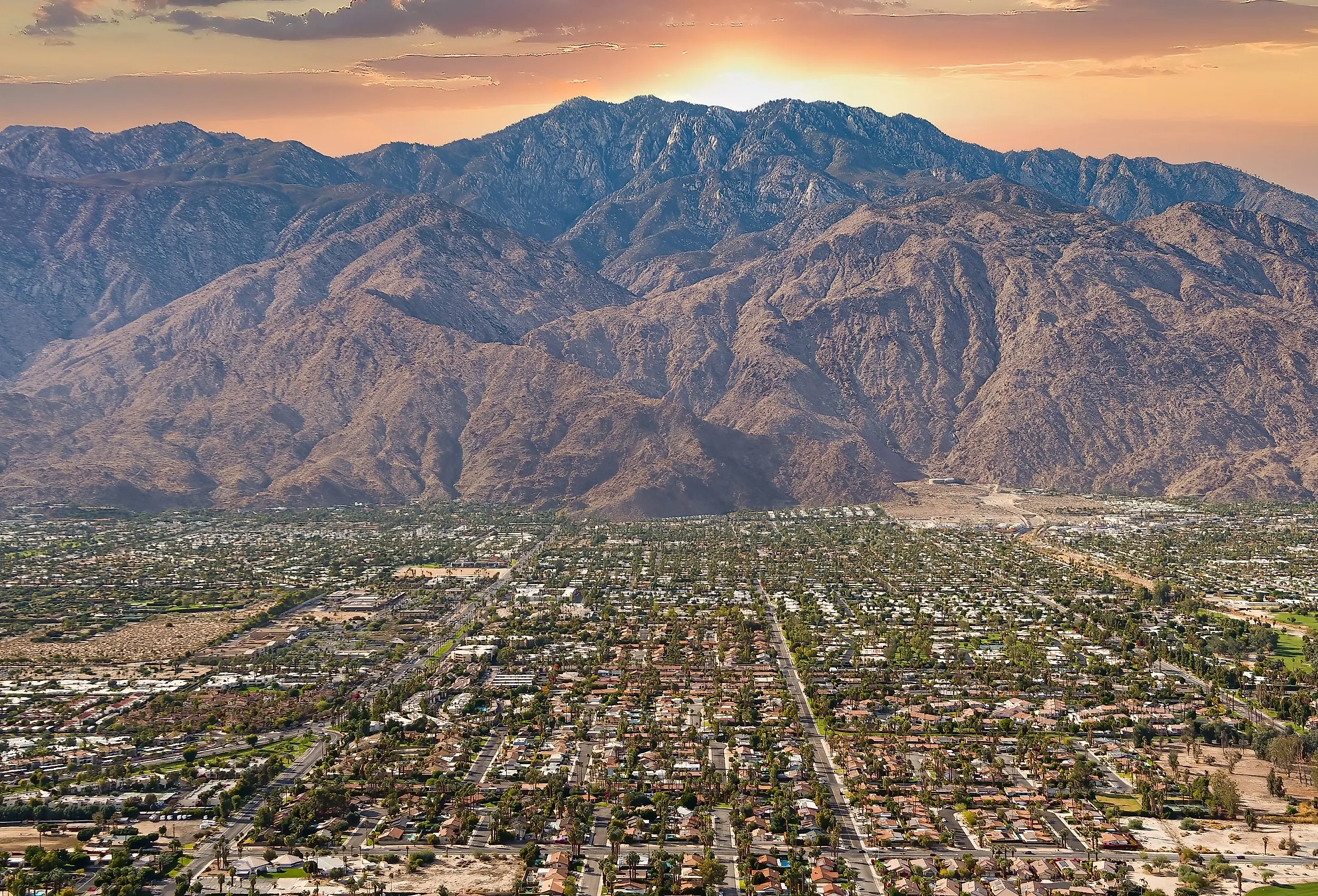
Palm Springs gets about 4.6 inches of rain in a normal year, yet the city runs a golf resort with two 18-hole courses and draws its tap water from wells sunk deep into the desert floor. For half a century, the ground under those wells has been refilled with water from Lake Mead, the reservoir behind Hoover Dam.
In August 2026, Lake Mead fell to the lowest level ever recorded, and it kept dropping into the fall. Far below its surface is the dam's lowest outlet. If the lake sinks to it, a level called dead pool, Hoover can no longer release the water still sitting behind it. For a resort city where visitors spent nearly $1.9 billion in 2024, the first signs would show up hundreds of miles from the kitchen tap, then work their way toward town one link at a time.
Hoover Dam Would Release Only What Flows In

Hoover Dam's lowest outlet sits at 895 feet, which the Bureau of Reclamation lists as the top of Lake Mead's dead storage pool. Water below that line cannot be released through the dam. At dead pool, Hoover could send downstream only the inflow that lifted the lake above 895 feet. Its turbines would have shut down 55 feet earlier, at the 950-foot minimum power pool, near the lowest level at which the dam's newer wide-head turbines can keep running.
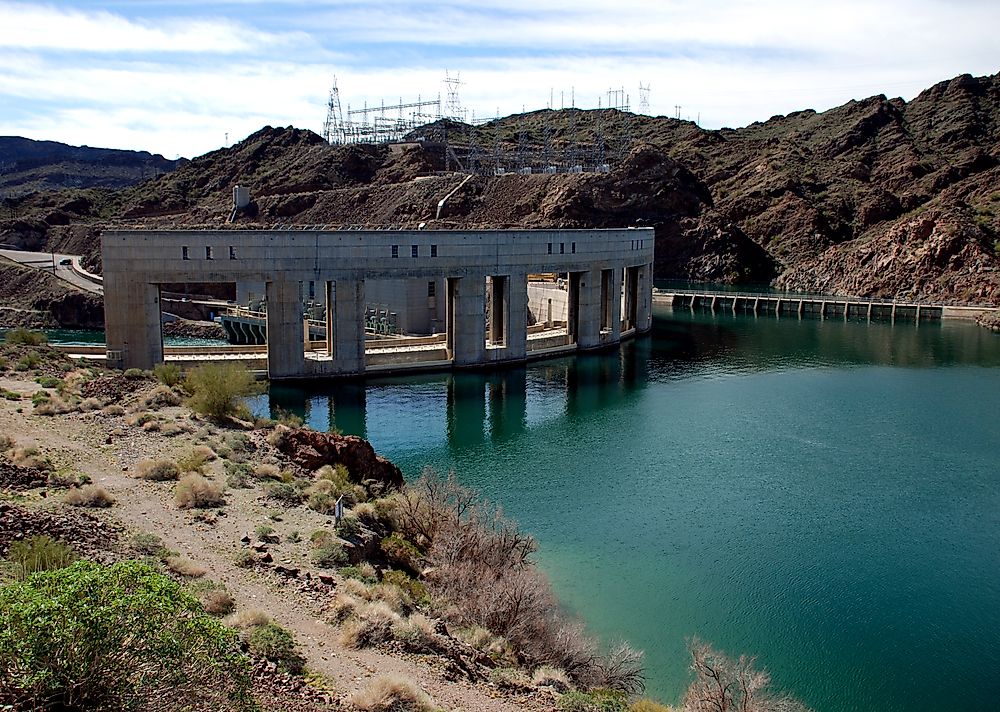
Hoover's releases fill Lake Havasu, which holds about 648,000 acre-feet behind Parker Dam. An acre-foot is about 326,000 gallons. Parker and Davis dams re-regulate the water Hoover sends down, and the Metropolitan Water District of Southern California pumps it out of Lake Havasu into the Colorado River Aqueduct, which runs 242 miles to Lake Mathews near Riverside and crosses the Coachella Valley on the way. With Hoover passing along only inflow, the aqueduct would be drawing from a lake the big dam upstream was no longer keeping full.
The Recharge Basins in North Palm Springs Would Lose Their Colorado River Water

The aqueduct's water reaches Palm Springs at the Whitewater River Groundwater Replenishment Facility, a set of recharge basins at the north end of the city, with Interstate 10 along the northern edge and part of the site on about 690 acres of public land managed by the Bureau of Land Management. Colorado River water poured into the basins percolates down into the aquifer the city's wells draw from. The Desert Water Agency and the Coachella Valley Water District finished the facility in 1973, and through 2024 it had taken in about 4.35 million acre-feet from all sources. Since 1973, the agency's groundwater has been replenished with more than a trillion gallons of imported Colorado River water.
Palm Springs gets that water through a trade. The Desert Water Agency holds a State Water Project entitlement of up to 55,750 acre-feet a year, but no pipeline or aqueduct carries State Water Project water to Palm Springs. The agency and the Coachella Valley Water District exchange their allocation with the Metropolitan Water District for Colorado River water from the aqueduct instead. At dead pool, the exchange would have little Colorado River water to deliver, and the basins would be left mostly with the Whitewater River's own runoff and leftover flow from nearby mountain creeks.
Palm Springs Taps Would Keep Drawing on Stored Groundwater

Under the city, the Desert Water Agency pumps from 27 wells drilled between 1,000 and 1,200 feet deep, and at dead pool they would keep running on water already in the ground. The aquifer can store an estimated 39.2 million acre-feet in its top 1,000 feet, room for about 130 times the roughly 300,000 acre-feet of groundwater the valley pumps in a year. Part of what sits down there was delivered early. The Metropolitan Water District has put water into the basin ahead of future exchanges, and at the end of 2024, that advance delivery account held about 449,015 acre-feet.
Storage without refill still runs down. The Desert Water Agency's engineer's report states that groundwater production "continues to exceed natural groundwater replenishment," and the Whitewater basins have been covering the difference. Farther down the valley, where pumping ran ahead of recharge, the U.S. Geological Survey measured the land sinking about nine inches to two feet between 1995 and 2010 in parts of Palm Desert, Indian Wells, and La Quinta. Any groundwater drawn down without refill would also come from the supply the Agua Caliente Band of Cahuilla Indians holds a right to. A 2025 settlement would set the tribe's share at 20,000 acre-feet a year once Congress ratifies it, and a Senate bill to do that had a committee hearing in July 2026.
Palm Springs Already Has Shortage Rules Written for Lawns and Sprinklers

Daytime sprinklers would be one of the first things to go in Palm Springs if the Desert Water Agency declared a water shortage. The agency's shortage plan has six levels, with Level 1 in force under normal conditions, and the ban on daytime spray irrigation starts at Level 2. In August 2022, the agency's residential customers averaged 349 gallons a day each, compared with 310 for Coachella Valley Water District customers.
Decorative grass faces its own deadline. A separate agency ordinance will bar drinking water on non-functional turf, the grass nobody walks or plays on, starting with government properties on January 1, 2027, and turf watered with recycled water is exempt. The agency and the city offer a combined turf-removal rebate of $3 per square foot while funds last.
Canal Water for Farms and Fairways Down the Valley Would Dwindle

In the Palm Springs end of the valley, six golf courses run on recycled water from the Desert Water Agency's treatment plant, which can produce about 10 million gallons a day, and they turn to groundwater when recycled supply runs short in summer. Southeast of the city, farms and fairways get their Colorado River water by a second route. Imperial Dam, north of Yuma, Arizona, turns river water into the All-American Canal, and at Drop No. 1, the Coachella Canal branches off and runs 123 miles northwest into the valley. The canal has carried Colorado River water to eastern valley farms since 1949, delivered about 250,000 acre-feet a year as of 2021, and accounts for about 80% of the Coachella Valley Water District's imported supply.
About two-thirds of the valley's farmland is irrigated with canal water. Growers in the Coachella Valley district produced crops worth $860 million in 2024, and according to Visit Greater Palm Springs, the valley grows more than 95% of the nation's dates. Canal water, delivered directly or through the Mid-Valley Pipeline, also irrigates about three dozen of the valley's roughly 120 golf courses. With little more than inflow getting past Hoover, less water would reach Imperial Dam, and less would flow down the canal to those fields and fairways.
The Valley Is Already Leaving Recharge Water in Lake Mead
Some of the water that would have gone into the ground near Palm Springs is already being left in the river. In December 2023, the Interior Department announced an agreement with the Coachella Valley Water District to save up to 105,000 acre-feet through 2025, and the district's program for 2023 through 2026 sets aside up to 35,000 acre-feet a year at a fixed price of $400 an acre-foot. In July 2026, the district proposed doing it again for 2027 and 2028, at up to 35,000 acre-feet a year and $325 an acre-foot, with the cuts drawn from deliveries to the Whitewater facility.
The Metropolitan Water District, the agency on the other side of the Palm Springs exchange, agreed in July 2026 to leave up to 200,000 acre-feet in Lake Mead that year, with Reclamation paying $325 an acre-foot, up to $65 million.
Lake Mead Still Sits More Than 100 Feet Above Dead Pool

Lake Mead set a record low of 1,040.5 feet on August 7, 2026, beating the previous mark from July 2022, and was down to 1,037.8 feet by the end of September, about 143 feet above dead pool. Reclamation's October 2026 projections put the lake at about 1,034.5 feet at the end of the year in the most probable case. In a dry case, drier than nine out of ten expected outcomes, the lake falls to about 1,026 feet by March 2027 and about 1,005 by June, then holds near 1,003 feet through December 2027, still about 108 feet above dead pool.
Lake Mead will operate under a shortage condition in 2027. On August 21, 2026, the Interior Department issued a Record of Decision for running the river from 2027 through 2036, after efforts with the basin states, tribes, and other parties failed to produce consensus on long-term operations. California's water was not cut under the 2026 shortage, and how deep the cuts go from here will set how much water reaches the Whitewater basins in the years before the lake gets anywhere near 895 feet.
For Palm Springs, the distance between Lake Mead and a kitchen faucet runs mostly underground. A dead pool would show up first in the recharge basins beside Interstate 10, which took in about 510,000 acre-feet from all sources in 2023 and 2024 combined, roughly 166 billion gallons. Below them, the 27 wells would keep pumping, and the question would become how long storage could cover what the refill used to replace. Without exchange water arriving at Whitewater, the gap between what the valley pumps and what the mountains send down would come out of an aquifer the Colorado River was no longer topping up.