10 Of The Best Ways To Experience The Florida Everglades
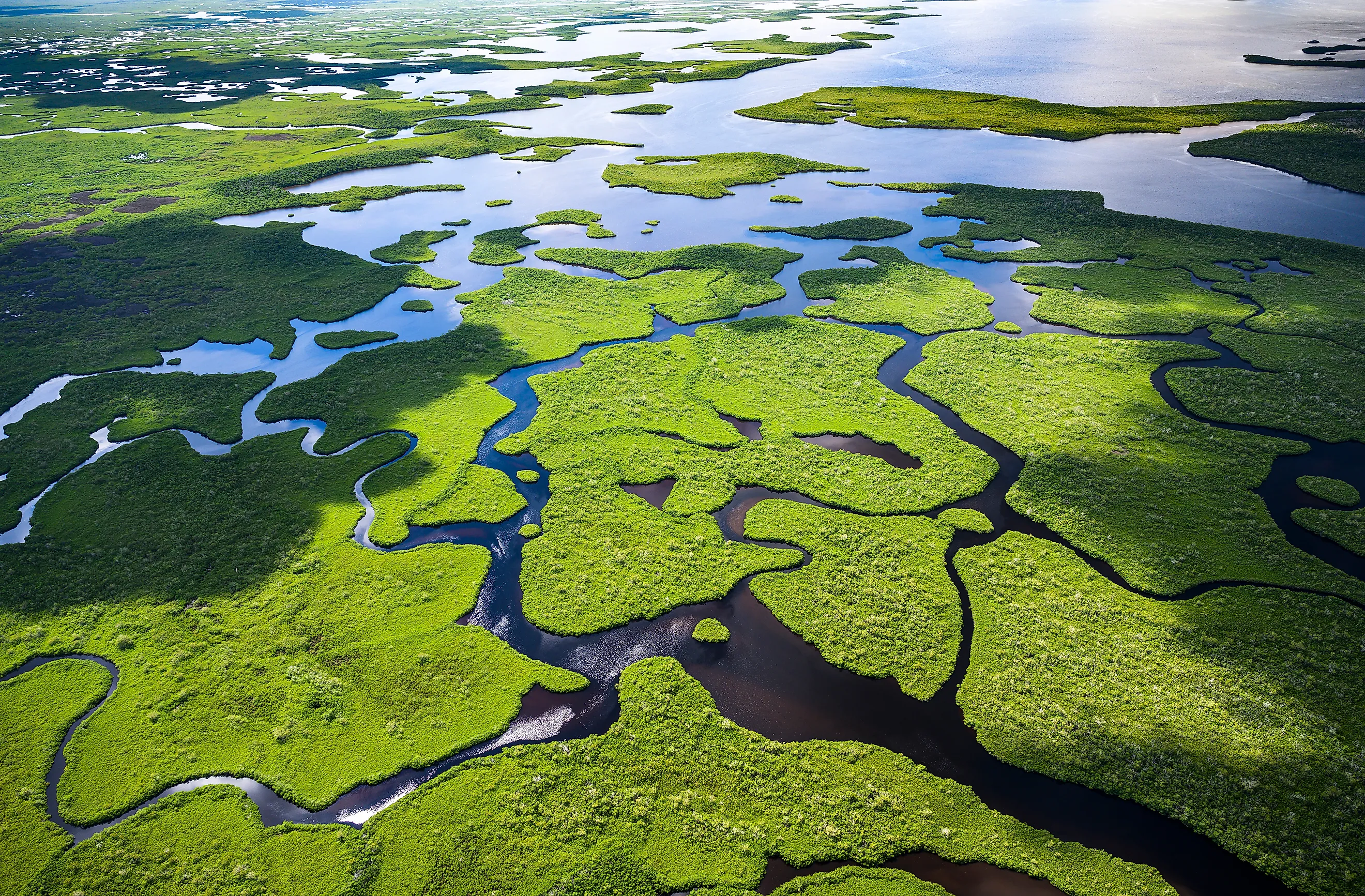
Everglades National Park covers 1.5 million acres at the southern tip of Florida, making it the third-largest national park in the lower 48 states. The park is also the only place on Earth where American alligators and American crocodiles share habitat, and the entire ecosystem operates as a slow-moving freshwater river: the "river of grass" sliding south through sawgrass prairie to Florida Bay. The ten places ahead cover the major access points, the signature trails, and the adjoining Big Cypress National Preserve, with a mix of Gulf-side, freshwater interior, and boardwalk hammock experiences.
Chokoloskee Bay

Chokoloskee Bay sits on the Gulf side of the Everglades, a 16-kilometer-long shallow body of water that opens into the Ten Thousand Islands and the western park boundary. The town of Chokoloskee is connected by a single causeway to Everglades City, the historical jumping-off point for kayak trips, mangrove tours, and inshore fishing for snook, redfish, and tarpon. The Smallwood Store on Chokoloskee Island, opened in 1906 and listed on the National Register of Historic Places, served as the area's trading post and is now a museum of the early 20th-century frontier community. In Everglades City, the Ernest Hamilton Observation Tower, built in 1984 and rising 75 feet, gives one of the few elevated views over the mangrove islands and Gulf inlets.
Long Pine Key

Long Pine Key sits about seven miles inside the main park entrance near Florida City and runs the only frontcountry campground on the park's east side. The campground takes RV and tent sites and stays open all year. The ecosystem here is pine rocklands, a fire-dependent forest of South Florida slash pine growing directly on exposed limestone bedrock, full of solution holes and sinkholes. The pine rocklands are one of the most threatened habitats in the United States. The Long Pine Key Nature Trail runs a network of fire roads through the pinelands and connects with the Pinelands Trail, a short interpretive loop on the main park road.
Flamingo

Flamingo is the southernmost developed point in Everglades National Park, 38 miles down the main park road from the entrance and the closest thing the park has to a saltwater port. The Flamingo Visitor Center sits on the Florida Bay shoreline and runs as the trailhead for the Snake Bight Trail, the Rowdy Bend Trail, and the Coastal Prairie Trail. Boat tours and rental kayaks launch from the marina. Flamingo Lodge, built originally in the 1960s and destroyed by Hurricanes Katrina and Wilma in 2005, was rebuilt and reopened in 2023 as a modern eco-lodge with cabins. The park is also a designated International Dark Sky Park, and Flamingo's distance from any city light source produces some of the darkest skies in the eastern United States.
Big Cypress National Preserve

Big Cypress National Preserve covers 729,000 acres directly north of Everglades National Park and was established on October 11, 1974, as the first national preserve in the United States. The preserve protects most of the cypress swamp watershed that feeds the western Everglades and is critical habitat for the endangered Florida panther; current population estimates put the wild Florida panther count at about 200 animals, almost all of them living in or around Big Cypress. The preserve allows hunting, off-road vehicle use, and oil and gas operations that are prohibited in national parks proper, which is why the "national preserve" designation was created. Three visitor centers run along U.S. 41 (Tamiami Trail): the Oasis Visitor Center, Big Cypress Swamp Welcome Center, and Nathaniel P. Reed Visitor Center.
Sawgrass Recreation Park

Sawgrass Recreation Park sits on the eastern edge of the Everglades watershed in Weston, about 25 minutes west of Fort Lauderdale on US-27. The park is privately operated rather than part of Everglades National Park, which makes it the closest practical Everglades airboat experience for residents of Broward and Palm Beach counties. The standard tours run airboat trips through the sawgrass marsh; night airboat tours go out for alligator and barred owl spotting after dark. The park also runs an animal sanctuary on site with native reptile exhibits and offers tent and RV camping.
Shark Valley

Shark Valley is the northern Tamiami Trail entrance to Everglades National Park, about an hour west of downtown Miami. The signature feature is a 15-mile paved tram road loop that runs through the sawgrass slough and ends at a 65-foot observation tower designed by Czech architect Marion Manley. Visitors can walk, cycle, or take the ranger-led tram tour around the loop, and alligators are routinely visible on or near the path during dry-season months from December through April. The Bobcat Boardwalk and Otter Cave Hammock Trail run shorter alternatives at the visitor center end. The "valley" is a shallow geological depression that channels the Shark River Slough, the largest of the Everglades' freshwater drainages.
Gumbo Limbo Trail

The Gumbo Limbo Trail is a 0.4-mile (600-meter) paved loop at Royal Palm Hammock, about four miles inside the main park entrance. The trail threads through a tropical hardwood hammock canopy of gumbo limbo, royal palms, ferns, air plants, and the dangerous poisonwood tree, whose sap is reportedly ten times more toxic than poison ivy. The trail is wheelchair-accessible and runs adjacent to the much more famous Anhinga Trail, which together make up the most-visited stop in Everglades National Park. The peeling red bark of the gumbo limbo trees has earned the species the nickname "tourist tree," after the way the bark resembles a sunburned tourist's skin.
Royal Palm Hammock

Royal Palm Hammock is the historic core of Everglades preservation. The 4,000-acre tract was Florida's first state park, established in 1916 as Paradise Key by the Florida Federation of Women's Clubs, and was donated to Everglades National Park when the park was created in 1947. The Royal Palm Visitor Center is now a small information station at the trailhead for the two most-walked trails in the park: the Anhinga Trail (a 0.8-mile boardwalk loop through a sawgrass marsh with reliable alligator, anhinga, and wading-bird viewing) and the Gumbo Limbo Trail. The visitor center sells park passes, runs ranger talks, and operates restrooms and a small bookstore.
Ernest Coe Visitor Center

The Ernest F. Coe Visitor Center is the main eastern entrance to Everglades National Park, located on State Road 9336 near Florida City and Homestead. The center is named for Ernest F. Coe, the landscape architect who spent the 1920s and 1930s leading the campaign that resulted in the park's creation in 1947. The building is open daily year-round and runs exhibits on Everglades ecosystems and history, a park film, and a bookstore. Ranger-led programs and park passes start here. The main park road runs 38 miles from this entrance south to Flamingo, with all of the major eastern trails accessible along the route.
Mahogany Hammock Trail

The Mahogany Hammock Trail is a 0.4-mile (600-meter) boardwalk loop located about 20 miles into the park along the main road. The trail circles a tropical hardwood hammock that holds one of the largest living West Indian mahogany trees (Swietenia mahagoni) in the United States. The hammock is a tree island rising out of the surrounding sawgrass marsh, kept above the seasonal floodwater by a few feet of accumulated limestone and peat. The boardwalk is fully wheelchair-accessible and shaded by the dense canopy of mahogany, gumbo limbo, and strangler fig. Air plants and orchids grow on the higher branches.
How To Plan The Visit
The eastern entrance near Homestead reaches the Royal Palm Hammock trails, the long drive to Flamingo, Long Pine Key, and Mahogany Hammock. The Shark Valley entrance off the Tamiami Trail handles the tram road, the observation tower, and direct access to Big Cypress National Preserve to the north. The western entrance at Everglades City and Chokoloskee runs the Gulf-side mangrove experience and the Ten Thousand Islands paddle network. The three entrances are roughly two hours apart by car, so a complete Everglades visit either picks one entrance to anchor or runs across multiple days from different bases. Dry season (December through April) is the recommended visit window for wildlife viewing and tolerable mosquito conditions.