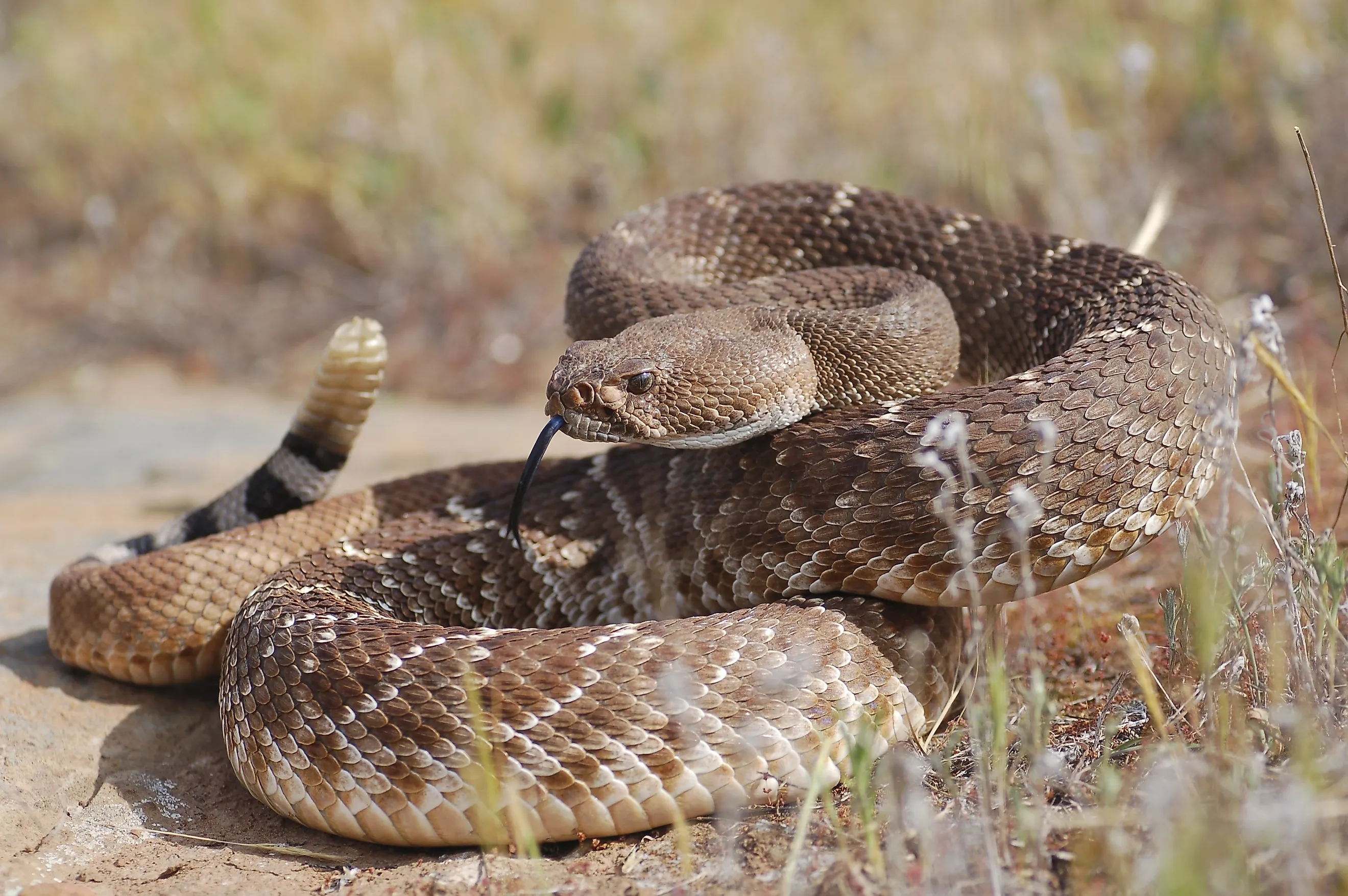
Rattlesnakes
There are upwards of 36 distinct rattlesnake species worldwide, with over 80 subspecies recorded. Often associated with desert environments, these cold-blooded, venomous reptiles can also be found in forests, prairies, and other landscapes across the Western Hemisphere.
Predatory and staunchly carnivorous, these snakes have gained quite a reputation; the sound of their rattle signifying dangerous stretches of wilderness in both popular media and real life. However, deadly attacks on humans are fairly rare, with one study only recording 74 deaths over a 30-year period in the United States (a low fatality rate compared to the nearly 1,000 bites reported every single year). Furthermore, they are vital to the ecosystem's health in several ways, as we will discuss in more detail below.
Taxonomic Classification

Rattlesnakes belong to the family Viperidae, a group of venomous snakes that includes vipers and pit vipers. The name "pit" refers to the heat-sensing pits located between the eyes and the nostrils. These infrared-sensitive organs help them detect warm-blooded prey.
Taxonomically, rattlesnakes are divided into two closely related genera: Crotalus and Sistrurus. The genus Crotalus includes the larger and more widely distributed species, such as the western diamondback rattlesnake and the timber rattlesnake. Species in this genus also typically have larger bodies and more prominent rattles.
In contrast, Sistrurus includes smaller species, such as the eastern massasauga and the pygmy rattlesnake. They are common across Canada and the United States, and often have finer rattles and slightly different scale patterns.
Physical Description

Rattlesnakes are typically medium- to large-bodied snakes, generally known for their heavier builds, triangular head, and, of course, their distinctive tail rattles. Most species measure between 2 and 5 feet in length, although larger individuals, such as the eastern diamondback rattlesnake, can exceed 7 feet. Their heads are also often broad and clearly separated from the neck, a typical feature of pit vipers in particular.
Their main defining trait, the rattle at the tip of the tail, is composed of interlocking keratin segments. When rapidly vibrated, the hollow segments strike one another, producing the characteristic buzzing warning sound. Interestingly, each time the snake sheds its skin, a new segment is added. The rattle is not a reliable way to determine the snake's age, though, as rattle segments can break off over the snake's lifetime.
Rattlesnake bodies also usually feature patterned scales, often in the form of diamonds, bands, or blotches that provide camouflage in desert, grassland, forest, and rocky environments where they commonly live.
Behavior

Rattlesnakes are generally ambush predators that rely on camouflage to strike at prey. Many species remain motionless for long periods along trails or near rodent burrows, attacking quickly when their target moves within range. After successfully injecting their venom, they usually drop their unlucky prey and track it by scent cues until it succumbs to its injuries and ceases to fight. Their venom has attracted significant scientific interest, contributing to research on blood clotting, nerve function, pain management, and other medical treatments.
The rattle itself functions primarily as a defensive warning. When threatened, a rattlesnake may coil, elevate its head, and vibrate its tail to produce the distinctive buzz. This signal warns large animals, including humans, to keep their distance, reducing the likelihood of direct confrontation or accidental trampling.
Most rattlesnakes are solitary outside of breeding or seasonal denning periods. In colder regions, hardy species like the timber rattlesnake and the western rattlesnake only gather in communal dens during winter brumation. These dens may contain dozens of individuals returning to the same location year after year.
Food

Rattlesnakes are carnivores, with prey varying by habitat, body size, and local species availability. The average rattlesnake's diet is dominated by rodents such as mice, rats, and ground squirrels, making them important natural pest controllers and a huge help to agricultural operations. Many species also consume birds, lizards, frogs, and occasionally, other snakes when the opportunity arises.
Rattlesnakes typically feed infrequently compared with many other predators. A large meal can sustain an adult snake for weeks because their metabolism slows significantly between feedings. Digestion also becomes most efficient when the snake can rest in warm, comfortable conditions, which is why rattlesnakes often remain inactive for extended periods after eating. Furthermore, their flexible jaws allow them to consume large quantities of food at once, swallowing prey whole, even when the animal appears wider than the snake’s own head.
Reproduction

Rattlesnakes reproduce by internal fertilization, giving birth to live young rather than laying eggs. This reproductive strategy, known as ovoviviparity, means embryos develop inside the mother’s body until they are ready to hatch. Litters typically range from 4 to 12 young, though larger species may produce more at a time.
Mating usually occurs in spring or early summer after snakes emerge from winter dens, with males usually competing for access to females through ritualized combat. When a victor is chosen, females then store sperm internally and can even delay fertilization for several months. Gestation generally lasts three to six months, and when born, young rattlesnakes already possess functional venom glands and a small “button” at the tip of the tail, which will eventually develop into a full rattle after their first shed.
Range and Habitat

Rattlesnakes occur only in the western hemisphere across a broad portion of the Americas (and not on any other continents), with the greatest diversity found in the United States and Mexico. Their range extends from southern Canada through much of the continental United States and into Central and South America.
In North America, species such as the prairie rattlesnake reach the northern edge of the group’s distribution in the Canadian Prairies, and in more forested environments, massasauga rattlers reach as far north as Georgian Bay in Ontario. On the other hand, desert specialists like the Mojave rattlesnake occupy arid regions of the southwestern United States and northern Mexico, whereas further down in South America, the aptly named South American rattlesnake is widely distributed.
Rattlesnakes clearly inhabit a wide range of ecosystems, including deserts, grasslands, scrublands, rocky hillsides, and open forests. Many species especially prefer areas that provide both shelter and easy access to food sources, such as rock outcrops, fallen logs, or dense brush.
Seasonal conditions can also influence habitat use. In wintery climates, rattlesnakes rely on underground dens for hibernation, while in hotter regions they may remain active year-round, seeking shade or burrows during extreme heat (usually midday, when the sun is highest).
Threats

This species faces several threats across its range, many of which are linked to human activity. Habitat loss is the most significant pressure, as expanding agriculture, urban development, and road construction fragment the open landscapes that many rattlesnakes rely on. In more developed regions, deaths on roadways have also become a major issue for snakes, as they are frequently struck while crossing or basking on warm pavement. Environmental changes pose additional challenges. Drought, wildfires, and shifting temperatures linked to climate change affect anything from prey availability to breeding cycles and the integrity of traditional den sites.
Direct persecution has historically contributed to population declines as well, as rattlers are often killed on sight due to fear or pure misunderstanding by hikers, hunters, and/or farmers. In many cases, bites occur precisely because a human is trying to kill the snake rather than leaving it to go about its business. Organized events known as "rattlesnake roundups" still remove large numbers of snakes from shared spaces with humans, though many have declined or shifted toward conservation-focused formats.
The Importance of These Often Misunderstood Reptiles

Rattlesnakes play an important role in maintaining ecological balance across a plethora of ecosystems. As mid-level predators, they help regulate populations of rodents and other small animals that can damage crops, spread disease, and disrupt native vegetation. By keeping these prey species in check, rattlesnakes indirectly support a healthier environment and productive agricultural landscapes, greatly benefiting us all in the long run.