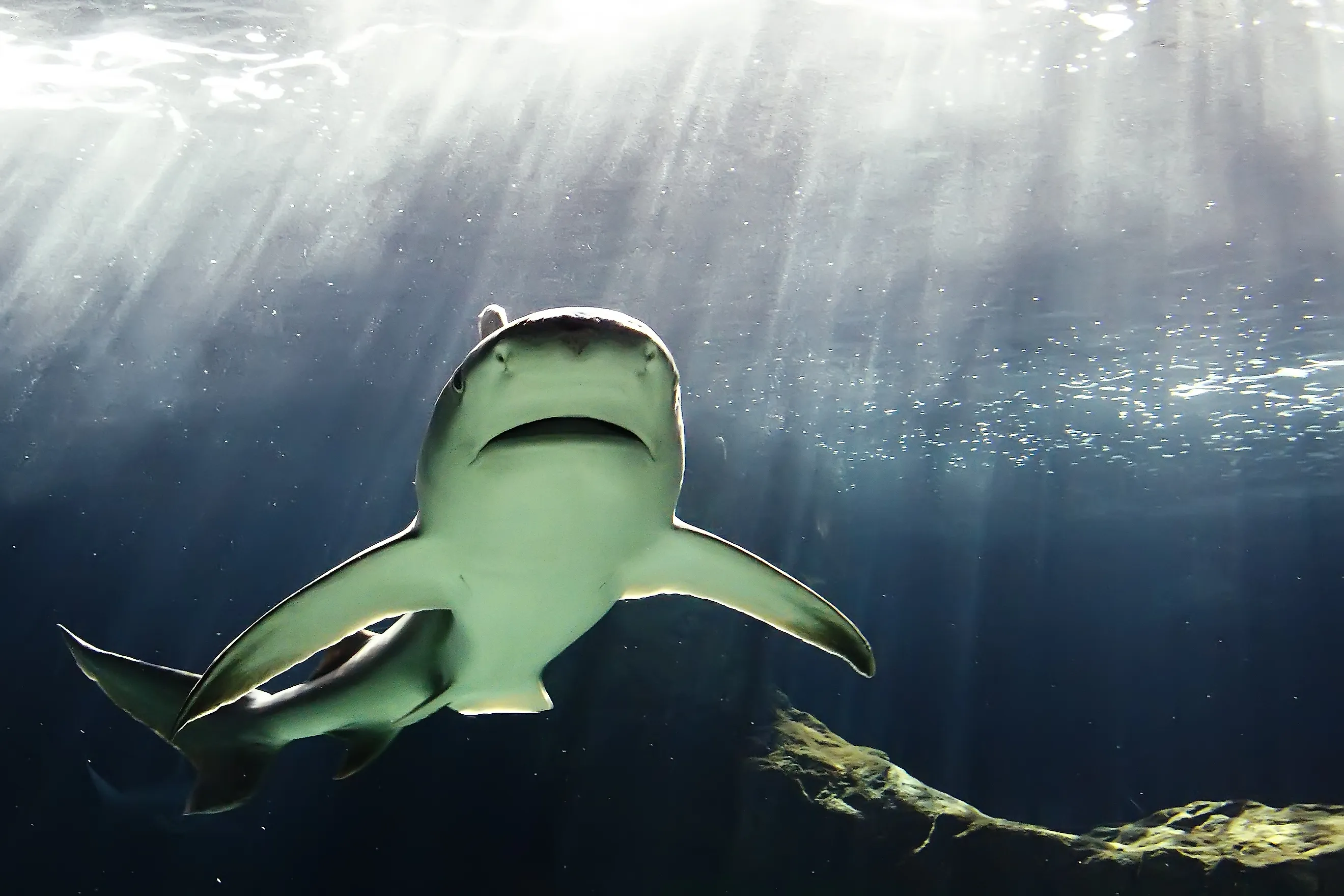
Where Bull Sharks Go In The Winter
A single gray fin breaking the surface is enough to clear an American beach. Sharks patrol most of the planet's water, but they do not all hold still: when the sea turns cold, some of them move, and the bull shark is one of them. Blunt-snouted, unusually aggressive, and often blamed for the 1916 Jersey Shore attacks that helped inspire Jaws, Carcharhinus leucas is also one of the rare sharks at home in both salt and freshwater, the trait behind its nickname, "river shark," and its run of coastlines, rivers, and estuaries other sharks cannot follow.
That same tolerance decides where it spends the winter. Every animal has a temperature it cannot fall below, so as the cold sets in, many bull sharks chase warmer water. Along the US coast that means the Gulf of Mexico and the warm estuaries of Alabama, Texas, and Florida; others range much farther, as far as the Indian Ocean off the coast of Africa. These are the places they ride out the season.
Mobile Bay in Alabama

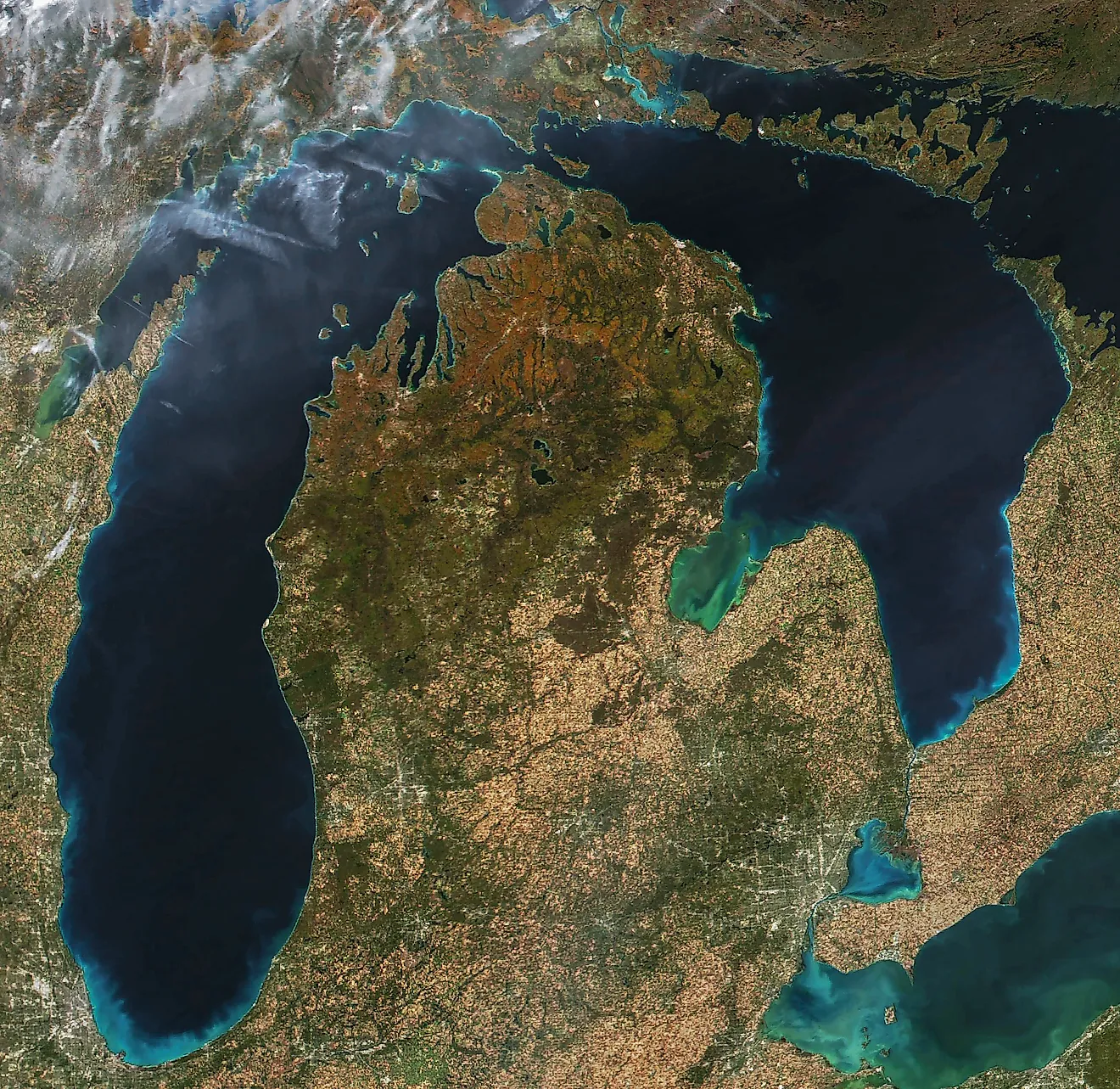
An estuary where bull sharks have multiplied in the last several decades is Mobile Bay, Alabama. An estuary is a body of water where a river meets the sea. This is the perfect breeding ground for bull sharks who are euryhaline, meaning they can tolerate and adapt to varying levels of salinity. Given the rising water temperatures in the sea that average between 72 and 74 degrees Fahrenheit, Mobile Bay has seen an increase in bull sharks and their pups. The Mobile River Basin is a well-documented hotspot for aquatic biodiversity in North America, and research has looked into the role of the higher temperatures and how they have expanded its suitability as a habitat for bull sharks in the northern Gulf of Mexico. Warmer water and changes in salinity regimes have caused juvenile bull sharks to take their nurseries farther north to inhabit estuaries that were traditionally more temperate. A study found that baby bull sharks have increased fivefold within the last two decades along the coast of Alabama. In comparing the Mississippi and Florida to the northeast Gulf of Mexico, these young bull sharks have actually dominated the shark species within Mobile Bay.
Matagorda Bay and San Antonio Bay in Texas

Similarly to Alabama, the US state of Texas has experienced a rise in the presence of bull sharks. The warming of the Texas estuaries has resulted in an uptick in shark pups over the last 40 years. Estuaries are a common habitat for bull sharks, especially for females who are pregnant or after giving birth. These areas provide a high probability of survival before returning to the Gulf of Mexico for the next stages of life. The Texan coastline is made up of estuaries that are isolated from the Gulf by its barrier islands. Nearly all of these inlets provide habitat for juvenile bull sharks due to the shift from low to high salinity levels. However, Matagorda Bay and San Antonio Bay are seen as the main nurseries for bull sharks in the area. They are characterized by seagrass meadows, salt marshes, and muddy substrates with influence from the Guadalupe River. One study found that bull shark migration has been delayed in the winter, combined with warming temperatures over the last four decades. Due to this, researchers believe that winter migrations could be eliminated by the end of the 21st century for sharks in the Texas estuaries.
The Shark River Estuary of Everglades National Park in Florida

On the western coast of the Everglades National Park is a place with a name that tells you exactly who resides there: Shark River. The collection of interconnected waterways is a vital tidal and mangrove ecosystem that combines freshwater with the saltwater of the Gulf of Mexico through Ponce de Leon Bay. Its location is southwest of Miami and just north of the Florida Keys. The environment contains brackish water that is ideal for bull sharks, who use the river mouths year-round as breeding and nursery grounds. Some bull sharks remain in the Everglades for the first four years of their lives. Other animals like alligators, crocodiles, manatees, tarpon, and snook all thrive in the area due to its remote nature and little to no public access.
A comparison study on the spatial and movement patterns of bull sharks and Atlantic tarpon within the southern waters of Florida found that while bull sharks were in abundance throughout the year, the numbers peaked in the winter. Shark surveys were deployed and caught 56 bull sharks, with the highest number collected between December and January.
Bazaruto Archipelago and San Sebastian Peninsula in Mozambique

The coasts of Africa are also common habitats for bull sharks. A study conducted along the Western Indian Ocean reviewed the habitat use, residency, and regional connectivity of adult bull sharks in Mozambique's Bazaruto Seascape. The findings indicated that these sharks exhibit high residency on a year-round basis, most concentrated within the reef systems and inshore areas of the San Sebastian Peninsula. The Seascape is believed to provide both a critical habitat for the shark species, while also acting as a connectivity node for resident and transient bull sharks.
Another investigation looked at the Ponta do Ouro Partial Marine Reserve, a fossilized dune running parallel to the coast. The study monitored bull sharks for 664 days between January 2012 and November 2013 and found that the Pinnacle reef was an important aggregation site for adult bull sharks that experience prolonged residency. While the Pinnacle reef is a stable residency for bull sharks throughout the year, there were some migration events noted where the species moved northward to warmer latitudes in the austral winter. Mozambique also holds the first record of a bull shark crossing between ocean basins, traveling over 7,000 km from the country and around the Cape to Nigeria.
Playa del Carmen in Mexico

Another favored winter spot for bull sharks is the coastal resort town of Playa del Carmen. Situated along the Yucatan Peninsula and just above Cozumel, the strip of Caribbean shoreline acts as an ideal migration spot for these sharks from December to February. This area within the Mesoamerican Barrier Reef System is characterized by its coral reefs and substrates with seagrass patches. It is considered a protected space that covers the entire volume of water from the seabed to the surface. Between 2014 to 2026, photo-ID data collected by an underwater visual census and citizen science were collected daily between November to March. The results revealed bull shark aggregations in the area with an average of eight to 19 individuals at a time, with a maximum number of 28 sharks recorded at once. Within a five-year span, there have been 2,080 bull shark observations at Playa del Carmen. Pregnant female bull sharks were identified by their distended abdomens, and around 32% of the sharks spotted were pregnant, indicating that the area boasts ideal conditions for gestating females.
Currently, the Pelagios Kakunja Marine Conservation is making efforts to understand bull shark movements and their reproduction, gestation, and residency habits in Mexico. This includes the implementation of ultrasonic and satellite tagging, and uterus-inserted tags. Given its ecological significance, Playa del Carmen was declared an Important Shark and Ray Area (ISRA), an international scientific initiative aimed at identifying essential areas to the survival of shark species. Additionally, the Saving Our Sharks organization has contributed to conservation efforts by supporting the first ultrasound examination of free-swimming bull sharks and the development of a bull shark identification catalog.
Cabo Pulmo National Park in Mexico

Cabo might be an ideal travel destination for winter beach weather, but it's the prime time to witness the Sea of Cortez filled with bull sharks. Between December and March, bull sharks, whale sharks, humpback whales, and gray whales all overlap within a 100 km radius within the Gulf of California. Cabo Pulmo National Park (CPNP) is one of the most successful protected areas for marine life in the world. This oceanic haven was created on the eastern coast of the Baja California Peninsula in 1995 to protect a combination of coral reefs, fish, and sea turtles. Studies have found that populations of bull sharks thrive here due to its heightened level of protection and the availability of prey. An analysis of 32 bull sharks followed their movement patterns within the CPNP and noted that they were present in the winter months between December to May, then absent from August to October. One popular spot to witness bull sharks in Cabo Pulmo is El Vencedor, a former tuna boat that sank 16 meters to the ocean floor after colliding with the reef in the 1980s. The national park is renowned for holding the only living coral reef along the North American Pacific coast, and was declared a UNESCO World Heritage Site in 2005.
Where Sharks Bull-Doze through the Winter

Across the globe, bull sharks seek out warm coastal waters for their habitat. This can include tropical and subtropical areas within the Gulf, Indian, and Pacific Oceans, plus the rivers and estuaries that lead into them. The species' fascinating ability to adapt to both salt and fresh water gives them an advantage when it comes to seeking out the ideal place to spend the colder, winter months. Keeping to traditionally warm areas like Florida, Africa, and Mexico, or the increasingly warmer waters near Texas and Alabama, gives bull sharks an extensive range of options throughout the year, but especially during the winter months between December to February.