How Many Soldiers Were In The Roman Army At Its Peak?
Ask how big the Roman Army got at its peak, and the honest answer is a range: somewhere between 400,000 and 500,000 soldiers by the middle of the 2nd century AD. That is the figure most historians settle on for the reigns of Trajan and Hadrian, when the empire stretched across the widest territory it would ever hold. It is a staggering number for the ancient world. But the number alone undersells what made Rome so hard to beat. The real story is how those half a million people were organized, because Rome did not just field a big army. It built a machine, and every part of it had a job.
The Professional Army

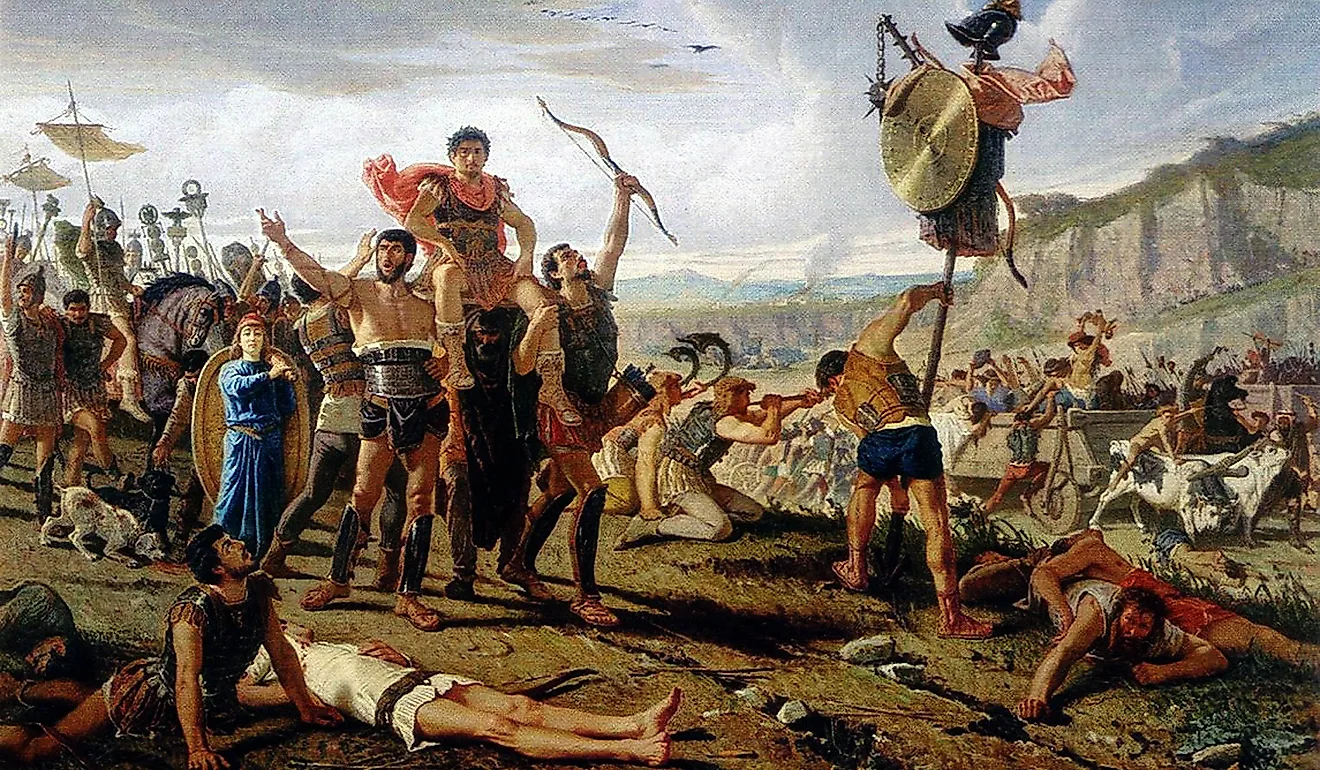
Start with the legionaries, because they were the core of everything. These were Roman citizens, heavily armored, and at the empire's height they filled roughly 30 legions spread along the frontiers. Each legion carried a number, and here is a detail that says a lot about Roman pride: numbers got reused so freely that at one point five separate legions all answered to the number III. Yet three numbers were treated as untouchable. Legions XVII, XVIII, and XIX were wiped out with their commander Varus in the Teutoburg Forest in AD 9, and Rome never assigned those numbers to anyone again. A ruined legion kept its number the way a retired jersey keeps a player's.
A legion at full strength ran to about 5,000 or 6,000 men, mostly infantry. Inside it, the structure was tidy and deliberate. Ten cohorts made up a legion, and nine of them held about 480 soldiers each. The first cohort was the exception, larger and more prestigious at roughly 800 men, home to the legion's most senior officers. Each cohort then broke into six smaller units called centuries, and each century answered to a centurion. The name suggests a hundred men, but in practice a century held around 80. Rome kept the old word long after the math had changed.
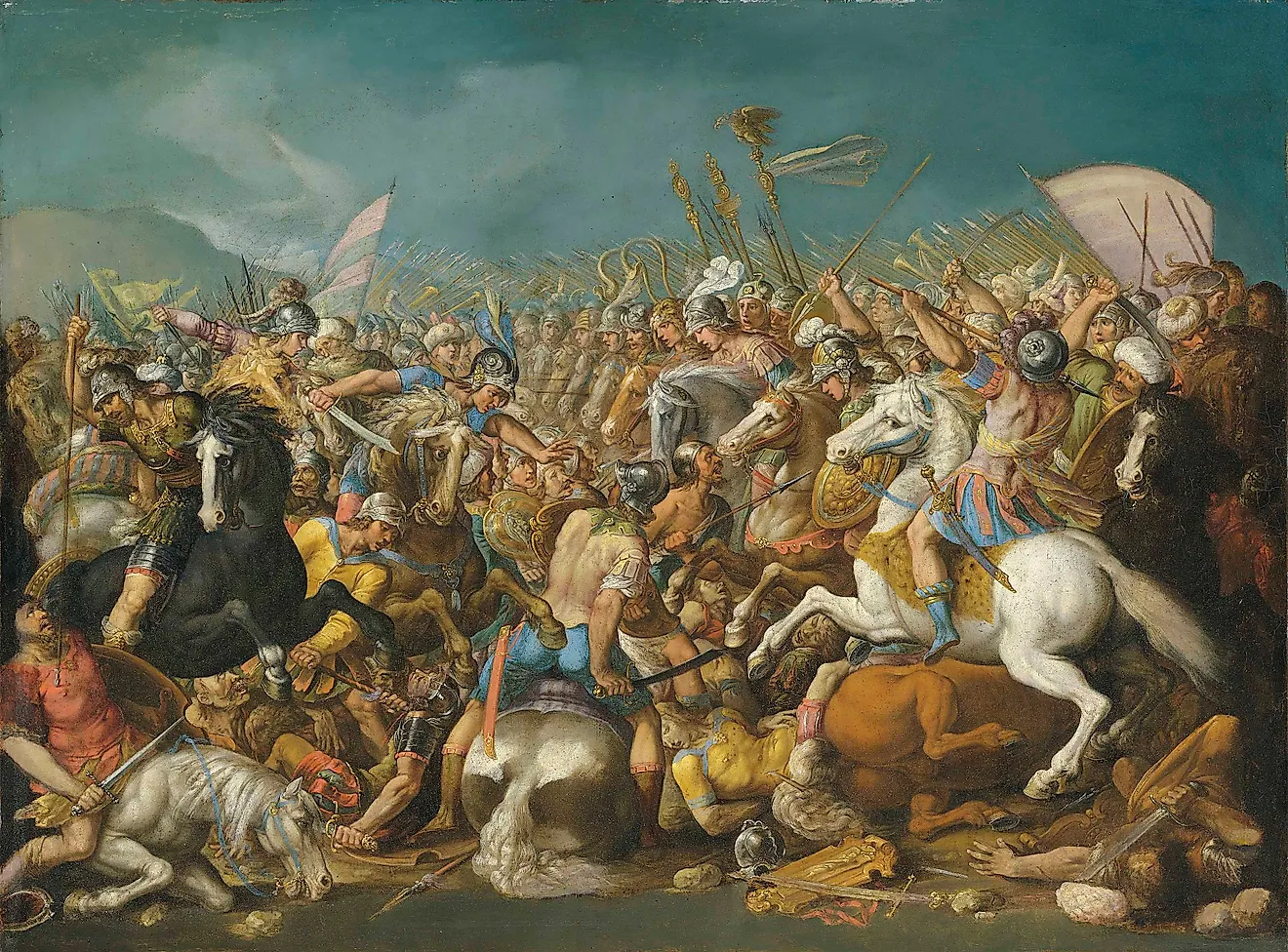
The legions were versatile because they carried their own specialists. Light infantry scouted ahead. Cavalry chased down a fleeing enemy or covered a retreat. Engineers handled the problems that muscle alone could not solve. A single legion could march into unfamiliar country and adapt to whatever the terrain and the enemy threw at it, which is exactly what a frontier force needs to do.
Legionaries were only half the fighting strength, though. Alongside them served the auxiliaries, soldiers recruited from the provinces and allied peoples rather than from Roman citizens. At the empire's peak they numbered somewhere around 250,000 to 300,000, and they brought skills the legions lacked. Archers, slingers, and expert cavalry filled out the ranks, and their reward for surviving about 25 years of service was Roman citizenship, extended to them and their descendants. It was recruitment and integration in a single stroke: fight for Rome, and Rome eventually made you Roman.
The one branch that tends to get forgotten is the navy, the Classis. Rome was never a natural sea power, and it knew it, but controlling the Mediterranean meant controlling the empire's supply lines. Its fleets ran the full range, from small, fast patrol boats to heavy warships built for ramming and carrying siege equipment. Unglamorous work, mostly, and all the more essential for it.
The Forces That Ran the City Itself

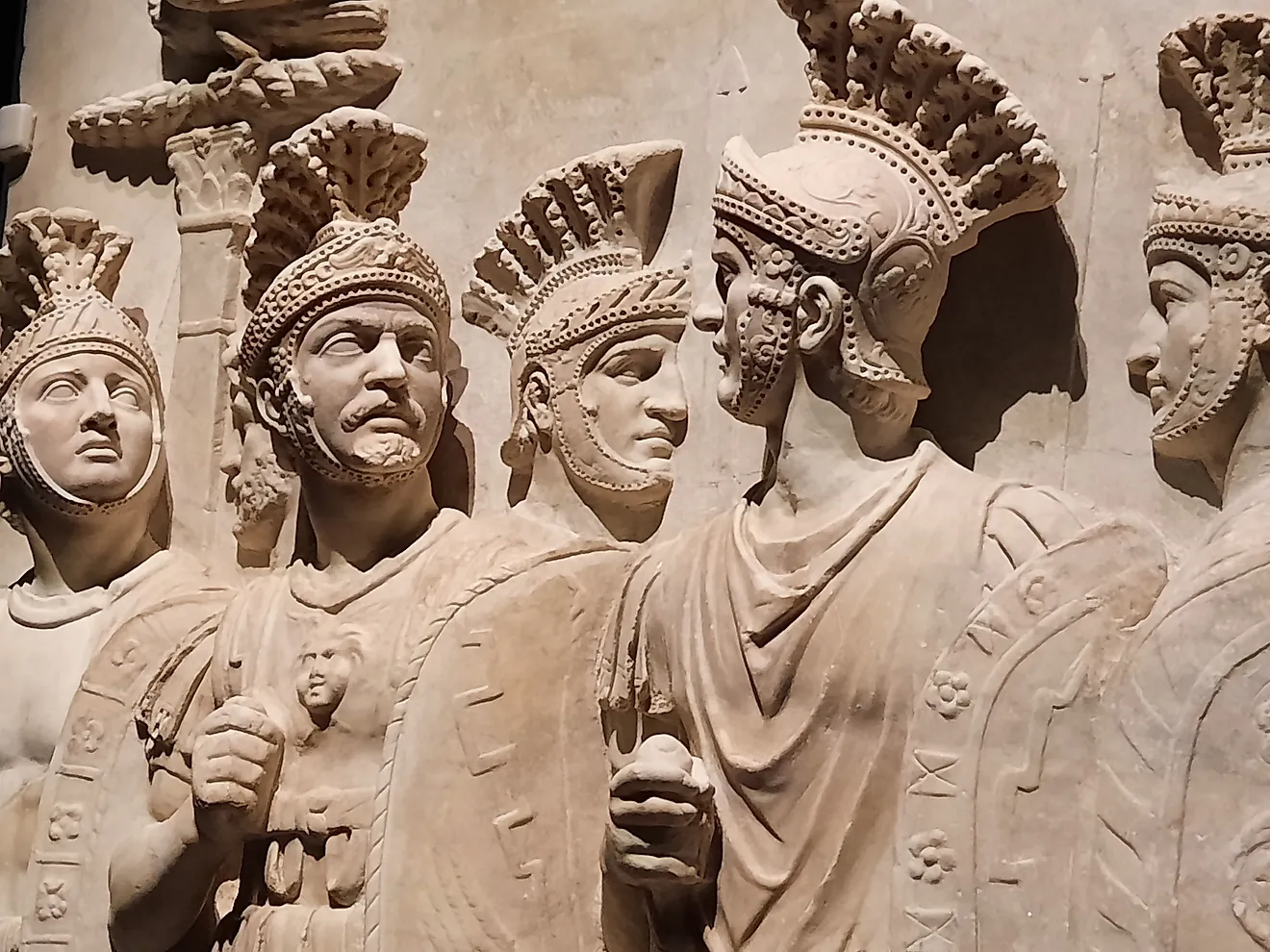
Not every armed Roman stood on a distant frontier. A whole set of forces existed to keep order in the capital, and the most notorious of them was the Praetorian Guard. Their reputation for intrigue is earned: they had a hand in overthrowing, abandoning, or murdering 15 of the first 48 emperors who ruled between 27 BC and AD 305. The very unit sworn to protect the emperor turned out to be one of the biggest threats to his life.
The Guard was the creation of Augustus, Rome's first emperor, who wanted a body of loyal soldiers close at hand to safeguard the imperial family and keep the army, the Senate, and the Roman crowd in check. Its commander, the Praetorian prefect, became one of the most powerful figures in the city. The idea was not entirely new. During the siege of Numantia in 133 BC, the general Scipio Aemilianus had surrounded himself with a bodyguard of about 500 men, roughly the size of a single cohort. That kind of personal guard was an old Republican habit; Augustus simply made it permanent and turned it into an institution.
Augustus also raised the cohortes urbanae, the urban cohorts, garrisoned in Rome to keep the peace. They functioned as something close to a police force for the capital, and they answered to the urban prefect, a post that outranked even the Praetorian prefect. The urban prefect held senatorial rank, oversaw criminal cases in Italy, and became the most senior authority in Rome whenever the emperor was away on campaign. Ancient records are thin on their exact size, but the urban cohorts seem to have run anywhere from 500 to 1,500 men depending on who was in charge.
Then there were the vigiles, and they might be the most quietly admirable group in the whole system. Augustus organized them into seven cohorts of roughly 1,000 men each, and they served as Rome's permanent firefighting service, patrolling the streets by night to watch for flames and keep order in a crowded, timber-built city. Most of them were former slaves, which set them apart from nearly everyone else under arms. They rarely saw combat, and they held together until the 4th century AD, when the service was finally disbanded. A fire brigade does not sound like an army. In Rome, it counted as one.
Why the Army Was So Effective

Size explains why Rome could be everywhere. It does not explain why Rome usually won. That came down to professionalism, and it started with training that never really stopped. Roman soldiers drilled hard even in peacetime, running long marches under the weight of full equipment, rehearsing formations until they were automatic, and holding to a chain of command that was strict to the point of brutal. It looks harsh by any modern standard. It also meant a commander could count on his line to hold when everything around it was chaos.
These were career soldiers, not seasonal levies. A term of service could stretch to 25 years, which produced hardened veterans who understood how battles actually unfold, how formations stay cohesive under pressure, and how to keep going when their bodies wanted to stop. Experience like that cannot be conscripted overnight, and Rome's enemies rarely had it in the same depth.
A Roman soldier was also, remarkably, an engineer. Between battles, the same men built the roads, bridges, forts, and walls that held the empire together, and they threw up a fortified camp at the end of nearly every day's march. Those roads did more than move troops; they let Rome reach a trouble spot before the trouble could spread. And the engineering knowledge that raised a camp overnight was the same knowledge that cracked open heavily defended cities when a siege demanded it.
Adaptability sealed the rest. Rather than clinging to tradition for its own sake, the Roman military borrowed whatever worked, absorbing tactics and equipment from the peoples it fought. That flexibility let it tailor a strategy to each new enemy instead of forcing one approach onto every war. Rome leaned on diplomacy too, wearing opponents down over time rather than relying on force alone. And underpinning all of it was standardization: every legionary carried the same heavy armor and the same curved shield, so any soldier could slot into any formation. The army was a genuine career, woven deep into Roman society and politics, and Rome rewarded it accordingly with steady pay, bonuses, and a plot of land at retirement.
The Sum of the Parts

So the answer to the headcount question is 400,000 to 500,000 at the peak. But now that number means something. It was not one enormous mob; it was legions and auxiliaries on the frontiers, fleets on the water, and the guardsmen, police, and firefighters who kept the capital standing, all locked together into a single working system. That combination of scale, discipline, and sheer organizational skill is what let Rome conquer new lands, hold distant borders, and keep the whole sprawling empire steady for centuries. The size is what people remember. The machinery behind it is what actually won.