The Role of Religion In Roman Politics
Roman religion was complex and multifaceted. With so many gods and traditions, it can be difficult to keep track of it all. It also changed significantly over time. Greek-inspired polytheism dominated Roman society for centuries, but it was then replaced by Christianity in the 300s CE. If you want to learn more about Roman religion, and particularly its role in politics, then continue reading this article.
Religion Was The Foundation Of Rome

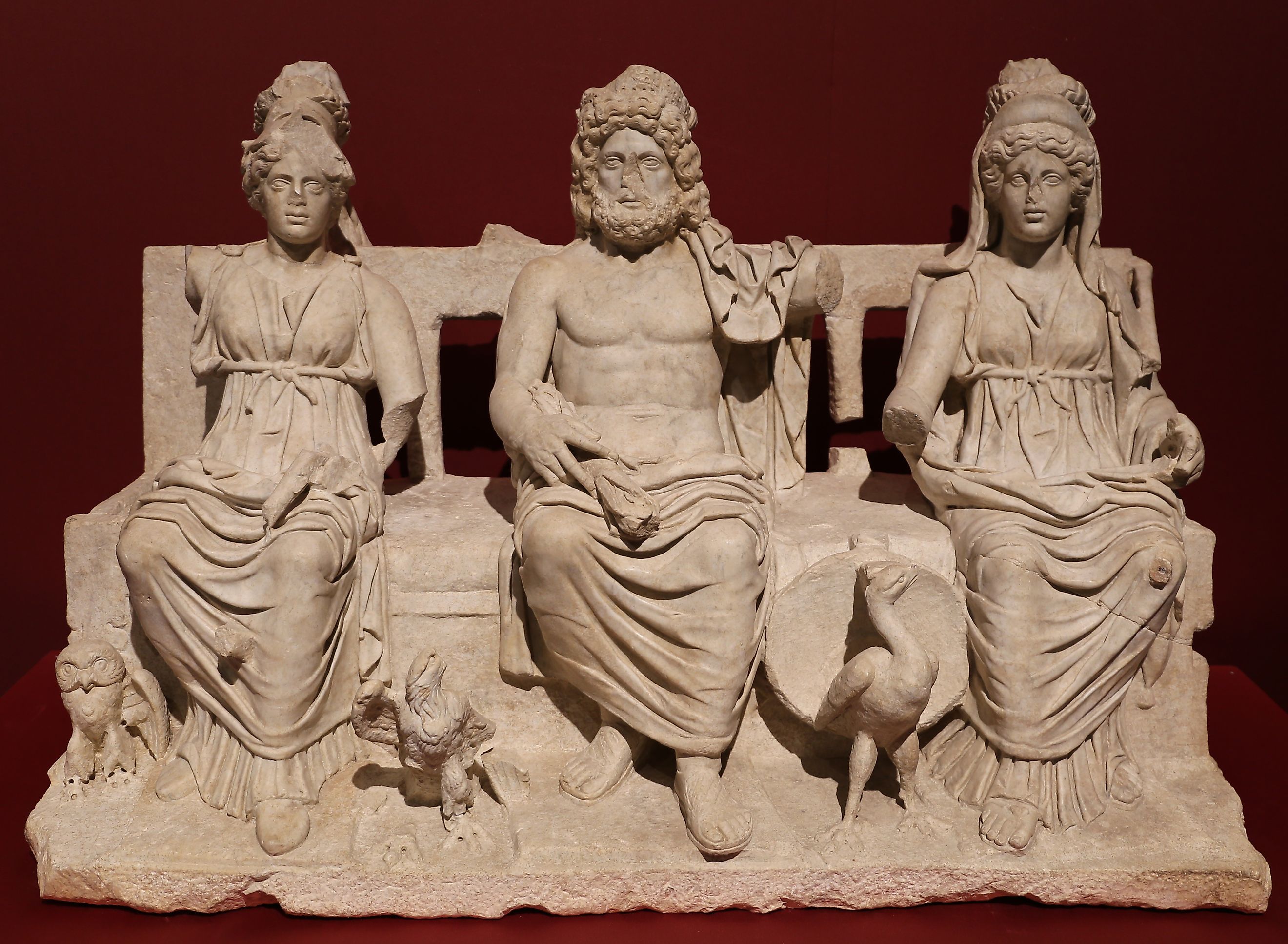
Religion was fundamental to everything in Roman society. Romans believed in pax deorum, or “peace of the gods”. This meant that Rome would only do well if the gods were happy. Because of this belief, religious ceremonies were political functions, and governmental decisions often required religious approval. Most importantly, key religious positions like the Pontifex Maximus (chief priest), Augurs (interpreters of omens), and Flamines (priests of major gods) were often held by ambitious politicians. For instance, Julius Caesar, general and future dictator of Rome, became Pontifex Maximus in 63 BCE. This gave him spiritual legitimacy and strengthened his political influence.

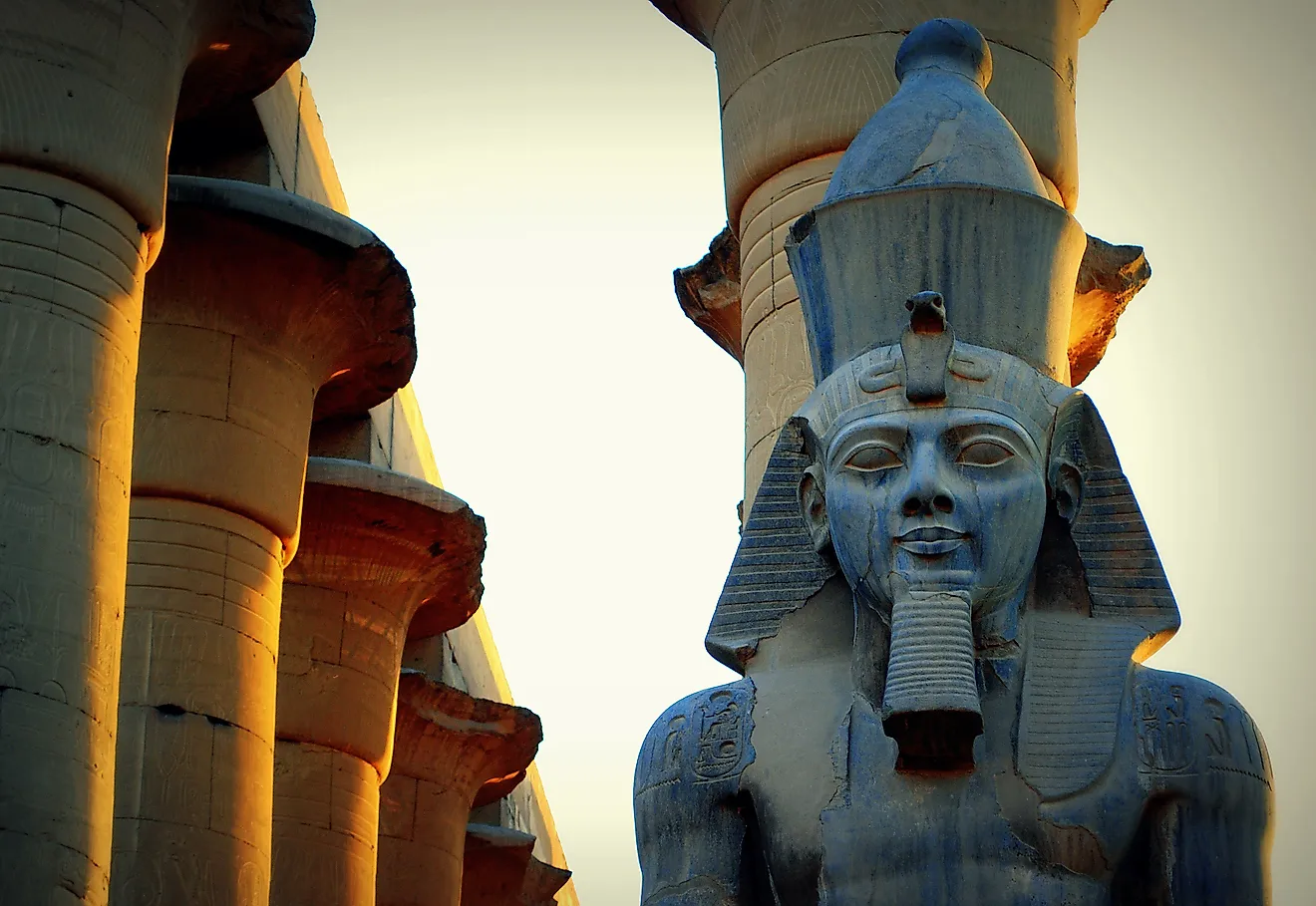
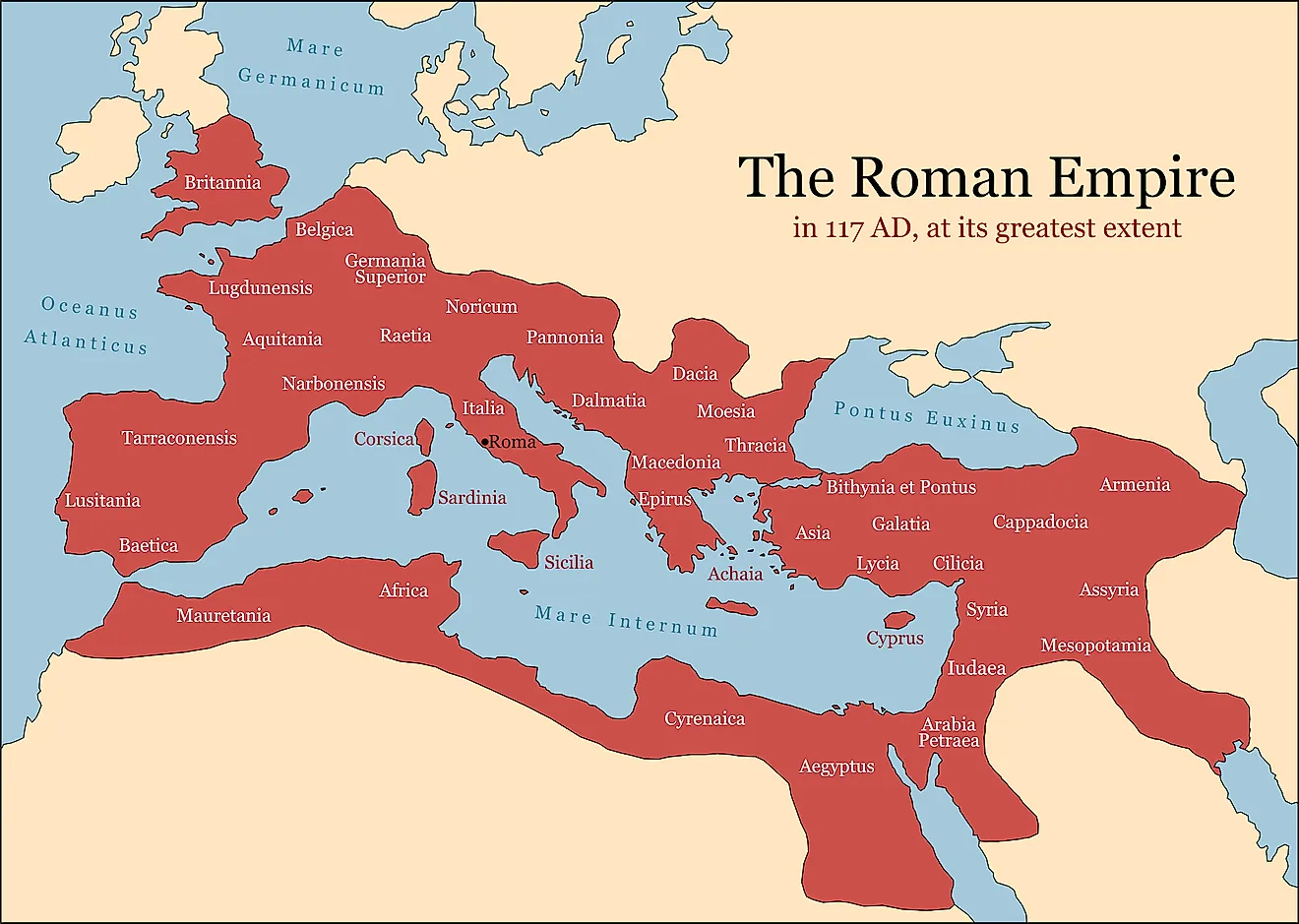
As Rome expanded from a small city-state into a multicontinental power, it needed something to help unify its people. Religion played a crucial role in this regard. State-run religious festivals reinforced loyalty, promoted social order, and helped create a shared Roman identity. Rome’s polytheistic traditions also made it remarkably tolerant of other religious practices, to the point where it even absorbed many foreign gods into its own system. One such example was the Egyptian god Isis, who became widely followed across Rome.
Religion In The Roman Empire

Major changes in Roman religion occurred when it transitioned from a republic to an empire in 27 BCE. Rome’s first emperor, Augustus, declared that Julius Caesar, who had been assassinated after declaring himself dictator for life in 44 BCE, was divine. Doing so accomplished two goals. First, it portrayed Augustus as Caesar’s legitimate successor. Second, it promoted the idea that all absolute rulers had a sacred role. This resulted in an imperial cult, in which emperors and certain members of their family were believed to have divine authority.

Religious worship of the emperor, therefore, became associated with loyalty towards the regime itself. In short, religion in the Roman Empire was used as a tool to legitmize the emperor’s authority and discourage dissent.
Christianity Enters The Picture

At the beginning of the first century CE, in the province of Judea, Jesus of Nazareth began preaching about repentance, compassion, and salvation. His message made him popular, which alarmed the Roman authorities. Eventually, under the order of Judean governor Pontius Pilate, Jesus was crucified between 30 and 33 CE. However, rumours of his resurrection three days later only strengthened his message. When combined with the infrastructure around the Mediterranean world, built by Alexander the Great and the Romans, this facilitated the spread of Jesus’ ideas. Christianity subsequently emerged, quickly transforming from a small offshoot sect of Judaism into an entirely new religion practiced across the Roman Empire.

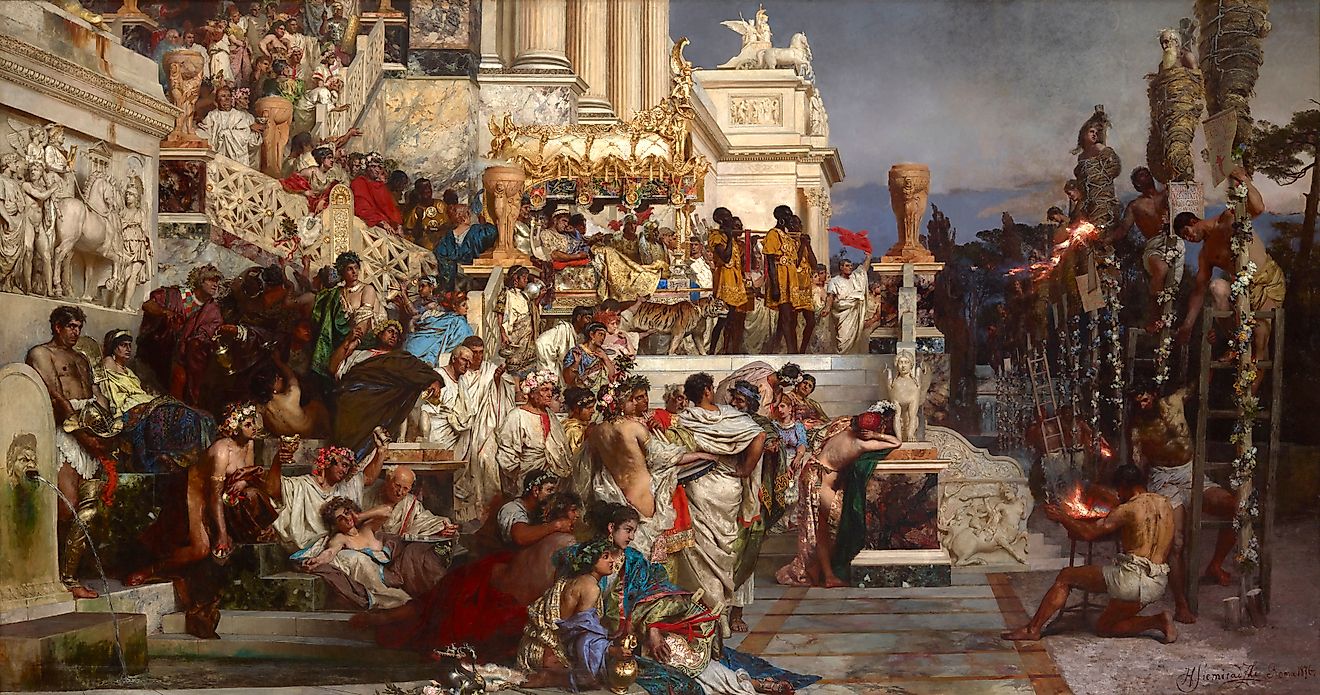
While the Romans generally tolerated other religions, Christianity was different. As monotheists, Christians refused to worship Roman gods or the emperor. Roman authorities perceived this as disloyalty, and frequently persecuted Christians as a result. For instance, Emperor Nero blamed the Great Fire of Rome in 64 CE on Christians. In 303 CE, Emperor Diocletian then launched the “Great Persecution”, in which Christians’ legal rights were revoked, churches were destroyed, and members of the clergy were imprisoned. Many were also killed.
The Roman Empire Adopts Christianity

The major turning point for Christianity came in 312 CE. Before the Battle of the Milvian Bridge, Emperor Constantine reportedly saw a vision of a glowing cross in the sky. He subsequently converted to Christianity and issued the Edict of Milan the next year, which legalized the religion throughout the empire. Later, in 380 CE, Emperor Theodosius made Christianity the official state religion. With this, pagan temples declined in importance, and churches rose to prominence. Roman emperors were now considered defenders of Christianity, and political legitimacy was tied to worship of the Christian god.
Religion In Byzantium

While the Western Roman Empire fell in 476 BCE, the Eastern Roman Empire thrived for the next thousand years. Known retroactively as the Byzantine Empire, Christianity continued to play an essential role in its politics. The emperor was considered God’s representative on earth. Its capital, Constantinople, was also one of the most important cities in the world for Christians since it contained major religious institutions like the Hagia Sophia. Religion shaped Byzantium’s legal sphere, as Christian ideas informed family law, marriage law, and overall perceptions of public morality. In short, the Byzantine Empire was Christian in nature. Even after it fell to the Ottoman Empire in 1453 CE, its legacy means that millions of Christians still live in Anatolia, the Balkans, and the Middle East.
Impact And Legacy
While the role of religion in Roman politics evolved, its significance remained consistent. From the beginning, religious and political figures were one and the same. This connection deepened when Rome transitioned from a republic to an empire, since emperors were believed to have divine authority. Christianity then replaced Greek-inspired polytheism in the 4th century CE, and it continued to influence Roman politics for the next thousand years.