The Brutal Side Of The Ottoman Empire
As one of history's longest-lasting and most successful empires, the Ottoman Empire (1299 to 1922) looms large in popular memory. Like all major states, it had a brutal side. The foundation of its power was conquest through violence. Slavery, both via the Devshirme System and through more traditional means, also played a major role in Ottoman society. The succession system for sultans was often bloody as well. Finally, the Armenian Genocide is perhaps the most shameful chapter in Ottoman history. While not more brutal than any comparable empire, addressing these darker aspects of the Ottoman Empire is crucial if we want to fully understand it.
Conquest Through Violence

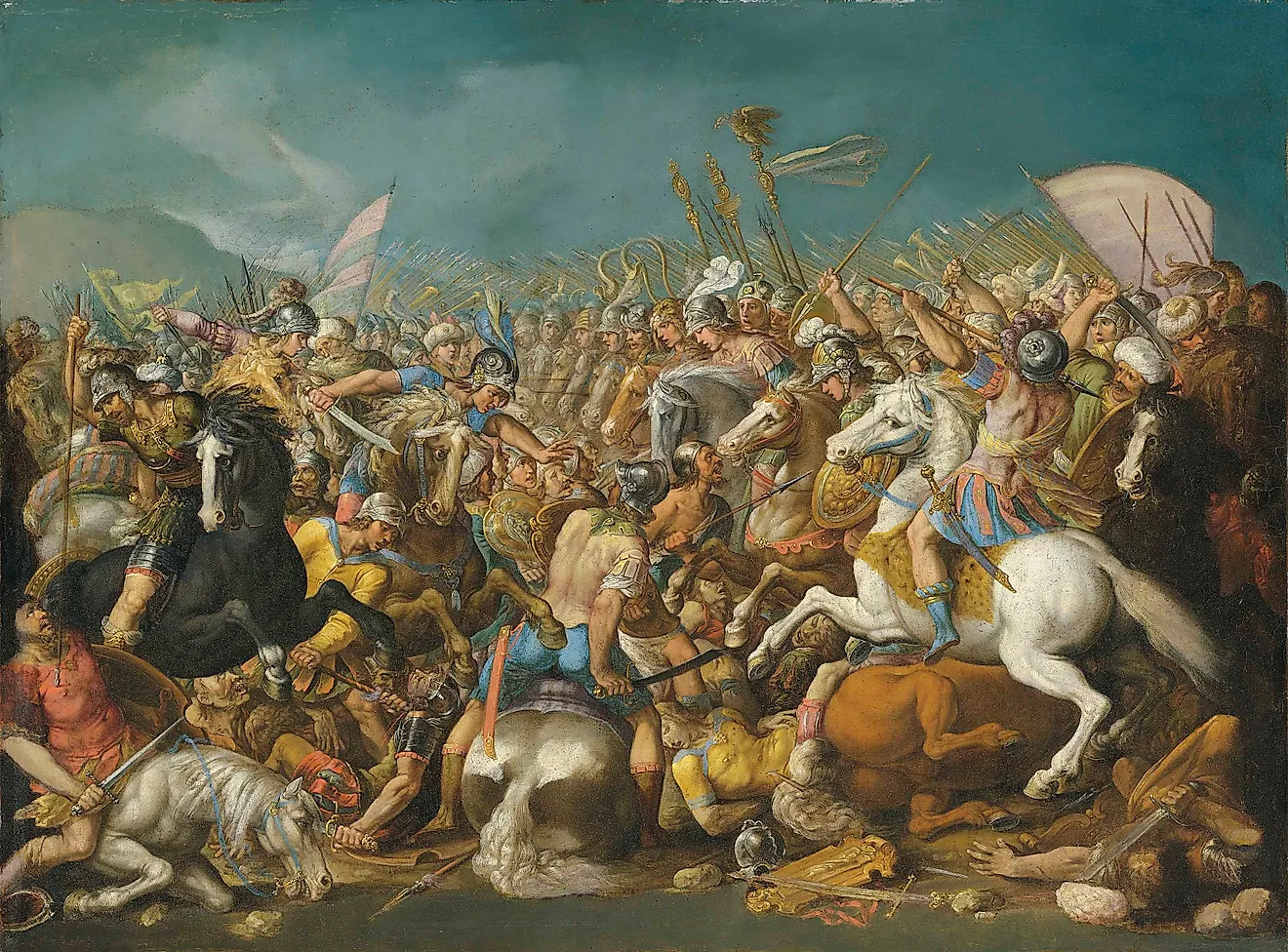
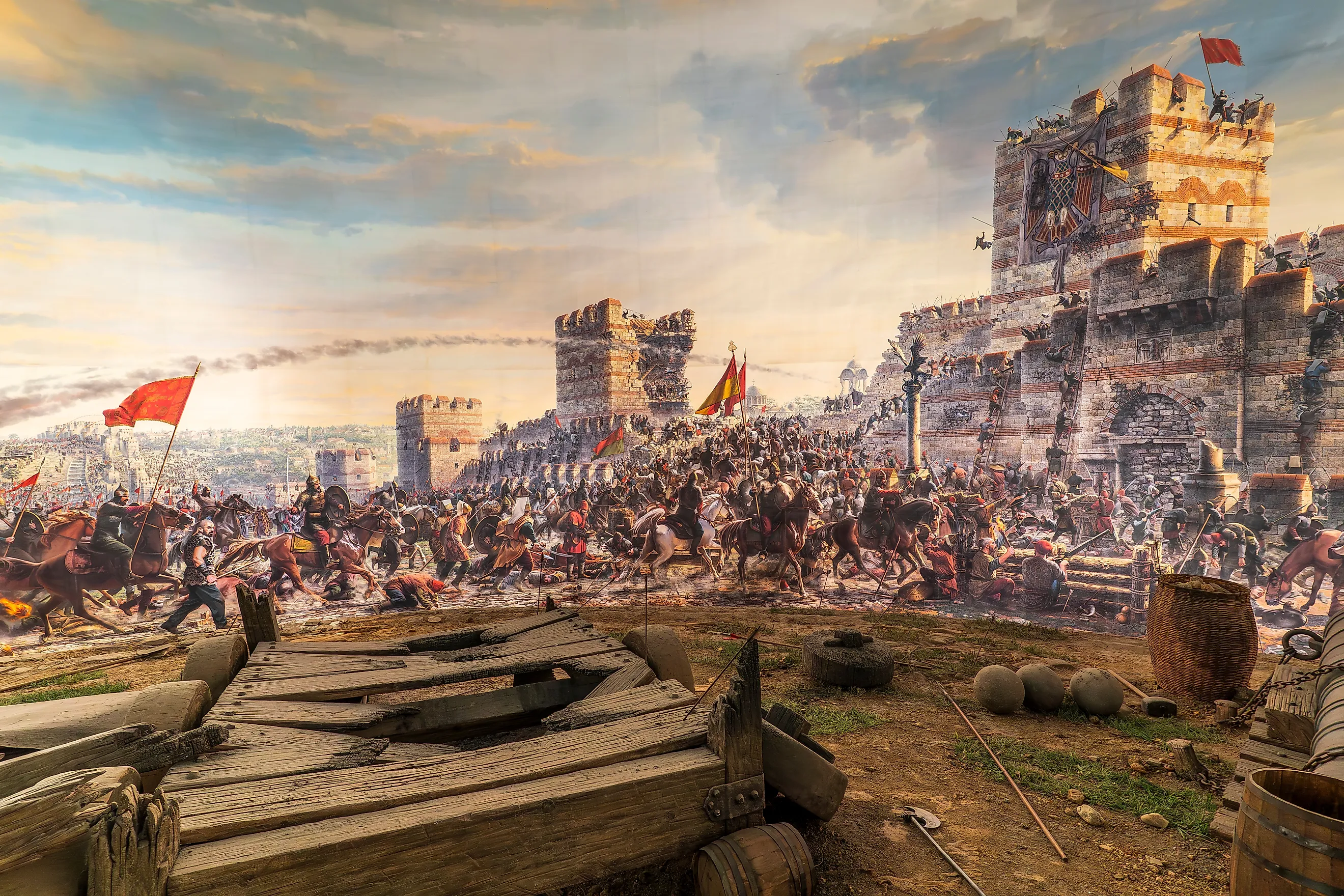
Like the Romans, Mongols, and numerous European kingdoms, the Ottoman Empire primarily expanded its territorial reach through war. From its founding in 1299 to the mid-1400s, its military campaigns were focused on Anatolia and the Balkans. This period culminated in the capture of Constantinople in 1453. In doing so, the Ottomans killed, enslaved, and displaced thousands of people. They also looted homes, raped women and children, and vandalized major holy sites. Similar acts occurred in the coming centuries as the Ottomans expanded into Central Europe and North Africa. Even though none of this brutality was out of the ordinary for the time or unique to the Ottoman Empire, it nonetheless remains part of its historical legacy.
The Devshirme System

The Devshirme System, on the other hand, was a specifically Ottoman practice. It involved kidnapping young Christian boys from the Balkans, forcibly converting them to Islam, and then training them at elite military schools. This process created the Janissaries, the sultan's highly skilled and disciplined personal guard that proved instrumental in early Ottoman conquests. Since they had no connection to local politics and were separated from their local identities at a young age, the Janissaries were completely loyal to the state. A form of slavery, the Devshirme system caused immense emotional distress in the Balkan communities it affected. It also led to cultural erasure, since the boys lost their connection to Christianity and their communities. While the Janissaries eventually gained immense political and personal privileges, they didn't change the fundamental cruelty at the core of the Devshirme System.
Slavery

There were other forms of slavery in the Ottoman Empire as well. Most slaves operated in domestic or urban contexts. Islamic law forbade enslaving free Muslims or the empire's own protected non-Muslim subjects, the dhimmis such as Christians and Jews living under Ottoman rule. The enslaved instead came largely through warfare and the frontier slave trade. They included Greeks, Slavs, Circassians from the Caucasus, and sub-Saharan Africans. Roles were gendered. Men performed strenuous physical labor, occupied administrative positions, or served as eunuchs in the royal court. On the other hand, women frequently served as domestic workers and in harems, where they were subjected to horrific sexual abuse. Slavery in these contexts was less all-encompassing than the chattel slavery practiced in the Americas. Slaves could convert to Islam, marry, and sometimes even own property. Emancipation also occurred relatively frequently after a number of years of service. Regardless, Ottoman slavery was still brutal and inhumane.
Succession Killings

The Ottoman Empire operated according to the Turco-Mongol notion that any male member of the royal family had the right to rule. This, therefore, led to the systematic practice of fratricide, the killing of brothers, to eliminate rivals to the throne. While common in the 14th and 15th centuries, Sultan Mehmed II later codified it in his imperial law code (the Kanunname), which held that "whichever of my sons inherits the throne, it is acceptable for him to kill his brothers in the interest of the world's order".
Perhaps the most infamous example of this practice occurred in 1595, when Sultan Mehmed III ordered the execution of his 19 brothers. Another brutal incident took place twenty years earlier in 1574, when Sultan Murad III had his five brothers strangled. Over time, succession killings were replaced by the Kafes ("the Cage"). This kept potential heirs confined to palace apartments for years or decades, which often damaged their mental health and left them ill-prepared to rule. Despite this brutality, the practice at the very least resulted in less bloodshed.
The Armenian Genocide

For centuries, Armenians lived in the Ottoman Empire. Predominantly Christian, they were governed in accordance with the millet system. This meant that they were allowed to practice their religion and operate relatively autonomously, so long as they paid a tax called the Jizya. Even though they were technically second-class citizens, treating religious and ethnic minorities this way was relatively progressive for the time.
Things changed in the 19th century. As the Ottoman government's authority began to weaken, nationalist groups demanded more rights and independence. Armenians participated in these movements. Doing so stoked suspicion and resentment amongst the ruling elite. Tensions eventually spiraled into a series of massacres in the 1890s, during which up to 300,000 Armenians were killed under the orders of Sultan Abdul Hamid II.

Things got even worse after World War I (1914 to 1918) broke out. Many Ottomans (falsely) believed that Armenians shared sympathies for their Christian brethren in Russia. When paired with the ultra-nationalist beliefs of the new Ottoman government, run by the Young Turks, the stage was now set for atrocities. On April 24th, 1915, Armenian leaders and intellectuals in Istanbul were arrested. This soon spread across the entire empire, as Armenian soldiers were stripped of their weapons and people were kicked out of their homes. They were then forced on long walks through the desert to concentration camps. Many people died along the way, and many more were executed. In total, up to 1.5 million people were killed in the Armenian Genocide. It also remains a controversial topic, with the Turkish state continuing to deny it.
Impact And Legacy
The brutality traced here was not incidental to Ottoman power but woven through it. The Ottomans built their empire through conquest, filled their households and armies through the Devshirme and the slave markets, and secured the throne through fratricide. None of this made them uniquely cruel among early modern empires, and much of it mirrored practices elsewhere. What sets the record apart is its scale and its endurance across more than six centuries, culminating in the Armenian Genocide and the killing of up to 1.5 million people. Reckoning with that history is part of understanding the empire, not a substitute for it.