The Rise of Istanbul as a Global Capital
Istanbul (formerly Constantinople) has been one of the most important cities in the world for nearly 2,000 years. The capital of the Roman/Byzantine Empire until the Ottoman conquest of 1453, it then became the capital of the Ottoman Empire and its successor state, the Republic of Turkey. Throughout all this, Istanbul emerged as a major international center of religion, trade, and culture. However, it is worth exploring why and how it achieved this importance. Doing so reveals several important elements about the city itself, as well as about the Roman and Ottoman Empires.
Geographic Advantages

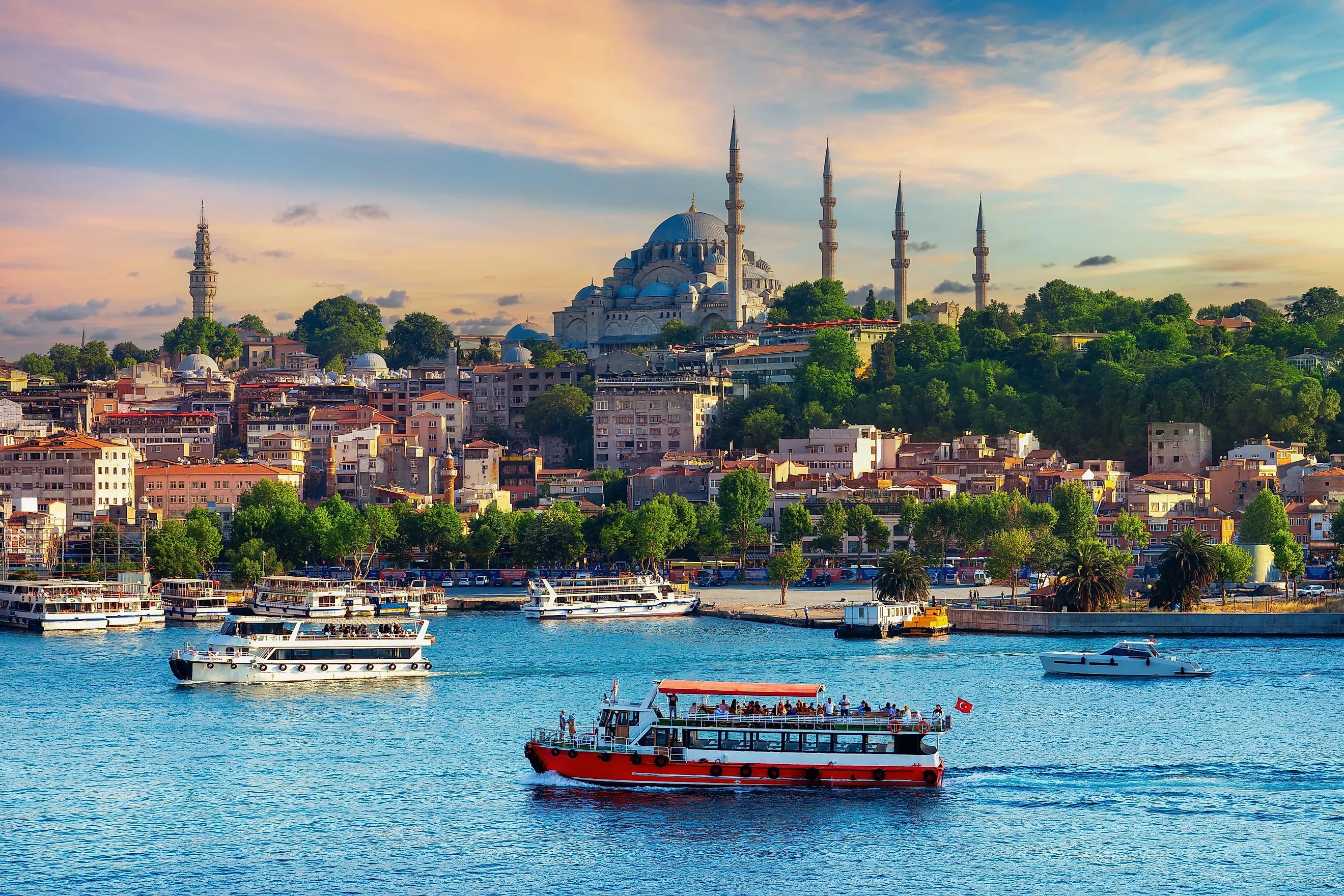
One cannot understand Istanbul without comprehending its location. Situated on the Bosphorus Strait, it sits at the crossroads of Europe and Asia and is the only sea route between the Black Sea and the Mediterranean. The city thus historically lay between major European and Asian empires, including the Habsburgs, Russians, Mamluks, and Safavids. This meant that it controlled trade between these powers and was a major strategic chokepoint in military affairs, ensuring that any state controlling Istanbul had significant global influence.
Istanbul as Constantinople

In 330 CE, Roman Emperor Constantine the Great established Constantinople, formerly Byzantium, as the new capital of the Roman Empire. Over the next 1000 years, it became the largest, wealthiest, and most culturally important city in Europe, acting as a major center of Christian theology and administration. It also preserved the knowledge of classical antiquity during the Middle Ages, ensuring that the learnings of the Greco-Roman era were not lost when the Western Roman Empire fell. Finally, Constantinople acted as a buffer against invasions from Asian empires, with the city's Theodosian Walls making it nearly impregnable. As the capital of the Roman/Byzantine Empire, Constantinople was one of the most important cities in Europe and the world.
Ottoman Rule

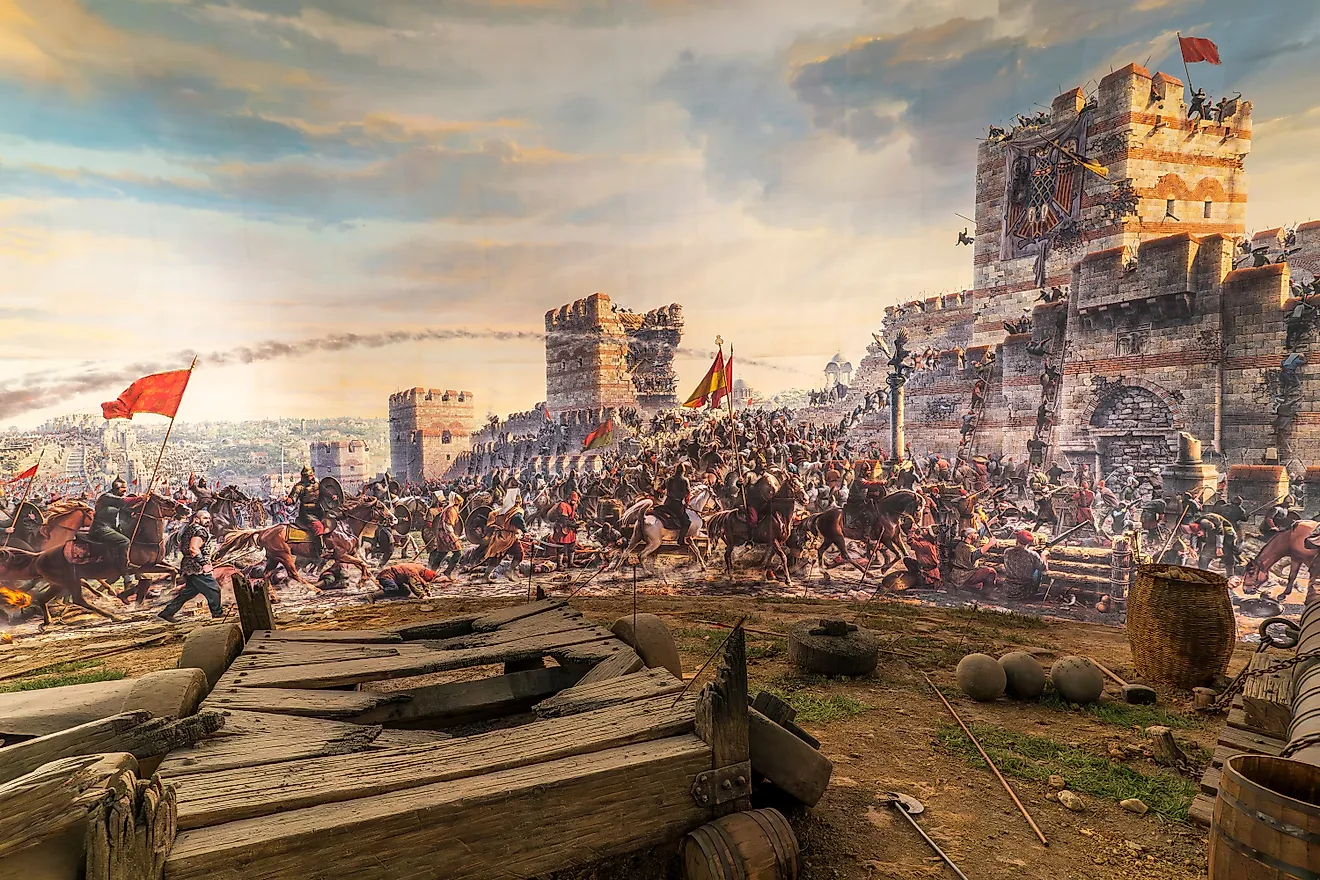
In 1453, the Ottoman Empire, under the rule of Mehmed II, took Constantinople. With this, the Byzantine Empire fell. However, rather than completely destroying the city, the Ottomans rebuilt it, renamed it (Istanbul), repopulated it, and made it the capital of their empire. The Ottomans also initiated massive public works projects, erecting mosques, markets, baths, and bridges throughout Istanbul. All these actions helped establish the city as the strategic centre of the empire.

In the early 1500s, once the Ottoman claim of being a Caliphate gained significant legitimacy after they took Mecca and Medina, Istanbul became the capital of the largest Islamic empire in the world. Nonetheless, it did not lose its importance to Christians, who, under the millet system, were allowed to practice their religion in the empire, so long as they paid a tax called the jizya. This convergence of Christian and Islamic history meant that Istanbul became a key city for two of the world's largest religions.

Istanbul also held significant governmental and military importance. As the capital, it was the location of the imperial court, the imperial council, and the sultan himself. It was also where foreign diplomats met to discuss trade agreements, treaties, and capitulations. Istanbul served as a large military base as well, being the home of the Ottoman Navy. This location at the crossroads of Europe and Asia meant that the navy had a distinct positioning advantage over other contemporary militaries. Istanbul was also the home of many Janissaries, an elite military corps tasked with protecting the sultan. As the first modern standing army, they were instrumental in the rapid territorial expansion of the Ottoman Empire. Their presence in Istanbul thus gave the city even more importance.
Importance and Legacy
Istanbul changed and evolved along with the Ottoman Empire. Whereas in the 1400s and 1500s, its military might was key, by the 1600s and 1700s, Istanbul's importance came more from its bureaucratic, administrative, and cultural influence. As the empire began to decline relative to other powers in the 18th and 19th centuries, the Ottomans enacted a series of centralising and modernising reforms known as the Tanzimat. Istanbul was subsequently further integrated into the European financial and diplomatic system. Finally, once the Ottoman Empire fell in 1923 after being defeated in World War I, its successor state, Turkey, moved its capital to the Anatolian city of Ankara. However, Istanbul, the largest and most cosmopolitan city in the country, remained significant for many reasons. Indeed, the 20th century saw it turn into a megacity, the financial hub of Turkey, and a symbol of the country's modern identity.