How Did The Ottomans Expand Into The Balkans?
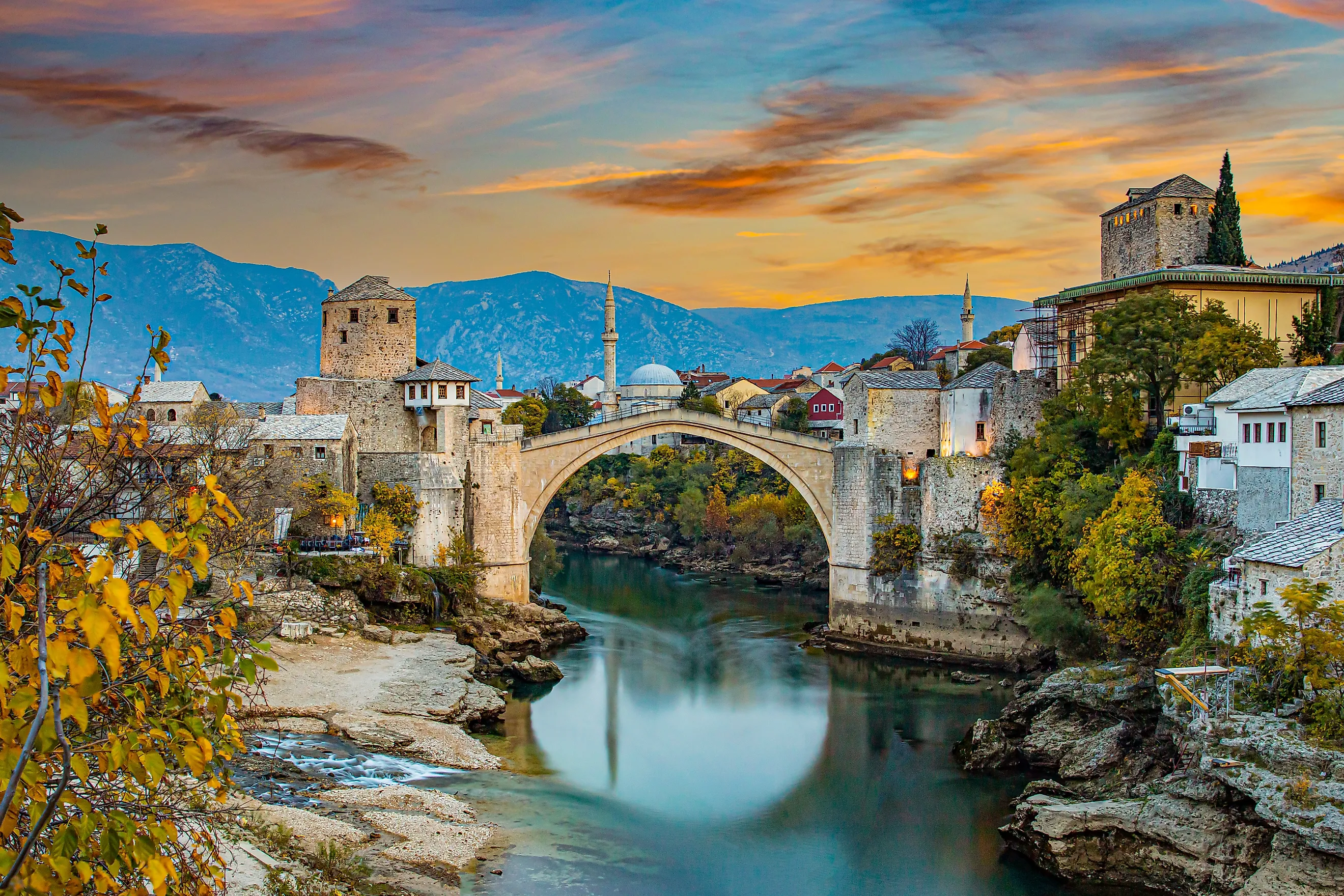
While often remembered as a Middle Eastern power, the Ottoman Empire also had a major presence in Europe. The foundation of this foothold was in the Balkans, which the Ottomans controlled for the better part of 500 years. It is therefore worth investigating how this Anatolian-based empire came to control the region. Doing so reveals key details about the nature of the Balkans in the 1300s, as well as the strengths of the Ottoman military and system of governance.
A Divided Peninsula

In the 14th century, the Balkans were divided. Whereas much of the peninsula was previously controlled by the Byzantine Empire, its increasing weakness had led to a power vacuum. Therefore, by the middle of the century, the most influential state in the region was Serbia under Stefan Dušan, who led an empire that stretched across Serbia, Macedonia, Albania, and parts of Greece. However, when Dušan died in 1355, the empire fragmented. The Second Bulgarian Empire also effectively split in 1371. Finally, Albania, after the fragmentation of the Serbian Empire, had no formal state structure at all, with rival noble families instead controlling regions of the country
All this division proved advantageous to the Ottomans. Indeed, the Battle of Kosovo in 1389 saw them defeat a coalition of Serbian and Bosnian troops. This victory further divided an already fragmented region and gave the Ottomans easier access to the Balkans.
Superior Military

Another reason why the Ottomans were able to expand into the Balkans was their superior military. At the core of this dominance were the Janissaries, an elite military corps tasked with protecting the sultan, and the first modern standing army in the Middle East and Europe. The Janissaries were formed by taking Christian boys from the Balkans and enrolling them in state-run military academies. This process ensured they had no ties to local Anatolian politics and were completely reliant on the sultan. It also meant they were better trained than other contemporary armies. When combined with the timar system, which granted land to cavalrymen in exchange for military service, the entire Ottoman army was far more effective and willing to fight than most other forces at the time.
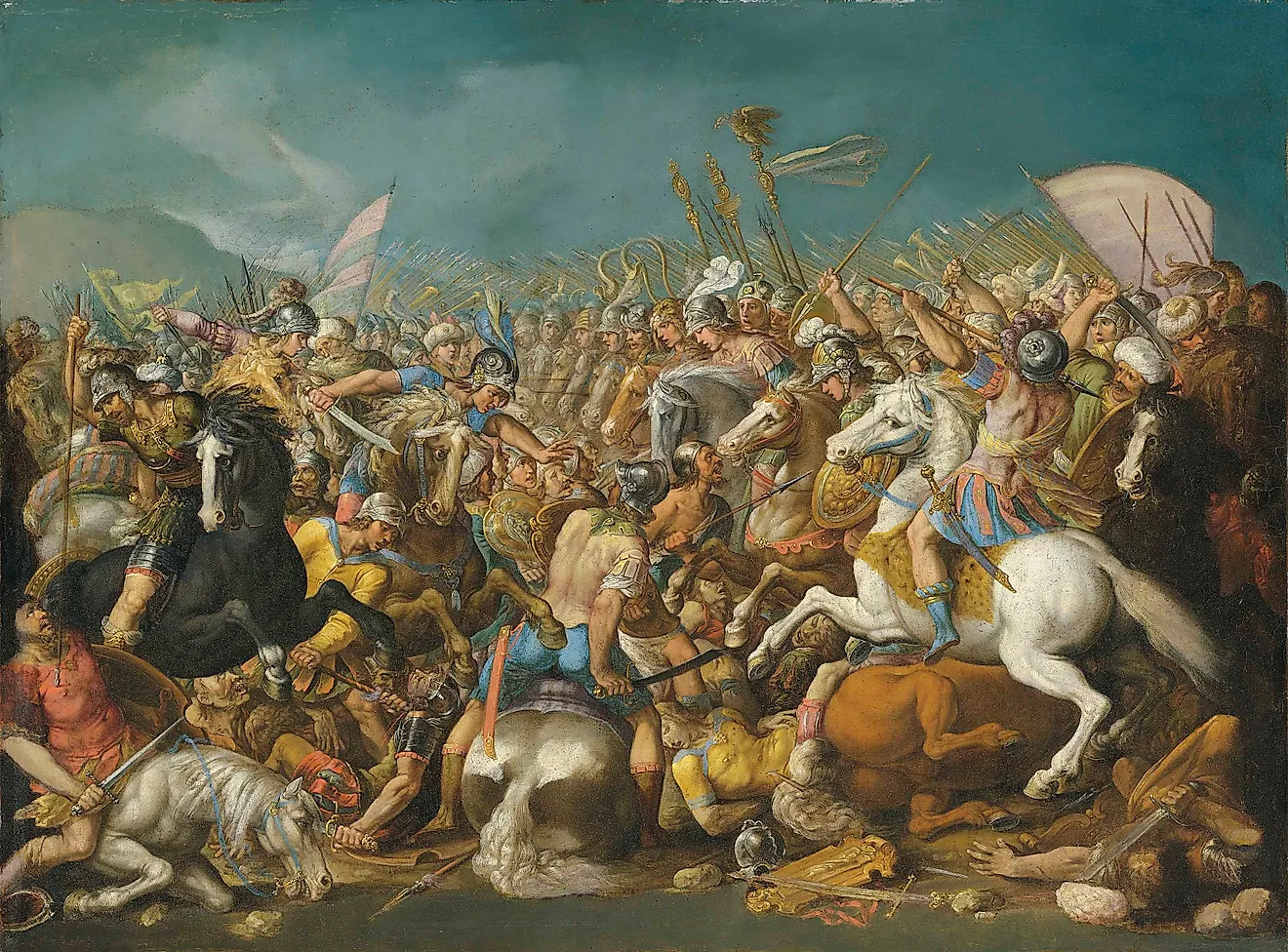
This military superiority resulted in major victories. For instance, the 1371 Battle of Maritsa saw the Ottomans crush the Serbian Empire. The aforementioned 1389 Battle of Kosovo then resulted in Serbia becoming an Ottoman vassal state. Finally, the Second Battle of Kosovo in 1448 effectively marked the end of any major resistance to Ottoman rule. Indeed, the remaining holdouts of Bosnia, Herzegovina, and Montenegro all fell under Ottoman control relatively easily to varying degrees over the next forty years.
Decentralisation and the Millet System

While taking the Balkans was an impressive display of strength, actually holding them for hundreds of years required an approach beyond military might. Therefore, rather than imposing a centralized government, the Ottomans let local leaders maintain their positions of power, so long as they swore fealty to the sultan. People's lives thus remained mostly unchanged after the Ottomans took control. This helped prevent the emergence of resistance movements, thereby allowing the Ottomans to focus on expansion elsewhere rather than fighting internal battles.
Another component of this decentralised approach can be seen in the Ottoman approach to religion. The Ottoman Empire was primarily Muslim; however, millions of Christians and some Jews lived in the Balkans. Rather than forcibly converting or expelling them, the Ottomans let them practice their religion, as long as they paid a tax called the jizya. This system of autonomy for religious minorities, known as the millet system, was yet another way the Ottomans discouraged resistance.
The Impact

As noted, by the mid-1450s, the Balkans were largely under Ottoman influence. When combined with control of the Anatolian peninsula, this meant that the Byzantine capital of Constantinople was surrounded. Therefore, in 1453, the Ottomans laid siege to the city and took it by the end of May. With this, the Byzantine Empire fell, and the Ottomans quickly established Constantinople as their own capital. The conquest of Constantinople is thus considered by many historians to have been when the Ottoman Empire emerged as a major world power.
Legacy and Importance

The Ottoman conquest of the Balkans was a crucial event in the empire's history. It demonstrated their military superiority over other contemporary powers and displayed the efficacy of their decentralised approach to governance, as well as their (relative) tolerance of religious minorities. Finally, taking the Balkans, in conjunction with Anatolia, meant that the Ottomans could overthrow the seat of Byzantine power in Constantinople and establish themselves as a dominant player in the Middle East and Europe.