Who Were The Young Turks?
The Ottoman Empire went through many forms and iterations. This was particularly true in the 1800s and 1900s, when it transitioned back and forth between an absolute monarchy and a constitutional monarchy, before finally becoming a 20th-century-style one-party dictatorial state. A reformist and revolutionary movement called the Young Turks was at the center of these changes, and they ultimately ran the empire during the last years of its existence. Therefore, the Young Turks are an indispensable part of Ottoman history.
Background

In the mid-1800s, the Ottoman Empire enacted a series of reforms. Known as the Tanzimat, these were modernising and centralising measures meant to combat a perceived decline in the empire. Legal equality for all subjects was established (previously, Jews and Christians had to pay a tax called the Jizya to practice their religion). Furthermore, political authority, which had historically been very decentralised, was concentrated in Istanbul. A modern bureaucracy was created, which thereby produced new ministries and a professional civil service. Finally, Western-style institutions were introduced, including secular courts, modern schools/military institutions, and a reformed tax collection system.
The Rise Of The Young Turks

The Tanzimat led to the creation of a loose network of reform-minded military officers, students, intellectuals, and bureaucrats, known as the Young Ottomans. They wanted even more sweeping reforms, and pressure from them resulted in the creation of the 1876 Ottoman constitution. However, immediately afterward, the Ottomans lost a war with Russia, and Sultan Abdulhamid II suspended the constitution. This convinced many Young Ottomans that the system itself was the problem.

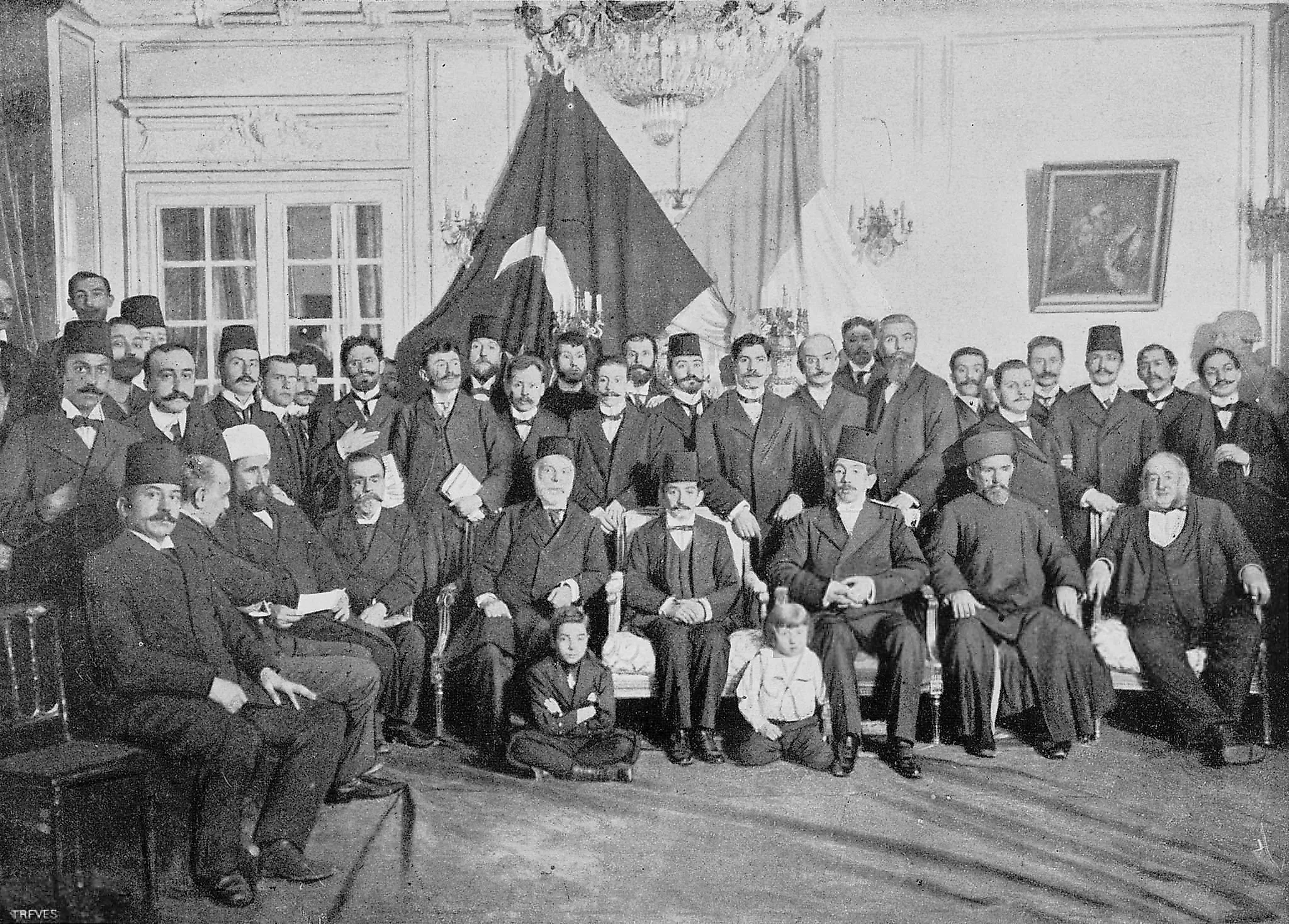
Therefore, over the next 30 years, the now renamed Young Turks evolved and coalesced, with the most important group amongst them emerging as the Committee of Union and Progress (CUP). The Young Turks had particularly strong support in the Ottoman military, who saw constant defeat on the battlefield as humiliating and indicative of the empire's decline. This support allowed the Young Turks to depose Abdulhamid II in 1908, leaving the CUP in charge.
The Three Pashas

Despite this new government, the empire continued to experience significant challenges. Political infighting was common, and the Balkan Wars of 1912-1913 saw the Ottomans lose almost all of their European territory. This eventually culminated in CUP leaders launching a coup against the government in 1913. Aftward, while the empire technically remained a constitutional democracy, authority actually rested in the hands of a triumvirate known as the Three Pashas. Talaat Pasha was the minister of the interior. He was the leader of the Three Pashas and was primarily responsible for major atrocities like the Armenian Genocide (which will be discussed in more detail shortly). Enver Pasha was the war minister and organized Ottoman alliances during World War I. Finally, Djemal Pasha was the governor of Syria and brutally repressed rising Arab nationalism.
World War I

On June 28, 1914, Archduke of Austria-Hungary Franz Ferdinand was shot. This set off a chain of events that led to the outbreak of World War I. The Ottomans, who initially did not enter the war, signed a secret treaty with Germany in August 1914. Ottoman troops then fired on Russian ports in October 1914, forcing Russia, and the Russia-allied Britain and France, to declare war on the empire. While the Ottomans did have notable moments of success throughout the conflict, their wartime experience was generally characterised by failures and atrocities. Enver Pasha led a disastrous campaign in the Caucasus against the Russians that resulted in the deaths of tens of thousands. Furthermore, Djemal Pasha brutally repressed Arab nationalism in Syria and fought, often unsuccessfully, against military incursions into the region.

Finally, while all of the Three Pashas played some role, Talaat Pasha was the chief architect of the Armenian Genocide. For years, Armenians had experienced repression in the Ottoman Empire, including several massacres throughout the 1890s. Then, when World War I began, they were falsely accused of collaborating with their Christian counterparts in Russia. When combined with an ever-growing tide of Turkish nationalism, this resulted in Taalat Pasha ordering the arrest and deportation of Armenian intellectuals in Istanbul on April 24th, 1915. He enacted the Temporary Law of Deportation on May 30th that same year, which called for the deportation of the entire Armenian population in the empire. This deportation campaign resulted in the deaths of 640,000 to 1.2 million people and was intended to destroy Armenian civilisation.
Legacy and Importance

In 1918, the Ottoman Empire (and its allies) lost World War I, and the Three Pashas fled the country (they were later all assassinated in 1921-1922). The empire subsequently broke up, with Turkey emerging as its successor state. All this means that the legacy of the Young Turks is complicated, but ultimately negative. Indeed, they successfully pushed for constitutional and modernizing reforms. However, these good acts were undone by the Armenian Genocide and the collapse of the Ottoman Empire itself.