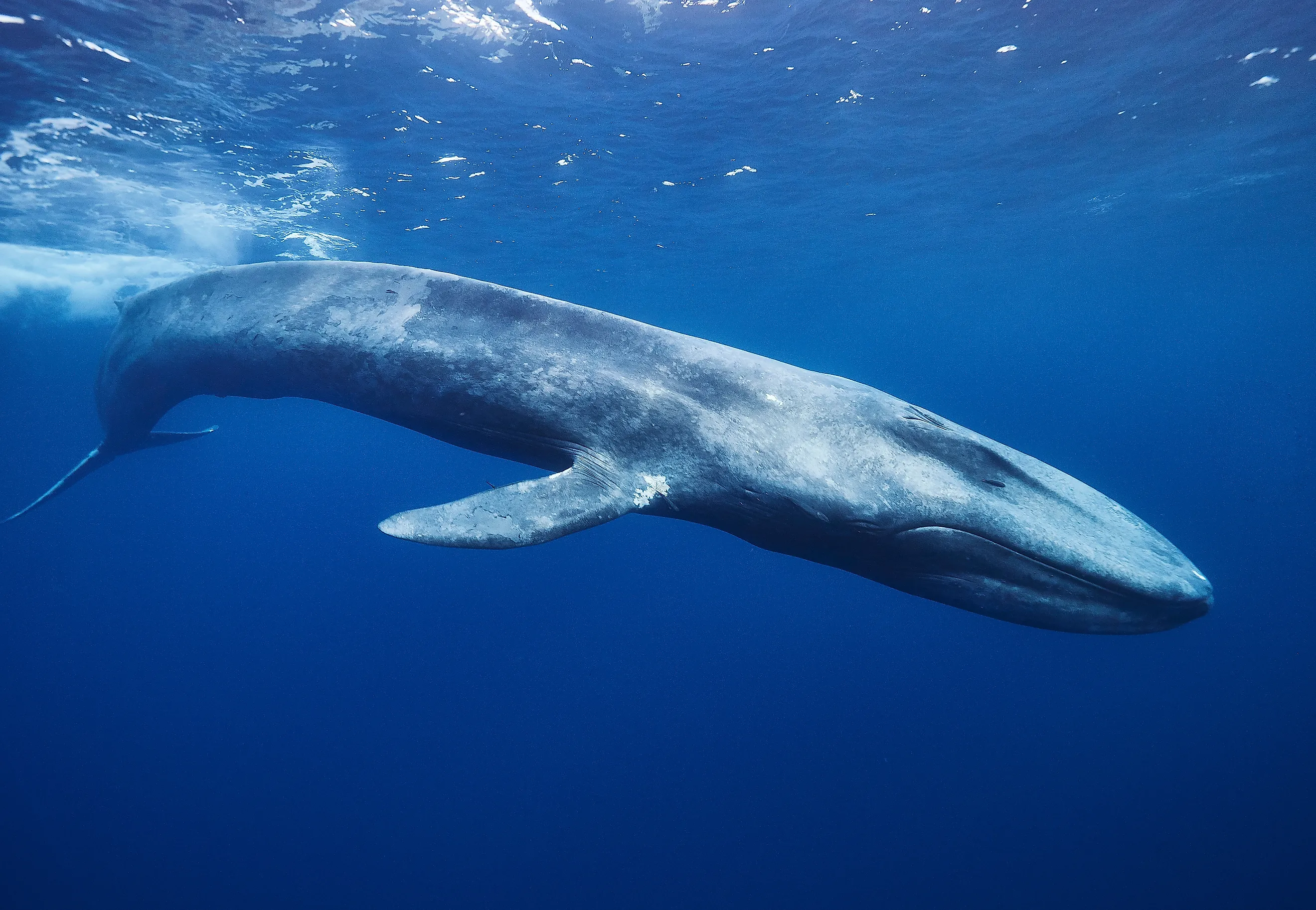
The Largest Whale Ever Seen Off The US Coast
The largest whale ever spotted off the coast of the US also happens to be the largest animal to have ever existed on Earth: the blue whale (Balaenoptera musculus). These giants of the ocean can reach up to nearly 100 feet long and weigh up to 400,000 pounds.
A newborn, on their very first day of life, weighs between 5,500 to 9,000 pounds.
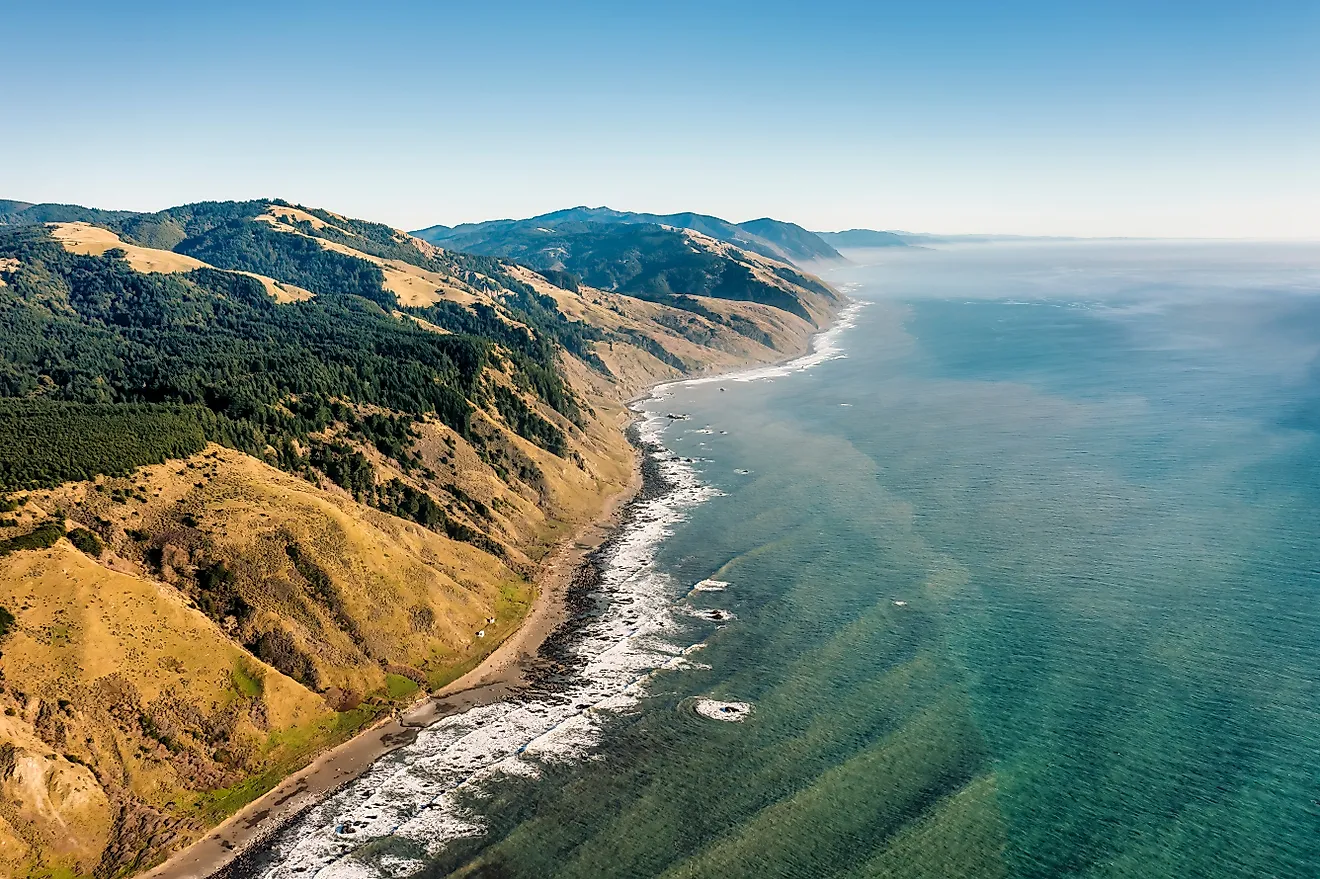
Blue whales can occur on both sides of the US coasts, but they are far more commonly seen along the coast of California. Spotting one on the Atlantic coast is much rarer, but does occasionally happen in the northeast. Off the coasts of California, hotspots include the waters of Monterey Bay, San Diego, and the Channel Islands.
Why Blue Whales Visit California Waters

California is definitely the hotspot for watching blue whales, but they aren't present year-round. These animals migrate across thousands of miles each year to reach specific breeding and feeding grounds. Off the coasts of California, they typically gather in the summer and fall months where they arrive to feed on dense swarms of krill.
While they are the largest animal to have ever existed, their diet is composed almost exclusively of these tiny, shrimp-like crustaceans. Each day, a single blue whale can consume 8,000 to 35,000 pounds, so their migration routes are intricately bound with where krill are gathering in massive numbers around the world.
Krill aggregate off the California coast in the summer and fall due to coastal upwelling, in which cold, nutrient-rich water is pushed up the continental shelf to the surface. Nutrients also flow southerly from the California current that begins in southern British Columbia. Krill feed on the microscopic bits of organic debris brought to the surface through upwelling and current, gathering in such high numbers that they attract the largest blue whale population on Earth.
Currently, in the summer and fall months, about 2,200 whales feed in these waters; a number that reflects close to 97 percent of their historical pre-whaling population. Currently, an estimated 10,000 to 25,000 blue whales persist worldwide. While global blue whale populations remain endangered, the National Oceanic and Atmospheric Administration (NOAA) Fisheries West Coast Region has noted that the California population is making a strong recovery.
Just How Big are California's Blue Whales?
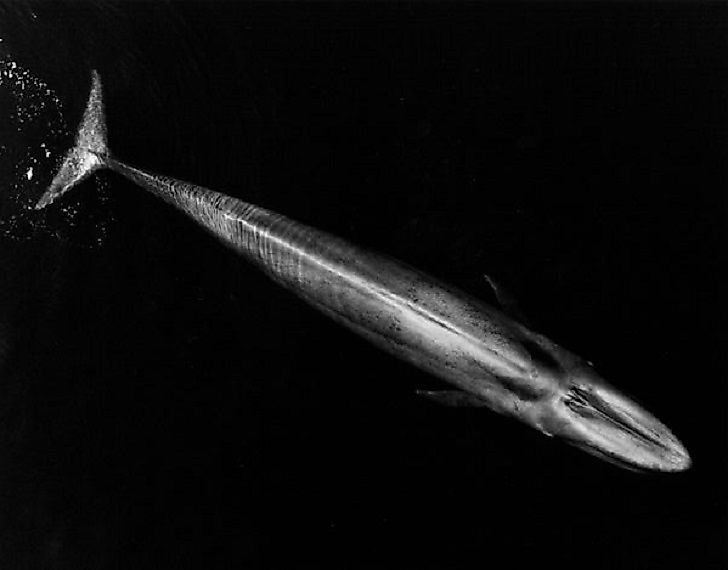
The largest blue whales on Earth can reach up to around 110 feet long, but, behemoths of this size are more often recorded in the Southern Ocean and around Antarctica. In the waters off California, it's more common to spot individuals at around 70 to 80 feet long. Still, that length is nothing to scoff at as it represents the approximate length of a Boeing 737 or three standard school buses parked end to end.
Most of the individuals seen off the coast of California are adults and older juveniles, so you can expect to see blue whales at least 50 feet long. Calves are already 19 to 26 feet long at birth, and weaned juveniles of at least one year tend to measure between 50 to 60 feet.
Blue whales typically give birth in the warmer waters south, such as the Sea of Cortez. By the time mothers and their young are migrating up to California, their offspring are typically at least one year old.
Blue Whale Hotspots in California
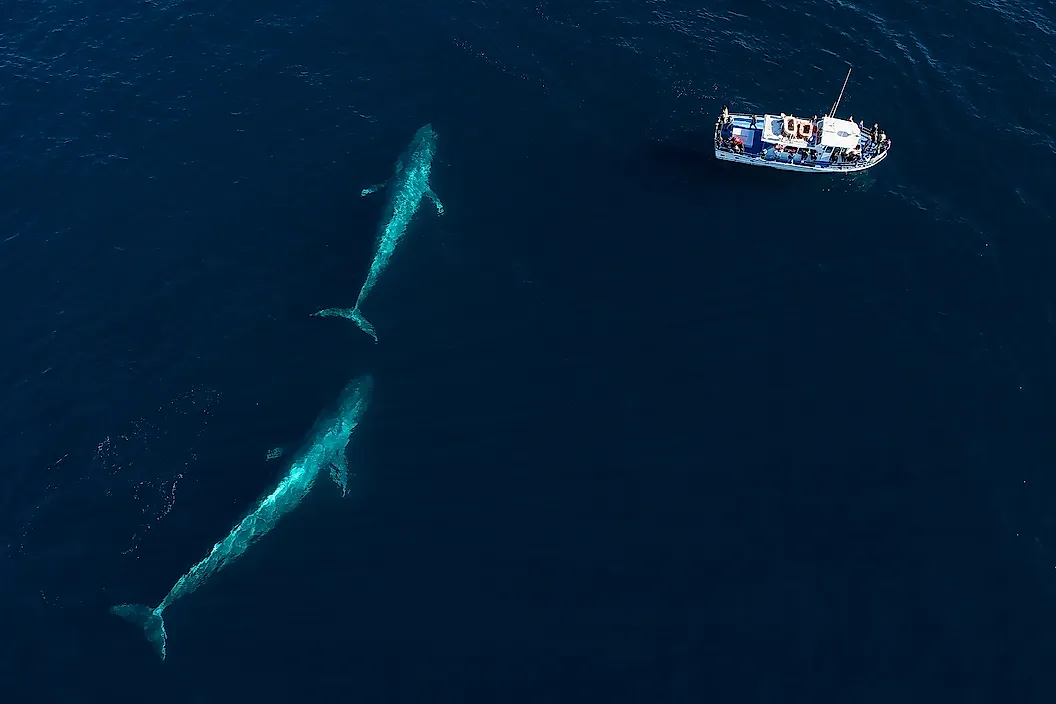
While these oceanic giants can occur anywhere along California's coast, they gather in the largest numbers in Southern California. The Channel Islands and the Santa Barbara Channel have the highest numbers, with around 2,000 individuals passing through this area each year.
A coastal species of krill called Thysanoessa spinifera concentrate here due to strong seasonal upwelling. Several whale watching tours operate daily around the channel islands during the peak season, offering visitors an excellent chance to spot a blue whale breaching.
The waters off San Diego are another area that draws significant numbers of krill and blue whales. Most individuals can be spotted more than ten miles from the coastline. Though, they sometimes can be seen as close as about two miles out off Ocean Beach or near the local submarine canyons, like La Jolla and Coronado, which are oases of marine biodiversity. Around San Diego, the best time to view blue whales is between July through mid-September.
Monterey Bay represents one of the best blue whale-viewing areas in Central California. As with the other hotspots, blue whales gather here in the hundreds to thousands to feed on krill that congregate around the edge of the deep Monterey Submarine Canyon. The underwater geography here of deep drop-offs and shelf breaks create the conditions necessary for strong upwellings of nutrients that attract krill.
How Climate Change Affects When the Whales are Arriving
According to researchers, as oceans are warming, the migration patterns of krill and blue whales seem to be responding. In a study published in Nature Scientific Reports in May of 2020, blue whales appear to be arriving in southern California earlier and earlier to adjust to warming waters.
Krill depend on upwelling that brings cold, nutrient-rich waters to the surface, and the blue whales follow the krill; therefore, as oceans are warming, krill are arriving in massive numbers off the coast of California earlier. Over the course of the study from 2008 to 2017, researchers found that blue whales arrived in Southern California a full month earlier than their previous patterns.
Spotting the Largest Whales off the US Coast
For the highest chances to see blue whales off the US Coast, visitors should consider taking a whale watching charter that heads at least a few miles off the coast. These massive animals rarely come closer than a couple of miles from the beach, so hopping on a tour boat offers the best opportunity.
Morning tours are your best bet, with calmer waters, optimal lighting, and increased feeding activity. Seeing one of these animals not only means you've witnessed the largest animal to have ever existed, but you're also viewing a population in active recovery.