How Romans Trained Their Legions
Roman legionaries would put most fitness influencers to shame. They trained for both form and function. A single soldier could march in formation, fight at long range and hand-to-hand, and haul heavy loads for miles. Then he helped build a fortified camp at the end of the day.
Citizen legionaries often served for about 20 years, while auxiliary soldiers commonly served for 25 years. Legionaries could receive a cash discharge payment or, in earlier periods, grants of land. Honorably discharged auxiliaries were commonly awarded Roman citizenship and legally recognized marriage rights.
Much of the surviving information historians have comes from a Roman military guide called De Re Militari, or "Concerning Military Affairs." The text was written around 390 CE by Flavius Vegetius Renatus, and served as a series of recommendations to the Emperor about how best to raise an army. As Vegetius compiled recommendations from earlier military traditions, his work is prescriptive rather than an infallible record of one uniform training system used throughout Roman history.
Who Were The Roman Soldiers?

The rank and file of the imperial legions consisted primarily of professional citizen soldiers, although Rome also resorted to conscription when voluntary recruitment proved insufficient. Vegetius recommended choosing recruits around puberty so they could be trained before acquiring undesirable habits, but this was a late-antique prescription rather than a clearly enforced minimum age throughout Roman history. Recruits commonly depended on local officials, patrons, or serving soldiers to help them enter the army. While letters of recommendation survive, they were not a universal requirement.
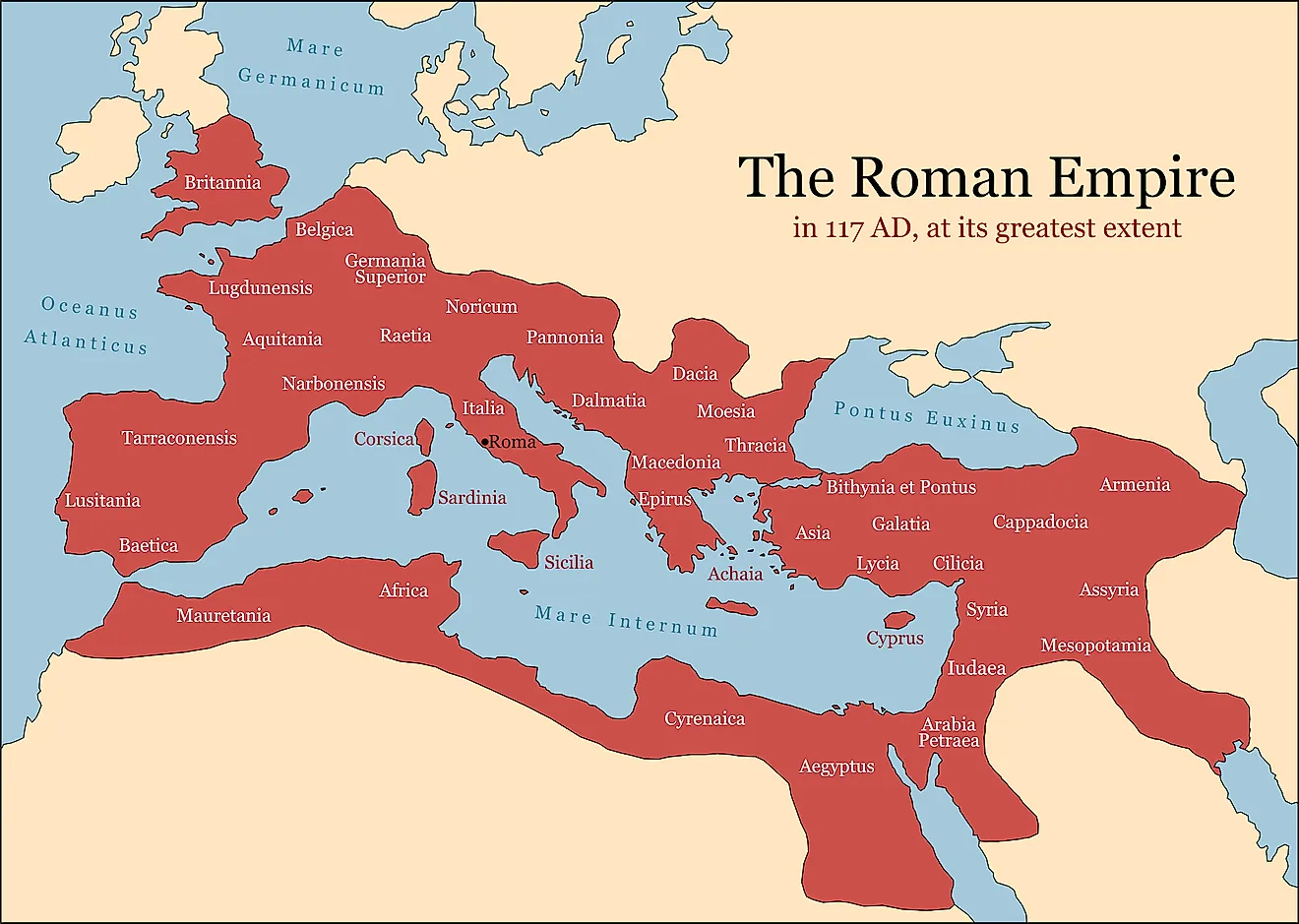
Roman legionaries and auxiliaries could serve far from their places of origin. During the early Empire, auxiliary units were frequently transferred away from the regions where they had first been raised, reducing the danger that local loyalties would compete with military obedience. Over time, however, many units recruited increasingly from the provinces in which they were stationed.
Taken as a whole, the Roman army was a very diverse institution. It mingled different peoples and, through the grant of citizenship to the auxilia, folded conquered populations into Rome's identity. This made the army a powerful tool of assimilation. It helped maintain the empire's stability even as Rome expanded and conquered new groups of people.
Recruitment

When selecting soldiers, the Romans looked for certain qualities. Height was not necessarily important to the Roman legions, though it was considered. Instead, the Roman legions sought out traits that they associated with strength. Generally, Roman military instructors preferred men of muscular builds, with broad shoulders, small waists, and long muscular arms. They also considered the way men held their heads up, and looked for those with "lively eyes."
It was important to the Romans, or at least to Vegetius, that recruits exhibited qualities that showed they had not just the strength to live a military lifestyle, but also the intelligence to learn the necessary skills and tactics employed by the legion. To that end, honor was a heavy consideration. Men who had a strong sense of honor were believed to be more devoted to their duty and less likely to resort to cowardice in the face of danger.
The economic and social background of a recruit was also taken into consideration. Men from rural areas were preferred, as years of hard labor working on farms prepared them for long marches, digging ditches, and hot weather. There was also a belief that men from cities were too accustomed to the pleasures of life found in urban areas, and thus would be more reluctant to put themselves in danger of death. Vegetius writes that, "the less a man is acquainted with the sweets of life, the less reason he has to be afraid of death."
A man's family and occupation were also markers of honor and strength. The legion preferred recruits who worked as smiths, butchers, hunters, or farmers, rather than fishermen, weavers, or men who worked in professions that he said, "more properly belong to women." Once selected for service, Roman men were put in a probationary period and were tested to ensure they possessed enough strength and energy to serve, enough intelligence to learn how to use Roman weaponry, and enough courage not to abandon their position in the face of danger. It was during this period that they underwent their initial physical conditioning. Because legionaries were not recruited only from the countryside, conditioning was the first step of a recruit's training. Prospective legionaries were made to run over long distances, usually in the sun and the dust. To build up their strength, recruits had to dig trenches and ditches, and march with heavy burdens. Trainees also had to become accustomed to the quality and quantity of military rations, and to live outside and in tents, as they would in a camp.
When they were finished with their initial conditioning, recruits were given a permanent mark, perhaps with a branding iron or in the form of a tattoo, which signified their membership in the legions, and made it easy to organize and identify soldiers. The recruits then began their training.
Left, Right, Left

Vegetius prescribed a regular march of 20 Roman miles, about 18.4 modern miles, in five summer hours and a faster march of 24 Roman miles, or about 22.1 modern miles, in the same period. Elsewhere, he required recruits to practice carrying at least 60 Roman pounds, roughly 43 modern pounds, in addition to their weapons.
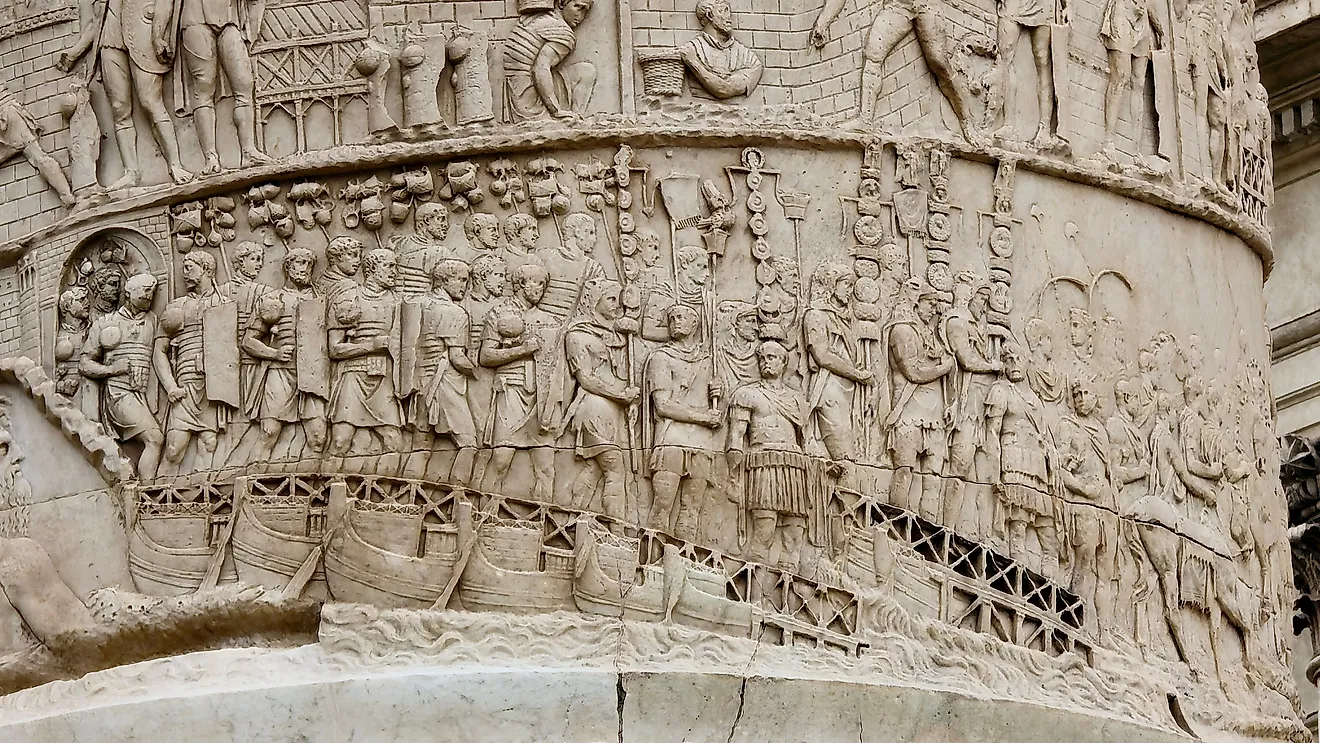
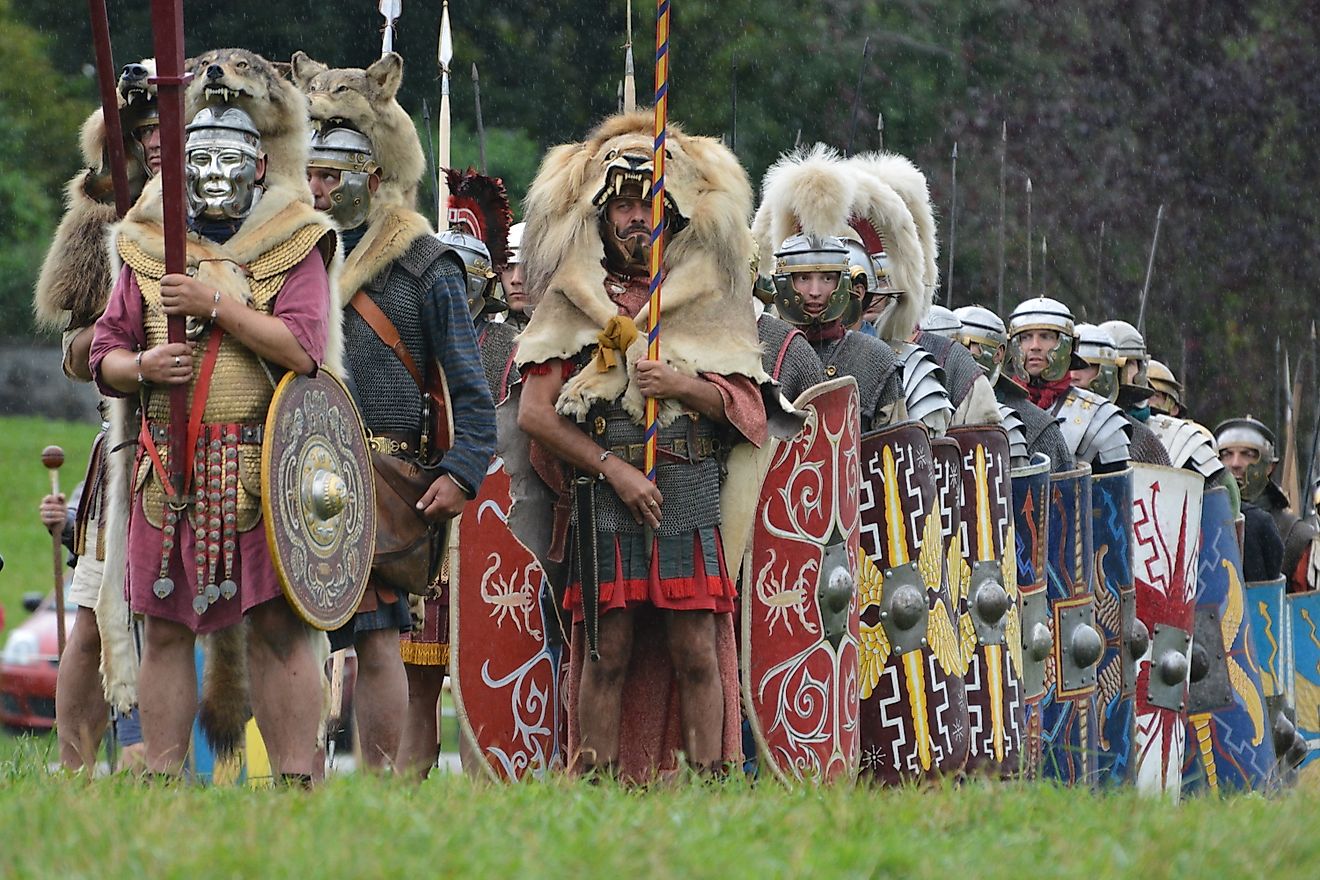
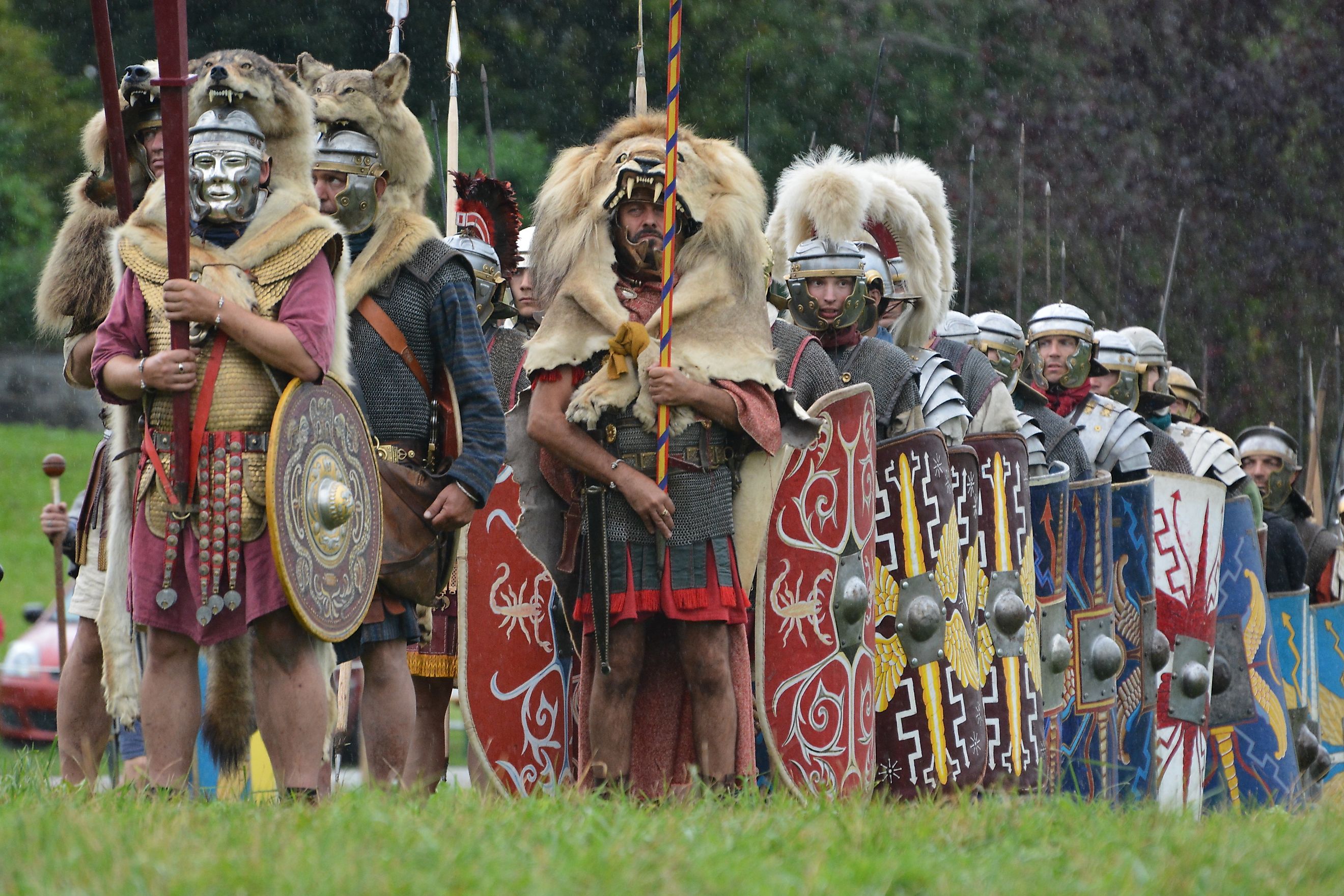
Because the Roman legions relied on battle lines and specific military formations, the ability of soldiers to move together at a consistent speed was indispensable. Soldiers who broke formation ran the risk of leaving their flanks exposed, breaking a defensive shield wall, or being cut off from their comrades. Recruits would be continually drilled on how to move as a formation. It was vital that they be able to march close enough to one another that enemies could not penetrate their lines, while also maintaining enough distance to allow proper movements. Soldiers were trained to march and fight in a variety of formations, and were drilled in the rapid transition between them. Legionaries had to quickly switch between formations one, two, or four men deep, plus the triangular wedge and circular orb formations, used when Roman lines were broken. Roman legionaries would also have to learn various maneuvers, like the famous testudo, or tortoise formation. When forming the testudo, legionaries made a box-like shape, holding their shields out on the front, top, and sides, and stabbing out from between the gaps. This allowed legionaries to advance on enemies armed with projectile weapons, closing the distance before striking. Maneuvers like these required perfect coordination, each legionary a part of the greater unit.
Physical Fitness For Roman Soldiers

Instructors also made sure their trainees were capable of running and leaping, which were critical when legionaries had to serve as runners or scouts, or had to bypass enemy fortifications, charge enemy lines, or intimidate enemy forces. Wooden horses were also set up, and recruits were then trained to rapidly vault over or onto them, first without equipment, then with their armaments. This helped make the Roman legionary even more adaptable, skilled in mounting a horse or climbing over small obstacles. Every Roman soldier was also taught to swim. This practice ensured armies could cross otherwise impassable rivers, prevented retreating armies from being cut off with their backs to the water, and made certain that soldiers would be prepared in the case of sudden floods.
Throughout their years of service, fully trained legionaries would still be forced to go on three long marches every month, about 18.4 miles each, carrying with them all of their equipment. The legionaries were expected to march at varying paces, and their commanders would take them through different types of terrain, which helped keep the soldiers in shape and prepared for any situation they might find themselves in. The regular practice of marching also ensured that legionaries who weren't in active combat still had a chance to practice staying in formation and moving as a unit. Recruits could expect drills twice a day, while veteran soldiers typically drilled once per day, regularly practicing group maneuvers, fighting, and carrying heavy gear.
Camping Out

Another key skill was the ability to rapidly construct a makeshift encampment. Choosing a location that was on high enough ground to avoid archers firing from a higher vantage point, and which would not be endangered by flooding, were a few considerations. Ensuring the camp was large enough to accommodate the size of the army without spreading the force too thin, was another. Once a spot was selected, legionaries were trained to then dig wide and deep ditches or trenches, raising mounds of dirt on the nearer side on top of which wooden spikes or palisades would be affixed. This prevented an enemy force from rushing in and catching the men of the legion off guard, and gave them a fortified place to which they could retreat in the event of a battle gone wrong. The ditches, walls, and wooden spikes also prevented enemy cavalry from sweeping through Roman camps, overrunning unprepared legionaries.
Weapons Training

Hand in hand with Roman discipline was their martial skill. Legionaries were instructed in the use of various weapons. Their primary armament was the gladius, and later the spatha, both of which were broad swords used when lines of legionaries closed in on their foes. To build basic skills with their weapons, recruits were equipped with wooden swords and shields and taught to strike at a wooden post six feet in height. The soldiers would be drilled to attack certain areas of the post corresponding to the head, sides, or limbs of a real soldier, using the tip and sides of the sword. They also learned how to advance or retire effectively. The wooden gear the recruits trained with at the post was twice the weight of the actual equipment they would use in combat. Because of this, when legionaries transitioned to the use of real arms, they were able to put increased strength into each attack and parry. Once they had demonstrated adequate skill, they moved on to paired duels in a drill called armatura. According to Vegetius, the armatura was considered to be the gold standard of training for a legionary. It was here that they truly learned how to move in combat, when and how to attack and defend, and learned firsthand what fighting was really like.
Legionaries were trained to stab with their swords, rather than to slash or cut. This was because a slash would often glance off an enemy, merely grazing them, or being reduced in lethality by the protection of flesh and bone. A stabbing attack, meanwhile, would penetrate a few inches into an enemy and was generally more lethal. Stabbing also had the added benefit of allowing a legionary to attack without exposing their arm or side. Thrusts were also less telegraphed, generally hitting their targets before they could perceive what was happening, whereas the clear slashing movement of a cutting attack was easier to predict. Legionaries were taught to stab over their shields, keeping their defenses up, and then to retreat down behind it, ensuring a soldier's guard was sturdy and effective even when on the offensive.
Other Roman Weapons And Armor

Besides their main weapons, most legionaries carried into battle two spears, called pila, which were thrown at distant enemies before Roman soldiers charged and drew their swords. Roman recruits were taught how to throw these pila from a distance. Instructors carefully taught them the proper technique to throw a javelin, making recruits throw their spears at the same target over and over until they understood the proper aim and force behind a throw. As in other training exercises, recruits were trained to throw javelins with heavier spears than what they would use in real combat, which helped build strength and muscle. Some legionaries were further equipped with five lead-weighted darts carried in the shield, which could be thrown by legionaries. Recruits were additionally taught to throw rocks and to shoot them from slings. The terror caused by the concussive force inflicted by these stones, as soldiers fell without huge blood loss, and the ease with which soldiers could find new ammunition by simply scavenging on the ground, made slings an incredibly useful tool.
Vegetius also recommended a portion of the legion would be trained to use a bow, around a third or a fourth of the recruits. Instructors would teach prospective archers the proper position to hold a bow, how to draw back a bowstring, how to steady one's hand, and how to take aim both on foot or upon a horse.
Discipline

The Romans were strict disciplinarians, and punished soldiers harshly for laziness or misconduct. They believed that the best way to truly impress an enemy force was to show discipline in the way they fought, rather than to show off lavish wealth. The Roman legion was above all adaptable, with tactics formed around the unit rather than the individual. Because of the precise movements needed to properly execute these formations and maneuvers, and because maintaining cohesion in the face of an enemy requires it, discipline was instilled early on in a recruit's training.
Roman soldiers were subject to varying military laws. Trainees faced strict punishments for failure or wrongdoing. Minor offenses like disorderly conduct or insubordination might warrant wage garnishment, demotion, or even corporal punishment, though the punishment varied according to the offense, military status, and time period.
Severe punishments were reserved for more major offenses, like disobeying an order in combat, treason, desertion, or espionage. The consequence for such failures could be as severe as execution, often by the sword or crucifixion upon the cross.
Perhaps most famously, the Roman military also made use of group punishments. When a whole unit fled from combat for instance, they could in special instances be made to endure a punishment known as decimation, from the Latin word decimus, meaning tenth. A unit subject to decimation would see one in 10 of its soldiers be chosen at random to be executed by the rest of the unit.
Through the use of group punishments, fear was used as a tool that reinforced a legionary's commitment to his comrades and to group cohesion. Understanding that a failure of character could mean the death of one's brothers in arms made a legionary think twice about fleeing, and strict enforcement further reinforced a legionary's respect for the power of their commanding officers.
When In Rome
It was this combination of discipline, adaptability, and martial skill that made the Roman legions such an effective fighting force. From strict standards, the best men were chosen to undergo vigorous physical conditioning and training. Only then, having learned to work as a unit, could the hopefuls train with the tools of war. With strict instructors, brutal punishments, and relentless drills, those recruits were transformed into career soldiers capable of conquering the Mediterranean world.