How Barbarian Soldiers Took Over The Roman Army
By the fifth century CE, much of the Western Roman Empire's military strength came from soldiers the Romans would once have called "barbarians." Goths, Franks, Huns, and other peoples from beyond the frontiers fought in Roman armies, while men of foreign ancestry rose to the highest commands. Rome had used noncitizen allies for centuries, but repeated invasions, civil wars, population losses, and the difficulty of defending a huge frontier pushed emperors toward heavier reliance on outside manpower. By the fifth century, these "savages" had become essential to the Western Empire.
Rome Had Always Used Non-Roman Soldiers

Even during the Roman Republic, Rome did not fight alone. Citizen legions formed the core of its armies, but Italian allies known as the socii regularly supplied large numbers of infantry and cavalry. By the Punic Wars, allied troops could equal or exceed the number of Roman citizens in a consular army. After the Social War of 91 to 87 BCE, most free Italians gained Roman citizenship, and the old division between Roman legions and Italian allies largely disappeared.
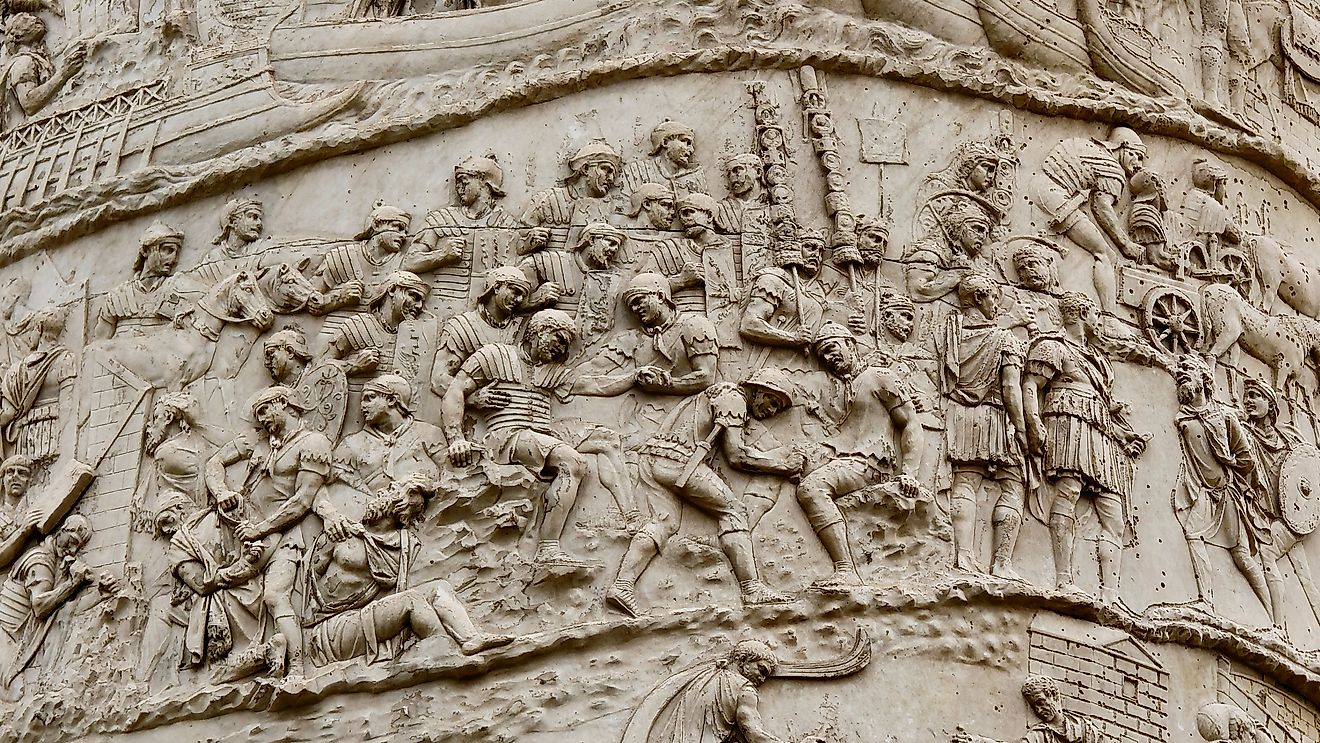
Under the emperors, the legions were generally recruited from Roman citizens, while auxiliary units drew heavily from noncitizen provincials. Men from Gaul, Britain, Thrace, North Africa, Syria, and elsewhere served as cavalry, archers, and infantry. By the early first century CE, the number of auxiliaries was already roughly equal to the number of legionaries. Many auxiliary soldiers received Roman citizenship after completing their service, helping integrate them and their families into imperial society.
The auxiliaries still belonged to the regular Roman military structure. They served in organized units, received Roman pay, and answered to Roman command. Rome had therefore relied on provincial manpower long before the late empire. Later centuries brought greater recruitment from beyond the frontier and a growing tendency for some groups to serve together under their own commanders.
The Third-Century Crisis Changed The Army

That change accelerated after the Crisis of the Third Century. The crisis began in 235 CE when Emperor Severus Alexander was murdered by his own soldiers. Over the next half century, more than 20 emperors rose and fell as civil wars, invasions, economic problems, and disease battered the empire. Germanic groups pressed across the Rhine and Danube, while the Sasanian Persian Empire threatened Rome in the east. The Plague of Cyprian, beginning around 249 or 250 CE, added another strain on the population and military.
The empire briefly fractured into three major political blocs before Aurelian reunited it. Diocletian came to power in 284 CE and reorganized the state and military. The old citizen-versus-noncitizen distinction had also lost much of its importance because Emperor Caracalla had granted Roman citizenship to most free inhabitants of the empire in 212 CE.
During the fourth century, Roman armies increasingly recruited men from peoples living along or beyond the frontiers. Some entered individually as regular soldiers. Others arrived in larger groups after defeat, migration, or treaty agreements. Frankish, Gothic, and other Germanic officers could rise high in Roman service. Constant civil wars and frontier emergencies made any reliable source of trained manpower valuable, and emperors repeatedly drew on groups that had once been enemies.
Adrianople And The Rise Of The Federates

The turning point came in the late fourth century. In 376 CE, large numbers of Goths crossed the Danube into Roman territory while fleeing the Huns. Roman officials mishandled their settlement, and the Goths rebelled. Two years later, Emperor Valens confronted them near Adrianople. The Roman army suffered a catastrophic defeat, and Valens was killed.
Emperor Theodosius I eventually reached a settlement with the Goths in 382 CE. The exact terms are uncertain, but the agreement allowed substantial numbers of Goths to remain inside the empire while providing troops for Roman campaigns. Rome had made treaties with outside peoples for centuries, and the Latin word foederati came from foedus, meaning treaty. These late fourth-century arrangements became especially important because sizable groups could preserve their own leadership while fighting for the empire.
Gothic forces fought for Theodosius, including in the civil war that ended at the Battle of the Frigidus in 394 CE. Alaric emerged as the leader of a major Gothic force after Theodosius died the following year. He repeatedly tried to secure land, supplies, and an official military position from the Roman government, using force when negotiations failed.
The Roman side could be just as complicated. Stilicho, the leading general of the Western Empire from 395 to 408 CE, was the son of a Vandal father and had risen within the Roman system. He fought Alaric, negotiated with him, and at times sought to use his forces for Roman purposes. His career shows how blurred the old categories had become. A commander with barbarian ancestry could defend Rome against a Gothic leader who had himself served in Roman armies.
The Fifth-Century Army Depended On Them

By the fifth century, the Western Empire increasingly depended on federate troops to defend large areas. Roman generals built coalitions from whatever forces were available, including groups that had fought Rome in earlier decades.
The clearest example came in 451 CE, when Attila the Hun invaded Gaul. The Roman general Flavius Aetius assembled a coalition that included Romans, Visigoths, Franks, and Alans. The Visigoths under King Theodoric I formed a major part of the army and suffered heavily at the Battle of the Catalaunian Plains, where Theodoric was killed. The coalition stopped Attila's campaign in Gaul and showed how much Roman defense now depended on peoples with their own rulers and political interests.
The balance shifted further as the Western government weakened. Federate groups expected land, money, or political concessions in return for service, while Roman officials had fewer resources with which to bargain. In 476 CE, Odoacer led troops in Italy who demanded land from the government. When their demands were rejected, they revolted, killed the Roman commander Orestes, and deposed his young son, Emperor Romulus Augustulus. Odoacer then ruled Italy himself.
Impact And Legacy

While inaccurate to say that "barbarian" soldiers took over the Roman army, they did, in fact, gain significant influence in it. As the Roman state faced existential threats, this necessitated more manpower to defend it. The Foederati helped achieve this goal, and the Romans signed treaties with non-Roman tribes to procure their military support. Doing so was a double-edged sword. Some barbarian leaders, like Alaric, had their own political and military ambitions. At the same time, non-Roman troops were essential in defending the empire, as exemplified by the Battle of the Catalaunian Plains. It's therefore important not to caricature so-called barbarians. They had a complex relationship with the Roman army that was both adversarial and helpful.