What Were The Roman Army’s Most Unlikely Victories?
The Roman army was one of the most feared fighting forces of the ancient world. A major component of this reputation came from its ability to win battles against all odds. Despite being outnumbered, poorly positioned, or unprepared for a particular type of warfare, the Romans often prevailed through adaptability, cunning, or sheer willpower. The Punic Wars, Caesar's civil war, and the last stand against Attila the Hun each turned on engagements Rome was not expected to win.
The First Punic War (264 to 241 BCE)

In the mid-200s BCE, two powers dominated the western Mediterranean: the Roman Republic and Carthage. To achieve hegemony, both states set their sights on the island of Sicily. Located between Italy and North Africa, controlling it had enormous strategic and economic implications. Crucially, however, the Roman Republic was primarily a land power, whereas Carthage dominated the seas with its navy. Many, therefore, assumed that it would be difficult for Rome to conquer Sicily.
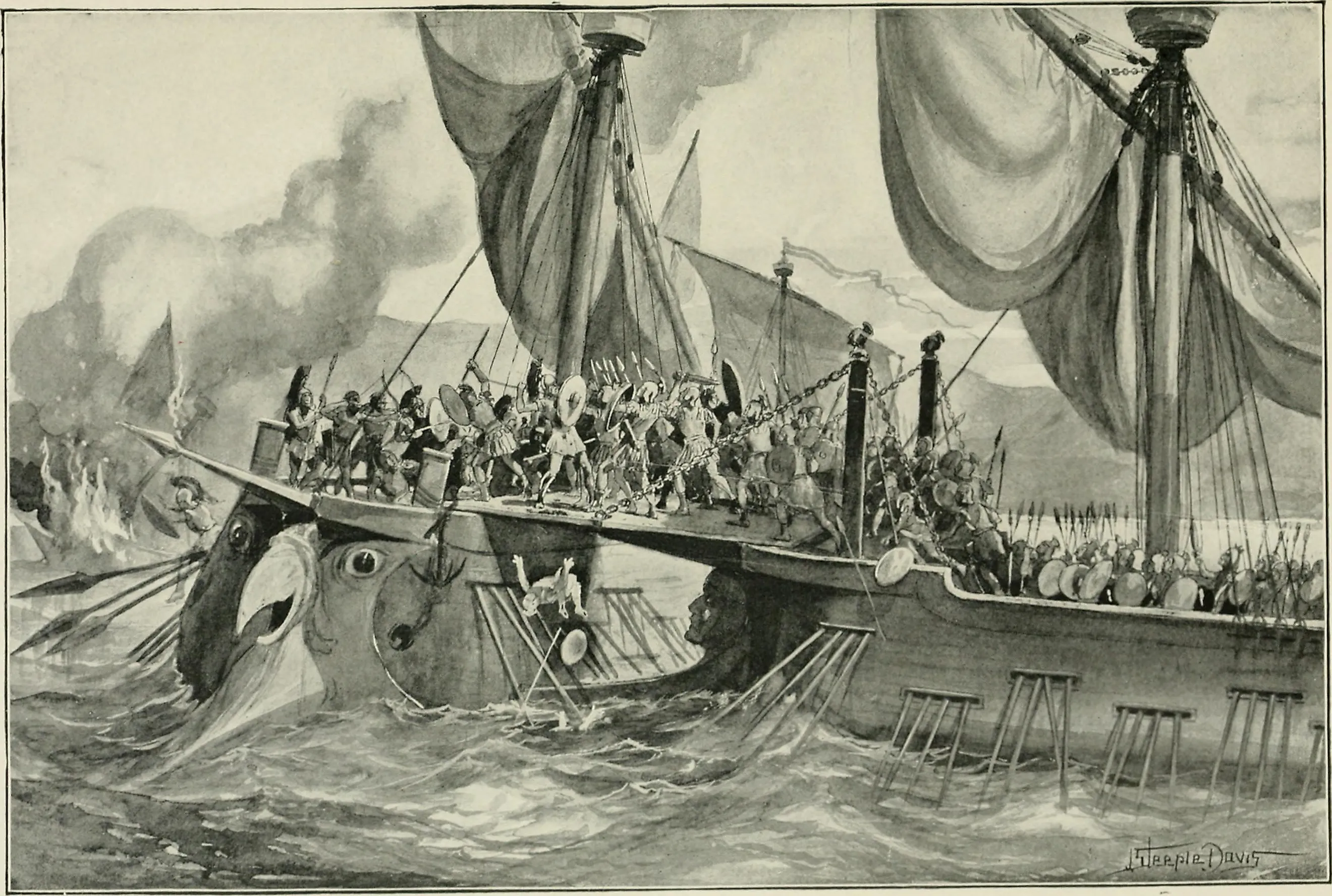
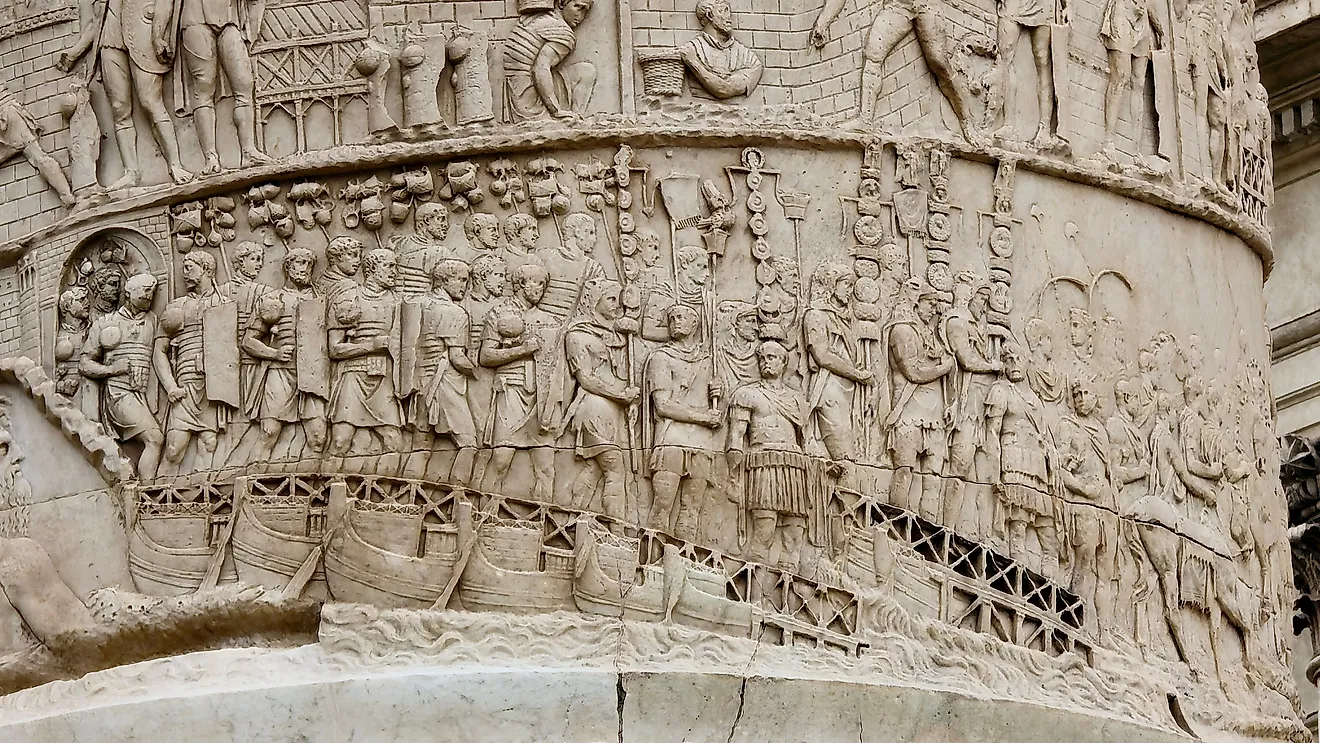
This is where the famed adaptability came in. Realizing that they needed to contend with Carthage's seapower, the Romans rapidly built up their navy. They also leveraged their land superiority by creating the corvus, a boarding bridge that could be dropped onto enemy ships. In doing so, they could effectively turn naval battles into infantry battles. These measures produced Rome's first naval victory in 260 BCE at the Battle of Mylae, which came only months after a Carthaginian squadron had captured an entire Roman flotilla off the Lipari Islands. The next twenty years saw momentum shift back and forth before Rome ultimately won the war in 241 BCE.
The Second Punic War (218 to 201 BCE)

Humiliated and enraged by the loss of the First Punic War, the Carthaginian military and political leadership spent the next twenty years plotting revenge. These plans came to fruition in 218 BCE when Hannibal Barca marched his army over the Alps and invaded Italy from the north. This daring maneuver completely caught the Romans off guard. Unprepared and shell-shocked, they lost battle after battle. The most disastrous moment was the Battle of Cannae in 216 BCE, when between 50,000 and 70,000 Romans were killed out of an initial fighting force of between 80,000 and 86,000.

Something needed to change. Roman society was heavily militaristic and took pride in meeting one's enemy in open combat. However, if the army continued to do so, there would soon be no one left. Therefore, dictator Quintus Fabius Maximus Verrucosus devised a new approach based on avoiding major battles and instead winning via attrition and guerrilla warfare. This highly controversial strategy was successful. Carthage eventually ran out of men and resources, and the Romans were able to invade North Africa. Hannibal was ultimately defeated at the Battle of Zama in 202 BCE.
The Battle Of Munda (45 BCE)

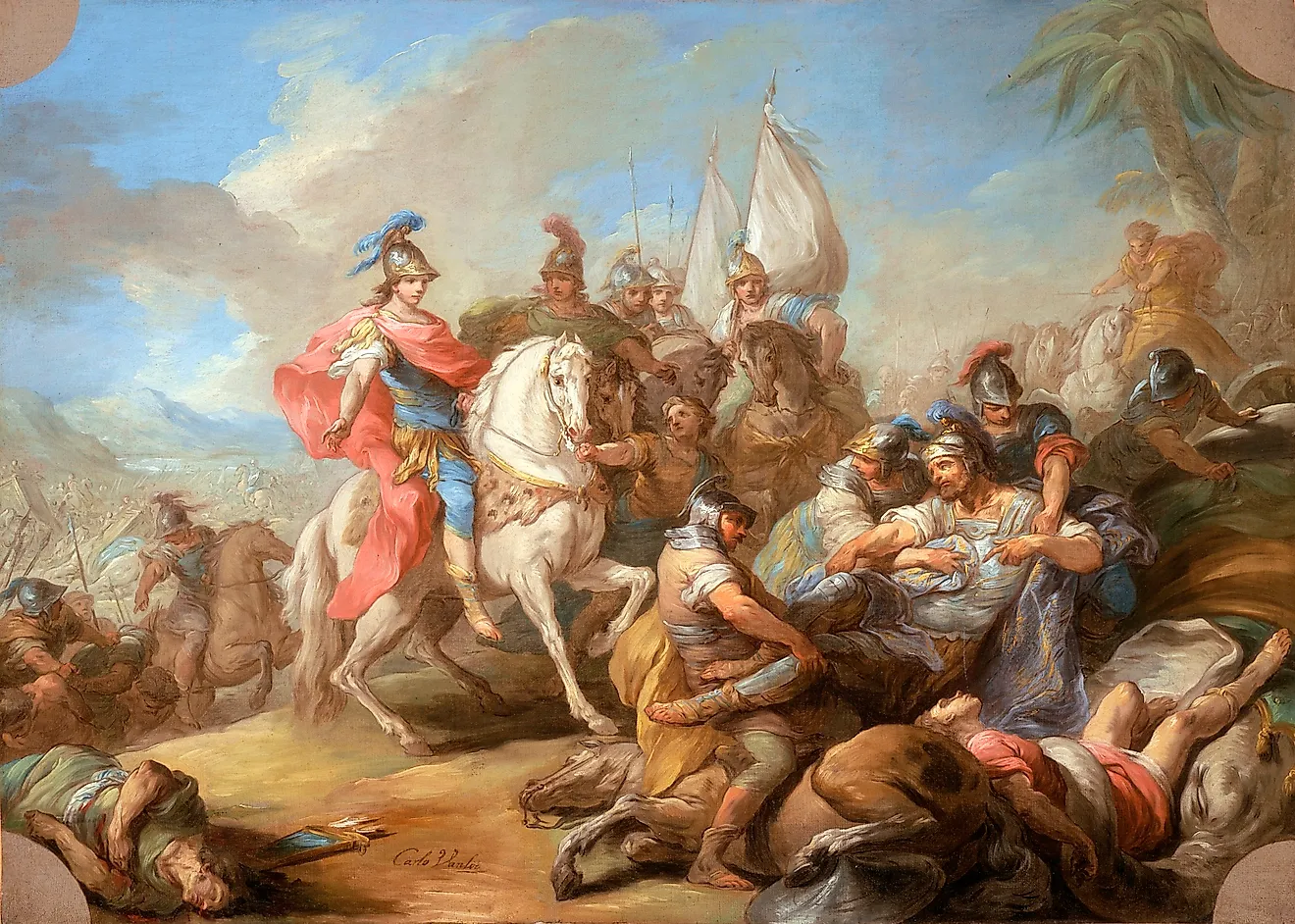
In 49 BCE, Roman general Julius Caesar crossed the Rubicon River with his army, effectively declaring war on the Senate and its ally, Pompey the Great. While Pompey was killed a year later in Egypt, his forces continued to fight Caesar. The final engagement of the civil war came in 45 BCE with the Battle of Munda. Fought in Spain, Caesar was heavily outnumbered. He had about 8 legions on his side, whereas the Pompeians had around 13. This discrepancy was so great that Caesar almost decided not to fight.
Once the battle eventually began, it didn't go according to plan. Caesar's left and center flanks faced heavy resistance, and the Pompeians fought with the ferocity of men who knew that defeat meant the end of their cause. This forced Caesar to take dramatic measures. The ancient sources assert that he seized a shield and went to the front lines. Although this story is likely exaggerated for dramatic effect, Caesar's taking charge to rally his troops has precedent based on early moments in his career.

Whatever Caesar did, it worked, and his army began to make progress on the Pompeian right flank. Eventually, it broke through. The Pompeians attempted to retreat to their camp, but Caesar's troops stormed it, ending the battle. The ancient sources claim that 30,000 Pompeian troops were killed, but this, too, is probably an exaggeration. Regardless, the death toll was very high for both sides. In fact, Caesar later claimed that the Battle of Munda was the most difficult of his career. It was nevertheless worth it. He had now won the civil war, and the following year, he was named dictator of Rome for life.
The Battle Of The Catalaunian Plains (451 CE)

By the 5th century CE, the Western Roman Empire was a mess. Territorial overreach, barbarian invasions, economic dysfunction, and political instability were some of its many issues. These problems made the rise of Attila the Hun an existential threat. The leader of a Hunnic Empire centered in Central and Eastern Europe, he transformed the confederation into one of the world's most powerful military forces. The Hunnic threat became even more pronounced when Attila invaded the Roman province of Gaul in 451 CE.
Commander Aetius knew that the Romans alone couldn't defeat the Huns. While it remained formidable, the Western Roman army had declined somewhat over the previous centuries. Therefore, Aetius assembled a coalition of allied peoples settled inside the empire. The Visigoths, Franks, and Burgundians supplied the Germanic contingents, while the Alans, an Iranian-speaking steppe people, fought alongside them. Together, they met Attila for battle on the Catalaunian Plains.

Due to the limited number of sources, it's unclear exactly what happened in the battle. Visigothic King Theodoric I was killed, and both sides suffered enormous losses. The outcome also wasn't cut and dry. The Hunnic army survived, as did Attila. Regardless, the coalition forces prevented the invasion. Attila's invasion of Italy the next year also failed, and he died soon afterward. In short, the semi-victory at the Battle of the Catalaunian Plains demonstrated that the Western Roman Empire still had an army to be reckoned with.
Impact And Legacy
The Roman army experienced its share of unlikely victories. Both the First and Second Punic Wars demonstrated its ability to adapt to changing circumstances and threats. The Battle of Munda showed how a charismatic general, like Julius Caesar, could rally his troops. Finally, the Battle of the Catalaunian Plains displayed the Roman army's continued strength, even though the Western Roman Empire itself collapsed twenty-five years later.

_(14578299319).jpg)
.jpg)


.png)

